Do you really need a writing course?

Do you really need a writing course?

Do you really need a writing course?

by Emma Dhesi | Turning Readers Into Writers

Do you really need to take a writing course?

It is said that many people learn to write without taking a writing class and while that technically is true, there are few writers who have finished their first draft without getting some guidance.

This need not be an MA/MFA, it can be an evening class at your local college or a weekend workshop. But undoubtedly most writers have taken some kind of training. The reasons are multiple. 

Craft aside, one reason to take a writing course of some description, is for the connections you will make. If you are new to writing there’s a good chance you do not know any other writers and probably feel alone in your creative endeavours. 

A writing course provides a network.

Network

Network can be a dirty word these days, but it really is just another way of saying community. 

By taking part in a writing course, whether it be online or in person, you find your writing community. This is the community that will keep you motivated when you feel you can’t go on, that will remind you why you are writing and why you love it so much. 

They are the people who will laugh with you when you tell them what friends and family have said about your writing endeavours. They will be the ones to read your work in progress and remind you, when you need it most, that you are a talented writer and you must to keep going.

I’ve taken many courses over the years, investing not only in my craft but in my network. My writing teacher in Hong Kong is someone I still stay in touch with, albeit sporadically. I still turn to people in my Edinburgh course and the retreats I’ve attended when I need inspiration and to feel less alone.

There is a feeling of excitement that comes with knowing you are part of something wider. That it’s not just you at the kitchen table feeling lost and uncertain. 

Sometimes you will feel demotivated and if left to your own devices, you may give up. But if you’re part of a group, you take on that group mentality and you want to do your best by that group and then, ultimately, by yourself. Your teacher and classmates will give you the impetus to keep going. 

emma dhesi writing course

From time to time, I link to products or services I love using with affiliate links. This means that I may receive a small percentage or fee for referring you to any product you may purchase from one of those sites. It does not cost you anything. These small fees help sustain my small business. I truly appreciate your support.

Why else might you take a writing class? 

It’s not a professional qualification. There is no exam or certificate that will prove you are a “good writer”. But a course will give you focus. It will give you deadlines and objectives to work towards. 

You have a leader, a guide, a teacher, who is giving you structure, direction and cheerleading as you work towards your goal.

You’ll get feedback from your teacher, and this will be incredibly helpful. They will give you the courage of your convictions, they’ll aid you in constructive ways, not telling you just what’s wrong, but also of what you’re getting right.

And that is part of the battle. You need to know you’re getting stuff right, not just what you need to improve. A good teacher will do that.

Where else can you learn about writing? 

If you don’t want to take a course you can always head to craft books. There are a plethora of craft books out there, I should know I’ve read many of them!

These are great resources if you want to understand novel writing at a higher level. You’ll find books on grammar, sentence structure, novel structure, character development or how to write dialogue. 

There are guides out there on how to self edit and then how to publish it should you wish to be an indie author. These resources are fabulous, but the one thing they cannot give you is feedback or encouragement. 

You cannot talk to the author of the book about specific stumbling blocks you have. You cannot go back to them and ask them to clarify something they’ve mentioned. So whilst these books are beneficial and I thoroughly recommend you read them as part of your ongoing learning, they in themselves will not give you what you need.

What about YouTube videos? 

When I did a simple search of ‘how to write a novel for beginners’ thousands of videos popped up, including one by Margaret Atwood! 

They all promise step-by-step guides, top tips and essential steps. Some throw in the words bestselling author so you can feel sure you’re getting advice from the best in the business.

Again, I recommend you watch these as part of your general research into the craft of writing and publishing. But they are not what will help you actually write your book. They cannot give you a deadline to work towards, they cannot give you feedback on your work to keep you motivated. 

Like the books, these are the tools and resources you dip in and out of on a weekly basis to keep you learning in the background while you are writing at the same time.

Over the years I have used all of these tools to learn my craft. And because the learning is never done, I will use them again. One of the wonderful things about being a writer is that you are always learning and always improving.

That said, for me the best and most inspiring resource is to take a course because it involves other people and not just me. I love having a teacher or a guide there to answer any queries I have, to give me examples if I need them and who can share their own writing experiences from which I learn.

Writing retreat

I’ve even been on writing retreats, some with a classroom element and some with just a tutorial element. They are both beneficial. 

Retreats with a classroom element have opened my eyes to new exercises I can do when I go home. They have exposed me to how other people write and create storylines. They’ve let me in on how other people view the craft of writing, which in turn has changed how I view my writing life.

The retreats that offer no teaching but one-to-one tutorials with experienced writers are also rewarding. It is a rare opportunity to talk with someone in detail about your work and where your going with the story. They are coming to your work just as a ‘real’ reader would!

Social media is another way to connect with writers. And although they cannot offer you the same level of support and connection I have with ‘real life’ connections, you can see your struggles reflected to you in their posts and comments. 

Ultimately, what I am saying is that you can do as much reading as you want and watch as many YouTube videos as you can, but it is the camaraderie and the personal interaction with fellow students and teachers that really help bring on your writing craft and skill. 

Conclusion

So now you know why it is important to take part in some kind of writing course whether it be a free one down at your local library or, the other extreme, a very expensive MA/MFA programme. 

Not only will you find your tribe, but you’ll take your biggest leaps yet in craft and confidence.

Have a look on Google, I’ll bet you can find a course or a class near you and which fits your budget.

If you’ve been working on your novel for years (perhaps even decades) the maybe it's time to consider working with a coach.

If you have multiple versions of your novel and you don’t know which works best, are scared nobody will like your book and don't feel like a 'real' writer, then my guess is coaching is the right next step for you.

Find out more and sign up for your free Clarity Call here: https://emmadhesi.com/personal-coaching/
 

emma dhesi

Emma Dhesi writes women’s fiction. She began writing seriously while a stay at home mum with 3 pre-school children.

By changing her mindset, being consistent and developing confidence, Emma has gone from having a collection of handwritten notes to a fully written, edited and published novel.

Having experienced first-hand how writing changes lives, Emma now helps beginner writers find the time and confidence to write their first novel.
What do you need to do, to write your first line?

What do you need to do, to write your first line?

What do you need to do, to write your first line?

by Emma Dhesi | Turning Readers Into Writers

What do you need to do, to write your first line?

Okay, so you’ve decided you want to write. You’ve made the commitment to yourself: You will face your fear and do it, anyway!

But, you wonder, how do you get started, how do you write the first line?

Believe it or not, the first line in your book is often one of the last sentences you write. Invariably the first lines, maybe the first paragraphs, or even the first few pages, end up on the editing room floor.

This is because it can take a while to get into the story and this is common for many, many writers.

In fact, in a lot of writing classes your teacher might read over something you’ve written, but it is not until the last page they say “This is where your story begins!”

It’s very disheartening when they say that because you’ve poured yourself into those first three pages, but it’s only on that fourth page your story comes to life. Believe me, that’s happened to me on more than one occasion!

So my message here is not to worry about your first line. The first chapter in your book is the one you’ll probably write more than any other. You’ll come back to it again and again.

The most important thing at these early stages is to get the story down on paper so you have something to improve.

As Anne Lamott says, you have to write your down draft before you can write your up draft.

The down draft is where you just get all the words down on paper and your up draft is when you fancy it all up and make it ready for readers.

Remember too, it’s also called a rough draft!

Your priority should be to get your words down on paper, not worrying about how great your first line is because no matter how great you think you’ve made it, you’ll change it time and again!

What is a good first sentence? 

In saying that, when you do come back to edit, what is a good first sentence?

You can open with a simple statement of fact. For example, in Sally Rooney’s debut novel Conversations With Friends, she writes:

“Bobbi and I first met Melissa at a poetry night in town, where we were performing together.”

Super simple and straightforward.

Or it could be a more extensive fact. A good example of this is the first line of Pride And Prejudice by Jane Austen.

“It is a truth universally acknowledged, that a single man in possession of a good fortune, must be in want of a wife.”

emma dhesi write the first line

From time to time, I link to products or services I love using with affiliate links. This means that I may receive a small percentage or fee for referring you to any product you may purchase from one of those sites. It does not cost you anything. These small fees help sustain my small business. I truly appreciate your support.

Setting 

You may want to open your story by letting the reader know when and we are the story is taking place. You describe what the character can see and what it means to them.

Amanda Prowse in her novel, My Husband’s Wife, opens the story thus:

“Having lived in the small seaside town of Woolacombe her whole life, it was hard for Rosie Tipcott to see it to the way visitors saw it. Where tourists might rave about the surfing, linger for hours in the famous sand dunes or spend every afternoon on the crazy-golf course, Rosie was often preoccupied with what to make for tea, how many shifts she get that week or whether she’d remembered to switch off the iron.”

This immediately gives the reader a sense of where the story takes place, who the main character is and the life she lives.

Equally, if your story is set in the future or a different time and place, you can state it up front. A good example would be J R R Tolkien’s the Hobbit. 

“In a hole in the ground and lived a hobbit. Not a nasty, dirty, wet hole, filled with the ends of worms and an oozy smell, nor yet a dry, bare, sandy hole with nothing in it to sit down on or to eat: it was a hobbit-hole, and that means comfort.” 

This tells us immediately that we are not talking about humans or a world recognisable to us. We know it is about something called a hobbit who lives in a hole, but not any old hole, a comfortable hole. And that leaves us wanting to know more.

How out how else might you open your novel to draw in your reader? 

Foreshadowing 

You can use foreshadowing to entice them in. Here is the prologue from Peter May‘s the Black House.

“They are just kids. Sixteen years old. Emboldened by alcohol, and hastened by the approaching Sabbath, they embrace the dark in search of love, and find only death.”

This immediately gets the reader interested. They know these kids are young, they have been drinking, the mention of the Sabbath tells us it’s a Saturday night and that religion is important.

The fact they are sixteen and in search of “love” tells us that sex is on their minds, but rather than finding love, they confront death. But whose death? The reader, intrigued, carries on. 

Inciting Incident 

Another way to open your book is to start with the inciting incident, something that leaves the reader thinking, wait a minute, what’s going on here?

A good example of this is Kerry Fisher‘s novel The Woman I Was Before.

“Of all be emotions I felt as I walked into my new house, hope was the most unexpected. But there it was, against the backdrop of fresh paint, a fragment of belief that this time, in the first home I’d owned since it all went wrong, Daisy and I would know good times.”

This tells us the character has just moved house, that something has gone wrong in her past and that she is with somebody called Daisy. They’ve moved house, and this is the inciting incident. This has pushed the character from her old life into her new one and where the story starts.

This is how I began my first novel, The Day She Came Home.

“From the master bedroom upstairs, I heard Ross’s key enter the lock and the front door open. I froze. My heart thumped and I felt my face flush. I wanted to scream, so put my hands quickly over my mouth. I wasn’t supposed to be here, as, technically, this wasn’t my home any more and it was with trembling limbs, I had made my way to the garden gate only half an hour before.”

Conclusion 

So now you know how to how to write the first sentence. You can state a fact, describe the setting, include foreshadowing, or use the inciting incident to drop them right into the action.

You also know that your first line is likely to be one of the last sentence is you write. You will come back to chapter one again and again until you, or your editor, are satisfied.

And now that you know you don’t have to worry about it, are you ready to start? If you’re ready to write your first novel, I’m ready to help you.

If you want hints, tips and practical advice dropped into your mailbox each week, then click the link below and I’ll make sure that happens. I promise not to spam you. I only share things I feel confident will help you in your writing journey. To get you started, I’ll send my 30 top tips to find time to write smile

Writing In The Margins – Interview with Stephanie Ferrara

Writing In The Margins – Interview with Stephanie Ferrara

Writing in the margins

by Emma Dhesi | Turning Readers Into Writers

Stephanie Ferrara, owner of Empowered Creativity Coach

Stephanie and I talked about how writing and publishing a book can change all areas of your life, not just your writing life.

We discuss how tricky it can be to implement new habits, but how those habits can be transformative.

Later in the interview we chat about how to manage parenthood and running a business, particularly in this time of lockdown.

I had a wonderful conversation with Stephanie, she inspires me with her thoughtful approach to business and coaching.

In fact, I’ve taken part in a money mastery challenge with her, and she’s helped me overcome some of my own insecurities around money and realize that bringing money into my author business is what will enable me to help more people who want to write their first novel.

If you’d like to learn more about Stephanie and Empowered Creativity Coaching, go HERE.

You’ll find her on Facebook, Linked In Pinterest and Instagram.

From time to time, I link to products or services I love using with affiliate links. This means that I may receive a small percentage or fee for referring you to any product you may purchase from one of those sites. It does not cost you anything. These small fees help sustain my small business. I truly appreciate your support.

If you’ve been working on your novel for years (perhaps even decades) the maybe it's time to consider working with a coach.

If you have multiple versions of your novel and you don’t know which works best, are scared nobody will like your book and don't feel like a 'real' writer, then my guess is coaching is the right next step for you.

Find out more and sign up for your free Clarity Call here: https://emmadhesi.com/personal-coaching/


emma dhesi

Emma Dhesi writes women’s fiction. She began writing seriously while a stay at home mum with 3 pre-school children.

By changing her mindset, being consistent and developing confidence, Emma has gone from having a collection of handwritten notes to a fully written, edited and published novel.

Having experienced first-hand how writing changes lives, Emma now helps beginner writers find the time and confidence to write their first novel.

Cheri Merz: It’s Never Too Late To Be A Writer

Cheri Merz: It’s Never Too Late To Be A Writer

Cheri Merz shows me why it’s never too late to be a writer

People as young as 30 years old regularly ask if they’ve left it too late to start a career in writing. Both Cheri Merz and I can, categorically, say no you haven’t!

I took up writing when I was, what the health professionals call, a ‘geriatric’ stay-at-home mum, Cheri Merz took up writing when an empty-nester. She demonstrates perfectly why a creative life is open to anyone, no matter what background you come from or what age you are. It’s never too late to be a writer.

Read Cheri Merz’s story and be inspired.

How did your writing career get started?

It was a bit of an accident. My former career in real estate had blown up with the Great Recession in 2009. My husband and I followed his temporary jobs with the United States Park Service in 2010, spanning four states and seven moves. I was licensed to practice real estate in only one of them.

When he landed a permanent position in Denver, I was well over 60 and was not inclined to work for someone else again. I put my qualifications on oDesk (now Upwork) and got the first of several assignments writing non-fiction books for the man who was later to persuade me to write fiction.

When you first started, what was your biggest hurdle to overcome?

Speaking of my fiction career now, my biggest hurdle was accepting that I didn’t know everything.

I had been an English major in college, and from a lifelong reading habit, I’d read thousands of books in many genres. I’m afraid those first books were badly paced and should have had the benefit of rigorous revision and editing. Unfortunately, they didn’t. More unfortunately still, for me, they were well received.

It wasn’t until I joined a local writer’s group that I began to know what I didn’t know. By then, I had written ten or so novels, all of which were selling well and getting great ratings and reviews.

What did your writing day look like?

I was an empty nester, of course, and my income was by the word until I began to write books under my own pen name. I would send my husband off to work and sit down to write at about 6:30 a.m., getting up only for lunch and calls of nature until he returned home eleven or so hours later. I don’t recommend this!

During that time, I gained forty pounds, made my eyesight worse, and developed osteoporosis. I now make sure to get up and walk around for at least ten minutes out of each hour that I’m at my desk. That first year, I wrote over 850,000 words, but it took a terrible toll on my health.

When you sit down to write, do you have any set objectives? For example, a set number of words or a period of time?

Both. Over the years, I’ve observed that I write 1200-1500 words per hour. I want to stress that this is a rough draft! I don’t revise as I go. I write best and fastest in the mornings, so my target is 4000 words, and I prefer to be done within a 3 to 4-hour window.

Do you plan your novels?

Yes. I’m a plotter. I’ve tried various methods and levels of detail. I’ve used long synopses, beat-sheets, W-plot, detailed scene-by-scene and even tried the snowflake method, which was too detailed even for me. It’s now a combination of everything but the snowflake method.

As a ghostwriter you wrote 30+ plus books in 6 years. That’s a phenomenal rate, how did you maintain it?

As I mentioned, I wrote a lot in the first year, writing for long hours to do it. For the first six months I was motivated by income. As I began to learn more and more about craft and write books under my own pen name (for which I’ve since sold the rights to one of my ghost-writing clients) I wrote faster but fewer hours.

I must emphasize that all these books were full-length novels of 80,000 words or more. I’ve long since stopped counting total words. I maintained the pace because I was driven. When I began to turn away ghost-writing work to write my own books, I was still motivated to make money, and the only way to do that as an indie is to keep the books coming.

That’s even more important now than it was then. The space was getting crowded when I started. Now it’s even more difficult to get traction until you have built a reader base. Once you have hundreds of loyal readers, you can maybe slow down, but you don’t want to risk disappointing them by slowing down too much.

Of course, the other thing is I don’t have children or a job to take my time. I can’t take credit for that. Though I wanted to be a writer from the time I was a pre-teen, I didn’t start until I was retired from everything else. I’m in awe of writers who can do it with kids and day jobs.

Now, it’s a compulsion. Once you turn on the faucet of words and stories, it’s hard, if not impossible, to turn it off. I’m writing ‘in my head’ all the time.  In addition to the three novels I have planned, I’m planning two memoirs and a major revision of the memoir I have published.

emma dhesi cheri merz

From time to time, I link to products or services I love using with affiliate links. This means that I may receive a small percentage or fee for referring you to any product you may purchase from one of those sites. It does not cost you anything. These small fees help sustain my small business. I truly appreciate your support.

Do you have guidance for my readers should they wish to rapid-release at some point?

Yes. Get ahead of the game. Exercise patience and write several books before you begin to publish any of them. I’m planning to rapid-release a series I’m writing, and even though I can draft a book in a month if I put my mind to it, by the time I’ve written, revised, and sent for editing three of them, it will be late this year or even early next year before I start releasing. I may even wait until I have six written, to give me a cushion of time for unexpected events. This pandemic is a case in point. I don’t know anyone who hasn’t been distracted by it, including me. So, give yourself some space before you start.

Meanwhile, begin cultivating readers. It never hurts to have a few dozen or more readers eagerly awaiting your first book.

Which writers inspire you?

Oh, wow. It would probably take hours to discuss all the writers who have inspired me in one way or another. I’ll say that my early inspiration was having been given Louisa May Alcott’s Little Women for Christmas when I was eight years old. I read that book every year until I went to college just before my eighteenth birthday.

As an English major, I was inspired by the classics, and then as a young mother I fell into genre fiction with a vengeance, devouring science fiction, historical, romance, romantic suspense, thrillers, action/adventure and procedurals.

Lately I’ve been into memoirs. My goal these days is to write as well as a few of my favorite Montlake authors – Kendra Elliot, Melinda Leigh, Mary Burton. My new series will be romantic suspense.

Are there any craft books or resources you’d recommend to beginner writers?

When I ‘discovered’ revision, it was from a blog post by Holly Lisle. I have taken several of her writing courses. My website (which is under construction right now) will have reviews and links to them by the time you publish this article. I’m an affiliate because I heartily recommend them. I also recommend some books there, on craft, marketing, and self-development.

A lot of beginner writers worry about not being good enough, was this ever something you worried about? How did you overcome it?

I’m not sure anyone ever overcomes it completely, and I don’t think that’s a bad thing. After interacting with many writers for the past five years, I’ve observed that those who ‘know’ they’re good enough often disappoint me, while those who have a touch of impostor syndrome either are brilliant or just need a bit of guidance to uncover their brilliance.

However, the only way to get through it is to stop the perfectionism, get eyes other than yours on your writing, take guidance, and then publish. Eventually it won’t cripple you, even if you still secretly think all those readers who love you are just being kind.

You offer writing courses and coaching services. Who do you teach/coach?

Right now, I offer a course in productivity for writers. I don’t teach craft except as it comes up in my editing work. So that course is for any writer who is struggling with procrastination, resistance, or any of the underlying challenges that keep them from writing. I’m also developing a memoir-planning course to be piloted later this year.

There’s some crossover in coaching. I’m a developmental editor, too, so there’s some coaching in that. I’m available for individual coaching for writers who want help with anything and everything from workflow, to personal and professional development, to the business aspect of writing. I’m certified as a Life Coach.

You had your first Virtual Writers Retreat earlier in the year. Why did you decide to offer the retreat and how did it go?

There were a couple of reasons. I wanted to offer a mini-version of my course affordably for writers who might be struggling or stuck, and I wanted to attract a community of writers virtually to take the place of the writer’s group I had to leave when I moved away from the city where I met them. Nothing improved my writing so much as being surrounded by other writers and interacting regularly with them.

As for how it went, I have now offered it monthly since January, and there’s a bit of a challenge attracting participants. However, I have plans underway to fix that.

As I write this, we are on the third day of the March 5-day virtual retreat, and I have one participant. I’m enjoying her so much that I’m hoping she will participate again in April.

If you’ve been working on your novel for years (perhaps even decades) the maybe it's time to consider working with a coach.

If you have multiple versions of your novel and you don’t know which works best, are scared nobody will like your book and don't feel like a 'real' writer, then my guess is coaching is the right next step for you.

Find out more and sign up for your free Clarity Call here: https://emmadhesi.com/personal-coaching/


emma dhesi

Emma Dhesi writes women’s fiction. She began writing seriously while a stay at home mum with 3 pre-school children.

By changing her mindset, being consistent and developing confidence, Emma has gone from having a collection of handwritten notes to a fully written, edited and published novel.

Having experienced first-hand how writing changes lives, Emma now helps beginner writers find the time and confidence to write their first novel.
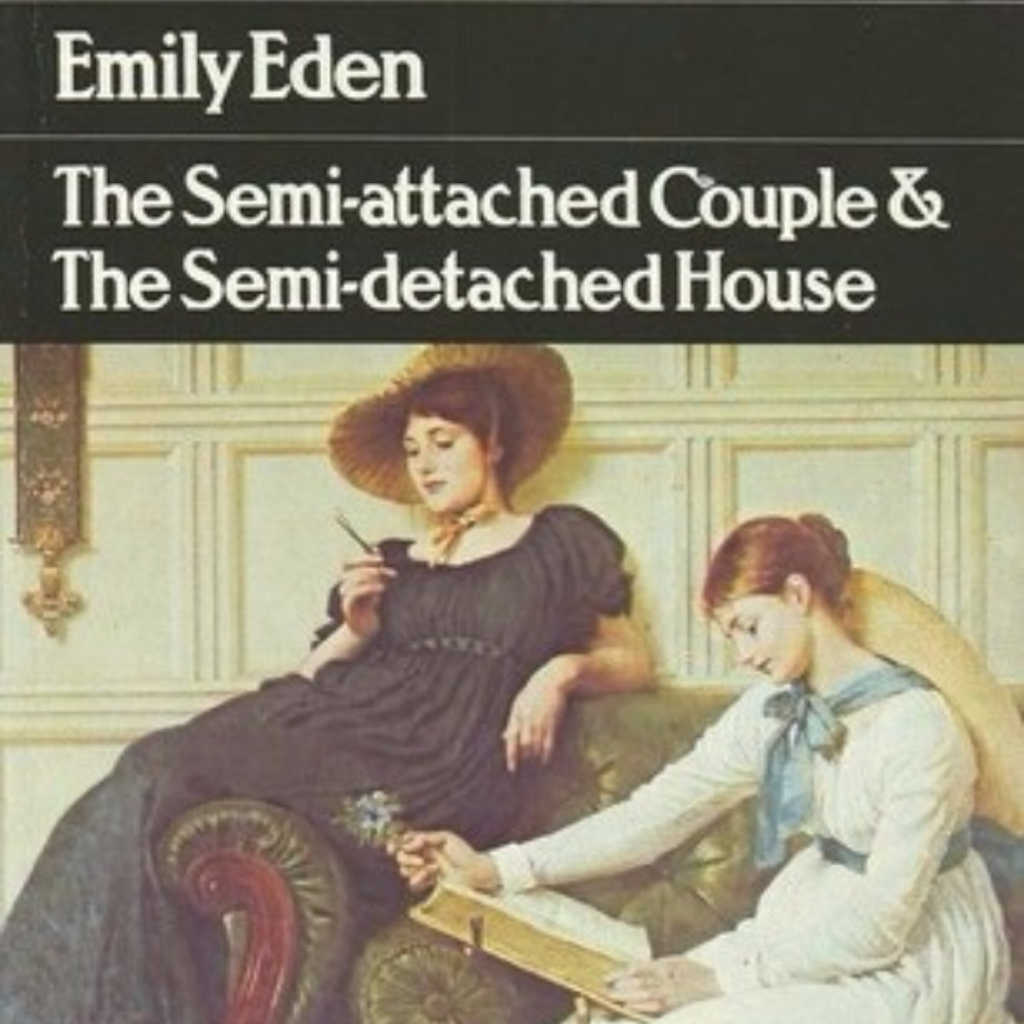
The Semi-Attached Couple, Emily Eden

The Semi-Attached Couple, Emily Eden

A book review

What happens?

The Semi-Attached Couple is primarily the story of two neighbouring families; The wealthy Eskdales and the not so wealthy Douglas’.

18-year-old Helen Eskdale is engaged to Lord Teviot. Just before the wedding she has second thoughts because Lord Teviot shows himself to be very jealous of her relationship with her family, and he displays bursts of anger and moodiness. These are understandably worrying to Helen.

Helen’s sister, Amelia, is very happily married and wants the same for her sister. She dismisses Helen’s concerns and encourages her to go ahead with the wedding. After all, it’s been arranged.

The wedding goes ahead and Helen moves to Lord Teviot’s house, St Mary’s Abbey.

When Helen moves to her marital home, Lady Eskdale asks Eliza Douglas to come and stay with her for a few weeks because she is lonely now that both her daughters have flown the coop. What we would now call empty nest syndrome.

Helen and Lord Teviot invite a large party of friends and family to their home. It is during this extended visit that most of the action takes place. We see the unraveling of Helen and Lord Teviot’s marriage, we see old friends bicker, new friendships form and the romances begin to blossom. 

One of the most irritating and entertaining characters is Lady Portmore. We get to know her intimately and as narcissistic as she may be, Emily Eden shows us just how insecure she really is with humour and sensitivity.

Towards the end of the novel, Lord Teviot is sent away to Portugal on government work. He and Helen argue just before he leaves and they both think that is the end of their short-lived marriage.

While he is away, Helen realises just how much she loves him and endeavours to be the best wife she can when he returns. Her wifely duties are put to the test when Lord Teviot falls dangerously ill and she is forced into the role of a nursemaid. 

In true romance style, we have a happy ending.

Emily Eden

Highlights

You will elsewhere find many references and comparisons to Jane Austen, so I won’t dwell on them here, only to say that it is clear Emily Eden was a huge admirer of Austen and certainly emulated her style with this novel. Eden doesn’t quite have Austen’s wit or turn of phrase, but she does delve further into the psyche of her characters and shows their darker side more than Austen did.

For example, I found Teviot’s behaviour during his arguments with Helen unacceptable and I would have been scared to marry him too if I were her. His temper and moods did show signs that he could turn violent at any moment, and I did wonder if the story was going to head in that direction.

Since finishing the book, I’ve read other people’s reviews and have been amazed at how funny people have found those scenes, so it perhaps says more about me!

Mrs Douglas is fabulously bitchy and mean about everybody, but it only goes to demonstrate her own feelings of inadequacy, especially when we’re told early on that:

‘Mrs. Douglas had never had the slightest pretensions to good looks; in fact, though it is wrong to say anything so ill-natured, she was excessively plain, always had been so, and had a soreness on the subject of beauty, that looked perhaps as like envy as any other quality.

As she had no hope of raising herself to the rank of a beauty, her only chance was bringing others down to her own level.’

When talking about Helen, Mrs Douglas describes her thus:

“I think her looking dreadfully old, Mr Douglas.”

“Old at eighteen, Anne! what [sic] wrinkled wretches we must be! Has Helen grown gray?”

Still in this vein, Mrs Douglas has one of my favourite lines the book:

“The Beauforts all laugh as if they thought they had good teeth” said Mrs Douglas.

That line made me a laugh out loud – I hope my teeth are good enough!

Lady Portmore is a wonderful character, tragic and unlikeable I still wanted a good outcome for her. She is vain beyond compare, gives herself the airs and graces of someone much richer and more influential than she is. She strikes me as someone who has been disappointed in life, and wishes she’d married someone like Mr G, the Prime Minister. That is the sort of role she feels she was born to play.

They joined the rest of the circle and found Lady Portmore proving to Lord Eskdale that she had brought about most of the political changes of the past year and that she knew beforehand all that were likely to take place in the ensuing one

The book is good fun and told tongue in cheek throughout. Emily Eden never married and I can’t help but think she is having a dig at how foolish the institution is. All the couples in the book meet and marry within the space of a few weeks, even Lord and Lady Eskdale.

Politics

There are a few chapters towards the end of the book during which Lord Eskdale and Mr Douglas stand for election, on opposite ends of the political spectrum. The election takes place over a few days and the votes each candidate receives at the end of each day are made public, upping the tension.

I had forgotten that at the time the book was written votes were declared publicly. The entire town, indeed the candidates themselves, were made privy to who made each and every vote. If you were the employee of someone standing for election you had no choice but to vote for them, regardless of your own political inclinations.

Is this book for you?

If you enjoy light-hearted, witty historical romances, you’ll love this. Not only does it fit well with Austen fans but I think Georgette Heyer fans as well.


If this review was helpful, you’ll enjoy these too: