Regeneration, Pat Barker

Regeneration, Pat Barker

Book Review

Edinburgh, 1917

Regeneration by Pat Barker takes place in Craiglockhart War Hospital, Edinburgh in 1917. Dr. Rivers is the psychiatrist in charge of the hospital and it is his job to conduct near-daily interviews with his patients in an attempt to help them overcome the many and varied symptoms of shellshock.

It so happens that two of his patients are the poets Siegfried Sassoon and Wilfred Owen who did indeed attend the hospital at the same time.  Sassoon plays a large role in the story, but the book is more about the impacts of the First World War on every echelon of society, from the Upper-Class Captain to the Working-class Tommy, than just this famous poet.

The story is predominantly told from the point of view of Dr. Rivers as he does his rounds. We also learn about his history prior to coming to the hospital, that he himself suffered from a stutter and feels the guilt many men did at not being sent overseas or being returned home on leave.

While Dr. Rivers, Sassoon, Owen, and Robert Graves are real people, Barker includes a number of fictional characters, namely Billy Prior and Sarah Lumb. Barker uses Prior and Lumb as a way of taking the action out of the hospital and demonstrating that despite the carnage, people are people and do look for pleasure where they can.

Sassoon and Graves regularly meet in the local Golf Club for a drink, a game of golf and a discussion on the politics and morality of war (including Sassoon’s highly controversial ‘A Soldier’s Declaration’ in which he declared the war as ‘being deliberately prolonged by those who have the power to end it’).

We later see Prior skulking the streets of Edinburgh looking for beer and a woman with whom he can forget the war and who won’t try to pry inside his mind. They manage to find love of sorts and although I wasn’t convinced they would live happily ever after, I hoped they would.

The horror builds

For me, there isn’t so much an increase in tension throughout the book, (as you would find in a more plot-driven novel), rather an increase how much I was told about the sights, sounds and landscape the men were exposed to, and the effects of living that way long term.

The climax for me was the discovery that the torture didn’t end when they were sent back from France. Those that were put under the ‘care’ of Dr. Lewis Yealland were subjected to his own brand of therapy and I found that scene to be particularly upsetting.

As you can imagine, there is no happy ending to Regeneration, but there is closure, especially for Sassoon and Rivers.

I’m not normally a fan of Booker winners, I prefer a bit more story and pace than most offer, but I was absolutely drawn into this world of Craighlockhart. It may be because I live close to the hospital and so can picture it so clearly and that I’m fascinated by all things WWI.

I rooted for each of the characters. I wanted Rivers to cure them all so they’d live happily ever after. Of course, I knew that wouldn’t happen but it didn’t stop me hoping.

Curiously, it was the fictional Prior who felt the most real to me. Barker got right into his mind and showed us so clearly the ongoing conflict within him. He was a fascinating mixture of anger, fear and hope. The very fact he wanted to enter into a relationship with Sarah showed me he still had a desire for love and a family. He retained some optimism for his future.

5 Stars from me

I’ve read some very conflicting reviews of Regeneration but I loved it. I did listen to the audio version rather than read the print version, so that may have made a difference, but I found it so well written, so insightful and it gives the average modern reader a glimpse into the views, language and therapeutic practices of the time. It’s easy to forget that the level of PTSD experienced by WWI soldiers was unprecedented and in many ways the medical profession was groping in the dark.

If you’re interested in war stories, and stories that examine the darker side of the human psyche I think you’ll get a lot from this read. I might take a break first, but I will go on to read the two other books in the Regeneration Trilogy, The Eye In The Door and The Ghost Road.

As a companion read, you might want to try All Quiet On The Western Front by Erich Maria Remarque. War is horrific no matter what side of the battlelines you fight.


If you liked this book review, you’ll find more here:

But He Looks So Normal!, Sarah Naish

But He Looks So Normal!, Sarah Naish

A Bad Tempered Parenting Guide: But He Looks So Normal! by Sarah Naish

A book review a book for Adoptive Parents and Foster Carers

But He Looks So Normal! begins with a quiz for parents to determine whether they are Perfect, Good or, like the author, Bad Tempered (I was Good Parent, veering heavily towards Bad Tempered Parent – which seems about right!)

Contents

In Part 1 of But He Looks So Normal! Sarah Naish then takes us on a journey with her on how to deal with annoying people, for example Competitive Mothers or the Mummy Mafia, Unsolicited Parenting Advice and Patronising Professionals.

In Part 2 she takes us through a chapter on Minimising Drudgery such as Laundry Avoidance, Not Cooking Christmas Dinners, Fun Family Days Out, as well as the never-ending school activities and performances.

Part 3 all about Managing the Arguing Children and how to handle the Mad Lying, Reallocating Money, Food Management and Leaving the Arguing Children. This is my favourite part of the book.

Part 4 is an excuse for Sarah to have a rant in Everything Else Annoys Me Too Now! Part 5 highlights how Holidays Are Not A Rest and Part 6 reassures us that It’s OK In The End (Usually).

Mood Changer

I bought But He Looks So Normal! when I was in a low mood and felt everything I was doing for my adopted child was wrong and would damage him for life. We’d just discovered he’d been hiding old food behind the sofa and I was looking for some practical advice on how to handle this.

From the moment I picked the book up I laughed with recognition. I even cried with relief because someone else had spoken out loud what I was most insecure about. That meant it wasn’t just me feeling this way.

If you often feel like you have the ‘naughty’ kid, or you regularly see parents steer their children away from yours because they’re a bad influence, you will love this book. It will make you feel less of a pariah.

If you’re like me and don’t want to be involved with the endless school activities and performances, and who sends their children to school so you can have respite, this is the book for you.

But He Looks So Normal!, Sarah Naish

Real Life Anecdotes

But He Looks So Normal! is peppered with funny and reassuring anecdotes from Sarah Naish’s own experiences with 5 adopted siblings. But within it is a reminder that the parents and carers of adopted/fostered children mustn’t take things too seriously. Yes, there are serious times, such as when the kids are playing truant or stealing, but equally the arguing, the not doing homework, the refusal to do as their told, is all part and parcel of raising children with attachment disorders and we must be kinder to ourselves.

When Naish imagined being a parent she thought of Enid Blyton type days out. But, ‘Instead of spiffing adventures and obedient children playing hide and seek in un-chewed clothes, I found myself thrust into a world with a surround sound audio of Arguing Children playing on a loop. If you are making an Enid Blyton picnic that means you have to go to Tesco’s to buy all the ingredients, with the Arguing Children. This is not a nice start to the picnic. It can only go one way from here.’ 

‘Childline’ eyes

I regularly see my adopted child giving other adults, especially other women, big sad eyes at how badly treated he is and I can’t help but feel defensive and want to explain the long back story as to why he wasn’t allowed to go to the park or to have a pudding.

It was so freeing to read that this is a common tactic employed by our kids. In no time at all they’re being bought the chocolate they’re not supposed to eat because it hypes them up, or the plastic toy that will be thrown in the corner of their room as soon as it gets home, never to be played with again.

‘…when your child spends all their pocket money in the shop on the way to school and then tells everyone they are hungry (with a sad ‘Childline’ face)…The fact that your child will invariably nip down the chip shop anyway, telling all their friends they have no dinner and pleading starvation, is a given.’ 

This made me laugh a lot because I see my child doing this regularly. He eats his snack before class then I get a call from the school telling me I’ve forgotten his snack, can I drop one in? No, I can’t, I’m working. He’ll have to wait until lunchtime!!

Essential Reading

This book should be an essential part of every adoptive parent’s or foster carer’s library. It’s one of those books you’ll pull out again and again when you need cheering up and reassuring that you’re doing a good job – or at least a good enough job.

A lot of the parenting books I’ve read are written by professionals and are very earnest. They are full of useful research and information, but always leave me feeling inadequate. But He Looks So Normal! does the opposite. I felt seen and heard.

If you haven’t already, I thoroughly recommend you buy Sarah Naish’s books for children. They help our children see themselves reflected back at them. We’ve read them a lot and come back to them again and again when my child is feeling ‘wobbly’ or anxious, amongst other things.

As soon as I finished this book I bought “Therapeutic Parenting In A Nutshell”, also written by Sarah Naish.

Five Stars from me!

Photo by Brett Sayles


If you are an Adoptive parent looking for support or to find out more about Therapeutic Parenting, contact the National Association of Therapeutic Parents and their Facebook Group.


For more articles about parenting generally read these:

You’ll find more of my book reviews at www.goodreads.com

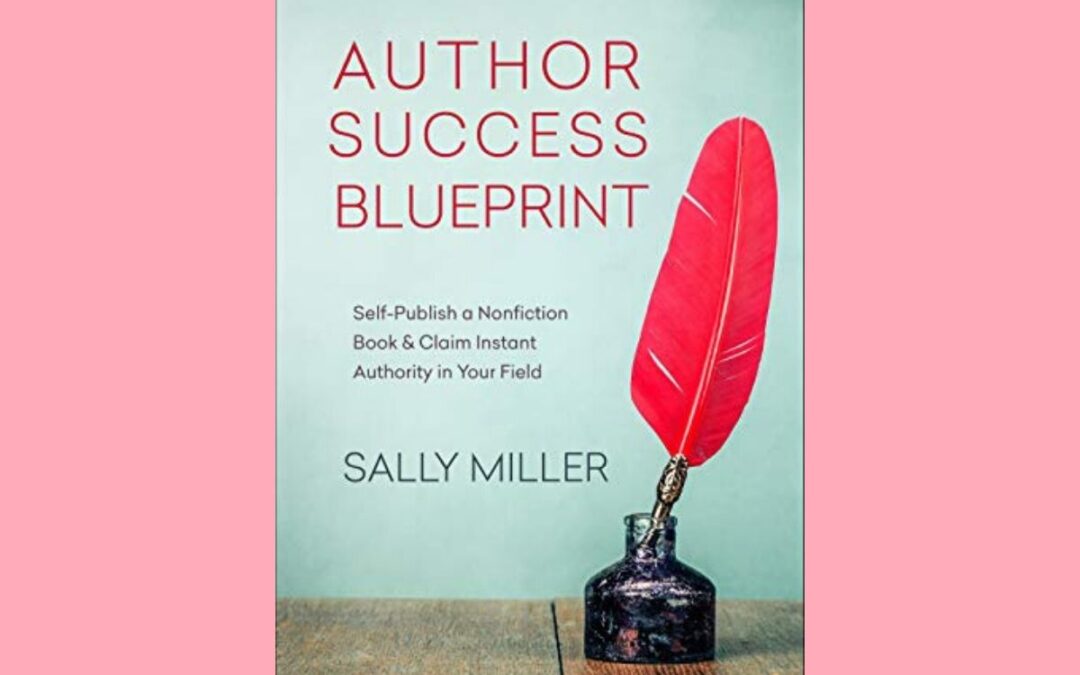
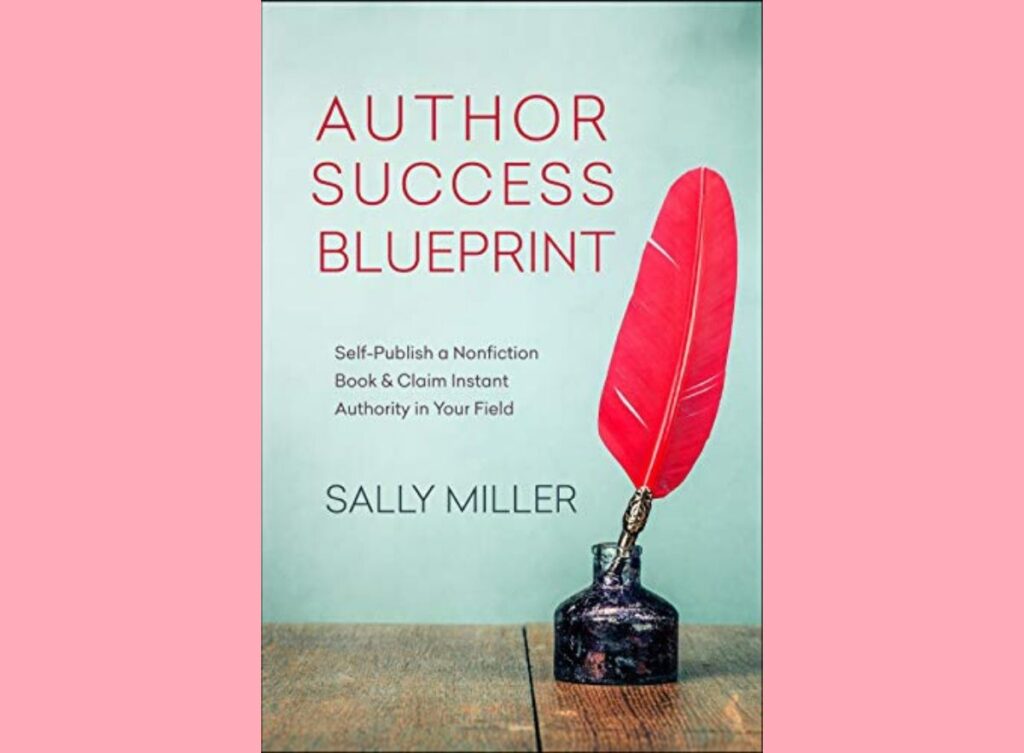
Author Success Blueprint, Sally Miller

Author Success Blueprint, Sally Miller

Self-Publish a Nonfiction Book and Claim Instant Authority in Your Field

A book review for people who want to write and publish their own nonfiction book

Author Success Blueprint is a ‘does what it says on the tin’ book and guides you step by step on how to research your book idea and outline it; how to write the first draft and work with an editor and designer; and how to publish, launch and market your book. It even includes a chapter on how to turn your book into an audiobook.

The author, Sally Miller tells us how she got started in publishing and it really was a case of needs must. She wanted a way of earning an income while staying at home with the kids. In true entrepreneurial spirit, she researched how she could publish her own non-fiction book, how to write and then did it!

The big promise

She does point out that writing a book isn’t a get rich quick plan, but it is a way of earning a reasonable regular income. She does promise, however, to give readers ‘The secret to writing a book people will rave about – in record time.’

I think she upholds that promise pretty well. She emphasizes the importance of researching your topic. ‘First, you make sure there’s a viable market for your idea. Then, you define who you are writing for and the outcome they can expect from your book. You want to get inside your readers’ head. Knowing your audience and what they desire is how you write a book your readers love.

She then gives you the step by step on how to do that research, which is hugely helpful.

Author Success Blueprint
Author Success Blueprint, Sally Miller

Publish and promote

When you’ve written your book and are ready to publish, the author tells you how to research keywords on sales platforms so that your book will get maximum exposure. She goes over pricing strategies that will help drive traffic to your product page on the stores in a bid to getting the ‘bestseller’ label.

She even covers book promotion websites, essential if you have no online following. ‘When applying to book promotion sites, remember that not all promotions are equal. Your book genre impacts how successful a promotion is. I recommend browsing promotion sites and seeing which ones appeal t your target readers.’

At the end of each chapter, Sally Miller gives you Action Steps that will take you a little closer to your goal of a finished and published book.

All in all, this compact book tells you what you need to know if you want to publish a nonfiction book. There’s no extraneous fluff and I absolutely recommend starting with this guide if you want to write and publish your own book.


Sally Miller has written 10 books now, including Making Money As A Ghostwriter


If this was helpful, you’ll find more book reviews here:

Why being a stay-at-home mum is a time for transition

Why being a stay-at-home mum is a time for transition

From time to time, I link to products or services I love using with affiliate links. This means that I may receive a small percentage or fee for referring you to any product you may purchase from one of those sites. It does not cost you anything. These small fees help sustain my small business. I truly appreciate your support.

Why being a stay-at-home-mum is a time of transition

by Emma Dhesi | Turning Readers Into Writers

Why being a stay-at-home-mum is a time of transition

Did you know that being a stay-at-home mum is a time for transition? And I don’t just mean from a corporate life to a domestic one! If you’re a stay-at-home mum, you’ll be all too familiar with sleepless nights, early mornings, inane questions and daily arguments over food!

This is certainly my experience of motherhood. I have three young children who amaze me every day with their ability to bicker about the smallest of things. This morning it was about who likes porridge more!

But in amongst all the exhaustion and being pulled every which way, there emerges a period of reflection, and being a stay-at-home mum can offer you the opportunity of transitioning your personal and professional life down a whole new path.

One of those paths might be to write the book you’ve always wanted to write. Here are 5 reasons why staying at home with the kids might just be the catalyst you need into a new you.

1. You are already out of the rat race

You’ve made what can be one of the most difficult decisions in your career, which is to leave it. The security that comes with having a daily routine, and a regular salary, can be frightening but once you’ve done it it opens up a whole raft of new possibilities.

You’ve already done the most difficult thing which is to take that step away you’re your old life.

When I talk to friends who have been working hard on their career ladder for the last 20 or 25 years, it is almost impossible for them to imagine making such a pivot in their life.

Although your hand is twisted to a degree by the arrival of a new tiny person, it is still a physical and mental upheaval.

You have foregone the professional work that gave you a sense of identity and are forging a whole new one as a  24-hour mother.

You’ve taken that step, and it is a blue sky moment. Life looks and feels differently for you now.

2. You’ve learned new skills

As a full-time parent you have undoubtedly learned new skills.

Unless you were a nursery or a primary school teacher, you’ve most likely not had to deal with daily tantrums, huge egos and people who are impossible to reason with and whose whim changes with the wind.

Even difficult of adult colleagues will not have expressed themselves quite so vocally and freely as your preschooler.

As such you have learnt a whole raft of new skills: Your time management has been tested, your cooking skills and menu offerings have been revamped; you’re learning things about your own and your child’s body you never knew possible will astound you and horrify you in equal measure (their poo is what colour??).

Your ability to negotiate has improved exponentially and if you are a mother that believes in setting firm boundaries, you’ve learn to hold your ground.

The lack of sleep and the level of patience you’ve show your child has made you dig deeper than ever before. You’ve found you are more capable and have enough inner strength to match even Margaret Thatcher (showing my age here!)

You impress even yourself with what you are able to achieve in a 24-hour period.

3. Time for reflection

If you’re anything like me you’ve found the transition from dynamic career woman to domestic slave a complicated one.

You’ve gone from being an independent woman who was spontaneous and sociable, to someone who is routine bound and whose life is dominated by an individual who can’t even speak yet.

Much as you love your child, and wouldn’t wish things any other way, it’s been a tough adjustment and has offered up some time for reflection.

This was certainly the case from me. Within a 12 month period I emigrated, got married, and had a baby. My world was turned upside down in a way I could never have predicted.

When my hormones settled down sufficiently I began to think about my future and what was important to me.

For example, I knew I didn’t want to go back to a 9-to-5. I enjoyed the freedom that came with being my own boss (to a degree of course, I still had a toddler to wrangle with!) And I don’t mind admitting I felt overwhelmed at the prospect of working a full-time job and being a full-time parent.

If that sounds familiar you may also find yourself, in quieter moments giving brief reflection on what you want for the second half of your life.

It’ll take time to figure out (it took me two more children and another four years) what you want next, but as Marie Forleo says, everything is figureoutable.

If you’re at home full-time, knowing they won’t be little forever and at some stage you’re going to want something for yourself, this might be the time to start thinking about it.

4. Rediscover old loves

As the kids get older and you settle into a routine, you may find that you start picking up old hobbies and activities you did as a younger person.

Things have probably changed in the intervening years, and that makes it feels as exciting as it once did. It may be that you rediscover crafting of some sort, for example knitting or sewing. It may be that you enjoy scrapbooking or quilting.

Perhaps he used to play sport competitively and that is something you’d like to resume. You may even decide to do it seriously and join our local league for your age group. But if you’re like me, that old love is writing.

I have heard it said that whatever it was you were passionate about at the age of eight, that’s your true calling.

And if your passion at the age of eight was making up little stories and illustrating them, fiction writing might be just what you need in your life I now. Perhaps this is an old flame that needs to be rekindled?

As the kids get older and you start to have more free time, what will you do with that time? Make sure it’s something for you, not the kids or the home. If you had that time, what would you do with it?

Go to the gym, nap, meet a friend, read, or do a little bit of writing? Whatever it is, this might be your opportunity to explore your old love and find out if it’s still got a special place in your heart.

5. Personal transition

The results of numbers 1 through 4 mean that you have, undoubtedly, gone through a huge personal transition.

Not only has the routine and shape of your day-to-day life change, the way you feel about your new life has caused a seismic shift within you. You have had to readjust the way you view your whole life, and that includes your own personal growth.

In the nine years since I became a parent, my own personal growth has gone beyond what I could ever have imagined.

Not only have I left the rat race but I’ve found a strength in myself I didn’t know I had. I’ve realised I want more from my life and to be a positive example for my daughters.

I stopped drinking alcohol, I have stopped eating sugar, I have stopped burning the candle at both ends and I have never felt better.

These things aren’t for everyone, your personal transition will look completely different to mine, but you have transitioned. So embrace this opportunity for change. What is it that you want the second half of your life to look like? For me it was to publish my novels.

It’s true what they say, youth is wasted on the young. And because I now realise that, I’ve focused in on what’s most important to me. Apart from my family, the most important thing to me is my writing. What’s yours?

Give yourself time to make changes in your life that allow you to do what lights you up and makes you happy.

It will boost your confidence, make you feel good and leave you wanting more. The more I write, the more my confidence grows and the happier I am. It’s an upward spiral.

If you want this, if you want to see your story finished, your books published and even to make an income from it, this could be the opportunity you want to grab with both hands.

If you’re a stay-at-home mum, now is the time to start thinking about what you want to do as the children get older. You have given so much of yourself to your kids, now it’s time to find a little corner for you.

A happy mum means happy children

I am a huge fan of the belief that that happier you are, the happier your children are. The happier your children are, the happier you will be.

If writing a book will make you happy, find the way to make it happen.

Do it for you, you deserve it.

Schedule in a little bit of time over the next week where you can either read books about writing, listen to podcasts about writing, take part in a writing course, or even start writing!

Do what lights you up, you won’t regret it!

If you’ve been working on your novel for years (perhaps even decades) the maybe it's time to consider working with a coach.

If you have multiple versions of your novel and you don’t know which works best, are scared nobody will like your book and don't feel like a 'real' writer, then my guess is coaching is the right next step for you.

Find out more and sign up for your free Clarity Call here: https://emmadhesi.com/personal-coaching/


emma dhesi

Emma Dhesi writes women’s fiction. She began writing seriously while a stay at home mum with 3 pre-school children.

By changing her mindset, being consistent and developing confidence, Emma has gone from having a collection of handwritten notes to a fully written, edited and published novel.

Having experienced first-hand how writing changes lives, Emma now helps beginner writers find the time and confidence to write their first novel.

My story is stuck, how do I move forward?

My story is stuck, how do I move forward?

If you’re a beginner writer and writing your first novel, it is possible that you’ve come to a point in your story where you’re stuck and you don’t know how to move the plotline forward.

Don’t worry too much about this, it happens to everybody at some stage in their career. In particular, if you’re a discovery writer, this is very much part of the beast.

You may have to backtrack to an earlier chapter, or send your character in a new direction. But although it is annoying, it is not the end of the book. It is just an obstacle you have to overcome. And you can overcome it! I had this very same problem with my first book, The Day She Came Home.

I took my character on a journey into a mental health facility, during which time she lost her memory. Whilst in another story this may have worked very well, for the story I was writing it didn’t cut the mustard. It took my character off on a tangent into the unknown from which I’d never get her back on track. I had to backtrack three or four chapters and start again!

If you find yourself in this position, when your story is stuck and you don’t know how to move it forward, you can do one of 4 things.

https://www.canva.com/join/moon-jute-bond

1. Take a break and work on something else

This technique is useful for so many things, not just when you’re feeling stuck. Stop working on your current work-in-progress, give it time to marinade, and start on something else. While you’re doing that your subconscious will ironing out the kinks in your WIP.

This may mean working on a short story for a day or two, it may mean writing a whole new novel for a few months.

Either way you are switching your brain off from the problem at hand. In doing so you are allowing your subconscious to have the freedom it needs to come up with the way forward.

Other tools you can try are small practical things like going for a walk, having a dance around the house, reading a book or meeting a friend for coffee.

If you normally work in a café try working at home, and vice versa.

By taking your brain out of yourself and focusing on something else, you’ll be surprised at how easily you find the solution to your problem.

2. Write the ending and work backwards.

This is a hugely helpful technique. Even if you are a discovery writer, most of you will know what your endpoint is. You have an idea of where your character is trying to get towards.

With that in mind write the last chapter. If that hasn’t broken the deadlock, write the chapter before that. If you still don’t know how to move the story forward, keep writing backwards until you come to the point at which you’re stuck.

It is amazing how that change of direction can open up a whole world of new possibilities.

For example, if your character is in a difficult position and you have no idea how to get them out of it, jump ahead to when the character has escaped that situation. Once you’ve written that part of the book, the escape route will make itself known to you.

Or, if you are writing a piece of reflective prose, but you’re not sure how your character would respond to the situation they find themselves in, knowing what comes next might help clarify that in your mind. Or you can take time out to write a detailed character description so you get to know them better.

3. Look at the conflict within your story.

Are the conflicts within your story severe enough? Are the obstacles your character has to overcome challenging enough?

They need to be situations or experiences that push your character to their limits, and in doing so you force your character into behaving in a way they wouldn’t normally.

Perhaps the conflict you’ve given your character isn’t strong enough, it is not forcing them out of their comfort zone and into doing something radical and perhaps even desperate.

Once they are backed into a corner, what options do they have? Are you too kind to your character and keep saving them? Don’t do that. Keep pushing them into situations that are difficult. This means you keep the tensions high and are forced to find an dramatic way of getting out of that particular predicament, which in turn drives the story on.

4. Delete the last two chapters.

This is pretty drastic but can be highly effective. As I mentioned at the beginning of this article, that’s what I had to do in my first book, The Day She Came Home.

For example, you might wish to delete the last two chapters you’ve written and tackle them from a different perspective. Perhaps you even write them from somebody else’s point of view?

The advantage to this is it frees you up to write with a blank canvas, and who knows what will happen after that!

The disadvantage of course is that you have more work to do. But this is worth it if it means your story takes on a new lease of life.

5. Talk to someone.

I never cease to be amazed at how talking to people about anything, not just work, can be enlightening and invigorating.

I’ve never forgotten being bumped and shouted at by a cyclist. It really upset me and I brooded on it all day at work. When I got home I told my housemates. They made lots of jokes about ‘killer cyclists’ taking revenge on all other road users and made me laugh. The came at the situation from a totally different perspective and made me see the funny side. My anger and upset disappeared.

If your story is stuck tell somebody about your story and even about the place where you are stuck. Ask them how they would like to see the story proceed.

Even if they are not a writer, they most likely are a reader, and might come up with something you hadn’t thought about because you’re so close to it. Sometimes we can’t see the wood for the trees!

It’s part of the job

As I mentioned at the beginning of this article, when you are just starting out on your writing journey, getting stuck in a story is a very real part of the job. Even for experienced writers this happens.

If you plot your story you may find this less of an issue, but if you are a discovery writer like me you might find this does continue to happen in your writing life. Don’t let it put you off. The excitement of discovery writing is well worth these temporary blips. It doesn’t mean you’re a bad writer!!!

Signposts

One of the ways I get around this, is by writing signposts chapters. And I encourage you to do the same. These signpost chapters don’t hold you to anything, but they do offer you something to aim for.

Write your beginning chapter, middle and end chapters. Even if you don’t stick to them you’ll know the direction in which you are headed and all you’ve got to do is figure out how to get there.

So remember, if your story is stuck be assured it happens to everybody but there are ways out of it. Use one of these 5 techniques to help you move forward with your story.


If you found this helpful, you’ll love these article too: