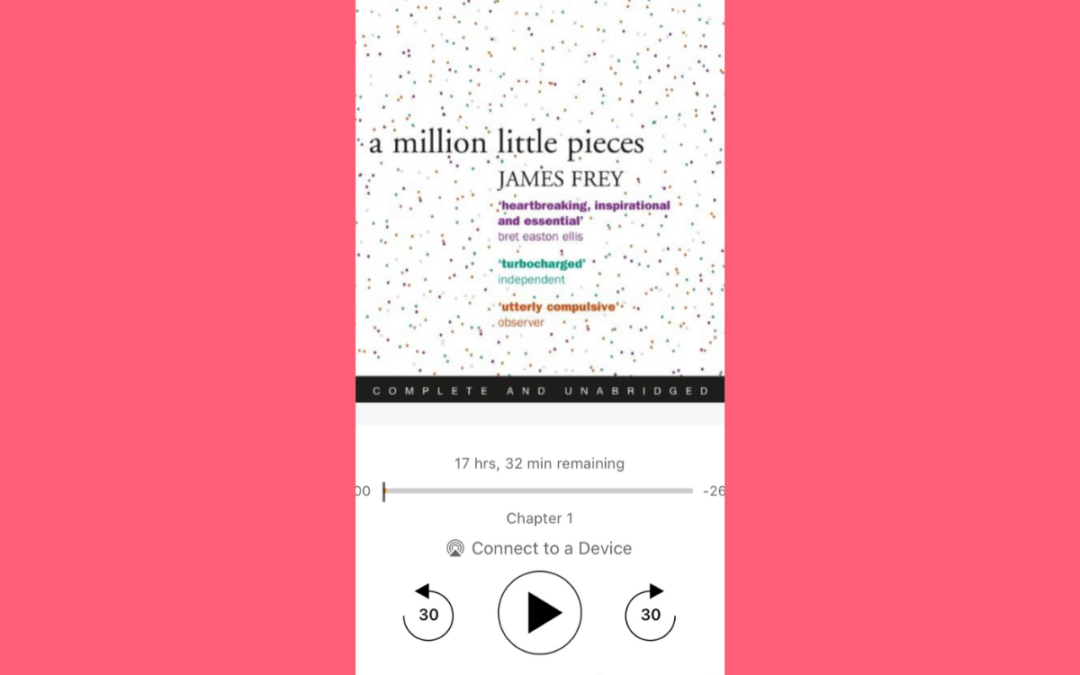
I found this book by James Frey to be absolutley fascinating. I’ve read a lot of addiction memories, and A Million Little Pieces is definitely the most ‘male’ one I’ve read!
The descriptions of his physical response to drugs/alcohol, and how his body responded to the withdrawal, was graphic and detailed.
The mix of characters in rehab, and the breakdown of any social divisions was fascinating. It showed how strongly those in recovery can pull together and support one another.
It was only after reading the book that I discovered all the controversy surrounding it, but even if aspects of the memoir have been made up or exaggerated, I still thought the descriptions of addiction and how difficult family relationships can be, was engrossing.
The only thing I didn’t like about the book was how repetitive it was. Frey used word and phrase repetition for emphasis, I think, but he used it so often it became tedious and lost its impact.
Other than that, it’s a worthwhile read, especially if you are struggling with addiction yourself.
I found The Sealwoman’s Gift to be a beautiful story. Sally Magnusson has written a love story, a tragedy, an adventure story and a story of hope.
Sally Magnuson has a beautiful turn of phrase at times. She tenderly uses storytelling as a way of connecting not only families, but uniting different nationalities and as a way of crossing generations.
There is a lot of action in The Sealwoman’s Gift but it never feels hurried and is tenderly told. Asta’s story is told with empathy and compassion. Sally Magnuson explores how we don’t always choose who we fall in love with, love can fade and how it can be reignited.
I had a good weep at the end of the story, and for me that’s always a good sign! For beautiful writing and a story well told, I really recommend Sally Magnusson’s The Sealwoman’s Gift.
For a beginner writer one of the biggest worries is how should you write your novel. What is it you need to do when you physically sit down and write your story.
You might have the plotline in your head
but you are worried about the mechanics of actually writing it.
Here are 5 ways you can write your book in a clear and easy way. I’m a big believer in making things simple and these techniques will do that for you.
1. Chapter by chapter
Do you prefer to write your stories chronologically from beginning to end, without jumping back and forth? If so, this is the technique for you. It’s definitely the one for me!
If you’re a linear person, write one chapter
at a time. This will keep you moving forward and you’ll be boosted by that
feeling of momentum.
And if your chapter size is fairly small chapter, this is an expecially great strategy for you. Chapter by chapter you’ll know you’re getting closer to The End.
I like to have a process to things, and as such my chapters are generally the same size. This means I know roughly how long each one takes to write one. As a result, I’m mentally prepared for how long I need to be at my writing desk.
Picture your opening chapter in your mind –
Who is there? What are they thinking? Who are they talking to? Where are they?
Literally start at the beginning and
describe what is happening. Then, sentence by sentence, work your way through
that chapter, adding in everybody’s dialogue and then a little bit of back
story as and when you feel it is needed.
You then move onto chapter two. Chapter two is when you can bring in your inciting incident. This is the chapter that pushes your character into the plotline. Here your character faces their first difficulty and attempts to overcome it.
In the third chapter they will get past this inciting incident, but it’s leads to something more complicated, and from that point on the story progresses.
If you plot your storylines this will be
even easier for you because you know exactly what’s going to happen in each
chapter.
If, like me, you are a discovery writer,
you are going to have the thrill of finding out what happens in your story
alongside your character.
Remember, all you’re doing is telling the reader what’s happening to your character. It’s no more complicated than than that. Take your time, write the dialogue, fill in some details, paint a picture for your reader.
2. Scene by scene
Do you find the idea of working on a whole chapter at one time too overwhelming? If so, you may prefer to write in scenes, or what some people call beats.
Even if you have two or more scenes in a chapter, breaking the chapter down into scenes makes it more digestible. There’s nothing wrong with that. I am a big proponent of breaking novel writing down into small chunks. It is far less intimidating that way!
Perhaps you don’t write in chapters at
all, but use breaks in the prose to indicate a change of scene or pace.
The principle is the same; paint a picture for your reader. It could be a picture of the physical space; where the character is sitting, what they’re wearing or what they look like. Or it might be an emotional picture; what they’re feeling, what they’re thinking, what they want to do but are unable to for whatever reason.
Scenes can act as snapshots, sharing with the reader a moment in time. Chapters are more like a large canvas, giving you a big picture view of what’s going on.
3. Character by character
If you’re telling the story from two or more points of view, a great way to ensure you have continuity of voice is to write separate drafts, one from each persons point of view.
For example, if Rod, Jane and Freddy are the
three voices in your book, write all of Rod’s chapters/scenes first. Then write
all of Jane’s, and finally all of Freddy’s.
That way you are able to get into the head
of each of those individuals and differentiate them from each other.
At the end of the writing phase, you can pull them all together into a coherent plotline. This is how Guy Gunaratne wrote his book, In Our Mad And Furious City. This is particularly useful if each of your characters comes from a different socio-economic background, have different nationalities or even just very different speech patterns.
4. As the mood takes you
This is for the real rebel authors out there!
Regardless of whether you have plotted your story or are a discovery writer, you may wish to write your novel as and when you visualise each scene or chapter.
It may be that you first of all write the middle chapter before tackling the second one. You might then jump to a chapter in the middle of the third act before writing the inciting incident. Perhaps you write the last chapter before you write the first; only once you have the ending can you work out the beginning.
This is not a technique I would recommend particularly, but each book is its own project and you may find this is the way you can best get to The End of your current work in progress.
5. Work backwards
As I mentioned above, I am a very linear writer and normally write chapter by chapter starting at Chapter 1 until I get to The End.
However, with my soon to be released novel
Belonging, I couldn’t seem to get into the swing of things and I finally ended
up writing it chapter by chapter but from the last chapter forward.
For some reason the story fell into place more easily when coming at it from a new direction. You might find this works for you, perhaps not for every story, but if you’re struggling with one that your currently writing, you may wish to try this.
There is no one-size-fits-all
However you like to write your novel, remember that there is no right way or wrong way.
You may have a system that works for you
most of the time but every now and again it just doesn’t cut the mustard and you
need to try a different approach; there’s nothing wrong with that. You’ve got
to do whatever works.
It may be that you are writing your first or second novel and you don’t yet have a system in place. You are at a great point in your career because you can give yourself all the freedom you needto try different techniques and approaches.
With each novel you write, you’ll hone your
system and process until you find the one that works for you.
Enjoy this early stage. It is a time when
you can remove any pressure from yourself and just enjoying experimenting.
Later down the line you might find you put yourself under pressure to get finished because you have a deadline to meet, and don’t have the luxury to experiment. So to write your novel, take your time. Write what you can, when you can, and have fun!
Enjoy the writing and lose yourself in story. It’s meant to be challenging but also a lot of fun, so let go and delve in. If you do, so will your readers.
Medical Resources for writers
Kim Foster has laid out a comprehensive glossary of online medical resources for writers.
If you’ve been working on your novel for years (perhaps even decades) the maybe it's time to consider working with a coach.
If you have multiple versions of your novel and you don’t know which works best, are scared nobody will like your book and don't feel like a 'real' writer, then my guess is coaching is the right next step for you.
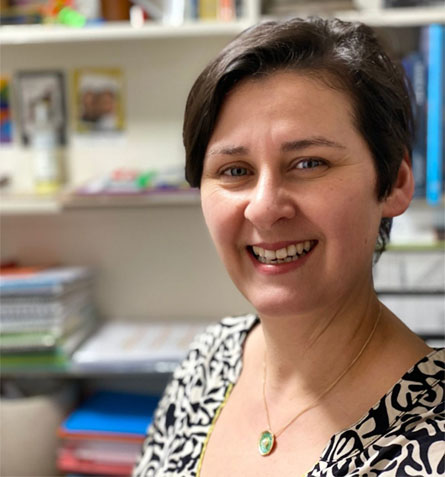
Emma Dhesi writes women’s fiction. She began writing seriously while a stay at home mum with 3 pre-school children.
By changing her mindset, being consistent and developing confidence, Emma has gone from having a collection of handwritten notes to a fully written, edited and published novel.
Having experienced first-hand how writing changes lives, Emma now helps beginner writers find the time and confidence to write their first novel.
[/et_pb_section]Medicine and technology are changing all the time. If you come across something new and interesting, go with it. It’ll be something equally new for your readers. By keeping abreast of new medical advances and technologies, you’ll come across new and original stories lines, exciting for your readers.
6. A moral dilemma.
Georgina Roy suggests that not only does this add depth to your book, but it also gives your character/s a puzzle to morality to solve, not just a crime.
Finally, have fun
Enjoy the writing and lose yourself in story. It’s meant to be challenging but also a lot of fun, so let go and delve in. If you do, so will your readers.
Medical Resources for writers
Kim Foster has laid out a comprehensive glossary of online medical resources for writers.
If you’ve been working on your novel for years (perhaps even decades) the maybe it's time to consider working with a coach.
If you have multiple versions of your novel and you don’t know which works best, are scared nobody will like your book and don't feel like a 'real' writer, then my guess is coaching is the right next step for you.
Emma Dhesi writes women’s fiction. She began writing seriously while a stay at home mum with 3 pre-school children.
By changing her mindset, being consistent and developing confidence, Emma has gone from having a collection of handwritten notes to a fully written, edited and published novel.
Having experienced first-hand how writing changes lives, Emma now helps beginner writers find the time and confidence to write their first novel.
[/et_pb_section]Georgina Roy echoes Chuck Sambuchino and emphasises just how important good characters are. They need to be multifaceted and be sympathetic, even the baddies.
5. Explore uncharted territory.
Medicine and technology are changing all the time. If you come across something new and interesting, go with it. It’ll be something equally new for your readers. By keeping abreast of new medical advances and technologies, you’ll come across new and original stories lines, exciting for your readers.
6. A moral dilemma.
Georgina Roy suggests that not only does this add depth to your book, but it also gives your character/s a puzzle to morality to solve, not just a crime.
Finally, have fun
Enjoy the writing and lose yourself in story. It’s meant to be challenging but also a lot of fun, so let go and delve in. If you do, so will your readers.
Medical Resources for writers
Kim Foster has laid out a comprehensive glossary of online medical resources for writers.
If you’ve been working on your novel for years (perhaps even decades) the maybe it's time to consider working with a coach.
If you have multiple versions of your novel and you don’t know which works best, are scared nobody will like your book and don't feel like a 'real' writer, then my guess is coaching is the right next step for you.
Emma Dhesi writes women’s fiction. She began writing seriously while a stay at home mum with 3 pre-school children.
By changing her mindset, being consistent and developing confidence, Emma has gone from having a collection of handwritten notes to a fully written, edited and published novel.
Having experienced first-hand how writing changes lives, Emma now helps beginner writers find the time and confidence to write their first novel.
[/et_pb_section]No matter how fast-paced your thriller, readers need to connect or at least care about your characters. They may even hate them, but they must care.
Georgina Roy echoes Chuck Sambuchino and emphasises just how important good characters are. They need to be multifaceted and be sympathetic, even the baddies.
5. Explore uncharted territory.
Medicine and technology are changing all the time. If you come across something new and interesting, go with it. It’ll be something equally new for your readers. By keeping abreast of new medical advances and technologies, you’ll come across new and original stories lines, exciting for your readers.
6. A moral dilemma.
Georgina Roy suggests that not only does this add depth to your book, but it also gives your character/s a puzzle to morality to solve, not just a crime.
Finally, have fun
Enjoy the writing and lose yourself in story. It’s meant to be challenging but also a lot of fun, so let go and delve in. If you do, so will your readers.
Medical Resources for writers
Kim Foster has laid out a comprehensive glossary of online medical resources for writers.
If you’ve been working on your novel for years (perhaps even decades) the maybe it's time to consider working with a coach.
If you have multiple versions of your novel and you don’t know which works best, are scared nobody will like your book and don't feel like a 'real' writer, then my guess is coaching is the right next step for you.
Emma Dhesi writes women’s fiction. She began writing seriously while a stay at home mum with 3 pre-school children.
By changing her mindset, being consistent and developing confidence, Emma has gone from having a collection of handwritten notes to a fully written, edited and published novel.
Having experienced first-hand how writing changes lives, Emma now helps beginner writers find the time and confidence to write their first novel.
[/et_pb_section]If you want to write a medical thriller, it needs to be fast paced and gripping. Georgina Roy warns not to become complacent with action. Just because a story is set in a hospital, it doesn’t mean the plot shouldn’t move forward at a good pace. Keep momentum going throughout the book, not just at the climax of the story.
[/et_pb_text]
4. Write good characters.
No matter how fast-paced your thriller, readers need to connect or at least care about your characters. They may even hate them, but they must care.
Georgina Roy echoes Chuck Sambuchino and emphasises just how important good characters are. They need to be multifaceted and be sympathetic, even the baddies.
5. Explore uncharted territory.
Medicine and technology are changing all the time. If you come across something new and interesting, go with it. It’ll be something equally new for your readers. By keeping abreast of new medical advances and technologies, you’ll come across new and original stories lines, exciting for your readers.
6. A moral dilemma.
Georgina Roy suggests that not only does this add depth to your book, but it also gives your character/s a puzzle to morality to solve, not just a crime.
Finally, have fun
Enjoy the writing and lose yourself in story. It’s meant to be challenging but also a lot of fun, so let go and delve in. If you do, so will your readers.
Medical Resources for writers
Kim Foster has laid out a comprehensive glossary of online medical resources for writers.
If you’ve been working on your novel for years (perhaps even decades) the maybe it's time to consider working with a coach.
If you have multiple versions of your novel and you don’t know which works best, are scared nobody will like your book and don't feel like a 'real' writer, then my guess is coaching is the right next step for you.
Emma Dhesi writes women’s fiction. She began writing seriously while a stay at home mum with 3 pre-school children.
By changing her mindset, being consistent and developing confidence, Emma has gone from having a collection of handwritten notes to a fully written, edited and published novel.
Having experienced first-hand how writing changes lives, Emma now helps beginner writers find the time and confidence to write their first novel.
[/et_pb_section]He makes the good suggestion of writing from the point of view of the layperson. You don’t want to overload your reader with too much jargon, otherwise it looks like you’re trying to show off how much research you did! The way to do that is to focus on the characters and their stories, spicing up the narrative with well-researched details.
3. Keep the story moving.
If you want to write a medical thriller, it needs to be fast paced and gripping. Georgina Roy warns not to become complacent with action. Just because a story is set in a hospital, it doesn’t mean the plot shouldn’t move forward at a good pace. Keep momentum going throughout the book, not just at the climax of the story.
[/et_pb_text]
4. Write good characters.
No matter how fast-paced your thriller, readers need to connect or at least care about your characters. They may even hate them, but they must care.
Georgina Roy echoes Chuck Sambuchino and emphasises just how important good characters are. They need to be multifaceted and be sympathetic, even the baddies.
5. Explore uncharted territory.
Medicine and technology are changing all the time. If you come across something new and interesting, go with it. It’ll be something equally new for your readers. By keeping abreast of new medical advances and technologies, you’ll come across new and original stories lines, exciting for your readers.
6. A moral dilemma.
Georgina Roy suggests that not only does this add depth to your book, but it also gives your character/s a puzzle to morality to solve, not just a crime.
Finally, have fun
Enjoy the writing and lose yourself in story. It’s meant to be challenging but also a lot of fun, so let go and delve in. If you do, so will your readers.
Medical Resources for writers
Kim Foster has laid out a comprehensive glossary of online medical resources for writers.
If you’ve been working on your novel for years (perhaps even decades) the maybe it's time to consider working with a coach.
If you have multiple versions of your novel and you don’t know which works best, are scared nobody will like your book and don't feel like a 'real' writer, then my guess is coaching is the right next step for you.
Emma Dhesi writes women’s fiction. She began writing seriously while a stay at home mum with 3 pre-school children.
By changing her mindset, being consistent and developing confidence, Emma has gone from having a collection of handwritten notes to a fully written, edited and published novel.
Having experienced first-hand how writing changes lives, Emma now helps beginner writers find the time and confidence to write their first novel.
[/et_pb_section]C S Lakin interviewed Richard Mabry, who reminded us that people love to be informed, not just entertained. That’s why police procedurals and legal thrillers are so popular. They want to feel the tension and listen to secret conversations.
He makes the good suggestion of writing from the point of view of the layperson. You don’t want to overload your reader with too much jargon, otherwise it looks like you’re trying to show off how much research you did! The way to do that is to focus on the characters and their stories, spicing up the narrative with well-researched details.
3. Keep the story moving.
If you want to write a medical thriller, it needs to be fast paced and gripping. Georgina Roy warns not to become complacent with action. Just because a story is set in a hospital, it doesn’t mean the plot shouldn’t move forward at a good pace. Keep momentum going throughout the book, not just at the climax of the story.
[/et_pb_text]
4. Write good characters.
No matter how fast-paced your thriller, readers need to connect or at least care about your characters. They may even hate them, but they must care.
Georgina Roy echoes Chuck Sambuchino and emphasises just how important good characters are. They need to be multifaceted and be sympathetic, even the baddies.
5. Explore uncharted territory.
Medicine and technology are changing all the time. If you come across something new and interesting, go with it. It’ll be something equally new for your readers. By keeping abreast of new medical advances and technologies, you’ll come across new and original stories lines, exciting for your readers.
6. A moral dilemma.
Georgina Roy suggests that not only does this add depth to your book, but it also gives your character/s a puzzle to morality to solve, not just a crime.
Finally, have fun
Enjoy the writing and lose yourself in story. It’s meant to be challenging but also a lot of fun, so let go and delve in. If you do, so will your readers.
Medical Resources for writers
Kim Foster has laid out a comprehensive glossary of online medical resources for writers.
If you’ve been working on your novel for years (perhaps even decades) the maybe it's time to consider working with a coach.
If you have multiple versions of your novel and you don’t know which works best, are scared nobody will like your book and don't feel like a 'real' writer, then my guess is coaching is the right next step for you.
Emma Dhesi writes women’s fiction. She began writing seriously while a stay at home mum with 3 pre-school children.
By changing her mindset, being consistent and developing confidence, Emma has gone from having a collection of handwritten notes to a fully written, edited and published novel.
Having experienced first-hand how writing changes lives, Emma now helps beginner writers find the time and confidence to write their first novel.
[/et_pb_section]Most readers will have no medical training or background, so you need to be careful not to talk over their heads. There’s a balance to be found between telling them what they need to know but not overwhelming them with technical detail.
C S Lakin interviewed Richard Mabry, who reminded us that people love to be informed, not just entertained. That’s why police procedurals and legal thrillers are so popular. They want to feel the tension and listen to secret conversations.
He makes the good suggestion of writing from the point of view of the layperson. You don’t want to overload your reader with too much jargon, otherwise it looks like you’re trying to show off how much research you did! The way to do that is to focus on the characters and their stories, spicing up the narrative with well-researched details.
3. Keep the story moving.
If you want to write a medical thriller, it needs to be fast paced and gripping. Georgina Roy warns not to become complacent with action. Just because a story is set in a hospital, it doesn’t mean the plot shouldn’t move forward at a good pace. Keep momentum going throughout the book, not just at the climax of the story.
[/et_pb_text]
4. Write good characters.
No matter how fast-paced your thriller, readers need to connect or at least care about your characters. They may even hate them, but they must care.
Georgina Roy echoes Chuck Sambuchino and emphasises just how important good characters are. They need to be multifaceted and be sympathetic, even the baddies.
5. Explore uncharted territory.
Medicine and technology are changing all the time. If you come across something new and interesting, go with it. It’ll be something equally new for your readers. By keeping abreast of new medical advances and technologies, you’ll come across new and original stories lines, exciting for your readers.
6. A moral dilemma.
Georgina Roy suggests that not only does this add depth to your book, but it also gives your character/s a puzzle to morality to solve, not just a crime.
Finally, have fun
Enjoy the writing and lose yourself in story. It’s meant to be challenging but also a lot of fun, so let go and delve in. If you do, so will your readers.
Medical Resources for writers
Kim Foster has laid out a comprehensive glossary of online medical resources for writers.
If you’ve been working on your novel for years (perhaps even decades) the maybe it's time to consider working with a coach.
If you have multiple versions of your novel and you don’t know which works best, are scared nobody will like your book and don't feel like a 'real' writer, then my guess is coaching is the right next step for you.
Emma Dhesi writes women’s fiction. She began writing seriously while a stay at home mum with 3 pre-school children.
By changing her mindset, being consistent and developing confidence, Emma has gone from having a collection of handwritten notes to a fully written, edited and published novel.
Having experienced first-hand how writing changes lives, Emma now helps beginner writers find the time and confidence to write their first novel.
[/et_pb_section]
Richard Mabry agrees. He says that if a non-medically trained writer wanted to include a medical scene, he’d recommend that they get some feedback from a professional at some point.
2. Understand your audience.
Most readers will have no medical training or background, so you need to be careful not to talk over their heads. There’s a balance to be found between telling them what they need to know but not overwhelming them with technical detail.
C S Lakin interviewed Richard Mabry, who reminded us that people love to be informed, not just entertained. That’s why police procedurals and legal thrillers are so popular. They want to feel the tension and listen to secret conversations.
He makes the good suggestion of writing from the point of view of the layperson. You don’t want to overload your reader with too much jargon, otherwise it looks like you’re trying to show off how much research you did! The way to do that is to focus on the characters and their stories, spicing up the narrative with well-researched details.
3. Keep the story moving.
If you want to write a medical thriller, it needs to be fast paced and gripping. Georgina Roy warns not to become complacent with action. Just because a story is set in a hospital, it doesn’t mean the plot shouldn’t move forward at a good pace. Keep momentum going throughout the book, not just at the climax of the story.
[/et_pb_text]
4. Write good characters.
No matter how fast-paced your thriller, readers need to connect or at least care about your characters. They may even hate them, but they must care.
Georgina Roy echoes Chuck Sambuchino and emphasises just how important good characters are. They need to be multifaceted and be sympathetic, even the baddies.
5. Explore uncharted territory.
Medicine and technology are changing all the time. If you come across something new and interesting, go with it. It’ll be something equally new for your readers. By keeping abreast of new medical advances and technologies, you’ll come across new and original stories lines, exciting for your readers.
6. A moral dilemma.
Georgina Roy suggests that not only does this add depth to your book, but it also gives your character/s a puzzle to morality to solve, not just a crime.
Finally, have fun
Enjoy the writing and lose yourself in story. It’s meant to be challenging but also a lot of fun, so let go and delve in. If you do, so will your readers.
Medical Resources for writers
Kim Foster has laid out a comprehensive glossary of online medical resources for writers.
If you’ve been working on your novel for years (perhaps even decades) the maybe it's time to consider working with a coach.
If you have multiple versions of your novel and you don’t know which works best, are scared nobody will like your book and don't feel like a 'real' writer, then my guess is coaching is the right next step for you.
Emma Dhesi writes women’s fiction. She began writing seriously while a stay at home mum with 3 pre-school children.
By changing her mindset, being consistent and developing confidence, Emma has gone from having a collection of handwritten notes to a fully written, edited and published novel.
Having experienced first-hand how writing changes lives, Emma now helps beginner writers find the time and confidence to write their first novel.
[/et_pb_section]Chuck Sambuchino from Writers’ Digest says that most of the really successful medical thriller writers were medical professionals, but that doesn’t mean you have to be. If you want to write a medical thriller, however, you do need some knowledge so you at least sound like you know what you’re talking about.
Richard Mabry agrees. He says that if a non-medically trained writer wanted to include a medical scene, he’d recommend that they get some feedback from a professional at some point.
2. Understand your audience.
Most readers will have no medical training or background, so you need to be careful not to talk over their heads. There’s a balance to be found between telling them what they need to know but not overwhelming them with technical detail.
C S Lakin interviewed Richard Mabry, who reminded us that people love to be informed, not just entertained. That’s why police procedurals and legal thrillers are so popular. They want to feel the tension and listen to secret conversations.
He makes the good suggestion of writing from the point of view of the layperson. You don’t want to overload your reader with too much jargon, otherwise it looks like you’re trying to show off how much research you did! The way to do that is to focus on the characters and their stories, spicing up the narrative with well-researched details.
3. Keep the story moving.
If you want to write a medical thriller, it needs to be fast paced and gripping. Georgina Roy warns not to become complacent with action. Just because a story is set in a hospital, it doesn’t mean the plot shouldn’t move forward at a good pace. Keep momentum going throughout the book, not just at the climax of the story.
[/et_pb_text]
4. Write good characters.
No matter how fast-paced your thriller, readers need to connect or at least care about your characters. They may even hate them, but they must care.
Georgina Roy echoes Chuck Sambuchino and emphasises just how important good characters are. They need to be multifaceted and be sympathetic, even the baddies.
5. Explore uncharted territory.
Medicine and technology are changing all the time. If you come across something new and interesting, go with it. It’ll be something equally new for your readers. By keeping abreast of new medical advances and technologies, you’ll come across new and original stories lines, exciting for your readers.
6. A moral dilemma.
Georgina Roy suggests that not only does this add depth to your book, but it also gives your character/s a puzzle to morality to solve, not just a crime.
Finally, have fun
Enjoy the writing and lose yourself in story. It’s meant to be challenging but also a lot of fun, so let go and delve in. If you do, so will your readers.
Medical Resources for writers
Kim Foster has laid out a comprehensive glossary of online medical resources for writers.
If you’ve been working on your novel for years (perhaps even decades) the maybe it's time to consider working with a coach.
If you have multiple versions of your novel and you don’t know which works best, are scared nobody will like your book and don't feel like a 'real' writer, then my guess is coaching is the right next step for you.
Emma Dhesi writes women’s fiction. She began writing seriously while a stay at home mum with 3 pre-school children.
By changing her mindset, being consistent and developing confidence, Emma has gone from having a collection of handwritten notes to a fully written, edited and published novel.
Having experienced first-hand how writing changes lives, Emma now helps beginner writers find the time and confidence to write their first novel.
[/et_pb_section]
[/et_pb_text]
6 steps to writing a great medical thriller:
1. Know what you’re talking about.
Chuck Sambuchino from Writers’ Digest says that most of the really successful medical thriller writers were medical professionals, but that doesn’t mean you have to be. If you want to write a medical thriller, however, you do need some knowledge so you at least sound like you know what you’re talking about.
Richard Mabry agrees. He says that if a non-medically trained writer wanted to include a medical scene, he’d recommend that they get some feedback from a professional at some point.
2. Understand your audience.
Most readers will have no medical training or background, so you need to be careful not to talk over their heads. There’s a balance to be found between telling them what they need to know but not overwhelming them with technical detail.
C S Lakin interviewed Richard Mabry, who reminded us that people love to be informed, not just entertained. That’s why police procedurals and legal thrillers are so popular. They want to feel the tension and listen to secret conversations.
He makes the good suggestion of writing from the point of view of the layperson. You don’t want to overload your reader with too much jargon, otherwise it looks like you’re trying to show off how much research you did! The way to do that is to focus on the characters and their stories, spicing up the narrative with well-researched details.
3. Keep the story moving.
If you want to write a medical thriller, it needs to be fast paced and gripping. Georgina Roy warns not to become complacent with action. Just because a story is set in a hospital, it doesn’t mean the plot shouldn’t move forward at a good pace. Keep momentum going throughout the book, not just at the climax of the story.
4. Write good characters.
No matter how fast-paced your thriller, readers need to connect or at least care about your characters. They may even hate them, but they must care.
Georgina Roy echoes Chuck Sambuchino and emphasises just how important good characters are. They need to be multifaceted and be sympathetic, even the baddies.
5. Explore uncharted territory.
Medicine and technology are changing all the time. If you come across something new and interesting, go with it. It’ll be something equally new for your readers. By keeping abreast of new medical advances and technologies, you’ll come across new and original stories lines, exciting for your readers.
6. A moral dilemma.
Georgina Roy suggests that not only does this add depth to your book, but it also gives your character/s a puzzle to morality to solve, not just a crime.
Finally, have fun
Enjoy the writing and lose yourself in story. It’s meant to be challenging but also a lot of fun, so let go and delve in. If you do, so will your readers.
Medical Resources for writers
Kim Foster has laid out a comprehensive glossary of online medical resources for writers.
If you’ve been working on your novel for years (perhaps even decades) the maybe it's time to consider working with a coach.
If you have multiple versions of your novel and you don’t know which works best, are scared nobody will like your book and don't feel like a 'real' writer, then my guess is coaching is the right next step for you.
Emma Dhesi writes women’s fiction. She began writing seriously while a stay at home mum with 3 pre-school children.
By changing her mindset, being consistent and developing confidence, Emma has gone from having a collection of handwritten notes to a fully written, edited and published novel.
Having experienced first-hand how writing changes lives, Emma now helps beginner writers find the time and confidence to write their first novel.
[/et_pb_section]
Why do we like medical thrillers?
If you want to write a medical thriller, there are 6 steps you must take before you sit down to write.
Henry Sutton, senior lecturer in creative writing at the University of East Anglia asked why do we like crime fiction so much? He wrote that crime fiction, of which the medical thriller is a sub-genre, has overtaken general fiction in popularity, and I would say it has only grown in popularity since he wrote that article in 2018.
Sutton suggests that one reason for its continued appeal is its ability to engage and thrill its readers so well. Cleverly written crime books are well paced, and the plot is water tight.
It’s a hugely competitive market and its readers can sniff out those that are writing to market as frauds!
Sutton argues that another reason it’s so popular is that the books make you feel uncomfortable, ‘that they invade your headspace, adding drama, fear and anxiety.’ They take you out of your world and into make believe as well as adding the element of surprise.
Medical thriller falls within the crime genre at its broadest, but what is it that makes a successful story? What must writers of a medical thriller do to ensure they write a book readers will love?
[/et_pb_text]
6 steps to writing a great medical thriller:
1. Know what you’re talking about.
Chuck Sambuchino from Writers’ Digest says that most of the really successful medical thriller writers were medical professionals, but that doesn’t mean you have to be. If you want to write a medical thriller, however, you do need some knowledge so you at least sound like you know what you’re talking about.
Richard Mabry agrees. He says that if a non-medically trained writer wanted to include a medical scene, he’d recommend that they get some feedback from a professional at some point.
2. Understand your audience.
Most readers will have no medical training or background, so you need to be careful not to talk over their heads. There’s a balance to be found between telling them what they need to know but not overwhelming them with technical detail.
C S Lakin interviewed Richard Mabry, who reminded us that people love to be informed, not just entertained. That’s why police procedurals and legal thrillers are so popular. They want to feel the tension and listen to secret conversations.
He makes the good suggestion of writing from the point of view of the layperson. You don’t want to overload your reader with too much jargon, otherwise it looks like you’re trying to show off how much research you did! The way to do that is to focus on the characters and their stories, spicing up the narrative with well-researched details.
3. Keep the story moving.
If you want to write a medical thriller, it needs to be fast paced and gripping. Georgina Roy warns not to become complacent with action. Just because a story is set in a hospital, it doesn’t mean the plot shouldn’t move forward at a good pace. Keep momentum going throughout the book, not just at the climax of the story.
4. Write good characters.
No matter how fast-paced your thriller, readers need to connect or at least care about your characters. They may even hate them, but they must care.
Georgina Roy echoes Chuck Sambuchino and emphasises just how important good characters are. They need to be multifaceted and be sympathetic, even the baddies.
5. Explore uncharted territory.
Medicine and technology are changing all the time. If you come across something new and interesting, go with it. It’ll be something equally new for your readers. By keeping abreast of new medical advances and technologies, you’ll come across new and original stories lines, exciting for your readers.
6. A moral dilemma.
Georgina Roy suggests that not only does this add depth to your book, but it also gives your character/s a puzzle to morality to solve, not just a crime.
Finally, have fun
Enjoy the writing and lose yourself in story. It’s meant to be challenging but also a lot of fun, so let go and delve in. If you do, so will your readers.
Medical Resources for writers
Kim Foster has laid out a comprehensive glossary of online medical resources for writers.
If you’ve been working on your novel for years (perhaps even decades) the maybe it's time to consider working with a coach.
If you have multiple versions of your novel and you don’t know which works best, are scared nobody will like your book and don't feel like a 'real' writer, then my guess is coaching is the right next step for you.
Emma Dhesi writes women’s fiction. She began writing seriously while a stay at home mum with 3 pre-school children.
By changing her mindset, being consistent and developing confidence, Emma has gone from having a collection of handwritten notes to a fully written, edited and published novel.
Having experienced first-hand how writing changes lives, Emma now helps beginner writers find the time and confidence to write their first novel.
[/et_pb_section]
Why do we like medical thrillers?
If you want to write a medical thriller, there are 6 steps you must take before you sit down to write.
Henry Sutton, senior lecturer in creative writing at the University of East Anglia asked why do we like crime fiction so much? He wrote that crime fiction, of which the medical thriller is a sub-genre, has overtaken general fiction in popularity, and I would say it has only grown in popularity since he wrote that article in 2018.
Sutton suggests that one reason for its continued appeal is its ability to engage and thrill its readers so well. Cleverly written crime books are well paced, and the plot is water tight.
It’s a hugely competitive market and its readers can sniff out those that are writing to market as frauds!
Sutton argues that another reason it’s so popular is that the books make you feel uncomfortable, ‘that they invade your headspace, adding drama, fear and anxiety.’ They take you out of your world and into make believe as well as adding the element of surprise.
Medical thriller falls within the crime genre at its broadest, but what is it that makes a successful story? What must writers of a medical thriller do to ensure they write a book readers will love?
6 steps to writing a great medical thriller:
1. Know what you’re talking about.
Chuck Sambuchino from Writers’ Digest says that most of the really successful medical thriller writers were medical professionals, but that doesn’t mean you have to be. If you want to write a medical thriller, however, you do need some knowledge so you at least sound like you know what you’re talking about.
Richard Mabry agrees. He says that if a non-medically trained writer wanted to include a medical scene, he’d recommend that they get some feedback from a professional at some point.
2. Understand your audience.
Most readers will have no medical training or background, so you need to be careful not to talk over their heads. There’s a balance to be found between telling them what they need to know but not overwhelming them with technical detail.
C S Lakin interviewed Richard Mabry, who reminded us that people love to be informed, not just entertained. That’s why police procedurals and legal thrillers are so popular. They want to feel the tension and listen to secret conversations.
He makes the good suggestion of writing from the point of view of the layperson. You don’t want to overload your reader with too much jargon, otherwise it looks like you’re trying to show off how much research you did! The way to do that is to focus on the characters and their stories, spicing up the narrative with well-researched details.
3. Keep the story moving.
If you want to write a medical thriller, it needs to be fast paced and gripping. Georgina Roy warns not to become complacent with action. Just because a story is set in a hospital, it doesn’t mean the plot shouldn’t move forward at a good pace. Keep momentum going throughout the book, not just at the climax of the story.
4. Write good characters.
No matter how fast-paced your thriller, readers need to connect or at least care about your characters. They may even hate them, but they must care.
Georgina Roy echoes Chuck Sambuchino and emphasises just how important good characters are. They need to be multifaceted and be sympathetic, even the baddies.
5. Explore uncharted territory.
Medicine and technology are changing all the time. If you come across something new and interesting, go with it. It’ll be something equally new for your readers. By keeping abreast of new medical advances and technologies, you’ll come across new and original stories lines, exciting for your readers.
6. A moral dilemma.
Georgina Roy suggests that not only does this add depth to your book, but it also gives your character/s a puzzle to morality to solve, not just a crime.
Finally, have fun
Enjoy the writing and lose yourself in story. It’s meant to be challenging but also a lot of fun, so let go and delve in. If you do, so will your readers.
Medical Resources for writers
Kim Foster has laid out a comprehensive glossary of online medical resources for writers.
If you’ve been working on your novel for years (perhaps even decades) the maybe it's time to consider working with a coach.
If you have multiple versions of your novel and you don’t know which works best, are scared nobody will like your book and don't feel like a 'real' writer, then my guess is coaching is the right next step for you.
Emma Dhesi writes women’s fiction. She began writing seriously while a stay at home mum with 3 pre-school children.
By changing her mindset, being consistent and developing confidence, Emma has gone from having a collection of handwritten notes to a fully written, edited and published novel.
Having experienced first-hand how writing changes lives, Emma now helps beginner writers find the time and confidence to write their first novel.
Why do we like medical thrillers?
If you want to write a medical thriller, there are 6 steps you must take before you sit down to write.
Henry Sutton, senior lecturer in creative writing at the University of East Anglia asked why do we like crime fiction so much? He wrote that crime fiction, of which the medical thriller is a sub-genre, has overtaken general fiction in popularity, and I would say it has only grown in popularity since he wrote that article in 2018.
Sutton suggests that one reason for its continued appeal is its ability to engage and thrill its readers so well. Cleverly written crime books are well paced, and the plot is water tight.
It’s a hugely competitive market and its readers can sniff out those that are writing to market as frauds!
Sutton argues that another reason it’s so popular is that the books make you feel uncomfortable, ‘that they invade your headspace, adding drama, fear and anxiety.’ They take you out of your world and into make believe as well as adding the element of surprise.
Medical thriller falls within the crime genre at its broadest, but what is it that makes a successful story? What must writers of a medical thriller do to ensure they write a book readers will love?
6 steps to writing a great medical thriller:
1. Know what you’re talking about.
Chuck Sambuchino from Writers’ Digest says that most of the really successful medical thriller writers were medical professionals, but that doesn’t mean you have to be. If you want to write a medical thriller, however, you do need some knowledge so you at least sound like you know what you’re talking about.
Richard Mabry agrees. He says that if a non-medically trained writer wanted to include a medical scene, he’d recommend that they get some feedback from a professional at some point.
2. Understand your audience.
Most readers will have no medical training or background, so you need to be careful not to talk over their heads. There’s a balance to be found between telling them what they need to know but not overwhelming them with technical detail.
C S Lakin interviewed Richard Mabry, who reminded us that people love to be informed, not just entertained. That’s why police procedurals and legal thrillers are so popular. They want to feel the tension and listen to secret conversations.
He makes the good suggestion of writing from the point of view of the layperson. You don’t want to overload your reader with too much jargon, otherwise it looks like you’re trying to show off how much research you did! The way to do that is to focus on the characters and their stories, spicing up the narrative with well-researched details.
3. Keep the story moving.
If you want to write a medical thriller, it needs to be fast paced and gripping. Georgina Roy warns not to become complacent with action. Just because a story is set in a hospital, it doesn’t mean the plot shouldn’t move forward at a good pace. Keep momentum going throughout the book, not just at the climax of the story.
4. Write good characters.
No matter how fast-paced your thriller, readers need to connect or at least care about your characters. They may even hate them, but they must care.
Georgina Roy echoes Chuck Sambuchino and emphasises just how important good characters are. They need to be multifaceted and be sympathetic, even the baddies.
5. Explore uncharted territory.
Medicine and technology are changing all the time. If you come across something new and interesting, go with it. It’ll be something equally new for your readers. By keeping abreast of new medical advances and technologies, you’ll come across new and original stories lines, exciting for your readers.
6. A moral dilemma.
Georgina Roy suggests that not only does this add depth to your book, but it also gives your character/s a puzzle to morality to solve, not just a crime.
Finally, have fun
Enjoy the writing and lose yourself in story. It’s meant to be challenging but also a lot of fun, so let go and delve in. If you do, so will your readers.
Medical Resources for writers
Kim Foster has laid out a comprehensive glossary of online medical resources for writers.
If you’ve been working on your novel for years (perhaps even decades) the maybe it's time to consider working with a coach.
If you have multiple versions of your novel and you don’t know which works best, are scared nobody will like your book and don't feel like a 'real' writer, then my guess is coaching is the right next step for you.
Emma Dhesi writes women’s fiction. She began writing seriously while a stay at home mum with 3 pre-school children.
By changing her mindset, being consistent and developing confidence, Emma has gone from having a collection of handwritten notes to a fully written, edited and published novel.
Having experienced first-hand how writing changes lives, Emma now helps beginner writers find the time and confidence to write their first novel.
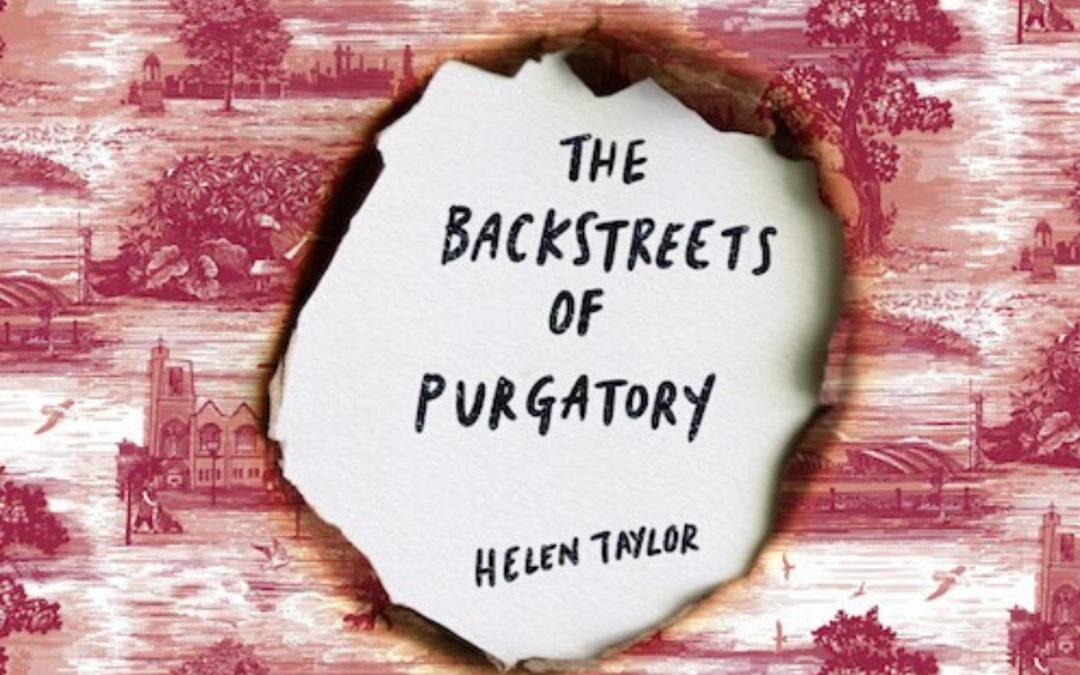
I first met literary fiction author Helen Taylor, at a writer’s conference in Manchester, UK in 2017. She has written a beautiful story about Caravaggio turning up in modern day Glasgow, Scotland.
At the conference Helen told me about how she found her publishing deal with Unbound, a crowdfunding publisher. She told me how hard she worked to sell her hardback book upfront, to cover the costs of publication. She learnt first hand the business of publishing!
I came away with the book, and a real sense of Helen’s artistry and doggedness. I was impressed with how, despite setbacks, she pursued her dream to be a writer and found a way to make it happen. I knew I had to interview her for this blog!
How did you start writing?
When I was a kid,
I’d write stories. As a teenager, diaries, dodgy poetry and lots of letters.
Writing fell by the wayside as I got older, but instinctively I’d turn to it in times of difficulty. I didn’t begin
writing seriously until a few years ago.
Before you wrote full time, you worked the 9-5. How did you fit your writing in around your working hours?
Junior doctor’s hours and research
science were quite a lot more than 9-5 and didn’t leave much time or headspace
for creative writing. And to be honest, I thought the creative side was really
far removed from what I was doing. It turns out though that research was good
training for writing. Both of them demand technical skills and practice as well
as the kind of left-field thinking that sparks ideas.
The Backstreets of Purgatory, Helen Taylor
Now you write full time, what does your schedule look like?
Each day is different depending on what
else I have on, but I make sure that I write at least every weekday for as many
hours as are free. If I’m in the middle of a long writing day, I’ll often take
a break in the afternoon to go for a run. But that is work time too. I don’t
consciously think about my writing but I let my mind wander and often come back
with a new idea or having solved a sticky plot point for example. In the
evening I stop at 7 pm to take my brain out, give it a massage and sit it on
the sofa beside me while I watch Home and Away (I’m in France, hence the time
difference). Crap TV rules.
What are your objectives for each writing session?
I’ve learnt over time that word counts
don’t work for me. If I don’t reach the target, I get demoralised. Some days I
write loads of words, some days I delete more than I write. I’m really lucky
because I have plenty of time, so I don’t worry about time goals, although I do
set the timer on the computer sometimes to remind me to get up and move about.
When I first started writing, I had terrible neck and shoulder pain from being
hunched almost immobile over the computer for so long. Basically, I write for as
long as I’m enjoying it (which is usually quite a while because I love it).
Do you plot or pant your stories?
Plot. But with wriggle room. If I didn’t
know where I was going, I don’t think I’d be able to start. For The Backstreets of Purgatory, I plotted
the overall story, the arcs in each chapter, the journey that each character went
on. But the finished novel deviated a fair bit from the original idea as I
learnt more about my characters and their motivations. However well I thought I
knew them, they were still capable of surprising me. So I tend to plot and
replot, just as I write and rewrite.
Helen Taylor
Have you taken part in nanowrimo. Was it helpful?
I’ve never done nanowrimo. I love the
idea of getting a huge chunk of writing done in such a short time and the
community spirit around it but it seems so different from the way I normally
work that I’m not sure I’d manage.
Which writers inspire you?
So, so many. Some books I keep, reread and study to see how writers pull off their brilliant achievements. Like Eleanor Ferrante for example. From this year’s reading, Kerry Hudson and Alice Jolly for their memoirs. Beautiful, devastating, raw writing for both of them. Meena Kandasamy’s When I Hit You is an extraordinary book, dark and poetic, harrowing and uncomfortable, yet at times light hearted and gently self-mocking. One to reread for form and style. Stunning.
Are there any craft books you’d recommend to beginner writers?
Francine Prose’s Reading Like a Writer is one I go back
to time and again. A guide for people who love books and those who want to
write them, it shows the importance of learning by example. Robert McKee’s Story is worth a look too. It’s aimed at
screenwriters but is useful to anyone writing longer form. Although it tends to
concentrate on blockbuster style movies, it is still great for unpicking the
essentials of a compelling story. Will Storr’s The Science of Storytelling is a brilliant summary of the science
and psychology of reading and how novelists rise to the challenge of ‘grabbing
and keeping attention of other people’s brains.’ It will change the way you
read. It will change the way you write.
Have you ever taken part in a writing class, either online or offline?
Yes, I’ve done a
few courses. Open College of Arts ‘Starting to Write’, Open University Diploma
in Creative Writing, Lancaster University MA in Creative Writing. All of these
were distance learning. For the OU and Lancaster courses, there were face to
face workshops too.
If yes, what was the most valuable part of the learning?
The interaction with other writers,
tutors and students. Having my work critiqued and critiquing that of others,
and working out what to do with that critique. Which comments to act on, which
ones not to act on. And learning to read my own work with the same rigour that
other people read mine and which I applied to theirs.
How do you write your first drafts? Do you write long hand or straight onto the computer?
I scribble loads of notes, outlines and
ideas in a big exercise book first. Pages and pages. There is something
different about the way I think when I write longhand. The act of putting the
words on paper triggers more ideas. I write heaps of junk but there are
treasures in there that I end up keeping. If I wrote straight on to the
computer, I don’t think the ideas would flow the same way and, anyway, I’d end
up deleting loads of it and I’d lose valuable stuff. When I have a padded-out
chapter plan in my notebook, I write for real on the computer. If I get stuck,
I go back to pen and paper to work through the problem. At the editing stage, I
often print out chapters to work on them. Words look different on paper than on
the screen.
I’m slow. I have an annoying tendency to
edit as I go along. I vowed I wouldn’t do that after the first book because pages
and pages were cut in the main edits so all the polishing seemed like a waste
of time. But I can’t help myself. There is a benefit in taking so long though.
Ideas spring from my subconscious all the time so I’m constantly refining the
project. And I keep all the cuts. You never know when they might come in handy.
A lot of beginner writers are scared of not being good enough. Is this something you worry about?
Oh gosh, all the time. Particularly the
day after I’ve written something that I think is genius and I go back to it next
day and see that it is actually pants. I’m not sure it is something that you
ever completely overcome. It helps to have people you respect being positive
about your work. But external validation will only take you so far. What helped
me was rewriting, rewriting and rewriting until I could honestly say that I had
finally written the book that I’d intended to write.
Tied in with the last question, beginner writers often feel the need for validation, either by an editor or trusted mentor. How have you moved past this?
At the beginning, I craved validation.
That is partly why I did the creative writing courses. I was desperate for
everyone to love my work. It took me a while and a few episodes of extreme
nerves and that sick feeling from anxiety to realise that just isn’t possible.
I was extremely lucky to have some amazing tutors (and a couple of terrible
ones from whom I got some unwelcome but ultimately extremely valuable life
lessons). It wasn’t about always being positive. The good tutors weren’t afraid
to hold back. But their feedback came from a place of honesty and a desire to
help me improve so I knew if I was doing well and I knew if it wasn’t good enough.
It doesn’t bother me as much now if my
work doesn’t appeal to every single reader but I do still need validation that
some people like it. There is nothing like reading a review from a stranger who
has completely understood what I was trying to achieve. And I think having a
trusted mentor is invaluable at any stage of your writing career. However hard
you try, it is difficult to objectively assess your own work.
What advice do you have for beginner writers?
Read loads. Read some more. And practice,
practice, practice. There aren’t any short cuts. Even if you are planning a
longer project, start off small. Short things like character sketches,
descriptions of settings, different points of view. If you don’t know where to
start, there are loads of websites with daily writing prompts. Experiment with
tone, style, pace. Gradually build it up. Nothing is wasted. The practice is
valuable and the material might come in useful later. Don’t wait for the muse
to strike. You have to show up.
I’m a strong believer that there’s an audience for every writer. Would you agree with that?
I think that is probably true but the
difficulty is finding them. In the last year or so, I’ve had to learn about
marketing and targeting your ideal audience is one of the central tenets. It
isn’t always easy. It helps to have an ideal reader in mind when you are
writing though.
Where do you get your story ideas?
Everywhere. Sparks from song lyrics,
overheard conversations, real life characters whose stories I imagine, news
stories, photographs or just from the clutter in the deepest recesses of my
brain. For The Backstreets of Purgatory,
the idea came from another book. I’d read a biography of Caravaggio and reckoned
he considered himself a hard man. Made me wonder how he’d go down in Glasgow.
What are you working on now?
I wrote an essay for Boundless magazine about my experiences of being sectioned under the Mental Health Act and it had such a phenomenal response with loads of people asking to hear more of the story that I put aside my novel-in-progress to write the whole memoir. But I’m not sure if I’ll have the courage to publish it. We’ll see.
Some of my hyperlinks are affiliate links, whereby I receive a small percentage of sales should you make a purchase. I only recommend resources I use myself. Integrity and authenticity continue to be of the highest importance to me. Read the privacy policy here. Read the cookie policy here.