I’ve been following dark fantasy author Natalie Johanson for a little while now and am impressed by how active she has been in promoting her debut novel, Shadow’s Voice. Like many of you she works full time in a demanding job and must fit her writing life around that.
If you’re a beginner or debut novelist, you know how hard it is to get to the finish line.
The biggest challenge is getting that first draft down. After that there are the rewrites and the edits. If you opt to go the self-publishing route, you also need to give thought to the book cover and then learn about marketing!
Natalie kindly agreed to be interviewed, and I hope you will find what she has to say helpful and inspiring. Not only does she share how she manages her time but is honest about how difficult it can be to stick to a writing routine. Life has a habit of getting in the way!
Here’s the interview:
You work full time. How do you fit your writing in around your
schedule? Do you write every day/week or when you can?
Natalie Johanson
I work full time. Sometimes I work upwards of 50 [hours] or more
depending on what’s happening. I wish I could write every day. Or even every
week. Wouldn’t that be nice? No… that hardly happens.
I have Fridays off (I work four tens… four ten hour days) so I
try my damndest to write on Fridays. I usually spend most of the weekend with
my wife and doing household stuff, but I try to sneak away and write if
nothing’s happening. But you know how life works, right? Things never go
according to plan. I have a journal I’ve started keeping with me to write down
notes and little spurts of writing when I have breaks.
Most of the time, Friday’s are my writing day. Which isn’t nearly enough, but it’s what I’ve got to work with.
What are your objectives for each writing session – to write a
set number of words, write for a set period of time, as the muse takes you?
I don’t really have writing objectives like that. *Gasp* I know
a lot of authors, at least on Instagram, do. They’re always posting about daily
word counts and page goals and… ya. I don’t do that. Writing something other
people are going to read is already enough pressure. Why in God’s name would I
add my own pressure to this mix?
Honestly though, I write what my muse lets me write. I try to sit down at my typewriter every Friday and write. Sometimes I end up re reading pages for continuity, for my own fun. Sometimes I end up on Facebook (I’m so bad at this…) sometimes I write only a page. Other days I’m whipping through pages and before I know it I’ve written a whole chapter. I write what I can write. I don’t try to force it if I can’t. I usually end up writing shit when that happens. I know there’s an adage that writing shit is better than not writing at all… I disagree. I’d rather work on something else and write when the muse is talking.
Do you plot or pant your stories?
Sort of? I have a general idea of where I want the story to go. I know the main conversations that need to happen and the important scenes I need to write. The rest of it I just write as I go. Most of the time that works. Sometimes I end up writing whole sections of book that is later removed but eh…that’s what editing is for.
You’ve taken part in NaNoWriMo. Was it helpful?
It might’ve been…if I had any time to write. LOL. I tried to
do it this year and was all excited. “Yeah! I’m gonna be a NaNoWriMo writer
this year!” and then promptly forgot I was doing that a week later. So…yeah.
But then again I really struggle with self-imposed deadlines and goals so I’m
not sure I would’ve stuck with it even if I had remembered.
Which writers inspire you?
My favorite author of all time is Kristen Britain. She writes
the Green Rider books. Her books were the first I picked up and read that I
just absolutely fell in love with the characters. I connected with them. I
truly felt what it meant to be connected to a book. I still read these books
and follow her social media stuff religiously waiting for the next in the
series.
I realized reading Green Rider that what makes a book amazing,
what makes it last in your memory, isn’t necessarily the plot but the
characters. I am more invested in the growth of the characters and their
journey than I am the overall plot.
Harry Potter did the same thing. Sure, you really want to know what’s going to happen to them all and how they’re going to get rid of Voldemort. But you REALLY want to know how Harry, Ron and Hermione are going to kill Voldemort. You connect with the characters’ journey.
Are there any craft books you’d recommend to beginner writers?
I would recommend books about world building, character growth, and dialogue. What I’ve noticed with new writers is there is always an “information dumb” at some point. It’s really hard to avoid doing that. You have this whole world you need to explain to them. But learning to build your world and explain it to your reader without it turning into a history lesson is vital. Same with dialogue. Knowing how to write realistic and easy flowing dialogue will save you.
Green Rider, Kristen Britain
Apart from your beautiful typewriter, what technology do you use
to write your manuscripts?
OMG I love my typewriter! She’s my pride. (check out Charlie
Foxtrot Vintage if you’re a typewriter person. I’m not a spokesperson. I just
love them). My writing process has evolved a lot between book 1 and book 2.
Now, I type out everything. This (mostly) prevents me from going
back and editing the old pages to death and I can just focus on writing. Once
it’s finished I’ll go through and edit the story. Mark the shit out of the
paper with my red pen. Then I type all that into my computer where it’ll be
easier to do the grammar, context and so on editing. I have a little journal
and fountain pen for my notes and writing when I’m at work or away from my
desk, but that’s it.
Oh, sticky notes. Many, many sticky notes.
A lot of beginner writers are scared of not good enough. Did you ever worry about this? If you did, and how did you overcome it?
Oh hell. I am always worried I’m not good enough; that my writing is bad. I have to remind myself that at the end of the day, I’m writing this story for me. Because I want to tell it. When I find a place I can improve, I work on it and I remind myself that writing is a very fluid and living thing. It changes. It gets better with age. You learn as you go and are always improving. I also remember that as artists we are always going to think there’s room for improvement. We are our own worst critics, after all.
Beginner writers often feel the need for validation, either by
an editor or a trusted mentor. Is that something you feel/have felt? If you’ve
moved past that, how did you move past it?
I like to tell myself I don’t need validation, but that’s a lie.
Everyone wants to know what they worked on for months, years is good. I found
validation when my manuscript was selected for publication. Even though there
was improvement to have…it was good enough at least for that to start.
My other place I find validation is in reviews. Those are the life blood of an author. Every time I see a review where my characters connected with the reader or even a simple “I liked the story” is validation for me. I don’t think I’ll ever move past needing validation. If we didn’t want our work to be taken seriously by someone, I’m not sure we would put ourselves through the pain of publishing it.
I’m a strong believer that there’s an audience for every writer.
Would you agree with that?
To a point, yes. There is always going to be someone who will read what you’re writing, but you need to find a reason for them to. The market is flooded with SO MUCH and that’s a great thing. But it’s hard for us to stand apart. Make sure you have a reason why readers should read your work.
What inspired Shadow’s Voice?
This is the most cliché answer out there but it is what it is. LOL. I was reading a book series…and man was I pissed with how it ended. So (keep in mind this is before fanfic.net and all those sites were a thing) I started writing my own ending to the book. Then I realized that was a little silly because who’s going to read it? So I started writing my own story with my ending.
What are you working on now?
Right now I am desperately trying to finish up Shadow’s Voice
book 2. I am SO FREAKING CLOSE. I really hope to have something ready to send
to my publisher come spring time. Cross your fingers. Pray for me. Send me your
good juju. Anything.
Go grab your copy of Shadow’s Voice here, and if you’re interested in learning more about Natalie you can follow her here.
Do you worry about or struggle with writer’s block? Well, in this post I am going to share with you the top strategies to avoid writer’s block.
If you’re a beginner writer it may be something is blocking you ever getting started.
If you are a more experienced writer it may be your nerves about where your next story idea will come from, or that the mews will leave you.
Who gets writer’s block?
Be reassured, you are not alone in this. It is something that hits all writers, and indeed all creatives, at some point in their working lives.
According to sources like Daniel Kolitz, David Mitchell, Truman Capote, Ralph Ellison and even Stephen King have all suffered at the hands of writer’s block.
What causes writers block?
According to Wikipedia there are a number of reasons writers can get blocked, both mental and physical, and they impact individuals differently.
Depression is, unsurprisingly, very influential upon a writer. Famously both Sylvia Plath and JK Rowling struggled with depression, but conversely it is what enabled them to delve deep inside themselves and produce wonderful work.
For others, depression prohibits their writing and have very long periods where they don’t write a word. Virginia Woolf comes to mind.
Strange as it sounds, the pressure of success is a cause for writer’s block. Harper Lee must surely be the most famous examples of this.
More recently Elizabeth Gilbert has talked about how difficult she found writing after the success of Love, Eat, Pray. How could she top her already top book?
Procrastination is another cause and I would venture is the primary cause of writer’s block in the beginner writer.
If you are a beginner writer and you procrastinate, it is most likely due to fear.
Fear of writing
Do you know you have a great story but are unsure how best to write it?
Writing 70,000+ words is a hugely daunting undertaking. Where to begin? How to progress the story? How do you get to the end?
There’s so much to think about that your head is spinning and you move away from your desk feeling dizzy and in need of a lie down!
The other fear you might have as a beginner writer is that you are not good enough. You’ve read the books of your literary heroes and you want to be as good as them but feel you never will be.
Fear of not choosing the correct word or crafting a perfectly fashioned sentence is what blocks you and keeps you away from your writing desk.
What can you do about it?
Luckily there are strategies you can adopt
that will help you make the shift away from fear towards productivity and
confidence.
“You only learn to be a better writer by actually writing.”
Doris Lessing
Jeff Goins says he has experienced writer’s block on several occasions and each time the solution is different. The lesson here is don’t give up, keep going until you find what works.
He makes some instant and practical suggestions such as go for a walk or a run, read a book, write in a new environment or listen to some music.
But what if your fear or writer’s block
feels more than a temporary blip? Try these strategies:
Identify the problem
Like any other problem in life, if we
understand the root cause and own it, we can start to look past the problem. Do
you procrastinate because you’re scared of being not good enough, or is it
because you don’t know where to start?
Once you understand that you can progress
to find practical solutions, like the ones Jeff Goins talks about.
Set small goals
If you break down your writing project into small bite-sized chunks, it’s going to be a lot easier to overcome. The all you need to worry about is getting to the end of that paragraph, that page or that chapter.
Don’t think about the book in its entirety. Think only about the next step you need to take. Take things Bird By Bird, as Anne Lamott would say.
Try this:
Go to your usual writing spot, of it that’s not working for you right now, move to another part of the house.
Alternatively, you can take yourself somewhere entirely new – a café, the library, the park. A change of scene can be surprisingly effective.
(If you don’t like to be somewhere noisy, try using noise cancelling headphones. I know one writer to find these particularly helpful.)
Next, set your timer for 10 minutes. It
doesn’t matter if you don’t write anything. It is enough that you’ve committed
the time and energy.
Do the same the next day, and the next.
Be patient, give yourself some grace, and
eventually the words will come. Trust me! Eventually they will come and you can
resume your storytelling during.
Self-care
It’s become a bit of a cliché, the idea of
self-care, but the reason it’s a cliché is because it’s true.
Ensure you get enough sleep, eat right and
take strategic time away from your desk. When you feel physically and mentally
well, you are best placed to focus your energy on your writing.
Don’t underestimate the power of mental and physical clarity.
Don’t forget..
A final, and particularly unpopular
solution to writer’s block, is simply to write.
Force yourself to the desk, no matter how
difficult, and get those words down. This is perhaps a more brutal way of
saying, trust the process.
Getting stuck and unsure is part of the
writing process. The trick is not to let it devalue altogether.
Go back to the things you need to do before you start writing. Find the passion you once had for the project and see where it leads you.
More tips for beginner writers:
If you’re a beginner writer, you may find these posts helpful:
If you’re interested in staying in touch, join my Reader’s List and I’ll keep you updated with tips and strategies for beginner writers. I’ll even send you a free short story!
Christmas is nearly with us and most will have some time off work, either over Christmas or the New Year. In anticipation I thought I would list out some of my favourite podcasts for you to look at over the holidays.
Joanna Penn has been an inspiration and online mentor from me for a number of years. She really is a great example of what you can do if you really want it!
She began her writing career over 10 years ago now, and it was through writing non-fiction she found her way into the publishing world. She was in a job she hated and wanted a way out.
She wrote a book about getting out of the corporate life, doing what you love and getting paid for it. That led the way for her to become a public speaker, a blogger, a podcaster and, ultimately, a novelist.
She never thought she’d be able to write a novel, but realised there are worlds of fiction out there that don’t need to be Booker or Pulizer prize winners, they just need to be well told stories.
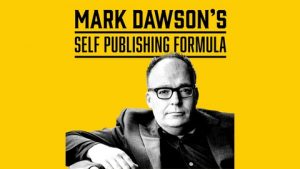
This is hosted by Mark Dawson and James Blatch. Their podcast is for authors who want to publish independently.
They are interesting in that each of them come from a different perspective. Mark Dawson writes thrillers and is extremely prolific. He has a vast back catalogue covering at least two series and a number of stand-alone books. He’s also writes non-fiction titles and runs courses for authors.
James Blatch has written his first historical novel and published it this year. He is a great example of putting what they preach into practice and time will tell if he is successful or not!
ALLi is a non-profit association for self-publishing authors. They offer a number of memberships schemes for which you will receive access to legal advice, speaking opportunities, forums, member discounts, and a quarterly magazine.
Importantly, they also advocate for indie authors and some of their campaigns include protecting the global digital rights for authors, promoting a code of standards, and encouraging The Establishment to open up to indie authors and what they can bring to the table.
Weiland hosts a weekly podcast and has an excellent website called www.helpingwritersbecomeauthors.com. She looks closely at the craft of writing and has a number of excellent books on story and scene structure.
She is currently one of my favourites and I recommend you have a look at her work.
This podcast is hosted by Tim Grahl, a marketing expert and public speaker. He shares tactics and strategies you can use when you’re ready to launch your book.
This is hosted by another writer based in Scotland, Sarah Painter. She is by nature a worrier and speaks to other authors who struggle with self-doubt and procrastination. Her podcast is billed as Creative Writing For The Timid. As a lot of writers are introverts, this may resonate with you!
I hope these podcasts offer some easy listening over the festive period. It’s a nice way of keeping your hand in, when you don’t have time to do the actual writing! You need to stop making excuses not to keep creating!
Let me know if you manage to listen to any of them, and what you thought. Also, let me know if you’re favourite isn’t listed here, I can always include it next time.
Novel writing is a marriage. Have you been married to yours this year? Have you been unable to stop thinking about your latest storyline or character or obstacle? Do you resent the rest of life getting in the way? I hear ya!
Last month my husband and I celebrated our ninth wedding anniversary (we’ve been together for 16 years!) and it got me to thinking of how proud I am that we’ve made it this far. My in-laws have been married 45 years, so we have a way to go yet!
But like my in-laws, my husband and I are in it for the long haul and we’re gonna give it our best shot. That said, I am having an affair!
An affair of the heart
Are you like me, is your writing life your secret love? Are you having a fling with, or even married to, your writing? Novel writing is certainly one of the more intense relationsihps I’ve had!
Your first few chapters sail along in a honeymoon dream, words are flowing and scenes are shaping themselves beautifully.
Then you hit the two-years crunch point. The romance comes down to earth, things start to get real and you have to do some deliberate planning on where your story is going. You may even consider dumping the book. It’s not as exciting as it once was.
But you stick it out. There are some stumbling blocks along the way and tensions build to a crescendo. Things are all up in the air leaving you uncertain and a bit tearful. At last they tumble down into a comfortable and happy place.
Are you in it for the long haul?
Like my marriage, I’m sticking with my writing. I am in it for the long haul. Maybe it’s something different for you? Is it something you do sporadically as and when you feel like it and just for fun?
Is it something you do semi-seriously but are still a bit embarrassed to admit it? Are you scared that people might ask to see your work or know what it’s about? But you’re not ready to share, because what if it’s rubbish??
Or perhaps you are a seasoned writer, published or unpublished, who knows writing fiction is an itch you just have to scratch. Are you like me? Can you go for only so long before your have to plonk your bum in a seat and write something?
I feel that this is what differentiates the hobbyist from the professional. It is not about getting picked up by the one of the big five publishers, or the amount of money you make from your indie published books. It’s about how often you get your bum in the chair and produce those words.
Face your obstacles
Novel writing is a marriage, and like a real life marriage, it’s not about how madly in love you are or how perfect your relationship is, but about how often you come back to the table to try and work out how to get over this latest obstacle to move forward. It’s about sticking together and knowing you both want the best outcome.
Writing fiction is the same. You come across obstacles and you have to find a way to get through them. For example, you might struggle to find a good enough obstacle for your character to overcome. You might put your character into a situation and have no idea how to get them out of it.
Perhaps you’ve reached the halfway mark and are feeling frustrated by just how difficult it is to get to the end. But if you’re in it for the long haul you want the best outcome for your book and keep going. You find a way around the obstacles, build the tension and find a resolution.
My number one marriage guidance tip
The biggest advice I can give to you regarding your novel writing marriage is to show up when you say you will. Put a stake in the ground and remind yourself that this is a dream you want to see come true. If you’re a beginner writer that commitment may only once or twice a week. That’s enough.
The new writing relationship is exciting and you want to take it one date at a time. So if you arrange to meet your story twice in a week, be there. In time you and your novel will get to know each other better and you’ll want to spend more and more time together.
Put that stake in the ground and before you know it, you will be in a literary marriage made in heaven. The words you produce will fill you with pride and wonder, and you’ll want to share them with the world.
Are you a stay-at-home mum?
Are you a stay-at-home mum trying to get started with your writing but having difficulty finding the time? Read my ’10 Tips To Find Time To Write Even When You Have Small Children’ to get you inspired!
If you haven’t already, sign up to my Reader’s List and I’ll send you my free short story, Before She Came Home.
Some of my hyperlinks are affiliate links, whereby I receive a small percentage of sales should you make a purchase. I only recommend resources I use myself. Integrity and authenticity continue to be of the highest importance to me. Read the privacy policy here. Read the cookie policy here.