The idea behind the project is that to ‘win’ you write
50,000 words in 30 days.
Is there a prize?
The prize is that you have the basis of a manuscript.
The prize is that delicious feeling of achievement.
The prize is knowing you’re halfway to a finished product.
Priceless!
NaNoWriMo – The Results!
If you sat down for even one writing session, then you are not heading to the dance-off! That writing session means you have a higher word count that you did before. It doesn’t matter how many words you wrote, or how bad they were, what matters is that you’re on your way to lifting that Glitterball!
Keep Dancing!
Did I ‘win’? Yes I did. I wrote 43,844 words. I didn’t hit my 50,000 mark and although I’m a little disappointed, I’m also thrilled that I am just over halfway in producing that ever-elusive first draft of my next novel.
Stress Levels
I got off to a good start and banged out 15,000 words in the first week – Score! But then the other bits of my life started to interfere.
I had a few more kids’ school activities to get involved with, my other business needed my attention and ill health reared its ugly head.
All of these meant I had to take time away from the office (i.e. my local Caffe Nero!) which had a knock-on effect on my word count.
At first this stressed me out because I was so desperate to
get that word count down and get my 50k badge at the end of the month. I’d be
very proud to post about that!
However, I had to remind myself of what I teach others – you
can only write what you can, when you can! I scheduled in the times I could
work on my draft, sat down to do the work at those times and as a result my
word count kept mounting and I was proud to know I was working hard.
The important thing was that I turned up when I said I would
and wrote the words I said I’d write.
Challenges
Each morning I sat down to write, I kept a log of how I was feeling. My emotions varied wildly! Some days I couldn’t wait to drop the kids off at school, head to Caffe Nero and get started. I was excited about what was going to happen next in my story.
Other days I lingered in the school grounds, nervous to go to my desk because I had no idea what I was going to write about. Once there I’d order my coffee, take my time to unpack my stuff, and remember an urgent social media post I had to write!
To calm my anxiety I’d jot a few words down in my log book. hen I’d read the previous days work, and out of the blue I’d know how a conversation would continue, or how my protagonist could get themselves into more hot water and – boom! – I was off!
Ah, the relief that I wasn’t going to have to sit there for an hour looking busy when really I was panicking inside!
My Log Book
1/11/19
I’m nervous about starting a new book. Although I have basic premise, it’s scary to sit down and do the actual work. What if my mind goes blank or none of my ideas turn out to be any good? I don’t have anything else on the back burner.
6/11/19
Today I was excited to sit at my desk. The words flowed nicely.
7/11/19
After a great day yesterday, I’m nervous again. I have no idea about what to write!
19/11/19
I’m less excited about today because yesterday was a bit tough and although I know the direction I want to take the story in, it doesn’t yet feel enough for a full m/s.
Emma’s NaNoWriMo 2019 Log Book
So, did you win at NaNoWriMo this year?
I’m betting you did. I’m betting you’re going to have a think about what worked for you this year and what you’d like to do better next year. I’m betting it’s confirmed just how badly you want to write your novel and that it really is a dream you want to see come to fruition.
I am sure many writers are asked where they get their ideas, and the answer is, all around us. The people we talk to, the books we read, billboards we pass by and even the television programmes we watch provide fodder worth investigating. History is also a huge resource, the most famous recent example being the Game of Thrones series by George R R Martin.
However, you don’t need to be a history buff to incorporate it into your writing. You can focus on something local and that has some resonance to you. I talked a little bit about this in a previous blog post about Bonfire Night here in the UK.
In a similar vein, this week, on November 30th, is St Andrew’s Day here in Scotland. That got me to do a little digging, as I’ve never given him much thought before!
Turns out, not only is he the patron saint of Scotland, but Cyprus, Greece, Romania, Ukraine and Tenerife, amongst others. And it appears he is the lesser-known brother of St Peter!
Saltire flag
Another little known fact is that the Saltire Cross is St Andrew’s cross. It features not only in the Scottish flag, but also those of Tenerife and the Confederate flag in the US.
Saltire Flag of Scotland
The Saltire Cross represents the cross upon which St Andrew was crucified, rather than the more upright one upon which Jesus was crucified.
Who was St Andrew?
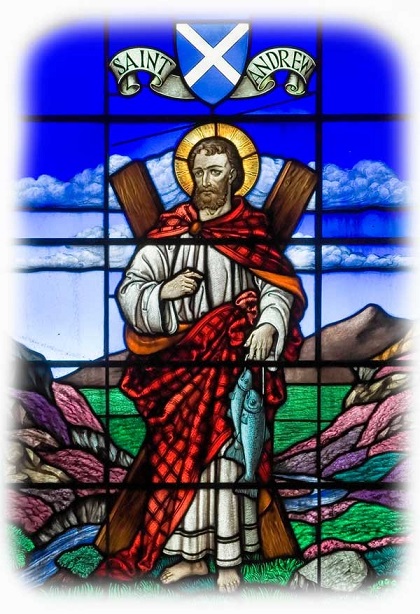
Born in Galilee, St Andrew and his brother St Peter, were fishermen, who later became two of Jesus’s disciples. Rather randomly, St Andrew’s in Scotland is named after him because it is thought that was where he was laid to rest.
St Andrew
Who is your patron saint?
Regardless of your religious beliefs, the Bible stories offer a rich source of inspiration. How did your national saint go from an ordinary man to someone who is believed to have performed miracles or been part of Jesus’s inner circle? What might their relationship with Jesus have been like? What did they chat about? Was it all work and no play?
There is both a physical and emotional journey for anyone who ends up on a crucifix! What was your saint’s journey? How are they remembered in your community? Can you bring their story up-to-date and make it relevant to the modern world?
Modern stories that are inspired by the
Bible
It’s well known that Narnia series of books are allegories of the Bible stories. Aslan was all good, Jadis (the White Witch) was all bad. The children were Aslan’s disciples.
The Grapes of Wrath is thought to reflect the mass exodus of the Herbrew people. In this case California is the promised land
And of course the Lord of the Rings is a statement on JRR Tolkein’s view of Christianity. Even Harry Potter has Christian references sprinkled throughout.
Non-Christian faiths
Perhaps you come from a non-christian background? I’m sure your faith or religion has many myths and legends, heroes and influential leaders who have led extraordinary lives? Can their stories be brought up to date to fit in with a modern setting? Share them with us here, and tell us which is your favourite.
Local history
I love stories that incorporate local legends and history. I wrote about this recently in my Bonfire Night blog post. Everywhere we look we find fascinating stories in our local communities.
In that post I encouraged you to look for local traditions and folklore. I invite you to expand that search to your local saint or spiritual leader. Explore their life and why your community adopted them. What was it about them that resonated with your community?
Scotland has historically been a nation of fishermen and crofters, of whom St Andrew is a patron saint. It makes sense that when Scotland became independent in 1320 he was formally adopted by the nation. St Andrew’s Day became an official holiday in 2006.
Modern life?
Can you take that story of your saint and update it? Can you transpose them into your local community today and explore what role they might play and how modern society might respond to them?
A number of authors have used the saints in their work. For example, Jess Kidd incorporated a number of them, including St Valentine, in her recent book The Hoarder.
There is the Testament of Mary by Colm Toibin, which tells the story of Jesus through Mary’s eyes.
What books have you read that incorporate
the lives of saints or other holy leaders?
A challenge
I challenge you to write a 2000 word short story, and submit it to a competition. Let me know how you get on, you will inspire both me and others.
If you haven’t already, sign up to my Reader’s List and I’ll send you my free short story, Before She Came Home.
You’ve spent hours crafting your novel, novella or short story. You’ve sweated over the blurb and marketing spiel. If you’re going down the trad route, you’ve cried over your query letter. But if you’re an indie author, you need some top tips to choosing your book cover!
Cover design is one of the key ways to get your book noticed, along with that strong blurb and, of course, excellent content!
Traditional publication
If you opt for the traditional route it’s likely you won’t have a lot of input into your cover design. This is not a problem for those of you who (like me!) aren’t visually creative and are happy to leave it to the experts.
It is not so great if you do enjoy that
side of publication and have strong ideas about how you think your book should
look on the shelf.
Independent publication
More than a few traditionally published writers have told me they have hated the design chosen for their book by their publisher! It was not what they would have chosen and had to fight hard to get their voice heard. The pressure for the independent author is slightly different.
If you’re an indie author the design buck stops with you. You have the final say on the look and feel of your product. An essential you must budget for is a book cover designer. A professional cover will get your book noticed. When briefing the designer, there are two key criteria you need to consider:
1. Know your genre
This is harder than it sounds. A lot of authors believe they have a multi-genre book, or have even devised a new genre! The likelihood of this is very small, I’m afraid. There’s not a lot out there that is completely original.
Even if you’ve written a cross-genre book, you need to determine, from a practical point of view, which shelf or shelves your book needs to sit in. With a lot of the online distributers you can choose a number of genres, but make sure you choose the right ones.
If you put your sci-fi epic into the romance shelf because you know there’s a large readership, you won’t get very far. Readers go to a romance shelf because they want that sort of story, not sci-fi. It doesn’t matter how good your book is.
Know your genre, know who’s selling well and know the book covers they are using. Your cover needs to fit in because you want the readers of your competitors to see your book, recognise it as something they’ll like and buy it.
It’s unlikely you yet have the reputation or brand to take a gamble on something revolutionary.
2. Thumbnail
Be aware that as someone who is selling purely online, not from a physical bookshelf, your cover design needs to be uncluttered and arresting.
As a reader scrolls through the list of books advertised on, for example, Amazon, your book needs to be clearly recognisable as part of your genre. Don’t fill it with too many similar colours and tones, or small images.
This was one of the first top tips I was given when to choosing my book cover and although it sounds like common sense, it’s easy to get carried away with a cover you like aesthetically. Instead, the focus needs to be on whether it will sell your book.
As Joanna Penn often reminds us, don’t worry if you don’t get it right the first time. Being an indie gives you the freedom to have it resdesigned, if you think it needs it, at a later date.
3. Advice from the experts
No matter how visually creative you are, no matter that you design books covers for other people, the advice from all the experts is to pay someone else to do yours.
Give them the blurb, give them examples of covers you like, then let them do the creative.
The reason is that you are too close to the story. What you like and what is best for the book may not match. Of course you ultimately have the final say, but let a third party use their experience and objectivity to give your book the cover it deserves.
That said…
There is an excellent cover design webinar by Stuart Bache, facilitated by The Self Publishing Formula, that takes you through the basics of how to design your own cover. If budget is tight this may well be worth attending.
There are so many things to consider when publishing an independent book, and book cover design is one of the most important. Don’t leave it to the last minute, get it prepared well in advance. You can use a book cover reveal as part of your marketing.
In addition, keep a desktop folder of book covers you like so that when the time comes you have a database of inspiration, especially if you write across genres.
The Day She Came Home
For the cover of my book, The Day She Came Home, I found somebody through www.reedsy.com. I submitted my brief and gave examples of other books in my genre. The designer came back with 3 possibilities.
I shared the designs with my Reader’s List and asked them to choose the one they liked best. After that I asked for a few alterations to finalise the image and text.
As part of the deal, she also gave me social media banners and a 3D mockup of the book to be used in my promotional materials.
Before She Came Home
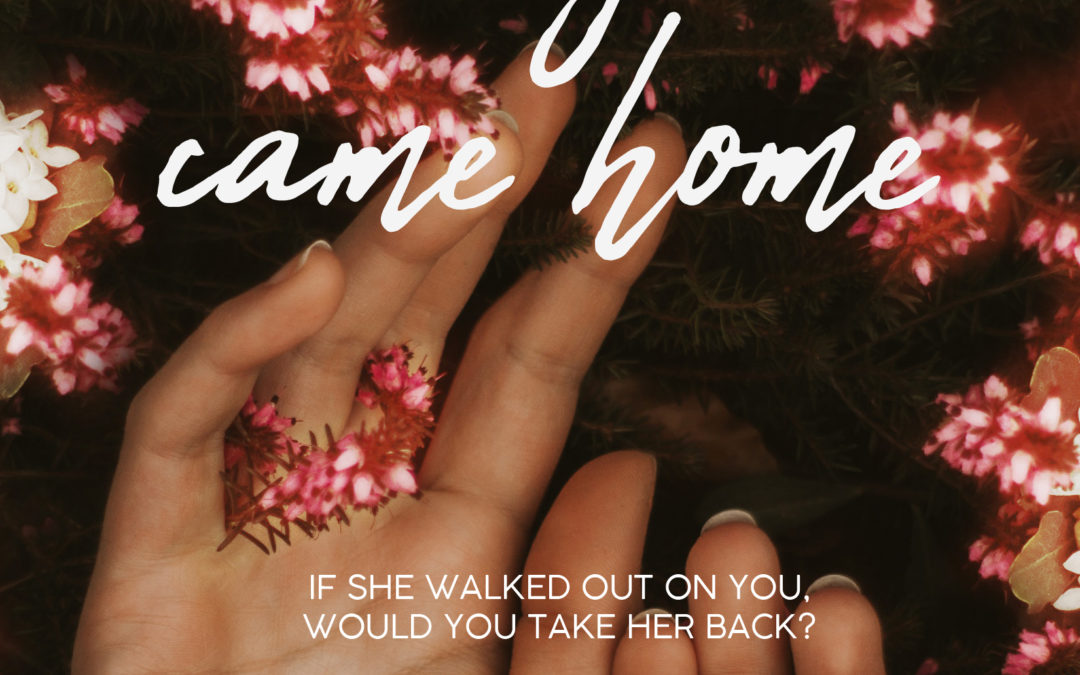
For my free short story, Before She Came Home, I used canva.com. I searched for an image I thought represented the short story, and because the story is a free giveaway, there are no copyright issues. I particularly love this image and hope you do too! 😃
If you haven’t read either of these stories you can find The Day She Came Home here, and Before She Came Home Here.
Remember!
A final top tip to choosig your book cover is don’t reinvent the wheel, go with designs that have been proven to work!
If you’re haven’t already, sign up to my newletter and I’ll send you my free short story, Before She Came Home.
You’ve written a great description of your protagonist and given the reader enough detail so they have a definite image in their mind. You’ve given examples of how strong and capable and smart they are. You are pleased with your choice of words and how well you’ve crafted your sentences. But something is missing. It all feels a bit two dimensional. Why?
You’ve developed a brilliant
piece of dialogue between two of your characters. Not only does it make clear
each person’s point of view, it also moves the story on. But something is
missing. It all feels a bit flat. Why?
They lack contrast.
What is
contrast?
Contrast is all around us. We use it in our everyday language: good and bad, light and shade, now and then, ups and downs, black and white.
It reflects so succinctly just
how many grey areas there are in life, how uncertain our world can be. Nothing
is wholly one thing or the other.
My children teach me this on a daily basis. On the one hand they bring me the greatest joy, on the other they give me the biggest headache!
It’s no different in your writing. You need to share with your readers the complexities of your fictional worlds.
You need to demonstrate the strength and leadership of a king, but also the difficulty he has in making those all important decisions.
You’ve painted a picture of a beautiful green valley, the sun shining down. It is at odds with the thunderous mood of our character.
Why is
contrast important?
In a nutshell, contrast in your writing add depth. It rounds out a character or a landscape of a piece of dialogue.
Today is Remembrance Day, also
known as Armistice Day. This year marks the 101st anniversary since the end of
the war.
It has prompted me to re-read my grandfather’s Second World War diaries, published many years after the war. In it I found wonderful examples of where he added contrast in his writing.
“Just now we live in mud and rain, blessing the rare sunny days, life could scarcely be more uncomfortable yet we laugh and yarn as though we were in a room full of students in Wantage, finished work for the night and gathered round a roaring fire for a midnight cup of tea.”
A Gunner’s Journal, 28 November 1943
David Reeve Fowkes, A Gunner’s Journal
My grandfather’s journal provides
a blunt and honest account of his experience as a young man. It also
illustrates that optimism and humour can loom above the most dark of situations.
“We travelled north – a beautiful day – when in the mountains the valleys looked vivid and green – the terraces fresh and the atmosphere crystal clear so that every detail… struck sharp on the eye. I looked at the earth as the early Italians did and was moved to such greatness, humility and clarity.”
A Gunner’s Journal, 28 November 1943
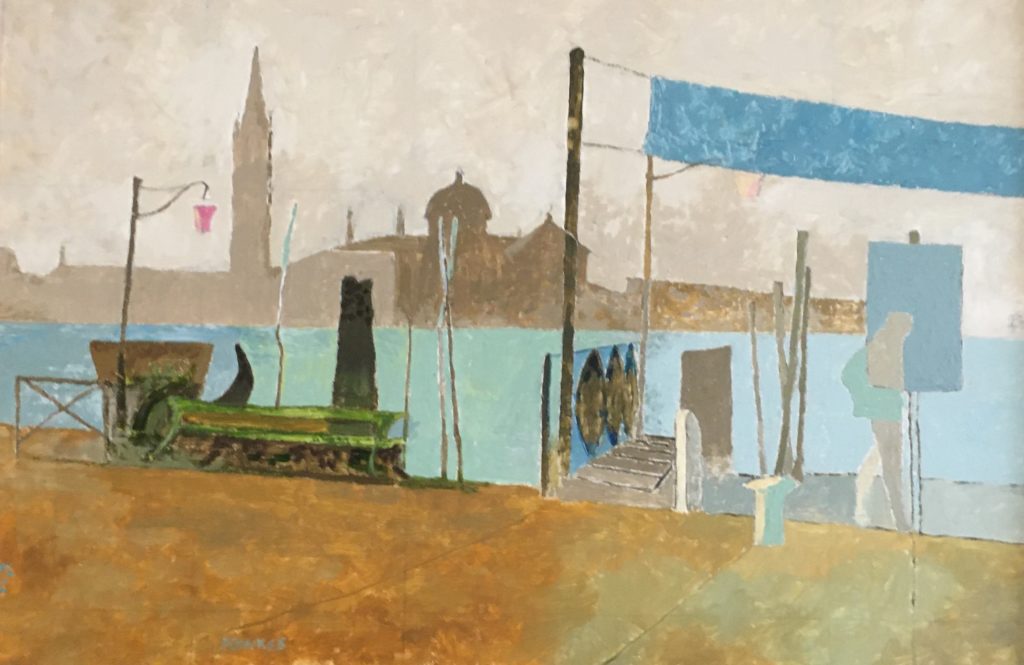
Despite the horror around him, David opened his heart to Italy’s language, food, geography, people, and most of all its art. It was a passion that lasted the rest of his life.
Venice, D R Fowkes
Light and shade
David’s experience shows you that in the stories you tell you must find those moments of light and shade. You put your protagonists through circumstances that challenge and change them. But it can’t all be dark and painful. Just as in real life humans find joy and laughter in the most unlikely of places.
You can push your characters to extremes to raise the stakes and build tension, but you must also add moments of relief. Otherwise you will discourage both your protagonist and your reader!
For example, someone tells a joke in the midst of a stakeout or something comic happens at the height of an argument. Perhaps there is a moment of tenderness in an otherwise brutal scene.
By adding this light and shade
you help your characters and your readers to push through to the end. In the
television world, Blackadder Goes Forth is the perfect reflection of just this.
Soldiers laugh and joke in between battles, or relish a meal after a week of no
rations.
Lest we
forget
This being Remembrance Day I want end on a nostalgic note. As the years pass younger generations feel increasingly removed from what happened between 1914–18, and 1939–45.
I hope that as a nation we continue to commemorate what our grand- and great-grandparents did for us and allowing democracy in this part of the world to continue.
“for nearly 3 months I have lived on this gun position in the wood beside the Rome road… Then one day we saw buds on the trees – by the latrine I found a violet. In a week the world was young again – green and white and the blue sky beyond.”
A Gunner’s Journal, 8th May 1944
If you’re haven’t already then sign up to my newletter and I’ll send you my free short story, Before She Came Home.
November is National Novel Writing Month, affectionately known as NaNoWriMo.
What is NaNoWriMo?
NaNoWriMo is a non-profit organisation that encourages and supports writers of all levels to write 50,000 words in the month of November.
They do this through online tools and forums, real life meet ups and daily emails throughout November to keep participants motivated.
Have I ever done it?
Yes, I have. In fact, it’s what got me to the end of the first draft of The Day She Came Home. I had been slowly plodding on with the manuscript and NaNoWriMo came along at just the right time to propel me to the end.
I loved logging on to their website and recording my word count. I enjoyed receiving their daily emails to make me get my butt in the chair. I adored getting my virtual badges whenever I reached a milestone (I’ve always been a sucker for a Gold star and a smiley face from my school teacher!) But more than that I was proud to reach 50,000 words and hold the first incarnation of my book in my hands.
Completing Nation Novel Writing Month has definitely been a defining moment in my career so far.
Will you do it again?
Yes, I’m doing it again this year and I don’t mind telling you I’m nervous. 50,000 words is a lot of words and although there is no obligation to write that amount in one month, it’s the challenge I’ve set myself.
The reason I’m doing it this year is that I have a new manuscript brewing in my head but I’m procrastinating – making excuses! – so need to make the commitment to get that first draft down on paper.
It doesn’t matter how bad the draft is, the important thing is to get it written. After all, I can’t edit a blank page!
So wish me luck, I am going to need it!
Why you should do it
I encourage all of you, no matter where you are in your writing journey, to give it a go.
If you’ve never written before this is your chance to try it with all the help and enthusiasm that comes from the NaNoWriMo team. By the end of November you will have a good idea of whether or not writing is something you enjoy.
If you’ve already started a novel use November as the impetus to get the draft finished. Perhaps all you need is the feeling of solidarity that comes with the NaNoWriMo community.
If you’ve written a whole first draft use the month as a pacing mechanism to get you through to the end of draft two. If you in the Northern hemisphere, November is a dark and cold time of the year. What better opportunity is there to stay warm and cosy at home while putting those long dark nights to good use and creating your masterpiece!
Let me know if you’ve decided to join NaNoWriMo this year, and keep me updated with how you’re getting on. Let’s do this together!
Some of my hyperlinks are affiliate links, whereby I receive a small percentage of sales should you make a purchase. I only recommend resources I use myself. Integrity and authenticity continue to be of the highest importance to me. Read the privacy policy here. Read the cookie policy here.