From time to time, I link to products or services I love using with affiliate links. This means that I may receive a small percentage or fee for referring you to any product you may purchase from one of those sites. It does not cost you anything. These small fees help sustain my small business. I truly appreciate your support.
Stop Making Excuses
It was tough, but it was time to stop making excuses and write the book I’d dreamed of writing since I was a child.
For as long as I can remember I’ve wanted to be a published author and, like many other, have a number of unfinished manuscripts dotted about my office, not to mention those that have been binned over the years!
Excuses
Terrified of failing, and if I’m honest about the work involved, I placed one excuse after the other in my path. I ensured no manuscript was ever finished, let alone redrafted and improved.
First school, then university, then work and eventually family life were just the avoidance tactics I needed to never get on and finish the job!
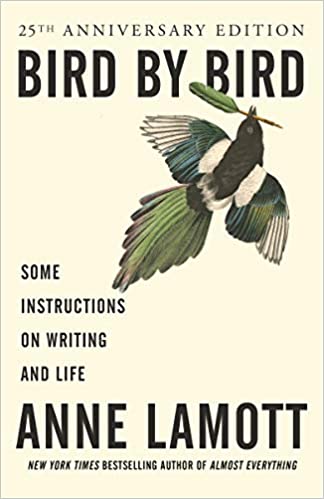
That changed when someone recommended I read Anne Lamott’s book, Bird by Bird. What a game-changer that was for me.
Bird by Bird
Anne tells the story of how her brother had a school project on birds to write. He left it to the last minute and then panicked about how he could possibly write a paper in one night.
Anne’s father sat down with him and told him not to get his knickers in a twist, but simply take it one bird at a time. He’d eventually get to the end.
This was the lesson I needed to make a mindset shift. I finally understood that I had to stop making excuses and write my book, one bird at a time.
Later, when I began my entrepreneurial journey, a colleague recommended another book to me.
The Slight Edge by Jeff Olsen. This book may appeal to those who don’t want to write, but have the same issues around making excuses!
Giving yourself the edge!
Olsen’s mantra is: it’s easy to do something, and it’s easy not to.
I say that to myself almost daily. When there’s a job I really don’t want to do, either because it’s difficult or because something more pleasurable beckons, I say it to myself and it has the desired effect!
This is important, and will have a profound impact on your ambitions, both professional and personal. If you want something, you must decide if it’s important enough to put the work in. If it is, Olsen says you must do a little every day. And I agree.
For us authors, it’s the difference between writing one more paragraph or one more page.
In my publishing life it might be making be making a phonecall. Either way, they are small actions that will get me to my end goal.
And when I achieve that goal, I set aside one more limiting belief.
Limiting beliefs
Limiting beliefs get in the way of everything we want to achieve in life, not just your writing.
Beliefs such as:
A lack of confidence
Others telling you it’s a waste of time
Your mental health
Your physical health
The job is too complicated
People will hate my work
It takes too long
You don’t have time
You lack focus
Will keep hold you back from reaching your potential.
Do you tell yourself things like this? If you do, you are successfully putting up a barricade between you and your ambitions. It’s what keeps you in your comfort zone.
If you want to stop making excuses in your life, you must understand the belief systems that hold you back. Once you’ve identified them, you can move forward.
That’s when you’re ready to move out of your comfort zone.
This isn’t easy, I understand, but it’s essential if you want more for yourself, whether it be getting that promotion, learning a new language or even finishing the book you’ve dreamed of writing.
By changing your mindset and casting excuses aside, everything is doable!
On the right is Ballet Shoes by Noel Streatfield and is the story that made me want to be a writer.
One of my own limiting beliefs was that if I was a bad speller or struggled with grammar, I couldn’t be a writer.
I’ve always felt an affinity with Streatfield because she too was a dreadful speller, but it didn’t stop her!
If you’ve been working on your novel for years (perhaps even decades) the maybe it's time to consider working with a coach.
If you have multiple versions of your novel and you don’t know which works best, are scared nobody will like your book and don't feel like a 'real' writer, then my guess is coaching is the right next step for you.
Emma Dhesi writes women’s fiction. She began writing seriously while a stay at home mum with 3 pre-school children.
By changing her mindset, being consistent and developing confidence, Emma has gone from having a collection of handwritten notes to a fully written, edited and published novel.
Having experienced first-hand how writing changes lives, Emma now helps beginner writers find the time and confidence to write their first novel.
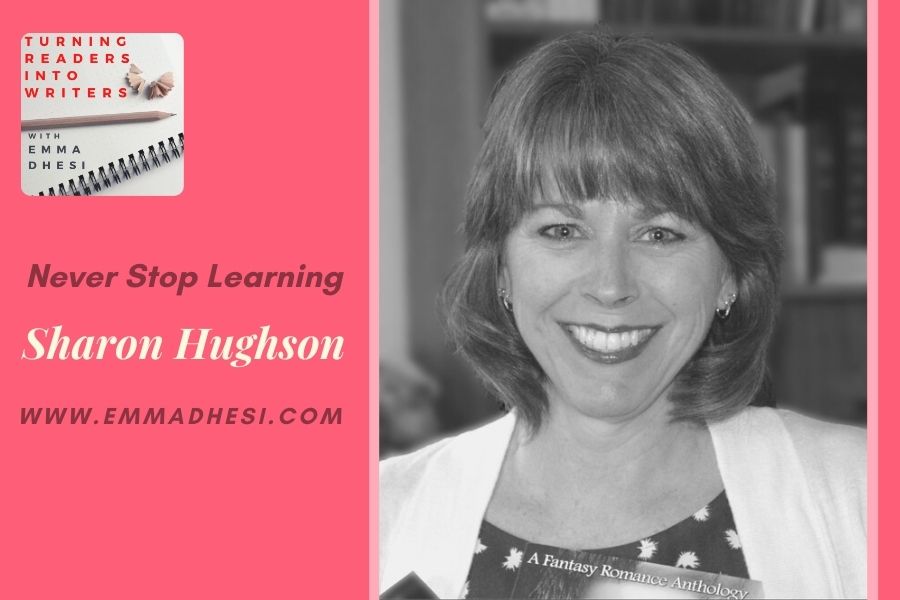
Well, welcome, Sharon. I’m so glad to have you on the show because we’ve been sort of in each other’s world for a little while now. So it’s lovely to finally get you get you on the podcast.
Sharon Hughson:
I am so fortunate to be here with you.
Emma Dhesi:
Well, I wonder if you wouldn’t mind sharing with us all, just about your journey to racing and to where you are? No.
Unknown:
Okay. Well, I’ve been I feel like I’ve been writing my whole life. I wrote my first book. Yes, that is in quotation marks. When I was in third grade, it was called the horse killer. I wrote it in a spiral notebook. And I still have it, as well as my second and third books that I wrote in spiral notebooks when I was a kid. So I have loved reading and writing pretty much my whole life. And, and I always dreamed of being a published author. But back when I was in school, it was not touted as something realistic. You were well, but what’s your going to be your real job while you pursue that on the side. And of course, the publishing industry, as it was then was very difficult to break into anyway, and not necessarily lucrative. So I mean, it makes sense that your parents and your teachers or whatever want you to have a better plan than that, right.
Sharon Hughson:
So it’s really exciting to me, that we have this new paradigm for publishing. So you don’t have to wait for the gatekeepers to say yes, you’re good enough. You don’t have to go through all those hoops. I mean, you can you can choose to, or you can choose to Self Publish, and you can, it can be lucrative, not like vanity presses, which was the only way to Self Publish when I first started writing so many years ago. So it’s really to me, I’m excited by it, I have been published by two different, or three actually different small indie presses, as well as it’s doing some self publishing. So I’m kind of familiar with both tracks. And I, I just still love to write I fall into stories and get lost in those worlds, whether I’m reading them or writing them. So.
Emma Dhesi:
So tell us about your fiction, because you’ve written across a couple of different genres. So tell us about them
Sharon Hughson:
yes, I have. So myself, I have self published some of the stuff that was previously traditionally published once I got my rights back. But the first thing I self published was a pondering heart in my reflections series, and that’s a biblical fictionalization series. And that story actually, just kind of came to me out of the blue, and I didn’t want to write it. I fought against writing it for a couple years, and then I would write a few scenes and then I’d be like, No, I didn’t. Because I I’ve read biblical fiction. It’s not like my favorite genre or anything. I’ve read it just because I think it gives me an interesting, I told you Yeah. Okay, um, so it’s because I feel like there’s a lot of pressure on that to get it biblically accurate, and that I’m not a scholar of that time. So I also don’t know whether or not to be able to portray life in the first century, Israel in a good manner. So but what I do have is a friend that I graduated from high school with, he has a degree, he’s a doctor, and he is a practicing Jew, but he’s a Messianic Jew. So he does believe that Jesus Christ, Messiah, but he has a degree in his degree is in first century Jewish culture. So he read my books to make sure that they were not out of the world out of the realm on
Emma Dhesi:
this so interesting that you resisted doing it but still there was this pool. This is like calling say, No, this is
Sharon Hughson:
what you have to ride it. See, that’s the thing about Sheena rider, the stories won’t if there need to be written, they won’t let you go. I know a lot of people are like, well, if I don’t write this, then I’m going to lose it. And I’m like, well, that hasn’t necessarily been my experience. If the story wants to be read written, it is gonna keep after you until you write it down. So I have three books in that series. And then I have two sweet Christian romances both that were published with sweet promise press originally, but when I got my rights back, I went ahead and republish them. So one is about a middle aged second chances romance. And the other is a kick out a cowboy, and it’s a former soldier and a cowboy. And it was written originally as three novellas that they published together as in a collection and I just put them so you have the whole meet cute through the happily ever after. You know? So anyway, that is what I have for that I do have a few other things on there that might be considered nonfiction. But my passion is really for fiction.
Emma Dhesi:
Mm hmm. I didn’t know that you’ve gone through a small press as well as it did, is there anything you can sort of spring to mind that was the main difference between working with a small press and being indie, and either good or bad.
Sharon Hughson:
So the good news is that they have a wider reader base than what I have for myself. So my work was published out or press out and presented to their wider base, for example. So we promised press had a base of 10,000 readers. And so every time they released 10,000, readers would hear about your release. And so I got, you know, quite a few sales there. Most indie presses are really good about they pay you in royalties, only most of them, and you get half of half of the net. So that is also a much better pay rate than you would get from most big traditional publishers who publish or give you quite a bit less than that. And since they require an agent, your agent is taking a cut of all that as well. So um, yeah, it says,
Emma Dhesi:
but that’s good to know, it’s interesting, you know, just, there’s no right or wrong is there. But it’s interesting to know which what your experience was and your sort of takeaways, and there’s always good and bad. So it’s, yeah, nice to have that kind of immediate exposure without having to do a Facebook ad or something like that. Just to know that the the press already have a readership. And thanks, thanks for sharing that with us. And so I know that you’re not only are you passionate writer, but you’re also passionate about helping other writers. And your website has a fantastic resources page. Can you share with us the the sorts of resources you’ve got up there for aspiring writers?
Sharon Hughson:
Okay, great. So I need to update it again. Because a lot of a lot of the bulk is posts, my blog posts that I’ve written based on my experiences, or whatever about specific things so that they can find those. So it’s an easy way for them to find something if they’re going to pitch their book to an agent. Well, I have posts about that, or if they’re, you know, trying to find an editor. Well, I have posts about that. So but the other thing I do is I have linked to quite a few other great resources on the web, like one stop for writers and Kristen lamb who is amazing, about how about helping indie writers promote themselves on social media. And so there’s just a lot of resources like that, that I found. As I was starting out, trying to go help me help me I need information. Well, these ones that are just so fantastic that I have linked those as well, because like you said, I want to help writers, and I remember what it felt like to be a newbie, and go, Okay, where do I start? Yeah, yeah. And so
Emma Dhesi:
it’s it’s an ever changing world, isn’t it? And so this always kind of things to be kept abreast or, and you also have a lovely community and your Facebook group called writes your book, nuc, which is a great title. If anybody wants to join that group, what can what can they expect from from being a member?
Unknown:
So I post six days a week, something, a lot of times, it might be a motivational quote, or it can be a question. I have given away critiques in the past. And so I like to do that. Because paid critiquer is one of my multiple jobs, freelance jobs that I have to try and make ends meet. Because we all know that offer pay still isn’t necessarily a top notch. And so I do that I have I do weekly lives where I’ve before it’s been courses, which I’m going on sliding that onto a YouTube channel, but I still go live usually and give a tip. And every member is encouraged to post if they have a question. So I’ve had members say, Hey, I’m looking for beta readers. I’ve had members going, here’s my story I did does it sound good? And different things like that. So it’s a place where it’s a safe space for riders to ask questions about whatever they want. Usually, twice a month. I have a post that says, hey, ask me, What are you struggling with? Ask me about it right now. I want to help you. Yeah. So to remind people that I am there as a resource for that and not just me.
Sharon Hughson:
All the other writers will have varied experiences as well so they can also answer and give feedback about questions that are there. So I really wanted to be that safe space for writers to Just know that they can even come and rant, as long as they were not digging on anyone else, you know, sometimes you just have a bad day or your computer doesn’t back up, and then the the drive fries, and you’re like, I just lost everything I wrote the last two weeks or, you know, no one understands that those struggles and those pains and that anxiety as much as another group of writers will just don’t.
Emma Dhesi:
yeah, your group is really active. There’s lots of Bessie, lots of comments coming through it, lots of people responding, it’s definitely a very encouraging place. And I agree, when you’ve got a sort of a safe space like that, then it’s a really good place to mind the hive mind and see what other people are doing and brainstorming. And you know, putting a problem out there, because who knows what will come back and it might just be the answer you need. Or it might spark an idea that becomes the answer that you need. So it’s a great group you’ve got so I recommend people dig it out. So it’s them called write your book nuke lovely title. But that’s not all you do. Oh, my goodness, you’re such a busy lady. You are also a book coach. And you’ve been coaching for quite a while now. But you recently invested in yourself. And you became certified with hope raters. So a big congratulations on that. Because I know that that takes a lot of work and a lot of not just financial investment, but a lot of time and energy investment. And this shows that you really care and are passionate about the writers that you help. How was the experience of going through that accreditation?
Sharon Hughson:
And it was great. I have been coaching since September of last year. So 2020, I guess I don’t know when this podcast goes live. So I guess, two years ago, anyway, so since September 2020, that’s when I took my first client on and I kind of was just, Hey, how can I help you, I’m gonna use my experience type of thing. And my clients were all very pleased with that. But I felt like that’s not really the total of coaching, I have had several different coaches myself, which I just wrote recently about on my blog, because I think that all of us can use coaching in various areas. So it was great to get a format, a methodology and to understand the process from that perspective of what coaching really is. Because according to hope writers ideology of my idea of coaching was kind of a teamwork, like we both are equally into it. And their their thought is that the writer who’s coming to me has all the answers they need for themselves. And my job is just to question them, to help them find those answers to mine. Those answers from within their themselves. And I love that idea is, as a matter of fact, our coaching direct director of coaching called it a thought partnership. And I think that’s, I think that’s an awesome verbiage to use to think about that. So you said a book coach, and my understanding of a book coach is someone who coaches you through the project of a book. So they come to you and they have a project, and they want you to help them through the process. And a lot of those also include critiques. Whereas what hope writers is promoting is just individual sessions where you would have whatever your struggle might be, and you work through it until you work through it. And then you come up with the next one. And so that that’s how they do it. And myself. I kind of visioned myself more as a story, coach, because as you said, I love working with writers. Well, I love talking about stories with writers. I love brainstorming ideas for stories. I love asking them about what Wait, what about that motivation, or the character’s background or all this stuff that’s really important to get a great grasp of if you’re going to have a successful book. Successful fiction story? Yeah, so
Emma Dhesi:
yeah, yeah, like me, I think. I like that. I like that approach. Similar to hope writers that the answer is there inside the individual, it’s in their brain somewhere. They it’s all kind of there, but you’re asking the right questions, asking the right prompts, even being a bit challenging sometimes so that there’s a sparks a response that then brings out that answer. So yeah, I love that approach. I love seeing it when suddenly, a client or student suddenly has that aha moment and they realize what the answer is and how they need to go forward. And so do you also help in through your coaching, talking about the story, uncovering all of that, do you also help sort of with the structure of the story and helping them get through, you know, all the plot points We need to get through getting that right arc into the climax, that kind of thing.
Sharon Hughson:
Yes. So, um, the one code the one fight has been with me the longest, we worked through her first draft. And yes, it was very much that we lined out all the beats, she ended up writing the synopsis two different times to get to me because to me, that’s how you can get even if she’s, she does want to go traditionally. So she will need that synopsis for submission submitting. But even if you were going to be indie, it still helps you get a pulse, like, do I have a complete story here. And so that’s kind of what we use to help her through that. And she is signing on with me in January to work through the revision process of that manuscript. So I don’t feel like that’s a pretty good.
Emma Dhesi:
It’s a good indication, automation that she was, he felt like it was very successful working with me.
Sharon Hughson:
So I think it depends on what the what the writer wants. But indeed, if they say help me make my story, right, I would definitely be talking about what structure plan they used. So yeah, because there are there. There are different ones, as far as they’re all really the same. But they tend to use different words and different. Whatever.
Emma Dhesi:
Yeah, yeah. And what so what kind of writers do you like to work with? Or maybe I should ask, first of all, do you? Do you like working with specific genres? Do you work with fiction nonfiction memoir? Do you work with voters across the border, do you specialize?
Sharon Hughson:
I have, I worked with nonfiction, and memoir, as well as some fiction writers, for my practicum for my 35 practice hours that I needed to get my certification. And I really enjoyed working with all of them. It’s just different the way that you work with each kind. And that depends really on the struggles of the, the writer that they come to you with. So like the memoirs, she was a really a very beginning writer, and she’s still very insecure about her abilities to write. And so it was working through those things, which, Hey, I’ve been published. So for seven years, and I still have those insecurities sometimes. So it’s like, I totally relate and get that. So if I’m going to work on stories, yeah, romance, women’s fiction, fantasy, young adult, those are the genres I read the most. And so I feel like, I would be up front with any writer that came to me to let them know that my, most of my experience would come with those, but is about those genres. Um, but I think the knowledge of structure kind of translates across the board. But you know, genre expectations are a real thing. And so that’s something that self published, writers really need to be cognizant of that their readers have an expectation. And so your story needs to measure up to those expectations that readers have.
Emma Dhesi:
Yes, absolutely. 100%. I’m just trying to think because you offer so many. You have many offerings for your clients, is there, is there something I haven’t mentioned or forgotten to ask you, I think you do developmental editing, is that right?
Sharon Hughson:
I do do editing too. And I like developmental editing is my favorite type. I do copy, edit, and proofread as well. I actually have a proofreading job on my desktop right now to do once we finish this call. Um, but I like developmental editing the best because if you don’t get that story, right, I think it goes, it connects in with my love of wanting to be a story coach, that if you don’t have all those pieces in place, your story is not going to satisfy. And so the best place to get that is with your developmental editor to point out those things and help you help you fix all that and strengthen it. So you have the strongest Best Story possible. Yeah, what I will say about my editing is a it’s a lot less expensive than what I paid for my editing. Because I feel like a lot of people who want to be self published don’t have a lot of money to spend, but I want them to be able to still put out a high quality product. And to do that you need an editor. And the other thing is, is that my mindset of it is always about your style, your story, your message and not mine. It’s not about me. But the truth is, is that if you don’t hit those structure points, you’re not going to be able to get the message out your story isn’t going to resonate the way that you want it to. So as a developmental editor, I’m picking up those things about that as well as character development that is such a huge thing. And when I first started writing, that was where I completely was terrible. because I just wanted to tell the story. And I, you don’t realize how much that character motivation and their arc is really tied in with the good, good stories that you love. Yeah. And so that was something that I spent several years do going through craft courses and whatever, to strengthen that aspect of my writing. So yeah,
Interview with Sharon Hughson
Emma Dhesi:
yeah, I think it’s quite common, isn’t it amongst new writers, we get very hung up, or very focused on the plotline and making sure that we get the plotline. And it can be easy to forget, actually, that character is equally as important. And they they sort of marry with one another. I’m certainly the same, you know, over. So I think I read every kind of plot book out there trying to find the right type of structure that was going to work for me, when really spent a little bit more time on the character, perhaps it might have been slightly easy for that story to move along a bit more organically. It’s interesting. I remember what I did want to ask you, because you’d mentioned that you have used coaching in the past as well or you still do, what do you feel is kind of one of the benefits of working with a coach, as opposed to just going out alone.
Sharon Hughson:
So going alone is just hard. Finding the right coach is important. I’ve worked with four different coaches. But all of them were for different things. I went to a coaches coach to help me build my coaching business. And I went to a business and a writing business marketing coach to help me with my launches. And then I’ll creativity coaches, that other type of coach I went to because I was kind of in writer’s burnout for a couple years, and I was struggling to try and get my creativity back I was having my well was empty, and I was having a hard time struggling with that. And so it really helps to talk to someone who that is her focus and that she was certified with that, how to work on creativity and build that. So I think that a lot of times we don’t even know what we need or what our story needs or whatever and having an outside person be able to look in, they have a different perspective that can offer us insights. And like you said, that aha moment is the best thing to see on I was a teacher before I was an education for more than a decade before I became a writer. And it was the same with students when they would have that aha moment like I get it. Oh, wow. Okay, this totally makes sense. And it gives you such joy to see that moment happen. And writing is a solitary profession. You write in your office by yourself, all of us do. That’s what we do. We’re encouraged to shut our door and get you know, so you can’t be interrupted so we can get into our story. Okay, great. Except for sometimes you get stuck, sir. And and when you first start out, you don’t know when your writing is good enough. So you really do need someone who’s more experienced who’s farther down the line? Who can help you suss out those answers. And so I guess my thing is, why go it alone, when you don’t have to? I think about me 10 years ago, when I first started, okay, I’m going to get serious. And I’m gonna submit and bumbling along and what I wish there had been writing coaches back then. But there weren’t, it’s a newer thing. You know what I’m saying? And so it’s like, why go it alone? If you don’t have to? Yeah. So yeah,
Emma Dhesi:
makes the journey so much more fun. Takes a lot of the pressure off, doesn’t it of just feeling like you’ve got the whole weight of the world on you. And only you can do this. And I think in no other profession, even other artistic professions. I don’t think anyone else does this quite so alone. If you think about, you know, songwriters or artists or sculptors there, there’s a community there. Yes, they might have to do the painting and the sculpting alone, but it’s with a teacher with a guide with a mentor. But for some reason, I don’t know where it’s come from. We feel that as writers we should be able to do all by ourselves, even though it’s a really, really difficult intellectual endeavor. But yet, we still think we’ve got to do it all by ourselves. It’s a funny one. It’s a conundrum to me, I have to admit, is it is very strange. But let’s let’s change tack a little bit because I’d like to come back to your own fiction. And I’m wondering, do you have time for your own fiction still? And if you do, what are you what are you writing?
Sharon Hughson:
Well, I did do National Novel Writing Month and I as I went through it, I decided this probably will be my This was probably my last year doing it. So I did it. The first time I did it was in 2013. I became aware of it even before that, because there was a teacher at the school middle school where I were to did it every year. And he was like, I think you have a novel and you usually Do this data. Um, but I would love to talk about why National Novel Writing Month is beneficial for writers, especially beginning writer, but we don’t have to talk about that here. And I did not write a novel, I wrote short stories. And actually, I wrote two different worlds of connected short stories that I was thinking, Oh, maybe I could do the Kimbo Bella thing with these. I don’t know if you’re aware of that. That’s the new episodic fiction that that you do. And so I talked to one of my friend, author friends who is doing it. And so I was like, Oh, wow, maybe I would use that for that. But where I started, my being published was was short stories. And because I’ve kind of been waffling about what novel idea inspires me or is drawing me in. And that’s a huge undertaking, as you know, as a published novelist, yourself. I thought, you know, I don’t want to write something if it’s not really the the thing I should be writing. So I’ve kind of went back to writing shorts. So I entered a few flash fiction contests. And I’m writing some short stories. And so my goal for 2022 is to submit short, and see if I can get some more short stories out there. But that’s why I started I have five or six anthologies, where I have short stories published in them. So that is where I started. And I the benefit of writing short, is incredible for building your muscles, your writing muscles, because you have to be concise. You have to get it done. And I think that it may actually have impeded my ability to be a novelist that I wrote short, short stories and then novellas burst. Yeah, because I’m so used to condensing my story into a short space. Mm hmm. That it’s difficult then to flesh it out. Like I wrote a women’s fiction book that was really close and dear to my heart. And it was 72,000 words, and I pitched it and everyone I pitched it to at the conference was like, holy like the story I did, but we wouldn’t even look at it until it was 80,000 words or more. Oh, wow. Okay. Yeah. And so it was like, wait, what I had already fleshed it out, because it started out as a short story. That just I couldn’t let go of and I kept flushing, questioning, questioning.
Emma Dhesi:
So do you think short stories are where your heart is actually, that that’s, that’s your first cold?
Sharon Hughson:
And I really am leaning toward that I’m going what I, which is something I’m gonna be working through with my writing coach. Is, is there a reason why I think I have to be a novelist. What’s wrong with just writing shorts and being a short story writer? Because yeah, I definitely have always felt that call. And even between novels, there be times when I’d have a short story, I didn’t I just, you know, whip it out. Yes. That’s a great thing about something. That’s five 6000 words. It doesn’t take you very long to write it. And so you can get it out. And you go, yes. All right. Now send me the next one.
Emma Dhesi:
Nice feeling of completion, like
Sharon Hughson:
our new ideas, don’t we? And so, when the short story, hey, get to the next new idea a lot quicker.
Emma Dhesi:
Sharon has been lovely speaking with you. I’ve so enjoyed our conversation today learning more about what you do. And the accreditation. So congratulations again on that. If our listeners want to find out more about you, and what you offer, where’s the best place to do that?
Sharon Hughson:
So you can find me at Sharon hewson.com There, the resource page you talked about there?
Emma Dhesi:
Well, Sharon, thank you so, so much for our conversation today. I’ve loved learning more about you and everything that you do. But if our viewers would like to learn more, where can they? Where can they find out?
Sharon Hughson:
So the best place to find me is on my website, Sharon houston.com. And you can find out everything about me there, my books, my services, and of course, that resource page that you like, and I’ve met other writers say wow, that’s pretty incredible. So that as well, if they are on Facebook, write your book neck, and it is a they can find it. But they will have to ask to join it before they can post your see all the other posts, but no big deal for that. So if that Facebook is the place they like to go, that’s a free coaching resource for them. So those are the two best places to find.
Emma Dhesi:
Wonderful. I’ll make sure that we have the links to those in the show notes. Sharon, thank you again. It’s been lovely.
Sharon Hughson:
Yes, have a wonderful day and thanks for having me.
From time to time, I link to products or services I love using with affiliate links. This means that I may receive a small percentage or fee for referring you to any product you may purchase from one of those sites. It does not cost you anything. These small fees help sustain my small business. I truly appreciate your support.
If you’ve been working on your novel for years (perhaps even decades) the maybe it's time to consider working with a coach.
If you have multiple versions of your novel and you don’t know which works best, are scared nobody will like your book and don't feel like a 'real' writer, then my guess is coaching is the right next step for you.
Do you feel as if you don’t have the time or the money to invest in editing your novel? I know an online course that can help you to transform your manuscript WITHOUT breaking the bank. It’s called Book Editing Blueprint: A Step-By-Step Plan To Making Your Novels Publishable, and it was created by Stacy Juba of Shortcuts for Writers.
Emma Dhesi is author mindset coach and bestseller author who helps writers let go of perfectionism, self-doubt and writer’s block through her signature programme, Unlock Your Creative Block.
She is the host of the YouTube Channel, Emma Dhesi, where she interviews debut and experienced authors alike.
Through her 1:1 coaching programme, Emma helps new authors start and finish their first novel.
Emma provides personal written feedback on their pages and guides them through the emotional rollercoaster that is writing a novel!
Imogen, thank you so, so much for joining me today. I always start by asking my guests, you know, what was your journey to writing and publication? How did it start for you?
Imogen Clark:
Well, it started about sort of about 2010, I had a dream, I had a dream that written a book. And I woke up and thought, Well, that’s an interesting thing, because I’d always been a reader. And so I had to go. So I had a bit of an idea. And I, I, I wrote it. And then I decided that actually there was most of this writing a book business the night realize it’s quite hard. And so then I decided I would do some courses. So I found a little Oh, you open university creative writing course, I did that I really enjoyed that, that kind of led on to doing some English courses with the Open University. And I ended up doing a full degree in English Literature and Creative Writing with the EU. And all the time I was doing that I was still writing books, and you know, seeing if I could make them any better. And I’d finished one, and I’d put it away. And then I’d finished another, I think I, I blogged one chapter by chapter to see if my friends thought it was any good. And that was a bit scary. But I did that. And I published a couple of YA books under a pseudonym, myself, because I thought, if it all goes horribly wrong, I can just walk away and nobody will know, it’s me. I did that. And eventually, I think in 2017, I wrote one that I actually finally thought might be good enough to publish under my own name. And, and that was postcards from Stranger, which I self published. And after I’d self published it, about six weeks later, I got a call from my publisher to say, we really like that, what else have we got? And that kind of led into book deals, and then to where we are now? Yeah.
Emma Dhesi:
So that dream that you had actually turned into the dream that most new authors strive for is to have a book that a publisher comes to you rather than the other way around?
Imogen Clark:
Yeah, the whole thing has been a complete very.
Emma Dhesi:
I didn’t realize that you’d written some YA under the pseudonym Do you still write YA as well?
Imogen Clark:
I haven’t written any more. So she’s, she’s called Lucinda Fox is my pseudonym and show books are still there, and they sell every day. And that they’re sort of a couple of teenage protagonists, or they’re kind of 12-13 years old, these girls, they got into three scrapes, which came out of three, three novels. And then I started writing them doing plots stuff more seriously. And since then, I’ve left her where she is. But as I say, they do still sell. So I just sort of, they’re just there. They just they’re in the background,
Emma Dhesi:
then always there if you want to come back to them at some Yeah, absolutely. Because yeah, it was
Imogen Clark:
fun writing and Lucinda and, and I did enjoy read from those characters. It was fun. But I think at that point, my, I have four children. And at that point, they were a little bit younger. So they were kind of more relevant to what the characters were doing. And I obviously haven’t forgotten what it’s like to have coffee or children now, but it’s not quite as relevant as it was back then.
Emma Dhesi:
Although I’ll come back to that a little bit later on. And you might have answered my next question was about asking, you know, did you publish the first book that you wrote, but clearly, you didn’t? And so one day, how many because you know, we’ve all got a hidden manuscripts away in our legalese somewhere. So how many did you write before you decided, okay, this is the one I’m going to reach out with.
Imogen Clark:
So the first one I wrote, I made my book read. So that that was that one. The second one is the one that I blocked. The third one, I think became the thing about Claire, which was my second publishable fourth one was the first listen to book then there are a couple that aren’t quite finished, that were nano books that I sort of started and did the first 50,000 words and got terribly excited and and wrote myself into a complete backwater, and never picked up again. So there are a couple of those that that, you know, I’ve got quite interesting concepts, but I’ve just never finished. And then postcards was was in an access, I think, probably postcards was about number four or five. But all of those, maybe only two or three were actually finished.
Emma Dhesi:
I think that’s a wonderful sort of reminder, too many new writers coming up, you know, we get so excited. We think this is the one we’ve written our first book, it’s going to be amazing. And nine times out of 10. This is our practice. This is what we’re kind of doing our apprenticeship with. Malcolm Gladwell, I think isn’t at the talks about the 10,000 hours of practice you need to do and so if you’re listening and you have written one or two manuscripts and it’s not taking you where you want to be, just know that this is part of the process.
Imogen Clark:
And there was somebody an editor once said to me, I think I’d got postcards edited before I was going to publish it myself. And she I said, Though I’d written lots and I’d kept him in a drawer and moving on and she she looked at me in that You do actually have you know that that’s potentially an issue if you keep not actually. And I think you actually, I don’t think it is an issue because I knew that those books just weren’t quite right. They just weren’t quite what I could do. And I thought, well, I can do something different. And if you enjoy the writing, in the learning all the time by writing, aren’t you anyway. But I always compare it to being an artist. And if you did a painting, you wouldn’t send the first painting that you paid to the Royal Academy for the summer expedition, you just wouldn’t do that with you. And it’s the same with writing a book, you know, some people are really lucky that the first one that they write, is amazing, or is edited so well, and for so long, that actually come up with them. But I that didn’t happen for me, you know, my first ones are, you know, they’re all parts of the way that I got to the first one that was actually able to publish, but I wouldn’t really want to publish.
Emma Dhesi:
So let’s talk about your process a little bit. And so if you get a story idea, you know, for now, no, say, and you decide all that’s going to go with it. How do you take that that spark of an idea? Do you have a process for then developing it into a storyline? Or are you someone who flies by the seat of their pants?
Imogen Clark:
A bit of both, and I don’t plan I can’t I’m in every aspect of my life, except my writing, I am a massive planner. But this for whatever reason, I’ve got a real butterfly brain, and I can’t just sit and think. So things come to ideas from books come to me when I’m doing something else, usually. And often, if I’m driving or listening to an audiobook or cleaning the house or whatever. And usually comes with a, I will have a kernel of an idea. And think, oh, it might make a good book. And then I kind of think about it. And they usually start with the characters. Now, I didn’t used to do that before, I used to start with the plot. But now I kind of think of that first idea. So for example, if I wanted to write a book about a camping trip, I think well, okay, so who would be on this camping trip. Whereas when I first started, I would have thought what is going to happen on this camping trip. So it’s a bit of a shift. And so that’s mainly, where I start, I start with the concept of what the book is going to be about, and my characters, and they’re just set off, and then we’ll see where we get.
Emma Dhesi:
So I’m interested in that shift from plot to character. What brought about that change? And why did you what, why do you feel it’s made a big difference?
Imogen Clark:
I’m not sure what brought I think it’s just experience. And I think I thought when I was first starting that you just have to know what your book was about. And actually, as I’ve written, however, 15 or whatever. Now, I’ve discovered that actually, what my books are really about for me is the people. And what happens to them is almost obviously it’s not relevant, but it’s almost a sideline in comparison to the actual people because they’re the, that’s the bit I like the best. And so creating the characters, and then putting them in a situation that is going to be interesting for the readers is it’s fun. And so that I think it’s just I think it’s switched, because I just have more experience of how I do and I’m less panicky about just the process a lot more now. I’m much less panicky than I used to be when that’s what we’re gonna do.
Emma Dhesi:
I love that. Okay, so we’re talking about your books. And I do want to say a big, big congratulations, because I know you’ve sold over a million now and that is phenomenal. Just must feel wonderful. But you’ve got a new novel out Reluctantly Home. And I wonder if you could tell us a little bit about it.
Imogen Clark:
Yeah, Reluctantly Home is about two women who both strive to leave the place where they were brought up for very different reasons. And the things that that happened to them that was out of their control, they end up being dragged back to the place that they were trying to escape from. And the theme is kind of, you know, escape and, and becoming more happy with your lot in life, you being becoming content. And so when I first started writing that I was interested, it’s amazing how you start off with one idea that the initial idea for reluctantly home was, I was in an airport. And you know, you have to put your iPad in that little tray thing. And somebody else picked your iPod up, if somebody else picked your iPad up, and it’s full of all these different assets, and that’s just stupid. And because you couldn’t get in, okay, can’t get in. I was thinking of all these ways in which I could create a book around this. And in the end, it was just silly, but it’s part of that I was thinking be really interesting if you kept a diary on your iPad, and then someone was into the diary. And then of course, that’s what happens here we find the diary at the beginning of the book, which is how the two women get to meet each other. But then the I was also very interested in the idea of being ashamed for for wanting a better would you the feeling that you’re or that your family aren’t quite good enough for what you’re aspiring towards. And which is quite, it’s quite, it’s quite a difficult idea, I think for both for the family, for the parents and for the child that’s trying to escape that you. You’ve got ideas that you think are beyond where you think your family says. And I think that’s a maturity thing. And I’m sure people who would think that, perhaps don’t think like that when they’re a bit older. And that was quite and that and that is, you know, that. So within, within Pips character, obviously, she’s Pip at home, but she doesn’t want to be Pip when she’s being a Barrister in London, because it’s just a baby name. And it’s not, you know, it’s she wants to be something that’s much more serious and taking a lot more seriously. And she ditches all her home friends, and she runs off to London and have this this successful career until she has this this issue that stops her. And I just thought I just really wanted to explore that you’re being be forced to go back home to they both women are reluctantly home, because both women really don’t, didn’t think that they would ever end up back in this tiny little town in Suffolk.
Emma Dhesi:
And so it’s interesting that they that Pip does have this second name that she uses the professional name that she uses when she’s in London. And was that something I’m always interested in the process kind of thing. And when characters take over, and you’ve mentioned that characters are very important in this process of writing. So did Pip say to you, I’m not Pip in London, I am rooms in London? Or was that a conscious decision that you made?
Imogen Clark:
I think that was a conscious decision that I made. Because I thought right at the beginning, when I was creating her as a character, and thinking about who she might be, I thought I liked the idea that that she would want to shake off her entire identity. And the thing that is most closely identified with who you are is your name. So I thought very early on, she’s going to have a different name in London so that she can just pretend to be a completely different person and not a farmer’s daughter from. And obviously, that’s yes. So it was kind of it was part of who she was from the very, very beginning, rather than her telling me that.
Emma Dhesi:
Now you yourself. I think it was in London, you had a very successful career in law as well. Is that right? Yes. Is there a bit of that? Did you have a second a London name and a home name as well?
Imogen Clark:
My, I did just law school in London. And then I did my practicing in Leeds. But no, I had my own name. And then my husband’s name when I got married in a very traditional kind of way. So so no, I didn’t have to have a professional name. But I do know lots of people who do have professional men, but mainly because of the not concerning thing, rather than giving yourself a whole new question.
Emma Dhesi:
Yes, yes. And no. So in the book, Pip, she struggled a lot with anxiety for various reasons. But you’ve written about it really, really well. And I wondered, is that something that you’ve experienced in your past that you could call upon when you’re writing pips character,
Imogen Clark:
The bitter pil that is very me is that I did knock a little boy over when I was driving. So the opening scene is that pit knocks his child over. And that’s what causes her anxiety, the child was fine, he walked away, he was absolutely fine. But yes, but it was, for me as the driver. absolutely terrifying, because he did bounce off my windscreen and land on the carriageway of the cars coming in the opposite direction. And from that, I did have quite a lot of sort of panicky, tacky, flashbacking kind of responses to start with to just about any loud noise. And, and then whenever, you know, when all you’re watching the TV and somebody gets hit by a car, every single time I see that it’s like, every single time. So but but it was quite short lived. And I haven’t had bouts of anxiety or, or anything like that. So whilst I had that, that one experience, in order to find out more about panic attacks and anxiety, I had to do quite a bit of research, research and talk to quite a lot of people. Because when you’re dealing with something that’s quite as, as very personal as that, it’s important that you do your best to get it right. Because you know, you don’t want to be you don’t want to belittle it or, or, or come across in any way as patronizing or whatever. But I think part of what we do as as writers is explore things, and not necessarily that we’ve experienced ourselves. And so you There’s so much available to researchers, so many people that you can talk to and there were lots of groups that I found online for people who had had actually accidentally through no fault of their own taking somebody else’s life. And you know, it’s very, very, very traumatic for lots of lots of these peoples. I researched it. That’s how I that’s how I found out how it might feel.
Emma Dhesi:
Gosh, wow. And it’s always it is always surprising him. Many people are willing to share their experiences because they do want it to be represented as closely enough. as possible that the boy was okay in your So, my audience, there are new writers. And one of the things that they’re still trying to get to grips with is the idea of managing time making space in their life, this writing passion, I know that you have a large family corporate life, I do a lot of traveling still. So I wondered if you could share with us how you managed to balance all those things? If indeed you do get the balance, right. And but how you kind of make sure you keep on top of your writing, but still have a personal life a social life at the same time?
Imogen Clark:
Yes, um, I felt easy. But nothing is, you know, nothing is easy. Everything is difficult. And so it’s all a question of priorities, and what you really, really want to do. So before before I was published when it was kind of my hobby. And I made time, I did the classic early morning thing, because I’m quite a morning person anyway. And so, you know, not so much during the week, because there’s a school run and all that kind of stuff. But at the weekends, I could get up early and just enjoy myself writing before everybody else was up. And so that that worked quite well. And as I began to be seem to be taking it more seriously about my family than they were growing, I have these four children. And they were quite accommodating, I have a little sign on my office door that says do not knock innocent sentences will die. Because if you just interrupt me right in the middle of something, I will never find that sentence again. So anyway, they don’t take any notice of that. And they do not and they do you. I think as as, as I then it was it became easier once I was published, because that then I can tell I’m working like job working. And suddenly, it takes on a whole different a different role. And now my kids are all gone. And two of them are college and two of them have just moved out now. So it is the only thing I have to battle against now is myself. Because obviously there is always millions of things that we want to do more than what we’re supposed to be doing.
So I have I try to I try to be relatively strict with myself and I tried to do the writing part of my work early. So not not necessarily early in the day, but at the beginning of the day. So the writing is when I’m freshest. And when I use what I’ve got. I’m just better mornings. And then I tend to use the afternoon to do the stuff that is not quite so interesting and responding to emails and doing marketing. And that seems to work quite well. And because I make up my books as I go along. And I only really have about 1500 words in me in any day. So because by then I kind of run out of ideas and have to go away and process but have written and think about it. And then the next day I get up and then I write the next chapter. And so it sounds like it’s not many words, but it means you do sort of a 90,000 word draft in three months, which is fine. That’s up. Yeah, that’s absolutely fine. And but those, those clouds of words, or whatever I write every day, and some days that only took me an hour, because I know exactly what I’m going to write, it just flies out my fingers and it’s fine. Other days, it can take me take me all morning, really. I just I allow myself to become distracted by all kinds of things. And partly, that’s because I’m just easily distracted. And partly because if I don’t, if I really don’t know what I’m going to write, I’m going off and doing something else sometimes trigger something and then come back and start to get.
But what I don’t do is I never give up until I’ve done it. Okay. So at the end of every day, I will have done my allocated words on a writing Scrivener and I set up the project targets thing and it tells me how many words I’m supposed to do that day. And you know, if I haven’t done it, it’s the wrong color. And then when I’ve done it, it goes into the right color. And then I can stop. And sometimes I think, yeah, I keep going. But generally I don’t. I don’t stop until I’ve hit that target. Because because this is my job. And this is what I’m supposed to do. And you know, I can’t just sit around and wait for the news to strike I have to. I have you’ve got to write your you’ve got to write it you don’t write you never say yeah, you have to do.
Interview with Imogen Clark
Emma Dhesi:
Yeah, so so true. Thank you for sharing that with us. There’s there’s sort of two things I really picked up on there. One was, you know, you had young kids when your kids were still young when you were writing. Yeah, restarted. But you took that, that step two, put a boundary up and it’s something I do try and encourage everybody to do that. Only until we as writers start taking it seriously and see to our friends and family. No, this is important to me, putting on the headphones putting a sign on the door and saying don’t come in for the next 40 minutes or whatever. It’s only then will our friends and family start to take us seriously if we step up and behave like writers and lately, so I love that you’ve done that. And then the other thing is Well as that you mentioned, they’re all 1500 words might not sound like a lot, but in fact, that is a lot I feel anyway. And that it’s that accumulative effect. If you just do keep plodding on and doing a little bit every day, every day, it does build up, because I think a lot of new writers have an idea in their head that being a full time writer means that you write for six hours a day. Yeah.
Imogen Clark:
No, not at all. No. And I think, also, I think, at the risk of staring stereotypes, generalizations, the only people I know who sit at their desk and write all day are men. I don’t know any women that do that. You know, women are always doing lots of other things at the same time, my kitchen, which is just the other side of the door, it’s full of machines that beep at me all day long. And so you know, it’s quite good way to get to a sentence, and then the dishwashers finished and the dishwasher, and then I’ll come back. And actually, as Joking aside, I think, for your health as well, it’s really important that you don’t just sit there because it’s you know, everything, season’s up and get sore. And I think the fact that I am, you know, up and down all the time, means that I never sitting very still for a very long time. So I don’t tend to get I don’t tend to get wrist pain and back pain and neck pain and all those rightaway complaints. And I think it’s simply because I don’t sit there for long enough. I’m always stopping. Going to do whatever’s just pinged at me most. So yeah, I think I think it is, yeah, full time writing is not full time writing, it really isn’t full time writing is full time thinking, but not full time writing.
Emma Dhesi:
Yeah. And it can be a difficult shift to make, I think, especially if you come from the corporate world, and you are expected to do your eight hours a day or more many cases. So is a mental shift. Yeah. So because this podcast is predominantly for new writers. I wondered if there was any suggestions or advice or thoughts that you might have learned when you were doing your own due course, that really made a kind of shift for you, or change for you that you could share with our listeners to see if it helps them? get over that hump and get their book finished? Yeah,
Imogen Clark:
Absolutely. It’s from something that you just said, actually. And when you said, you know, it’s important that you take it seriously, and you pass your family that they understand this is important to you. And what happened to me, what made the difference to me, I think I heard it on something not dissimilar to this, and that you had to, you had to invest in yourself. And so what I what I did was I invested in my manuscript, I sent my manuscript to an editor, and I had it edited, and it cost me lots of money, or it felt like a lot of money at the time. And I was trying to add six, but I’ve got money saved up, but I didn’t know what I was going to do with it. And I said to my husband, I want to actually spend this money on going to have my book edited. And he said yet, that’s fantastic. How much is it going to be on a told him? Oh, okay. But as I went through, by read, see, and so I found a, you know, an editor that had been curated, who was used to dealing with my kind of the books that I was writing, and I spent the money to have that book edited. And that was like a shift in my head. Because up until then, it really had been, it was kind of my hobby, but I was I didn’t seem to depart from the old course, I didn’t really want to invest in it. And once I invested in that editor, and the editor then said, Yeah, this, this is good, you might want to do this. And not only did that boost my confidence in what I was producing, but it also meant that I was, you know, I was money in that I’ve got skin in the game. And, and from that point, then I then invested in a training course on how to do self publishing. I learned how to actually do formatting and all the things I needed to get postcards out. And I think it but it was that it was that money that I spent on that editing, that changed. That was a game changer for me, because suddenly, I was a writer. I wasn’t just somebody who wrote books per foot, and even 100, a publisher or anything at that point. That was the switch. Yeah,
Emma Dhesi:
it’s that mindset shift. Yes. Okay. Lovely. Thank you for sharing that with us. That’s great. Now, I know that you’re not someone to sit on your laurels. And I believe you’ve moved on to the next manuscript your to your new book. You’re like, can you tell us anything about it at the stage?
Imogen Clark:
Yeah. And I will I built I’m writing is is busy. And so my, my publishers now have the next three books, but that Yeah. So three, three more books are with my publisher that the next one to come out is beginning of February, and it’s called impossible to forget. And it’s about a girl whose mother dies and so she’s only 18. So her mum in her in a letter of wishes, gives responsibility for the 18 year old to four of her closest friends, and she gives each of the friends responsibility for different parts of her child’s life. And so, whilst the book takes place So the girls 80 year, so the year that she’s doing her a levels, and there’s a degree of the the adults leading the child is quite a lot of the child’s leading young adults, because the adults or none of them are perfect. And they all have things that they demons that they have to deal with which the which the mother who died was very aware of them quite cleverly puts them in positions, that means that everybody is going to come out of here better. And so that’s, that’s the next one. So that one there will be out in February.
Emma Dhesi:
Oh, exciting. And where did the idea for this one come from?
Imogen Clark:
Well, I think I think I overheard something about giving responsibility to more, you know, you. Everybody thinks about whom who might be guardians for their children’s children. And I think I overheard a conversation about somebody who was saying that she quite liked the idea of having different guardians for different aspects. And I was thinking, Oh, that sounds like quite good fun. You know, what would you do? Which, which bits would you think were important, that was important that your child follows, and that would depend very much I think on the personality of the of the person whose child it was. So I know I’m not very sporty, and not really very interested in sports. So if I was setting up guardians for my children, I wouldn’t be interested in their sporting prowess. But I would want to make sure that somebody made sure that they traveled or that they were well read, or that they went to the cinema or in the theater, you know, the things that are important to me that I would have passed on to them. Had I been there to do, I would then be scouting out amongst my friends to make sure that those areas of my child’s future were banked.
Emma Dhesi:
Yeah, gosh, my children are still young. And we have allocated one poor soul to take them if anything happens. We should rethink this actually, maybe this is a good idea. Well, imaging has been a joy speaking to you. Thank you so much for your time today. Just very well. We say goodbye. I wonder if you could let listeners know where they can find out more about you and your books. Yes, that’s great. And my website is imaging club.com. And I mean, all the usual places. So you know, Facebook and Instagram, particularly those are my favorite places where I’m Clark author. So yes, have it have a have a look there. Fantastic. Thank you so much.
Imogen Clark:
You’re very welcome.
From time to time, I link to products or services I love using with affiliate links. This means that I may receive a small percentage or fee for referring you to any product you may purchase from one of those sites. It does not cost you anything. These small fees help sustain my small business. I truly appreciate your support.
If you’ve been working on your novel for years (perhaps even decades) the maybe it's time to consider working with a coach.
If you have multiple versions of your novel and you don’t know which works best, are scared nobody will like your book and don't feel like a 'real' writer, then my guess is coaching is the right next step for you.
Do you feel as if you don’t have the time or the money to invest in editing your novel? I know an online course that can help you to transform your manuscript WITHOUT breaking the bank. It’s called Book Editing Blueprint: A Step-By-Step Plan To Making Your Novels Publishable, and it was created by Stacy Juba of Shortcuts for Writers.
Emma Dhesi is author mindset coach and bestseller author who helps writers let go of perfectionism, self-doubt and writer’s block through her signature programme, Unlock Your Creative Block.
She is the host of the YouTube Channel, Emma Dhesi, where she interviews debut and experienced authors alike.
Through her 1:1 coaching programme, Emma helps new authors start and finish their first novel.
Emma provides personal written feedback on their pages and guides them through the emotional rollercoaster that is writing a novel!
Well, Paulina, thank you so, so much for joining me today. I’m really looking forward to our conversation.
Paulina Pinsky:
It is an honor and a privilege to be here. I’m very excited.
Emma Dhesi:
I wonder I always start with this question. I wonder if you could share with us your own journey to writing and how you got to where you are today.
Paulina Pinsky:
So, as a young girl, I was a competitive figure skater. And so I had no idea that I was going to grow up to be a writer. However, I always journaled and I have this one specific journal from third grade to maybe seventh grade and it was like this blue fluffy journal with like a faux lock on it. And every day I would catalog who I had a crush on and in what order. So it was like one through four, one Jack two, Kevin three Creighton next day, it was like Jack’s terrible cretins, my number one love. So it all kind of started in a journaling fashion. But it wasn’t until I got to college. When I wrote my first piece, it was called Get your get your teeth checked. And it was published in the Columbia University spectator. And it was really well received within my community. It was about intergenerational body trauma, it was about my bulimia recovery was about my relationship to my mother. However, six months later, it got picked up by the New York Post. And I went viral for a week because of who my father is. And so I learned that because of my proximity to his platform, I was going to be kind of scrutinized in a way that my peers weren’t going to be. And so from that point forward, I was like, You know what, I don’t want to be eating disorder girl anymore. I’m going to pursue comedy. And so I moved to Chicago to do second city after I graduated from college. And I did the conservatory there, where I studied sketch and improv comedy. However, I just, I felt like it wasn’t enough. And I was, you know, looking for more of a sort of intensive writing experience. So that’s when I applied for MFA programs. And I had the good fortune of being accepted into Columbia University’s nonfiction creative writing program. And so my trajectory has been a little bit non traditional, but I think, you know, it all started from a love of just sitting with myself and just pouring out my thoughts. And, you know, I’ve always I’m such an advocate of journaling, I really think it’s the root of like, a healthy relationship with yourself and also like, obviously, a real relationship to writing. And so journaling is at the foundation of my writing practice. And that’s where it all started. However, the trajectory started in a weird kind of way. But I writer
Emma Dhesi:
no has it’s not weird, but it’s been. You’ve gone from, you know, journaling, to kind of stand up and sketch and improv to then to nonfiction. So quite a diverse range of writing styles, and techniques that you’ve you’ve, you’ve mastered over the years really interesting background. But I can’t not ask you about your undergraduate thesis on Joan Rivers, which just sounds like so much fun. But what did attract you to her? And what was the nature of the thesis? So,
Paulina Pinsky:
junior year of college, I did a second city college program called comedy studies, the summer going into my senior year. And that’s like, when I was like, I’m going to be a comedian. With which, who I don’t know, comedian is such a like, loaded term, because then people expect you to be funny all the time. And I just like, now, I don’t want to be funny all the time. But anyways, that’s, uh, I digress. And so fall of my senior year, I knew I wanted to write about comedians. I studied American Studies and undergraduate AI, which is like an interdisciplinary genre of sorts. And Joan Rivers actually died the day I picked my thesis. And my thesis advisor was like, I know you’re gonna write about female comedians, like, why don’t you just focus on Joan Rivers? And I had actually met Joan Rivers the year before. Wow, I was in, like the theater district of New York City with my friends, and we were leaving a play. And we like walked past this lobby. And my friend was like, Oh, my God, that’s Joan Rivers. And I was like, Oh, my dad knows her. And he was like, You got to go in. You have to go introduce yourself. I was like, I don’t know. I really don’t like doing that. He’s like, This is Joan Rivers like you need to go So I walked in. And so I was like, Hi, my name is Paulina Pinsky. My father is Dr. Drew. He’s a friend of yours. I go to Barnard College, she goes, Oh, honey, I don’t care who your father is, you should leave with the Barnard stuff because that’s much more important. Because she went to Barnard as well. Right? And, and I was telling her how I wanted to go into comedy. And she’s like, yes, we need more women in comedy, like you need to do it. And then she passed away soon after. And so it just felt very serendipitous that she become my, my, my focus. And so my thesis was a feminist disabilities lens on Joan Rivers, comedy, plastic surgery and red carpet culture. And so within this thesis, I came up with the spectacle of defacement in that in her firt in her comedy, she would verbally deface herself by saying that she was ugly on marriageable all these things, then in her plastic surgery, she physically use the knife on herself in order to achieve a feminine ideal. And then on the red carpet, she wielded the knife that she wants wielded at herself at others. And so it was like the cycle of defacement through a verbal, physical and you know, interpersonal interaction.
Emma Dhesi:
Yeah. So interesting. And I just, I guess he’s not alone in that either. There’ll be many other maybe and you think as a generational thing, perhaps?
Paulina Pinsky:
Well, Joan Rivers was really one of the first female stand up comedians, like before her it was like Phyllis Dillard who really like wore she dressed up like a clown, she would wear like crazy, you know, feather head pieces, and, you know, pointed red boots and big fluffy boas and all those things in order to sort of remove the sort of the spectacle of being a woman. And, and it’s interesting, because when I was in comedy studies and doing comedy all the time, and like, this is probably this may come off the wrong way. But like, people would be like, Oh, you’re too pretty do comedy. And I’d be like, No, I want to be funny. Like, I don’t care what I look like, like, that shouldn’t even be a factor. And, and I think for so many women, either you have to physically, you know, or at least at the time, you had to physically sort of deform yourself, or you had to verbally tear yourself down because Joan went on, you know, late night and would wear, you know, a black a line dress with a pair of pearls and her hair up nice. So she looked beautiful. But this this sort of, I mean, she was you know, the last girl in Larchmont, you know, that’s sort of like her thing. And I think that she sort of created a lineage after her whether or not people recognize her for that, because she became such a spectacle, and she became so inflammatory. But that’s because, you know, she was like, the first stand up comedian to talk about abortions, you know, and that was like, totally a no, no, in the 50s. And so it’s, it’s, it was a, it was amazing to kind of study the trajectory of her career because she, she has been, or she was she was transgressive for each stage of her career. Right. And because in the 50s, like, you know, talking about not being marriage material and abortions, his transgression in the 1950s, you know, 22 2015, she was going to talk about, you know, Heidi Clune being as hot as the Auschwitz ovens, you know, like, that’s the same sort of like, it’s the same intent, but it’s intensified for the era in which it exists.
Emma Dhesi:
Gosh, fascinating, so much more to her than just being on chat shows and just being outspoken and being among Yeah, absolutely interesting. And, and fun as well, I would imagine as well to study her was. So on your website, you talk about the fact that you go through hypomanic periods, and then also periods of depression, and it’s a very, you know, opening have you to kind of share that with us on your on your public forum there. But I was interested because I wondered, does that impact your writing life generally? And as well? Does it have an impact on the writing that you do as well?
Paulina Pinsky:
Definitely. I love this question. And I definitely I haven’t spoken about it publicly and as much as I would like to mostly because I think the more we talk about these things, the more destigmatize they become. So in 2018, I experienced my first hypo manic episode. I’ve yet to have another one. Part of it was I was on too high of a antidepressant. And that sparked the hypomanic episode plus filming a millennial talk show pilot with my dad which is its own chaotic like anyone would have a hypomanic episode after that, I think. So, I, what I appreciate about that period is I discovered that I paint. And so when I am more manic, I kind of move out of verbal expression and move more into sort of abstract, theoretical shapes. And I kind of do these sort of floral kind of like Hawaii inspired flowers everywhere. And so 2018 was a big painting year for me, I just like painted everything. But I think through that, I learned that the creative impulse always remains, it’s just a matter of how it’s expressed. And I definitely go through sort of seasons of writing where it’s like, like, over the pandemic, I was writing, like I was, I was in it, you know, and I’m part of that was like, I had the time and space and privilege of apartment and food and all those things. But it definitely, it’s cyclical. However, I do really believe in routine Ising, the creative process, because of that sort of cyclical nature. It’s like, okay, well, I may not write an essay today, but I have to do my morning pages, like morning pages have to happen. That happens every day. And so I’ve sort of created writing structures so that even when I’m not quote, unquote, writing, I’m always writing. But I definitely I, you know, it’s, it’s interesting, because I feel like the cyclical nature of sort of the way my body works has, at first was sort of like, I remember I, I, like, wrote this thing, and I like sent it to my agent, and it was like, not cogent at all. And she was just like, I can’t do anything with this. And that moment really shook me where I was like, Oh, my agent can tell me that this is not good. I was like, Okay, I need to be a little bit more purposeful about when I like send things to people. But I, the cycles, kind of help me kind of let write writing brief, like I really believe of like, letting things sit for a period of time and then coming back to them. So, yeah, that’s very interesting question.
Emma Dhesi:
and so the kind of opposite then of that hypomanic period, is that that period of depression, did you find that you were less creative in that time that the impulse left you? Or that maybe the the paintings that you were doing changed? Or did you Yeah, during that period,
Paulina Pinsky:
I, I think I do more painting when I’m depressed, too. I do more painting. Jet. I think writing and painting have sort of kind of been my two modes of expression. I mean, I also like, I grew up as a competitive figure skater. So like, dance is also something for me, but I like haven’t quite integrated that into the the cycle yet, which I’m hoping to do. But I guess, like when I’m depressed, you know, how like open a Google Doc. And like, usually a couple sentences will come out and then six months later, I’ll find it and I’ll be like, Oh, that was stark. Oh, I felt that way once. I really just like, I think my main thing is like documenting everything so that my future self can come back and be like, Oh, that’s what that felt like, oh, that’s what that looks like. And so I guess it matters less to me what the? The output is, it’s just a matter of there being output at all. And then if I’m really, really depressed, I just lay in bed. Then I just, there’s no,
Emma Dhesi:
no, quite frank. And now I know that Julia Cameron’s The Artist’s Way sort of came along a pivotal moment for you, and you’ve described it as changing your life. So can you tell us about that experience? In what way? Did it change your life?
Paulina Pinsky:
Absolutely. So 2018 After the manic episode, I was gifted the artist way, and which is probably the best way to receive the artists way. And I I started the workbook by myself. And it. I mean, first of all, I love a workbook. I love being told what to do with structure. But more than anything I love sort of the concept of just like, everyone is an artist, point blank. Everyone is an artist and everyone has creative potential and it’s just about kind of thinking of your life as your medium. And that really helped me kind of identify the way I wanted to live and to like, so morning, so the artists way is a 12 week spiritual workbook. And there’s, you know, 12 chapters, and at the end of each chapter, there’s assignments and tasks that are like, if you have mending that needs to be done mend it, or if you have a pot that’s overgrown, please report your plant, you know. So it’s all very, like simple kind of tangible tasks. And then there’s also the tasks that are like, you know, right your hall of monsters, like who have, who have hindered you in your artistic process throughout your life. And so you like LIS, like your third grade teacher, your mom, your aunt, whatever. And then like, the next week, it’ll be like, write a letter to your monster, you know, and then it’s it, there’s a lot of tasks in there that are actually really conducive to unblocking creativity, which is the point of the book. Um, but this sort of requirement of the book is morning, three pages of stream of consciousness every morning, which is mourning pages, and then an artist state once a week. So that can be like literally stepping into a church and looking at the stained glass windows or going to a movie by yourself or going on a walk, you know, it’s really or going to a concert or museum. You know, it’s, it’s, it’s a it’s a player determined, which I love.
Emma Dhesi:
Yeah, I think that the idea of the the artist states, and I think it’s just the best one and and bizarrely, in some ways, I find it the hardest one, just before I know it a whole week has gone and I haven’t done anything that is out with family work the home, whatever it is, and especially in the last 18 months or so. Yeah, it’s so what Joanna pen calls, you know, refilling the creative. Well, it’s so important to get these outside influences that can then spark something in us or just refresh us in some way and maybe give us a new perspective on something and take us forward in some way. It’s such a for me, that was the biggest takeaway from hurt for me. Yeah. Have you done it? Yes, yes. And again, like you I was gifted it by my cousin who had done it. He’s an actor, and then tense journalist journaler. And so he said, it was really helpful to him, and he gifted it to me. So yeah, it’s had a special place in my heart, too. But you’ve taken it one step further. Because you know, host the writers that what’s it called the artists way group. So tell us about that as well. That sounds like fun.
Paulina Pinsky:
So, this January, I’m going to be leading group of people through the artists way. It’s going to be 12 weeks. And the reason I’m doing this is because June 2020, I decided I was going to lead a group for the artists way. And I you know, I recruited all my friends. I was like we’re doing this this summer. And the kind of intense reality of it was like, the the the protest started the Black Lives Matters. protest started, like literally the day we started, um, artists way. And so we had a very, America had a very tumult. I mean, the world had its most of the summer, but like, America had a very tumultuous summer. And it was like kind of, like it both felt stabilizing, and weird to like, make time for ourselves and kind of cultivate ourselves during that chaotic time. But I also felt like, that’s all we could do really, is like, really look at ourselves clearly and kind of reacquaint ourselves with ourselves so that we can be better people. And so the first 12 week, one was June 2020, it went really, really well. And so I I’m so the main reason I’m leading this group is because I need the structure. I need the artists way back in my life. But yeah, we’re going to be meeting on Monday nights, six to 7pm. Eastern, I’m potentially going to have multiple groups meeting. So it might be more than that, depending on who signs up. But really, you know,
Emma Dhesi:
online? Yes, it’s going to be through zoom. And so anyone can sign up.
Paulina Pinsky:
Anyone, anywhere in the world can sign up. If we get a Scottish Consortium. I’ll do it on your time. So yeah, Andre,
Emma Dhesi:
and people can sign up for that on your website.
Paulina Pinsky:
Special guests, Georgina. Yes, you can sign up on my website under the artists way tab.
Emma Dhesi:
Okay. Okay. I’ll link to that in the show notes for sure. Thank you. So you find it very helpful then just to have this kind of structure in place for not just the morning pages, but do you find that are you able to apply your painting to this as well? Or is it solely focused on your writing?
Paulina Pinsky:
I think this time around, it’s gonna be focused on my writing. But it previous times, I think, the artists way sort of open the door to painting And that’s what I love about the artist way is like, literally one of the tests will be like, list five things you want it to be when you grow up, and then circle one. And like, that’s what you’re going to be, you know, and it’s like, painter was one of the ones I put down and I was like, Wait, that’s how I feel like blood. You know, it’s like, you kind of surprise yourself with whatever your first impulses. And so this will be my fourth time going through the artists way. And this time around. So I’ve been working on a memoir for like, five years now. And I my intention through doing the artists way as sort of to create structure and accountability for myself. So that I’m I continue to do my own writing.
Interview with Paulina Pinsky:
Emma Dhesi:
Yeah. Yeah. And I do want to come on and talk about your memoir in just a moment. But I wanted to ask you, first of all about the book that came out this year, and you’ve heard you’ve written you’ve published, it doesn’t have to be awkward, dealing with relationships, consent and other hard to talk about stuff. And so what was the drive behind behind this book?
Paulina Pinsky:
So fall 2019. It was the height of the me to movement, and my dad was approached about a consent book. And he, you know, he, of course, thought that the topic was important, but he was like, Listen, I’m old. We need a young person. My daughter’s a writer, we should pull her in. And so basically what happened? I was selling T shirts at his podcasting event, because my mom made me family business.
Emma Dhesi:
Sorry, pleaded just for those of us outside of the states. Yeah. Your your father, Is he well known in America?
Paulina Pinsky:
Yes. So my dad is Dr. Drew Pinsky. He is a internist addictionologist. And television personality. So he’s done like he, he started by doing late night radio in Los Angeles on Loveline. So he would talk about he would give out medically based sex advice from like, the 80s to 2016. And then from there, he did, like, local, he did news, he was on like, a CNN sister channel HLN for a couple years, five years or so. Celebrity Rehab on VH. One, and now he like he’s, he’s everywhere. He’s like, this is how I would describe it. People don’t recognize his name. But when you see his face, you’ve seen him on the TV so many times that you know him. Okay, so that’s, that’s kind of he’s in the ether. And so my dad does a lot of podcasting. So much so that they renovated our childhood play room into a podcast studio in the house.
Emma Dhesi:
Lucky for some How nice. Yeah, it’s
Paulina Pinsky:
a good gig. And so he came up, and he was like, we sold the consent book today. And I was like, what consent book and he was like, we talked about it, I was like, No, we didn’t. So I was thrown into it. However, you know, I had just graduated from the MFA, you know, not even six months before, you know, I was like, Okay, this is a writing Robert tunity. Like, most people don’t get a book deal landed in their lap, like, six months after graduating from an MFA. And so, yeah, the book itself is about consent, yes, but it takes consent out of a legal slash, a legal standpoint, and, and takes out also a sexual inner like context to, mostly because we wanted kids to have practice with consent before getting into sexual sexual interactions. And so it’s actually a lot more based on identity. And so we get into like gender and sexuality and like, like relationships with friends, relationships with parents relationships with teachers. We don’t even get to crushes until Chapter 13. Okay, and so it’s really about like, the first six chapter, it’s, it’s, so it’s meant to be read the first six chapters, like straight through, and then you can kind of bop around for the rest of them. But we really wanted kids to think about their identity in relationship to others. Because if you can trust yourself, have compassion for yourself and know your own boundaries, then you can trust someone else have compassion for them and respect their boundaries. The sort of central tenet of the book is TCB trust compassion boundaries, which is the origin of that comes from my obsession with Elvis Presley. And he had a pack of friends like his sort of what’s his his friends, his Memphis mafia friends, that’s what they call them. And they all necklaces which stood for taking care of business. And when I was in the third grade, I became obsessed with Elvis and I was like, I need one of these necklaces mom. And I proceeded to wear it for the next 10 years. I pray to Elvis before anything important. And so TCB seemed like an easy acronym to take and repurpose. And so, yeah, I mean, and it’s interesting, because throughout the book, we have sort of fictional scenarios that help you apply TCB. So it’ll be like, you know, Georgia and Jim have been friends since the third grade. Georgia has feelings for Jim, like, what is Georgia? Do you know? Like it kind of gives a both children and adults with sort of practical situations to apply TCB?
Emma Dhesi:
Yeah. And this this for both young boys and girls, or is it mainly for girls for both
Paulina Pinsky:
now 1212 to 20 year olds, big demographic.
Emma Dhesi:
I saw a really interesting read for appearance as well to kind of get a younger perspective and kind of know what’s going on in? Well, kids these days that some things will be the same, some things will be different I imagined. So I think I might be thinking that out. Because,
Paulina Pinsky:
yeah, I’ll say,
Emma Dhesi:
Yes, twins. So these will be the thing very soon.
Paulina Pinsky:
We definitely the one that’s sort of like been sort of the hot button everyone’s been asking about we really get into gender and pronouns and all that stuff. So I really recommend the book for people who are struggling with understanding like that about gender and what that even means and what are pronouns, and how do you use them. And so this is a very practical advice guide to that.
Emma Dhesi:
Fantastic, fantastic. So as you say, you wrote it with your father. And I’m interested in the kind of practicalities of CO writing a book. So for example, Did one of you write the first draft of a chapter and then the other revise it? Or did you both work on it together in the same office?
Paulina Pinsky:
So the sort of thing that I’m not supposed to reveal, but I’m going to reveal because I think it’s stupid not to reveal. We had a quote unquote ghostwriter, but she wasn’t a ghostwriter. She, like ended up sort of being like a project manager for us, right. And so we, we would work in a Google Doc, where she would like ask a question, and then my dad would type out all his stuff. And then I would respond to all his stuff, because he is sort of considered the expert in the field. And so the book is really a conversation between the two of us. And you can feel that both in the text and in the audiobook, and that we alternate, right? We’re there’s two different fonts in the book. There’s my dad’s font and my font, and it really feels like a conversation. And mostly like, it was it feels like a conversation because it was a conversation. And so I think because we had that third person who was helping us sort of cohesive all together. And kind of direct it, it was, it became a much better book than had I, you know, six months out of my MFA program like that, and tried to direct my father through writing a book. Because even though I have an MFA, they do not teach you how to write a book like they don’t.
Emma Dhesi:
I’ve heard that so so many times, actually, yeah, you can deep dive, you can deep read, you can pull apart a sentence, you learn how to do all these things. But actually constructing a big piece of, of work isn’t one of the things that’s taught nor kind of on the business side of actually being a writer as well. But I know, I think that’s really interesting point that you’ve made about having. You’ve called them a ghostwriter. But it feels that perhaps they’ve also been a bit of a kind of a book coach in this respect to helping the shape helping the direction, making sure that everybody’s voice is heard, and discussing with you, you know, what would we need to include? What do we not include? And when do we stop? When do we put the chapters when and how, what the reading experience will be like, for the reader as well?
Paulina Pinsky:
Absolutely. And it’s, you know, it’s interesting, because through having that experience with her, I learned how to do it. And so now, like in my writing, coaching business, like I’m able to sort of offer those same services to people because I watched her do it. And so like, I have to say the best part of that book was her being part of the team because so much,
Emma Dhesi:
yeah, it kind of in the weeds. So you now also helped, you’re kind of paying it forward, if you like, and you’re helping writers who are looking to write their first you work with novelists or nonfiction writers what tell us about your name.
Paulina Pinsky:
So a lot of people who come to me mainly want to write memoir, though, I have people who come for college application essays, essay contests, college essays, I have a couple of teen girls who just I give them writing prompts and they write you know, nature seems you know, I pretty much I’m, I’m the full spectrum of whatever you want to do. But the main thing that I do is memoir And it’s been really amazing after publishing this book, because a lot, I’ve been doing more podcasts and all that. And, like, so many people are reaching out. And it’s very exciting. And I really, I feel very lucky that I get to do the work that I do, because it’s so rewarding. And I really do believe that everyone has a story to tell. And it’s it’s an honor and a privilege to help facilitate those those stories.
From time to time, I link to products or services I love using with affiliate links. This means that I may receive a small percentage or fee for referring you to any product you may purchase from one of those sites. It does not cost you anything. These small fees help sustain my small business. I truly appreciate your support.
Interview with Paulina Pinsky:
Emma Dhesi:
It really is, yeah, people are letting us into their kind of inner sanctum and sharing very vulnerable things with us, as you say, it really is an honor and a privilege to to help them bring that out to the world. That you mentioned memoir there. And you mentioned a little bit earlier, you’re currently writing your own memoir? Yes. What is them? How’s it going? And what’s the kind of scope of the memoir? What’s the main subject?
Paulina Pinsky:
So the memoir, it’s interesting, because when I first got to graduate school, everybody’s like, Do you know what you’re writing? Do you know, do you have a project and I was like, I have no idea. And I don’t even know how I got in, like, I’m just thankful to be here. And unbeknownst to me, I started writing that my more you know, the minute that I said, I didn’t know what I was doing. But I’m thinking that this memoirs, scope is going to be about sort of the, the sort of idea of celebrity and my family and sort of my proximity to media culture, and sort of, yeah, my experience of celebrity culture from, from the inside, kind of. And so I’m thinking about it in three parts, and sort of like three sort of like released, because I end up writing these, like, 60 to 70 page essays. I’m like, no one’s gonna take this. Like, this is only going to be in a book. And so I’m kind of zooming in on these sorts of experiences, like the first one. So when that that the essay, get your teeth checked, was picked up by the New York Post and went national? And do you know what the view is? No, know. Okay, so the view is this, like, daytime show in, in, you know, it’s film New York, and it’s like Whoopi Goldberg and, uh, you know, what’s her name, Barbara Walters, and like, just any sort of, like, adjacent celebrity woman. She is like on that show. And so I was interviewed on the view for my, about my eating disorder. And, you know, it was like this seven minute segment. And, you know, Barbara Walters, like not even looking at the teleprompter. And she’s like, what did your mother say to you, when you told her you were bulimic? And like, I had been through like, a week of interviews on like, CNN HLN Entertainment Tonight, extra, you know, just like every sort of like celebrity tabloid, like I had been on. And I’m a junior in college. I’m just like, this is the first essay I’ve ever written.
Emma Dhesi:
Okay, my fire.
Paulina Pinsky:
Wow. Absolutely. And, and so the first kind of section would be sort of honing in on that experience of like being sensationalized and understanding my proximity to the platform and understanding that, like, you know, I am under a microscope in a way that other people aren’t, but also I’m not at the same time, like, people don’t care. So it’s like that kind of weird balance. And then the second portion is about filming a millennial talk show pilot with my dad with 20 millennial influencers, which was its own kind of insane, like, reality television is disgusting. And that’s, that’s my final stance. Um, and then the third part I’m thinking is going to be like about this consent book experience and like, what that’s been like, and, you know, becoming a writer and what that’s means. And so that’s sort of the what I’m thinking the scope of the memoir is going to be especially since I’m so young, like I’m not trying to be like, do the sort of like monolithic like I was born in Pasadena, California, you know, like,
Emma Dhesi:
I want to wait for that. Yeah. That was to be considering and mulling over and there’s such a lot of scope there. There’s maybe even three memoirs there on the subject. Yeah, maybe. Wow, well, I wish you luck with it. And I’ll look forward to kind of keeping an eye out for it for when it when it does come to fruition and you finally release it into the world. And but until that point, do tell our listeners where they can find out more about you and your writing and the help that you give to writers. Absolutely.
Paulina Pinsky:
I am M iz piggie 111 on all social media, Instagram, Twitter, all that. You can find me there and then my personal website is Paulina, pinsky.com. So you can always contact me through there. I am always looking for people to work with talk to all that jazz. I feel exceptionally lucky that I get to do what I do. So thank you so much for having me. This was, this was a lot of fun,
Emma Dhesi:
a pleasure, an absolute pleasure, and I’ll be sure to link to all of that in the show notes. Well, Paulina Polinski. Thank you very much.
Paulina Pinsky:
Thank you so much.
If you’ve been working on your novel for years (perhaps even decades) the maybe it's time to consider working with a coach.
If you have multiple versions of your novel and you don’t know which works best, are scared nobody will like your book and don't feel like a 'real' writer, then my guess is coaching is the right next step for you.
Do you feel as if you don’t have the time or the money to invest in editing your novel? I know an online course that can help you to transform your manuscript WITHOUT breaking the bank. It’s called Book Editing Blueprint: A Step-By-Step Plan To Making Your Novels Publishable, and it was created by Stacy Juba of Shortcuts for Writers.
Emma Dhesi is author mindset coach and bestseller author who helps writers let go of perfectionism, self-doubt and writer's block through her signature programme, Unlock Your Creative Block.
She is the host of the YouTube Channel, Emma Dhesi, where she interviews debut and experienced authors alike.
Well, Sara, thank you so, so much for joining me today. I’m really thrilled to have you on the show.
Sara Letourneau:
Thank you very much for having me. It’s a pleasure to be here.
Emma Dhesi:
One that I always start by asking my guests to share your journey to writing, how did you get started in this wonderful world?
Sara Letourneau:
Oh, gosh, I started writing when I was seven years old, I can still remember sitting at the kitchen island in my, you know, my family’s house. Just with crayons and colored pencils, and paper, and just making up stories. And it would be stories about anything. I mean, I don’t remember specific stories, but I remember little bits and pieces of things like friends going on adventures and talking animals. And at one point, in one of my stories, I was in Hawaii. Beach eating pineapple pancakes. Like I said, I remember a little random things. And actually, at that point, I was also I was hoping to be an author slash illustrator. When I grew up, except as I found out over time, my art skill, my artistic skills are not as I shouldn’t say, they’re not as good as my writing skills. But my writing was a lot stronger than my drawing or sketching by any means. And, but from there, I just kept doing all kinds of writing. I in school, I was on the school newspaper. So I wrote articles. I wrote poetry, I wrote short stories, tried my hand at novel writing several times, and that just carried right up through college and then into my adult life as well. Today, you know, I, and even in my adult life, I’ve done so many different types of writing at one point I was doing, I was writing CD reviews for an online music webzine. I was I did, I wrote T reviews for a book blog. And so the T reviews always had a little bit of a bookish slant where I was asked where I would always recommend books to go with the T’s I was reviewing. And on a couple of occasions, I actually did review some teas that had lived that were influenced by literature. Like there were quite a few. There was one website I found that had all all the T’s were inspired by characters and places from Jane Austen novels.
Emma Dhesi:
How nice oh, my goodness.
Sara Letourneau:
And, you know, and I have done other kinds of writing over time, like blog articles for DIY MFA. And for writers helping writers and, but the one type of writing I always seem to come back to at least for creatively speaking for me is poetry. It’s, it’s where I feel most at home in my writing. And it’s also the one that I’ve had the most success with in terms of getting my work out into the world, which has been amazing to see especially over I would say, the past four years or so. I would never say never to going back to doing fiction, or even trying my hand at some kind of nonfiction. But right now, the poetry in terms of my own writing is what I’m focusing on.
Emma Dhesi:
Wonderful. So it sounds like you’ve been a real you know, a jobbing writer, you’ve been doing all the things you’ve been earning the you know, you’re living through doing the blog posts and doing the paid for articles. And then at the same time doing the passion projects, doing your poetry, and short stories and fiction before you kind of moved into that that one area of poetry. So it sounds like yeah, you’ve had a really varied and career writing wise, which must have given you a real breadth of writing styles and experience and just kind of constructing different types of stories, whether it be as short as 500 words or as long as a full length novel.
Sara Letourneau:
Yeah, absolutely different and like you were saying the different types of writing call for different not skill sets, but for me to hone certain qualities for example with the music reviews that required me to really pay attention to the music and my thoughts on it. You know, the lyrics the vocals and and sort of learning how to shape my opinions about that, you know, on those different aesthetic qualities and music, tea reviews, they’re always paying attention to the senses of taste and smell primarily. And a little bit of touch because sometimes we certainties they have, there’s a certain texture they have, as they’re going through, you know, as they’re passing over your tongue. Sometimes they feel very velvety, or buttery. And, but yeah, that was that was a very interesting experience with learning to hone those senses and how to convey that through writing. And, yeah, certainly between poetry and fiction, there’s a big difference as well, because poetry, it’s all about language and concision. And, you know, yes, in a way you are telling a story, but it’s very compact. Um, you know, really just a matter of a couple 100 words sometimes, and really only, you know, when you read, it only takes can take a couple minutes to read it. Whereas a novel, you know, there’s so much more to consider Plot Characters. worldbuilding, if it’s speculative fiction, which that was, what I was doing back in the day was why a fantasy and I think the last one I was doing was why a magical realism and pacing, and there’s so much your any, any novel writers who are listening to this will know exactly what I’m talking about in terms of how much has to be considered when you are writing any kind of fiction. So yeah, and then with the blog articles, um, that’s a little bit different. Because those were always taking an instructional stance in terms of what advice I was sharing on writing. Sometimes it would be more craft oriented, you know, whether it would be about different plot points, or, you know, conveying character emotion and things like that, or how to write flashbacks effectively. Other times, it would be about the more mindset aspects of writing songs, you know, like, how do you know how to have a better relationship with your inner editor, or, you know, just regaining confidence in your writing, when it’s been, you know, once you feel like you’ve been knocked down for one reason or another. And so depending on what kind of article I was writing, I was either taking a more instructional technical stance, you know, with the craft based articles, or maybe going in sharing my own insights, or what I learned about writing and sort of teaching others how they can apply those same concepts, or ideas or beliefs in for their own writing, so that they feel like they can do it as well.
Emma Dhesi:
Well, we’re definitely going to come back to that a little bit. But I’d love first of all, because I saw on your website, I was fascinated by this that you. You did a GoFundMe project back in 2016. I think it was. And I wondered if you tell us a little bit about what that experience was like, and why you wanted to kind of try that, that method that way?
Sara Letourneau:
Sure. Let me give a little bit of context first. So um, at that time, I was writing a fantasy and I found out about a it’s called the Iceland writers retreat. So it’s an annual retreat that’s held in Reykjavik, Iceland. And of course, there are writing seminars there as well as readings by the author faculty. But it also combined, it combines all of that with cultural immersion. So you also get a day where you go out on a tour of the countryside, a tour of your choice based on what the retreat offers, you get to go out to different couple different restaurants in the cities, you get to try Icelandic food. Some of the author faculty, and sometimes some of the writers who attend are from Iceland, but also there’s also a huge international contingent that comes as well. writers from other parts of Europe, South America, Asia, Australia, other parts of North America, where I’m from, I live in Massachusetts. And I think the draw for me to attend that retreat retreat initially was the novel I was working on part of the fictional world I was creating in terms of the wildlife and the geographical features and so forth.
I was inspired by those of Iceland. And so finding out that I would have the opportunity to go to this country or go to Iceland, to learn about writing and see some of these places that I’d seen only in photographs was a no brainer for me, I knew I needed to go, the only thing was I found out about the retreat about six months before it was happening. And so I really hadn’t saved up any money for it. And so because it was in such a compressed timeline. First, I tried first, I entered a couple of contests to see if I could win some money, you know, for the retreat, which didn’t quite work out. But a friend of mine also suggested, you know, you should try crowdfunding, I’m sure a lot of people would want to help you try to get there. And so I ended up using Go Fund Me for a crowdfunding campaign, I think I raised about two thirds to three quarters of the money that I needed to, you know, that I was hoping to raise which is still really good. It was about and and I think the fun part about it was choosing the different perk levels, in terms of what to do what to offer in return for the different donation level, so to speak.
So some of the different ones were like having your name on a thank you page on the website, having your name on a thank you page of my first book, which I can proudly say I am now I can, I hope to have that done soon. Because I’m my poetry manuscript is now on submission. Hey, I’m coaching sessions, for your writing a critique of the first page of your story, um, I’ve been put together tea blends for the novel I was working on at the time using Adagio tea, which is a, they have, they have a tea blend service for their customers, like if they want to do it’s a lot of them that are done or for fandoms. Like they have like Lord of the Rings, theme teas and Doctor Who and different shows in different movies and other franchises and books and things like that. And so I decided to just do some for teas based on characters on my books. And, or the book I was writing at the time. So there were it was a very creative thing. Oh, I’m sharing photos from my trip using.
I think I was using Flickr at the time, you know, for an online photo album. So there were various things. And you know, different ways of combining different services as well, it was it was a lot of fun to brainstorm, the different services are not surfaces, but the different perk levels for the crowdfunding campaign. Certainly the hardest thing for anyone to do for a crowdfunding campaign, I think spreading the word about it. Um, you know, I do use social media, I perhaps, and not as active user as of other people are and that was the case, then as it is now. I even now I go through periods where I actually forget to go on social media. Just because I get busy or other things that are going on. But um, so I knew that I was going to need to be a little bit more active as I was promoting the campaign.
And also, I think the one thing I was most concerned about was how do I approach this in a way where when I spread the word about the campaign, where I do it in a way that I’m not being overly pushy, or salesy, or that I’m doing it in a way that sounds natural, and I think that’s probably the biggest concern that I think anybody may have, when they tried to do something like this, you know, how did they accomplish that while still sounding like themselves and you know, knowing that it’s okay to ask for help for stuff like this. But during so in a way where it doesn’t make them feel uncomfortable, that they can still have some fun while doing so. And and, and then see where it takes them from there.
Emma Dhesi:
And so it was it sounds like it was overall it was very positive experience. Is it one that you would do again,
Sara Letourneau:
I, I’ve considered I have considered maybe doing like Patreon at some point for people who you know, for my poetry or something like that. I haven’t gotten around to doing it yet just because life and running your own editing and coaching business and other things, but at some point, I may, I may go back to maybe not doing another GoFundMe just because now I keep, you know, I keep him more of a IO for the long term and I can, you know, budget for these things accordingly now, but if I would consider doing something on Patreon, where people could support me in other ways, whether, you know, if they choose, you know, aside from you know, working on harder the story in hiring me as an editor at or writing coach, and especially, I think in terms of supporting my poetry, that might be a nice thing. Yeah. So, when I have when I have when I have some time, which is always a challenge, at some point, yeah, might be a good idea to maybe prioritize that and try to get something for that going.
Emma Dhesi:
Yeah, it’s the Yes, time as always there it as you say, it’s prioritizing as fight deciding what’s the most important thing at this moment, and going for it. So that was really interesting. Thanks for sharing your experience with this, I hope that the trip was a success.
Sara Letourneau:
Oh, my gosh, I loved it. In fact, I went again, two years later, so I’ve gone I went to the retreat in 2017, and 2019. And I would highly recommend it. For anybody who’s considering doing a writing retreat and maybe having an adventure at the same time. You know, it is it’s, it is an investment. But it is a worthwhile one just because of yes, you get your writing benefits from going to a retreat like this. And there are other retreats around the world like this into In fact, I think there’s one in Ireland, but I don’t know a whole lot about it. But but also, in terms of the International contingent to like, the, the years I went, there were people from Canada, Germany, Norway, United Kingdom, Brazil, different parts of Africa, Hong Kong, Australia, New Zealand, it is, and, you know, being able to write with these people, and go to writing classes with these people, and have dinner with them and talk with them about their lives. And it’s, it’s truly an amazing experience. And if anyone has considered taking going on the ice on writer’s retreat in the past, or other retreats in the future. Do it. Don’t hesitate, do it. And if you think you need a little bit of help, see what you know. Be brave and give crowdfunding a try, because more people may be willing to help you than you might think.
Emma Dhesi:
Yeah, yes. So true. Yes. Lovely bit of advice there. Thank you. So you have it seems that it was well worth it. Because you’ve had a lot of success in your career, you’ve had your period in many publications, you’ve won prizes. But I know too, that it hasn’t always been like that, or certainly it’s not always felt like that. Yeah. And you talk on your website about the times when you have received criticism about your work. And then you’ve been hit with bouts of, of deep insecurity. I’m wondering if you wouldn’t mind sharing with our listeners a little bit about that, and the ways that you handled it or kind of worked your way through it?
Sara Letourneau:
Yeah. Um, so in terms of getting my poetry out to the world, um, from the time that I started submitting my poetry, to literary journals and magazines for publication to the time I got my first acceptance was about five years. Okay. So it took it took a while. And over time, I had to adopt the mindset of not once a mindset, it was more or less a mantra that I kept telling myself, whenever I got a rejection, and every time I got a rejection, I would say, You know what, that’s okay. I will find a home for this poem someplace else. And sometimes, yes, that would mean going back to certain poems over time and editing or seeing how I could revamp them. Sometimes it meant retiring pieces altogether, because after realizing that, you know, these are not as strong or as good as some of my other pieces, and continuing to write new work as well. And that that mantra served me well, because I’m not sure I really would have continued writing if I hadn’t or so submitting my work if I hadn’t kept telling myself that each time, and five years is a long time to meet.
But I’m really glad that I stuck with it. Um, and then, you know, the other thing is, I still face rejection today, you know, I see my work. When I’ve said, you know, submitted over the past few years, yes, I’ve gotten a lot of publication credits over the past four years, but that’s not counting the other places that I’ve heard from, or haven’t heard from, that have not published my work that have, you know, sent me form rejections or more personalized rejections, saying, you know, what, we really liked this piece, unfortunately, it was a really close call, and so on. And, you know, have I received criticism for my work? Yes. You know, sometimes people have had interesting comments about blog posts that I’ve written in the past. And, you know, when I’ve written you know, I’ve been through the beta reader process with one of my novels. And gotten, I wouldn’t say, negative feedback, but at least constructive criticism in terms of how to improve on the next draft. Although a couple things I got were a little bit more negative.
So I’ve gotten, you know, I’ve gotten a wide range of feedback on my work, over the years, from different people and in different environments for different types of writing. And, you know, the one thing that there are two things with that one, you always view it as a learning experience, see, if there’s something you can take out of the feedback that you receive, and whether it can be applied to your writing in the future. And to, you know, and to also not take it too personally, which can be really, really hard. Um, but especially if a writer identifies very, you know, very strongly with their work, but the thing is, your writing is not you. And if somebody doesn’t like your writing, that’s not a poor reflection on you at all, it’s just their opinion about something. And sometimes, especially if that opinion does not involve constructive feedback, the best thing to do is to find a way to ignore it, or to focus on the positive in some way. Because the more you focus on the negative, the more it’s going to drag you down over time, and cause self doubt, and perhaps, cause you to consider quitting writing. Please, don’t ever do that, please keep writing. And, you know, instead of focusing on the negative, and what doesn’t appear to be going right, look for, again, ways of turning it into a learning experience and how you can improve on your writing. But also just to remember to focus on the things that are working to, and to know that you know, what, there are things in writing that you do do very well.
And, and perhaps over time, the room, maybe more things in your writing that you can do well, you know, we are never born we are in rubber really born writers we make come, we may come very into writing very early on with a love for it. But when we’re seven years old, like I was, there’s no way that you’re going to know everything that you need to know about writing. You know, it is it is as it is something that you that you learn gradually over time, and you expand your skill set and your knowledge by going to workshops, and writing conferences, and all kinds of things. And I mean, and I’ve done all of that. And I am absolutely proud of where it has taken me up to this point. And I will absolutely continue to do all of that in the future. Because I know that because of the time and effort and some of the money that I’ve invested into my writing has really brought me on my writing to where I am today.
Interview with Sara Letourneau:
Emma Dhesi:
Yeah. You’re a wonderful example, Sara, of persistence of resilience of how you’re in it for the long game. And I think this is something that as writers, we need to be conscious of that it is a long game. And if you hadn’t if you’ve given up in those first five years, you would never have seen the success that you’re having. No. And I think that’s something for new writers to really think about. If you have finished your first manuscript and you are querying, and if you’ve been querying for two three years and not getting anywhere, Saara is a great example of not to give up and to keep going, because it sounds like as well, once you started getting those 123 submissions accepted, it magazine submissions accepted, then it’s it kind of snowballs. And now you’ve got a catalog, you’ve got a repertoire, you’ve got a CV, if you like. And that really helps to build the bigger picture of your career.
Sara Letourneau:
Oh, absolutely. I mean, because the more you stick with writing, and especially like, the type of writing I do, not just poetry, but this, this advice also applies to other people who submit their work to literary magazines, and journals. So short stories, and essays and flash fiction, and anything else that may fall under that umbrella. You know, it’s all about, as you said, building that repertoire and continuing to write and continuing to learn and to, and to know when to let certain pieces go in favor of stronger ones. Last, this number has obviously changed in the past year, but last year, my boyfriend and I sat down because he’s very kind and generous. And he keeps a spreadsheet of all of my poems and whether they’ve been published, and if so, where and when, and, and also, like, I listened to music whenever I write poetry, so he also has columns for the song and the artist that I listened to. Yeah, no, he really wanted to, he really wanted to help out. And we made real as we went through the spreadsheet, to make sure it was up to date, we also saw how many poems of mine that I’ve had written, more or less, more or less, over the past, I would say, three years like since like, 2017, on but there were some pieces from before then that were also in the spreadsheet as well. And I saw that I was at the point where perhaps, after getting a few more acceptances, and writing some more poems, I would be ready to start, you know, to compile a manuscript for a first full length collection. Um, you know, I think there are about that, that manuscript has since been compiled, and is now out on submission. And I want to say there are about 45 poems in that manuscript. And somewhere between two thirds and three quarters of them have been published. That’s, that’s a lot. That’s a lot. And, you know, and I’m, I’ve actually have still written a couple new poems since submitting the manuscript, because they’re not necessarily there. I wouldn’t say they’re for this manuscript. They’re just because you keep I keep getting ideas as time goes on. And I don’t want to let them sit too long. I want to be able to write them, you know, when the time is right, and but yeah, when you build up your repertoire to that point, and you compare your, what you’ve got to what other debut poets or debut short story, collection authors and so on, had in their first books, and you know, that you’ve reached a point where you can really consider where you can really take your work more seriously and say, Okay, what is the next big step for me beyond writing these individual pieces? Okay.
Emma Dhesi:
Now, this is something I know that you do help people with, because this feels that this was the next kind of natural step for you, going through what you’ve been through the experiences that you’ve had, the knowledge now that you’ve got, you’re taking that sort of paying it forward, and now you’re helping new agents coming through to help them write their poetry, write their fiction, develop it improve upon it, because you now have recently was the catalyst for heart of the story, which is your your business. So please do tell us tell us about that.
Sara Letourneau:
Yeah, absolutely. So I’m at through heart of the story, editorial and coaching services. I work as a book editor, and literary coach for writers who want to get their manuscripts out in the world wants to finish or start their projects, especially if they’re looking for a coach and they need that accountability. And just for help with getting there, you know, for making the writing dreams come true. It doesn’t matter whether they want to traditionally publish and try to get an agent afterwards or whether they plan to Self Publish after we work together. I don’t know have a preference in terms of which one or the other or whether the writer doesn’t know how, what kind of publishing Katherine want to take? Yeah. You know, so I work mainly and I do a lot of work in nonfiction, that seems to be the bulk of the work that I do. So, memoir, as well as prescriptive nonfiction. So there I’ve written, I’ve worked on a couple of books about the craft of writing, as well as other more business style books.
But I also do I do work in fiction as well, I, most of my fiction work so far has been in speculative fiction, so fantasy, science fiction, and all the other places in between. Why a fiction, including why a fantasy. And I also enjoy literary fiction, historical fiction, and, and poetry, I know, that I didn’t do I didn’t work as a poetry editor at first, but now that I have compiled my own manuscript, and have experienced with editing client, you know, couple of clients poems, as well as, in my being in a poetry writing group and offering feedback on their work. I’m expanding my editing services to poetry, as well. So and in terms of the types of editing I do, it’s all kinds I do developmental, I do critiques, line editing, copy editing, and proofreading.
So basically, whatever your the author’s needs are, what they’re looking for, chances are, I may be able to help you with that. And especially with poetry manuscripts, the cool thing is not just editing individual poems for, you know, for clarity, flow, word choice, you know, consistency of voice and things like that. But if we’re talking about a full length manuscript, you know, looking at it with a bird’s eye view and saying, Okay, what are some of the potentially best ways of structuring this manuscript? What are some of the common themes and topics that this person writes about? What are the, you know, what are the what is the tone of each poem? And what is the mood that it evokes in the reader? Because those are important things to consider as well? Or does this collection tell a story? And is there a narrative arc in play that needs to be considered. So it really comes down to especially with the editing, it comes down to the specific project and what the author is looking for in terms of editing help.
And then there’s the coaching. And the coaching is right now I’m doing one on one coaching with writers. And that tends to vary based on the author’s and the project’s needs and challenges. One example I can give is a one of my clients, we started working together because she wanted to self publish her wife fantasy book. But in the three years that she had written the first half of the book, which was about 35,000 words, she knew that she needed it, she couldn’t, she knew that she wanted to go at a faster pace, she knew that she needed more accountability to get more done in a shorter amount of time, because otherwise it was going to take her years and years before her book was going to be ready. And she also needed to help with seeing the end of the book too.
And that was where she was struggling at why she was kind of waffling a little bit is because she couldn’t clearly see how the story was going to end. So when we first started working together, we sat down and figured out a possible possible structures for the rest of the book. And then from there, it was mostly she knew what to do from there, it was a matter of using the coaching to hold herself hold her accountable for her progress through the end of draft one. And then the revisions of drafts two, and three. All of which she managed to do over 15 months, which was absolutely amazing. He must have said, Yeah, and you know, and if she had craft questions that came up, we would talk about that, and so on. And she has since gone on to become an editing client. In fact, um, she’s bent.
We’ve been through a couple iterations of the manuscript since the coaching has ended. And I think we’re getting ready to do the last round of editing before she started publishes her book next year, which will be fantastic. Another example is a more recent client who she was actually in the process of revising her novel. And she wanted some feedback in terms of different short excerpts from the book. And in terms of the writing, and the narration, because she keeps going back and forth between narration styles, and she knew that she just needed a little bit of help with it, and other things that she figured she would need help with.
So with her, what I would tend to do is almost like live workshopping, she would send me an x, you know, like a 234 page excerpt of the manuscript in about a week before each meeting. And we would meet once a month. And, you know, I would spend an hour or two looking at it beforehand, take some notes. And then during the call itself is when we would discuss the excerpt between the two of us and I would offer my life feedback, which she found very helpful. So it really depends on what each writer is looking for, and what their specific project needs. And, you know, there are I’ve heard that there are coaching, writing coaching programs out there where they follow a specific program, which can work for some writers, but not all of them. And I think that’s why I’ve kind of stayed away from that. And I’ve just said, you know, what, what do you need, okay, here’s how we can do this. So it tends to be a little bit more flexible and adaptable. And it gives I think, the author and me a lot of freedom to change gears if needed, if something comes up that needs to be addressed. And also just for each writer to go at their own pace, some of my clients meet every other week, some of them meet once a month. So it all kind of depends on what works with their budget in their schedule as well.
From time to time, I link to products or services I love using with affiliate links. This means that I may receive a small percentage or fee for referring you to any product you may purchase from one of those sites. It does not cost you anything. These small fees help sustain my small business. I truly appreciate your support.
Interview with Sara Letourneau
Emma Dhesi:
Okay, that’s fantastic, lovely that you’re able to offer that flexibility with the different waiters that you have. And it sounds like you work if you work predominantly with with new writers, you know, kind of debut writers, or is it a mix? Um,
Sara Letourneau:
it is with the coaching and this primarily new writers or people who are working writers who are working on their first book. Yes.
Emma Dhesi:
Great. Okay, good. Um, so, what was also going to ask? Yes, I was going to ask about time management, because this is something that comes up again and again and again, for new writers that because it’s quite a conundrum about working out how you can balance during the day job having friends and family and a social life and but also allowing time for writing. And I think when we’re starting out, we we envisaged that we need fast swathes of time to write a book, but my experience actually, you can do it in just 15 minutes a day. But you know, different styles for different people. How do you find in your own life balancing, you know, running your business, having a social life, spending time with friends and family, but then also making sure that you have time for your, your poetry and your writing?
Sara Letourneau:
Yeah, um, I actually tend to worthy use the word juggling instead of bouncing because it feels because sometimes it’s not really in balance. Sometimes you have to focus more on what’s going on with the family or taking care of kids, if you have children, or take, you know, emergencies. You know, those always come up in our lives. And when I used to write for DIY MFA, I’m Gabriela Pereira, the founder of DIY MFA, she still echoes this principle a lot. But one of the things I wrote about a couple of times was the idea of honoring your reality. Yes, you want Yes, you’re a writer and you want time to write, but you’re also you also work, you’ve got a day job. You also have family or a spouse or a partner, children, friends, pets, other responsibilities. And there are going to be certain points in our lives where one is going to need a little bit more attention than the other for one reason or another.
And I think it’s funny that we’re talking about this. Now that the If your holidays are coming up, because this is one of the busiest times of year for everybody, between shopping and parties, and you know, we are starting to do that now that the pandemic is easing, easing and we want it’s obvious it’s never going to full. Yeah, yeah, that’s the easiest way of phrasing it is easing out of it, and people feel more comfortable with getting together again. But anyway, um, you know, we’re never going to have a completely perfect balance of writing and life and all that entails. I mean, I certainly don’t, um, you know, what I like to have a little bit more time for writing, because that’s honestly the part that probably does have to get sidestepped a little bit because I have to meet deadlines, or I have, you know, calls that I have to be on for coaching and things like that. And, yes, I’ve got a boyfriend. You know, my parents, I have a younger brother, I have friends and other commitments.
And so, the way I look at it is, you know, I am a writer, no matter how much time I spend on my writing, I just have to remember to, you know, honor my reality in terms of what needs my attention right now. And what is, you know, what has to be the priority because of schedule or deadlines, things like that, um, you know, and, and then I work in my writing around that I actually was typing up a poem yesterday that I probably wrote a few months ago. And sometimes that’s what happens, and I’m fine with that. Because sometimes, it’s that time between writing the poem by hand, because I always write my poem first drops by hand, and the time that I typed them up. The time away allows for some perspective, because then I look at it, and it’s like, you know, what, I don’t really want to start it this way. Or, Oh, this is a better word to use or things like that.
And, you know, so I’m at a place where what I’m doing works for me, and I have, you know, I have my working hours set aside for her to the story, whether it’s editing projects, coaching calls, or the administrative stuff that we, you know, has to get done, like, you know, emails, or newsletter preparation and things like that. Have an I know when I have my time for other things, and, and for my writing, and I’m okay with that. And I think that’s something that comes with time. And experience and knowing when you do your best writing, and also just understanding, you know, what, a Christmas is not too far away, I’ve got all this stuff to do you know, what if I don’t write until two days after Christmas, I’m fine with? You know, it’s an Yeah, so it’s funny that we’re talking about this topic now. Because it’s almost like this is one of the times of year when people need to honor their realities a little bit more. And give themselves a little bit of grace in case you know, what? They can’t do a lot of writing in December.
Emma Dhesi:
Yeah, yep. Wise words, they’re wise words, it’s just doing the best that we can with with what we have. And we can always be totally in control of our writing time, I do encourage my students to schedule ahead of time and really look at their diary and where they can fit in. But as you say, things happen emergencies happen or we can always be in control of it as much as we want, but we do what we can with the time that we have. So with the time that you do have, and you’ve mentioned it a little bit are you what are you working on at the moment, you’re continuing to sort of add to your your poetry manuscripts, or you’re starting on a new and new collection. Um,
Sara Letourneau:
so I think at this point, as far as I can tell, I have done everything I can with my manuscript I missed out on submission. So I don’t want to make a whole lot of changes. I have made a couple of things since it’s gone out on submission like the random typo that I found. A sometimes editors need editors too, as we like to say. Or so. I mean, I am continuing to send out submissions based on deadlines when submission windows open up for different places and contests and things like that. At some point, excuse me, I a couple of place a couple of places accept poetry manuscripts also want to see things like proposed So even though so that’s something else that I have to do a little bit of homework on. Because it wasn’t something why wasn’t originally planning to do. But now was the time for me to start, you know, thinking about doing that, and how to repurpose that for a poetry book. And I am still working on my own writing to like, if I get new ideas, I’m going to write them down. In fact, I have quite the long list of ideas that are going to be written at some point. And I have some poems that have already been written, they just need to be typed up and brought to the next draft.
And then, in terms of editing work, I don’t mind talking about that either. I start, as of the time we’re taping this, I started a new project tomorrow for an autobiographical fiction. Manuscripts. So that’s really interesting. It’s basically a, it’s not quite a memoir. But it’s taking events that happened in the author’s life, and giving the new characters new names and maybe changing some of the places or, or maybe writing some fictionalized content for it, just to tell the story that needs to be told. So I start that tomorrow, that will be my sort of my last project for the year carrying over a little bit into 2022. I am starting to get inquiries for 2022 projects as well. So if anybody is looking for an editor for their book, and you write in the genres that I mentioned earlier, which are speculative fiction, why a fiction, historical, literary fiction, and no more or other types of nonfiction. And you want to know, you’re looking for an editor for 2022. Feel free to reach out to me, because now is the time to have those conversations. Mm hmm.
Emma Dhesi:
Yeah, we do need to book our editors in advance and make sure we can fit into your diaries. It’s not just ours. Well, Sarah, thank you so much for spending some time with me today. I’ve loved our conversation. And I particularly appreciate the the suggestions, the advice, the encouragement you’ve given to people who are submitting, to not give up to keep going to use those rejections as kind of fuel to take them not personally, but take them constructively to keep moving forward. keep growing, keep improving. So thank you so so much. And I wonder just to round off, but could you let listeners know where they can find out more about you?
Sara Letourneau:
Absolutely. So um, you can find me, you can read more of my writing or my my poetry at Sarah Latino writer.com. Emma’s going to have the show notes, you know, all the links in the show notes. So my last name is a bit long, and so I won’t try spelling it. And having you write it down. So Sarah Turner writer.com. If you’re interested in learning more about my editing and coaching services, you can find me at heart of the story. editorial.com. And you can also find me on Facebook, Instagram, and Twitter. And on Goodreads. We can’t forget about Goodreads, too, because that’s a great place for bookish people to hang out. And that’s where you can find me. Cool. I
Emma Dhesi:
will absolutely we’ll link to those in the show notes. Sarah, thank you so much. It’s been it’s been great fun. Thank you.
Sara Letourneau:
You’re very welcome. Thank you again for having me on.
If you’ve been working on your novel for years (perhaps even decades) the maybe it's time to consider working with a coach.
If you have multiple versions of your novel and you don’t know which works best, are scared nobody will like your book and don't feel like a 'real' writer, then my guess is coaching is the right next step for you.
Do you feel as if you don’t have the time or the money to invest in editing your novel? I know an online course that can help you to transform your manuscript WITHOUT breaking the bank. It’s called Book Editing Blueprint: A Step-By-Step Plan To Making Your Novels Publishable, and it was created by Stacy Juba of Shortcuts for Writers.
Emma Dhesi is author mindset coach and bestseller author who helps writers let go of perfectionism, self-doubt and writer's block through her signature programme, Unlock Your Creative Block.
She is the host of the YouTube Channel, Emma Dhesi, where she interviews debut and experienced authors alike.
Some of my hyperlinks are affiliate links, whereby I receive a small percentage of sales should you make a purchase. I only recommend resources I use myself. Integrity and authenticity continue to be of the highest importance to me. Read the privacy policy here. Read the cookie policy here.