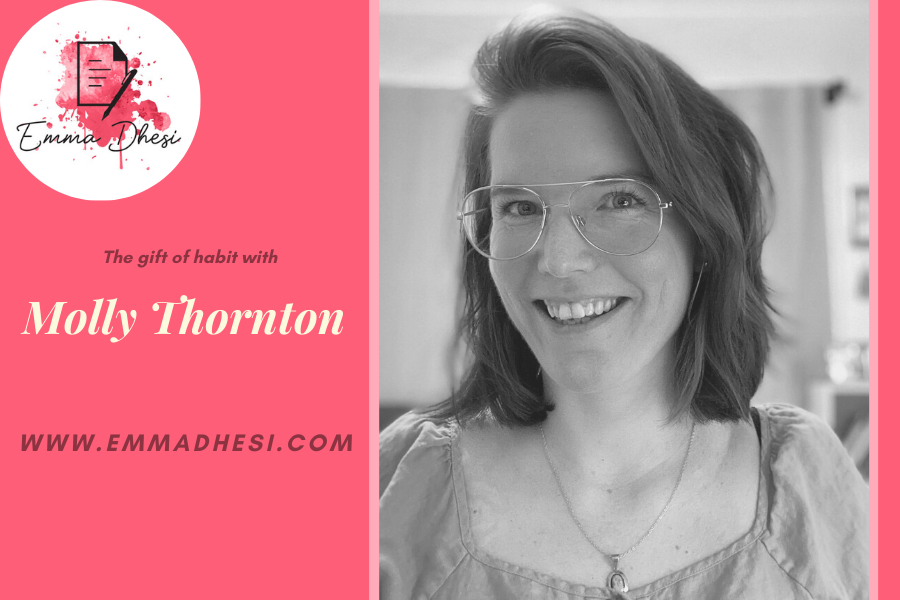
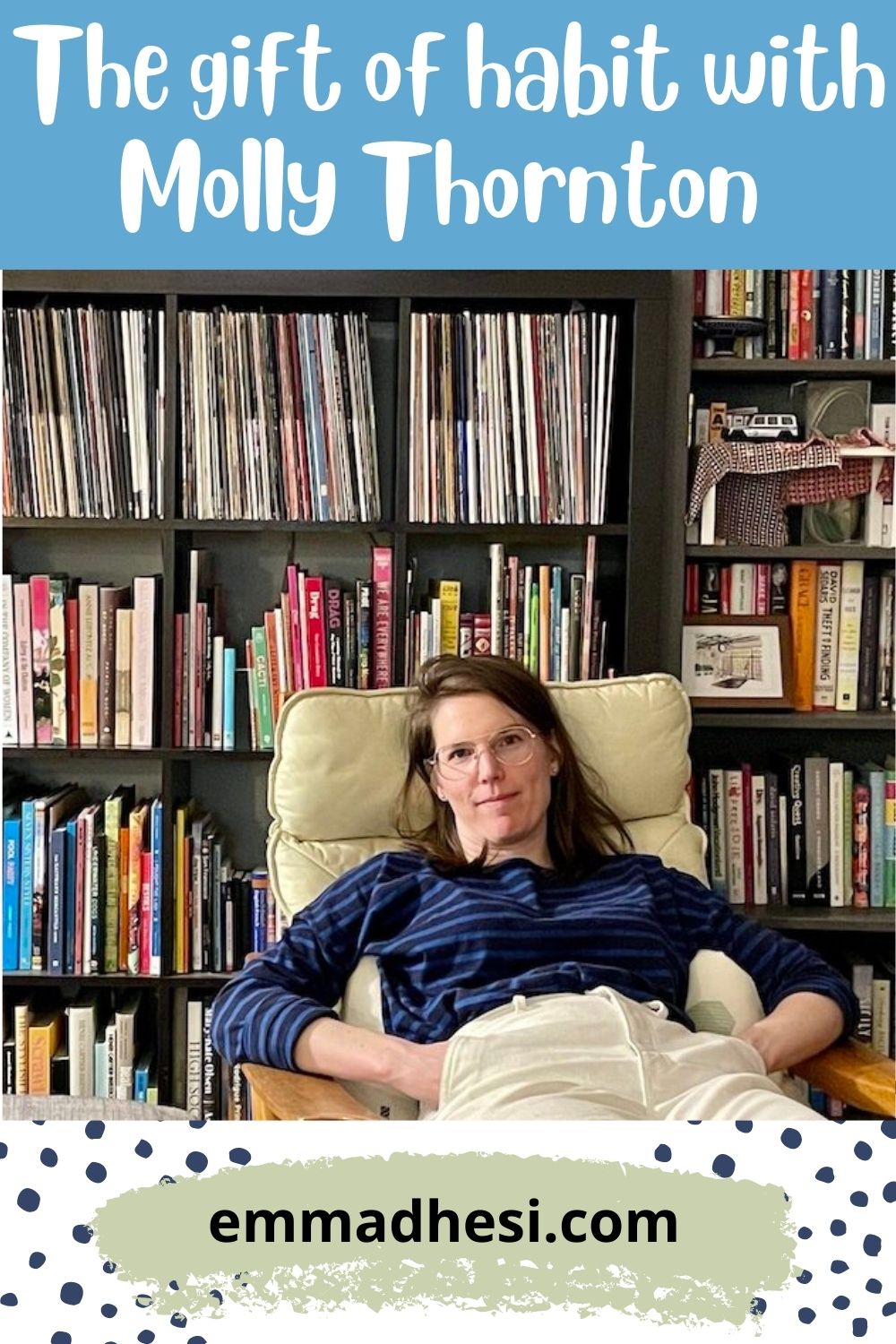
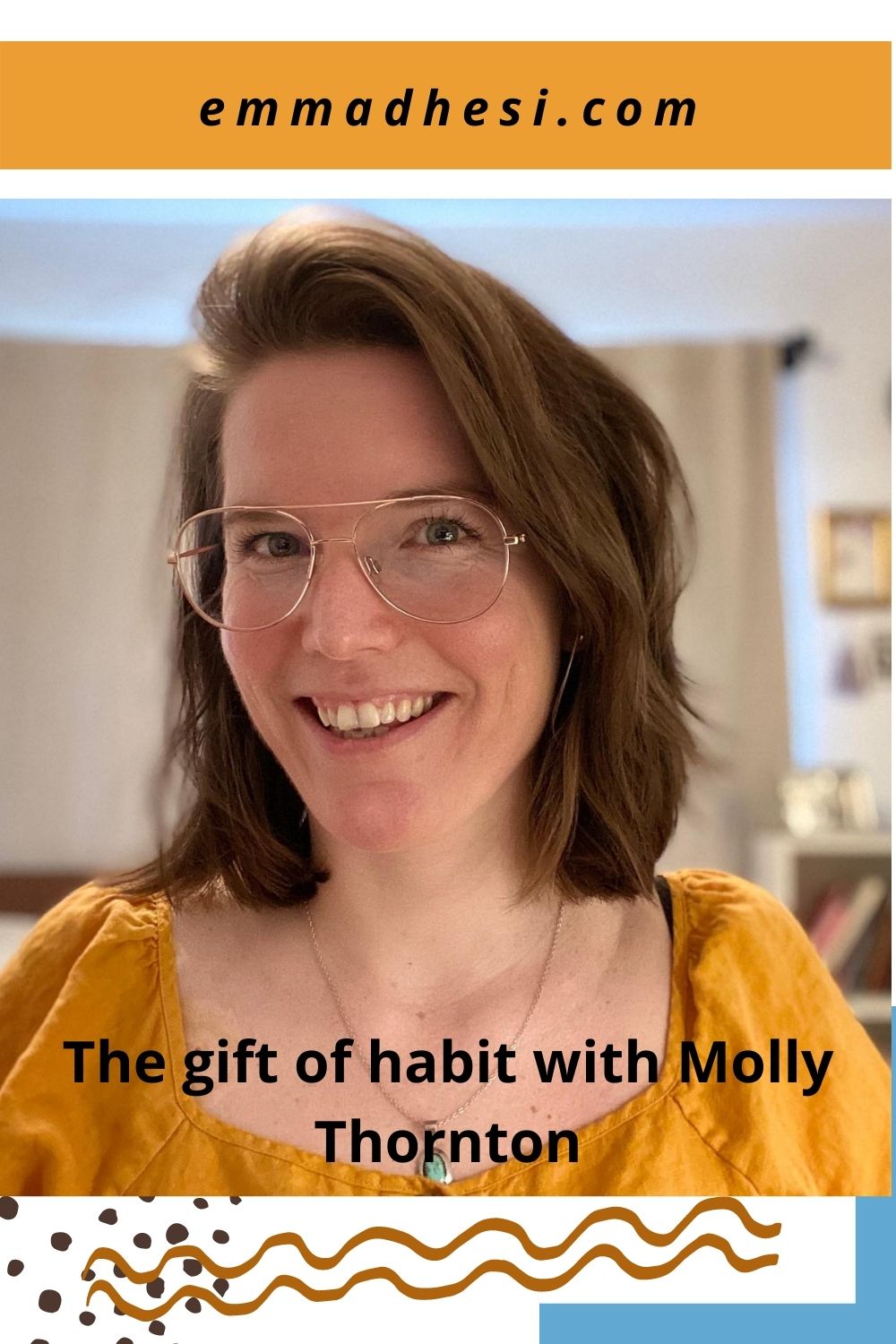
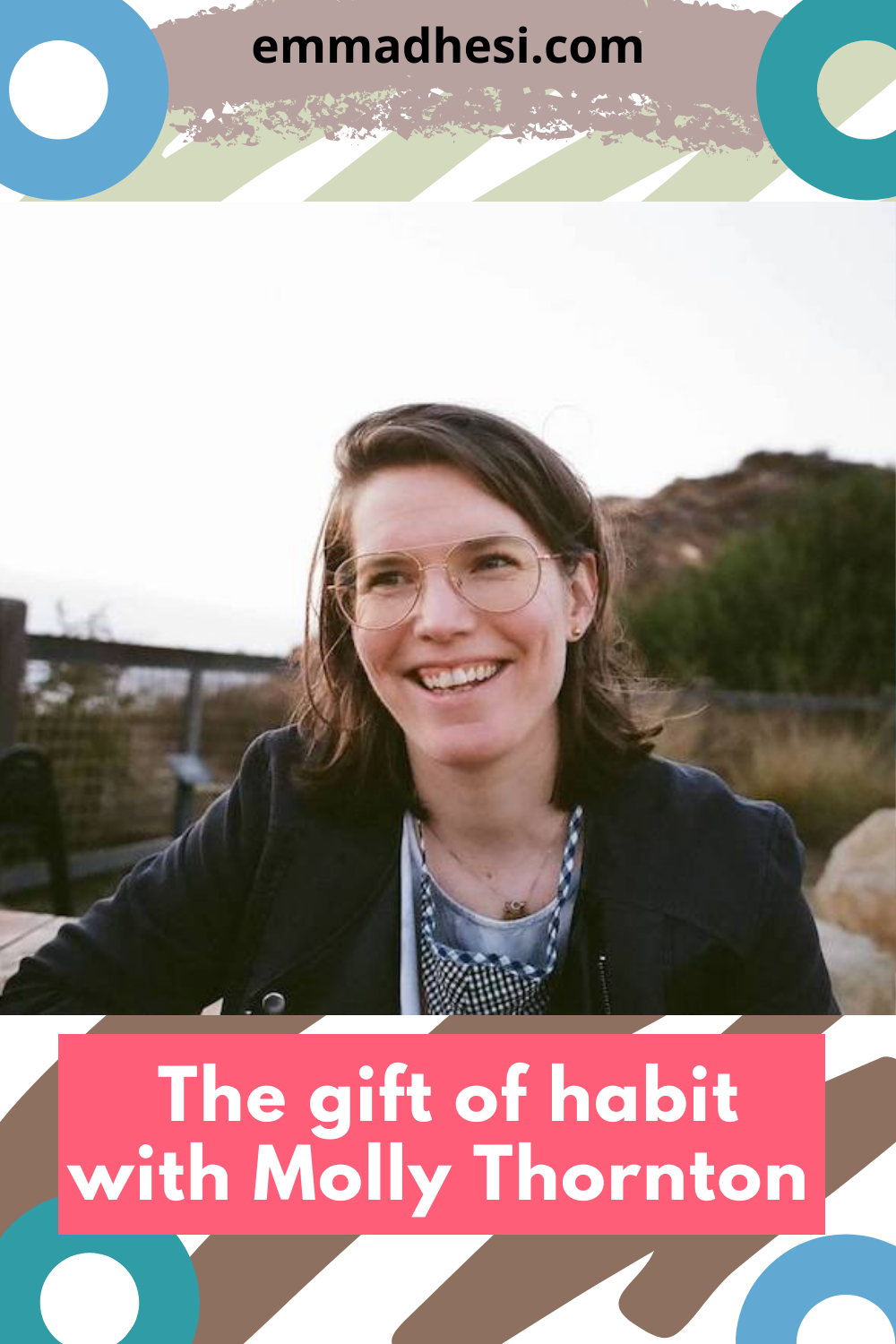
The gift of habit with Molly Thornton
The gift of habit with Molly Thornton
Interview with Molly Thornton
Molly Thornton is a multi genre writer and writing coach. Her manuscript proof of you was long listed for both the 2020 Pink big book contest.
And Dan Zach books diverse voices prize. Her writing is forthcoming in peach mag, and has appeared in the LA Times. They said collaborative writing anthology, hippocampus mag, the Seattle globalist lavender review and much, much more.
She is a Lambda Literary fellow and City of West holiday pride poet. So let’s find out a little bit more about Molly, her journey to writing what has made her so successful and the habits that have helped her to get there.
So, so important. If we want to be consistent, long standing writers, we need to get some good habits and practice.
And Molly has some fantastic suggestions. So let’s hear what she’s got to say. Well, welcome, Molly. And thank you so much for joining me today.
Molly Thornton:
Thanks for having me. I’m happy to speak with you and everyone listening today. Welcome.
Emma Dhesi:
Well, I wonder if you wouldn’t mind starting off just telling us about your own journey to writing because I think it was quite varied.
Molly Thornton:
It was Yeah, I think everyone has, you know, an origin story in hindsight of oh, here’s actually when I started writing, which for me, I would say just is journaling and, and also writing letters and emails. When I look back in retrospect, thinking, Oh, right.
When I traveled to Central America, I sent emails home, and everyone was like, I love your emails, which, you know, it was sure everyone’s family says that. But also, if you like writing, then take the win.
And maybe that’s your beginning. So I really started practicing creative writing, in my mid to late 20s. And I just sort of started writing poems, and just writing poems and then thinking,
Okay, well, I really want to know how to write poems, and what is this and are these good and sharing them with people. And from there, I just sort of started playing around, I took a year long class in young adult fiction and worked on a novel there and learned so much about story.
And I like to say that writing that novel, which is in a folder, somewhere lost on my computer, is how I really learned to write and just learn the fundamentals. So that was really the beginning.
And then over the years, I just kept trying different things.
And eventually, you know, I received a fellowship from a queer organization where I got to see oh, this is the world of all the other people who are doing writing like me, and I’m not alone.
And that’s really how How it all it all started.
Emma Dhesi:
Oh, cool. Now I know just from reading your website that in amongst all the writing, you also had a vintage clothing store.
Molly Thornton:
I did, yeah, I’ve had nine lives for sure. So I mean, that’s another way into the story, which is, so I am a long story long, I started college at Antioch College, which if anyone listening knows is a really strange and amazing school in Ohio.
And I was there when the college closed. So my college closed after my sophomore year of school. So I had an even more roundabout way through than I may have otherwise, I ended up finishing school at the University of Washington in Seattle.
And I worked in a natural food store in the deli the whole time I was in school there.
And when I graduated, about a month into it, I just suddenly was only working at the store. And I just had a breaking point and that I just can’t do this anymore, I have to leave now.
And I think within a week or two, I conceived of and began the idea that I was going to instead sell vintage clothing and I quit my job. And it was the heyday of Etsy and open an Etsy store. I had always been really into thrifting, and treasure hunting, my grandmother was the master garage sailor.
And so she took me from the time, you know, I could walk to and taught me how to, you know, find a bargain and find cool antiques and things. So I thought at the time, though, that if I did that, Oh, it’ll be so easy.
I’ll run this business where I’m reselling clothing. And that’s going to give me all this time to explore writing. And I remember at the time, I mean, I knew nothing about being a writer.
I think during the time I had the vintage clothing business, I did start a blog at one point, which again, this was still the heyday of lifestyle blogs. And so I didn’t really want to be a lifestyle blogger.
But that’s what I saw that was out there. So I would you know, occasionally write articles that were like, here’s shoes I like, or here’s how my day was or whatever it was.
And I remember having information from a magazine that a feminist magazine that I was interested in, and I would always look at what they were looking for and think, Okay, I’m gonna write an article that I can pitch to them.
But I didn’t even have the beginnings of the idea of how that would work.
And as I’m sure you know, running a business doesn’t just create all the time in the world for you to sit and write.
So it took a long time to kind of get there from there. Yeah,
Emma Dhesi:
it’s fun. Oh, I love that story. A friend of my parents used to run a vintage clothing store.
And it was one of my favorite things to do was to go there and rummaging around and all the jewelry and the dresses from bygone days, and even inspired a short story that I wrote about, you know, the history of these dresses that, you know, the Grandal days of when they were when the dress was in its heyday.
Molly Thornton:
That’s amazing. That’s great. That’s what you that’s what I should have been doing as I should have been taking each object I had as a story prompt. Yeah.
Emma Dhesi:
Well, now you know you are the writer that you want it to be. And one of the things I know that you talk a lot about is about developing a habit.
And it’s certainly in my own experience has been one of the kind of more surefire ways of not just starting a novel, but getting it finished getting to the finish line.
And I know that that’s something that you also help writers with. And I wonder why do you think it is that habits are so important for us if we want to finish a project?
Molly Thornton:
Yeah, I just listened to something again, recently that was talking about how we overestimate our willpower. And it’s just a matter of our brains. It’s just we think that our brains can do so much more on their own than they can and we think, Okay, well, I’m just gonna muscle my way into this.
And actually, no matter who you are, our brains just don’t have the capacity to do that.
So we have to have some sort of reward system or some sort of structure that we’re falling back on in order to make it through, I think something that we struggle with as writers that And part of what can also be a habit is, what gets you started is some sort of impulse, right?
Like you’re either have a new idea that you’re really excited about, or you have something that you really need to express, like if you’re writing about your own life or writing through something, and you’re compelled to sort of process it in that way that gets you going.
And for me, I very much will let something go once I’ve gotten through that first impulse.
So the habit to return to it is really important. Not always, but if you want to get something through to completion, then then it is. So a couple of different ways to approach that are having a structure. So if you this is kind of like getting rid of decision fatigue, for me, that’s a big part of it, too.
Right is, well, when should I do it? How should I do it? Should I do this instead, and just sort of spiraling through so that what’s really helpful about a habit and a structure is it cuts down the decisions you have to make if you can get to a place where even once a once a week, you know that that’s your writing time and you have an hour.
And that’s it at that time, and there’s no questions about it, then, that’s one less thing you have to decide. And you can always just go back to
Emma Dhesi:
it. I remember him. Wasn’t that something that Barack Obama used to talk about? That he would just wear the same suit every time because he had to make so many decisions about everything else. The last thing he wanted to think about was what he was wearing.
Molly Thornton:
Yes, I feel like in those roundups of like habits of the highly successful people that’s a common one is, yeah, they wear a uniform so that they can focus on bigger decisions in their day and not use their creative energy on all of the small things that get us to the point where even start the day. Yeah, yeah,
Emma Dhesi:
decision fatigue. Cool. And what about your own writing habits? Or rituals?
Do you have any for yourself, either when you are drafting or revising your own work, or when you’re kind of looking at your your clients and students work?
Molly Thornton:
Yeah, so with my own work, I have to cut distractions. So when I’m gonna try to focus on anything, I put my phone out of reach, and turn it off. I also have this is a newer one I have is on my desk, I have a mini whiteboard.
Because one of the things that I learned about habits this year is that visual cues are really helpful because we’re visual, as as as animals as humans. So I will write the seems ridiculous that you wouldn’t need this.
But I will write on my whiteboard, the one thing that I’m working on, so that as I start to wander in my brain, open new tabs on my computer, when I finally get to the moment in my brain where I think, Wait, what was I doing, I have the giant whiteboard is says, you know, revised chapter five, or, you know, finish this task you’re doing before we move on to the next.
I also, I like to set timers. So I’ll often do not a strict Pomodoro method, which is 25 minutes, and then five minute breaks. But I usually will set a timer for 25 minutes if I’m trying to get into something.
And then usually once I get started on something, I’m not as strict about the times, but I like to know that I can get up and wander around, because otherwise, I will just continue to think of one more thing or refill my water one more time.
So those things sort of really helped me get in the seat. And then I really like and find it helpful to have embodiment and physical process in my practice to sort of get out of the thinking brain.
So immediately with a writing session, I will sometimes dance either in the beginning or as a break between writing sessions, to just sort of let go of whatever is in my brain and get in a different state of mind. And in general, I find that I hike in my neighborhood a couple times a week, I live really close to a hike.
And that helps me get so many story ideas and get inspired because it’s that kind of I think people often say in the shower too, right? Like on a walk or in the shower, you suddenly have an idea that you’ve been sitting and struggling over.
So knowing that things like that taking my hike are parts of my work. writing process, even when I’m not sitting down to write is helpful, and helps me have something to bring to the page when I sit down for the writing
Emma Dhesi:
one like a lot of those and love the idea of having the whiteboard there, and just keeping you sort of giving you that Northstar, about what you’re working on, rather than getting distracted. And I love the the dancing as well.
That’s always a good fun and kind of good for your physicality as well, just to kind of shake it all out of your body. You’ve mentioned something there that I thought was worth highlighting as the about the whiteboard, you said, you know, this is a new addition to your habit.
And that is a good reminder that habits can change and what works for us at any one time can alter and kind of move with our own state of mind, I suppose. Do you find that you’re a little bit more fluid with your habits? Or did once they’re in they kind of stay?
Molly Thornton:
That’s a good point. That’s a really good point.
And, yeah, I definitely am fluid with them. And that I think that’s really important.
Because I think when you read about habits, and a lot of people who you know, will tell you about their cold showers and how they do everything really well in five minutes. I’m not one of those people at all.
And it can be really discouraging. If that doesn’t work for you, and you’re have a kind of brain or you’re the kind of person where doing the same thing day in and day out doesn’t work for you for various kinds of reasons that can be because you have too many things going on your schedule is variable.
Or it just doesn’t motivate you. And it’s important to be able to have habits that you can lean on when when you need them but not think, Oh, well, I didn’t wake up at 530 this morning, so my writing can’t happen.
So I think maybe I kind of try to have my habits be a little bit more modular, so that they can fit in with when it is time or when I’m wanting to do something and no, okay, even bribery, you know, I will I will eat chocolate while writing if I need to.
Or sometimes all of the sometimes I did this yesterday, I had to finish something I didn’t want to finish. And I had some food I could make. But I told myself, Okay, well, I can order some takeout that I want.
If I get this done, those things really help and you can fit in whatever those habits are when you have the time, because I love that idea. A lot of people talk about this, but like moving 1% forward.
So that you know, you don’t have to do it all at once. And any little, any little thing that you do is cumulative. And with writing that that is tangible. If you write a sentence yesterday, and you write a sentence today, and you write a sentence tomorrow, you’ll have your story and a couple of weeks just by doing that.
And it’s easy to forget that and think that you haven’t done enough. So you’ve got to kind of count all of those, no, I have three sentences, I have three days in the direction of what I’m trying to go towards, and know that those outweigh the one day that you didn’t get to your writing or the week that you didn’t get to your writing, you still have all these votes in the direction of what you want to do that you can bring forward.
Emma Dhesi:
Yeah, I love that the cumulative effect. It’s so so true. Just out of curiosity, what music do you prefer to listen to when you’re writing or getting into the mood for writing?
Molly Thornton:
Well, I taught a class for a lot of last year that’s called the right moves, which is the dancing and writing practice combined. So I have a bunch of themed playlists from that that I are sometimes use.
And I really love. I take this, like non choreographed choreograph dance aerobics class sometimes that I really love. And so I think a lot of those lists initially started with pop music or dance music from those that are just really high energy that I love.
But lately, I’ve been working on a novel for about a year. So typically, when I sit down to work, I’m listening to that playlist that I have with that which I continue to add things to, but a lot of it is the Taylor Swift album from last year folklore. I still am listening to that on repeat, and I don’t know it really goes with that novel for some reason.
Interview with Molly Thornton
Emma Dhesi:
Oh, okay. I’m intrigued to know what it’s about now.
I’m just one more question about habits because on your website you’ve written and I really spoke to me, you’ve said, after a break, we can get frustrated, nervous, uncertain where we left off, let alone where we want to begin.
And I certainly have found that, you know, I’ve had, I’ve got kids they’ve been off with when the schools were closed.
And I think for a lot of people over the last 18 to 24 months, our usual routines have just been out the window.
And so I wonder if is there one or two sort of strategies you could suggest for people, if they’re, you know, they still haven’t managed to find their groove, again, just one or two things that could help them start that routine off?
Molly Thornton:
Yeah, so one thing that I would say is, even if you have a project going, don’t put the pressure on yourself to immediately return to that.
And instead, find whatever way in you can to just return to your writing.
So maybe that’s journaling, or just some sort of experimentation and play.
And I have to say, I’ve been going through this too, as I’m in a stage with my novel, where it really does just need revision, which takes forever and is tedious.
And I’m remembering that I need to let myself have continued to have creative process where I’m just innovating, where I’m just playing around, because that is where we experience more of the satisfaction of writing that’s not tied to well, when am I going to get this done.
So finding, you know, a little bit of time just to do any writing to read a poem and use it as a prompt is a good way to kind of build the confidence back and remember, Oh, I am a writer.
And I do have ideas and kind of get a little bit of a quicker win. Because you can get a quicker win.
If you write a very a piece of flash fiction, or you know, a very short essay or a quick poem, which I know you talk about how you build that confidence from doing right.
So that’s a way to remember, oh, I can do this before you try to get back in.
And then something really practical, that I like to do with my writing that helps you get back into a project is to leave yourself a note of where you left off.
So if you haven’t done that, and you have a latent project, it might take you a little bit of time to do some rereading and make some notes about where you want to go with it.
And there’s an author of Ruth Ozeki, who I learned this from, she calls it a process journal, that she keeps side by side with a draft where she is troubling through whatever she needs to figure out next.
But for me, I have kind of just sort of a mini table that I’m using for my revision where I track, these are the pages that I did last, here’s what I did with them.
And then here’s what the next steps are.
Emma Dhesi:
Okay, lovely. That’s brilliant. Thank you for those.
I’m sure there’ll be some listeners out there who will be able to take those on and get going again.
Yeah, yes. Um, so I’m going to change tack a little bit.
And because I know that you offer some author services, including coaching, and I wonder, what is it that you you enjoy about coaching?
Molly Thornton:
Yeah, I think what I really love about coaching as compared to other ways of working with people on their writing, or just in general is being able to piece so close to someone else’s project and knowing that we can really move forward on exactly what they need and what’s going on with them as compared to abstract tips and tricks and knowing, okay, no, you know, sometimes it’s the right advice at the wrong time.
And people get bogged down on Well, I learned this thing about how you have to write a story. And sometimes they need someone at the right time to say, Yes, that’s good advice.
But in this case, you’ve gone too far, or that’s not necessary for you to follow.
And it’s really exciting to learn about all the different things that people are working on.
I just talked with someone new this week about their memoir, and it just reminded me again, Wow, there’s so many different things that people are writing about and coming up with stories about.
I also really enjoy it because I didn’t take a traditional track to writing and I didn’t have an English degree or any sort of, you know, institutional support or even really community support when I first began to know, what is writing?
What does it mean to be a writer? What do I do with this stuff, any of it.
And I really like to be able to be there to, you know, help with demystifying things that there’s a lot of gatekeepers in writing and publishing.
And I love to be able to share everything I know, and also help people trouble through those stages I went through of, what do you do?
And how do you begin to become a writer when you have three jobs, and you’re moving all the time, and you don’t really know how it’s going to happen? Or what you’re doing?
Emma Dhesi:
Oh, lovely, lots of good stuff there. And yes, it is. It is. I wonder, so did you feel at a disadvantage not having had that traditional route?
Or do you? Have you just kind of find, actually, there’s lots of different ways into it. When you’re looking back, you wish that you’d done that traditional route?
Or has been actually in the long run? It’s not really made a difference?
Molly Thornton:
It’s interesting. I mean, I don’t really know, obviously, because I didn’t go back and do it.
What would be different now, I definitely felt at a disadvantage at certain points, when I did start to get more into writing communities and a lot of things, particularly in the literary world, do have academia sort of in the background of them, even when they’re not, you know, I have a project that I’ve been sending out to small presses.
And even when you’re sending works to literary journals, a lot of them come from colleges.
And so a lot of the people who are reviewing that work and deciding what is literature and what is literature in their journal are coming from academia, and I definitely didn’t, I definitely still don’t have a reference point of exactly what that means from the inside.
And there were definitely times when I felt like well, everyone around me now has an MFA.
And that must be why they’re a writer, and they know how to do this.
But there are so many other ways to get there. And now that I have continued to get information, different ways, you know, I’ve taken classes with different people at different nonprofit organizations and literary organizations, through building writing community just through reading and writing.
There are so many resources, and I feel like now, and something I’m coming to even more, in this season of my writing, is realizing how much more I can still expand my idea of what it means to be a writer, and not being pigeon holed into even wanting to be in literary journals, or even in wanting to make a book.
And I feel like I didn’t, I forgot that for so many years, because I was focused on Okay, well, if I’m writing poetry, and I’m writing essays, and I’m writing fiction, then here’s where this goes.
And as some some projects that I really love are kind of hitting dead ends in those routes, and I’m unwilling to let them go.
And as I’ve started podcasting, and I live in Los Angeles, where everyone is a screenwriter, it’s finally starting to infiltrate me where I’m realizing, oh, a creative writing is behind so many things besides just what you can read on your computer in a book.
Creative Writing is behind podcasts, and audio plays, and movies, and TV, and there’s so many other things that we can do with it.
And I find that really exciting. And I love, just sort of continuing to be able to broaden what creative writing is, without feeling like I’m married to this specific path or community of writing.
Emma Dhesi:
Thank you for sharing that. Because I think it is easy to get stuck down the idea of what it is to be a writer.
And having, especially if we’ve come from if you’re a little bit older, like me, and you’ve come from a tradition, you know, you’ve always read traditional books, traditionally published books, then there’s this kind of idea.
This is the one way but I, a lot of the people that come in contact with are writing across different genres, different formats, different types of writing, and I’m sure they’ll take, they’ll hear what you’re saying and take not necessarily comfort from it, but kind of like okay, that’s good.
I’m not doing anything wrong in inverted commas. This is just part of my own writing experience.
And I am free to explore and play and discover what I love to do. So yeah, that’s a really lovely thing to share. If You?
Molly Thornton:
Yeah. And I think with that, and what I sort of implied is part of that is not going that route doesn’t mean that you do it alone, right?
It’s still important and helpful to find resources that you need and ask for help and find community and and learn what is going on in writing.
But there’s lots of ways to do that besides college program.
Emma Dhesi:
So you your coaching service, your own coaching service, how does that work? How do you work with you or your students?
Molly Thornton:
Yeah, so there’s two main ways that I find writers tend to come to me so one that I’ve started calling Shape Up Your story is for folks who are they’ve made good headway on a first draft, or they’re starting a first draft, or they’re working on a revision.
And they don’t, they’re not dealing as much with some of the problems that you and I have talked about with habits and things.
They’re the type of writers who are able to just kind of get the writing done, but they’re at a stage where they need some eyes on the work or they’re a little bit stalled out and not sure where to go. So they’re looking for someone to kind of be a sounding board or offer some review with them.
So I working with writers like that. They’re guiding someone else who knows they’re characters who gets into the nitty gritty of, okay, where does this begin, middle and end?
And where should it begin, middle and end and how to actually get through writing or revising a draft of something, often a novel, but not always.
And then the other way that I work with people, I call build, build your writing life. So that’s more about the habits and getting into something.
Either way, when I’m working with coaching clients, we usually have sort of a Northstar of usually they they have something that they want to work on long term, sometimes multiple things, and I will work with them to try to figure out okay, which one of these can we sort of focus in on and choose to be the project for now and kind of Project Map? What are the components of this? And how can you begin to move towards it.
So there’s a combination of this sort of left brain project management aspect of it. And with that, I like to, as we talked about the visual cues, give people things like a writing tracker where they can see, okay, I did get something done, and this is moving forward.
And at the same time, I always keep this flexibility of, okay, well, you know, if that’s not interesting, you right now, then you should work on something else. And if you had an off week, or right, you’re not feeling into this, well, then what do you need to do to get in fuse?
Are you reading and watching stuff that’s interesting to you, is the time that you’re trying to get your writing done not working? So sometimes it’s in the nitty gritty of the when, and how are you finding time? And is that working for you? And how can we make it more fun or more easy for you to get to it.
And sometimes, it’s really focusing on all of those fears, some coaching clients, we talk over and over again about where they’re getting stuck internally, and just figuring out how to make little baby steps.
And one thing we didn’t talk about directly previously, is, with people trying to get back to their work as the main thing that they might need to do is just to forgive themselves.
Emma Dhesi:
Talk a little bit more about that.
Molly Thornton:
So we without noticing, I think and this sometimes happens to me, we get so we get so mad at ourselves about the time that we didn’t write. And that seems to overtake the fact that we can still write, it’s not over.
But we feel we feel like it even without consciously knowing that so it can be helpful to begin to notice on your own or with a coach.
Oh, these are the things I’m telling myself because you may not even notice because to you, it’s just how you go about your day.
You just go about your day telling yourself No, I can’t do that. No, I’m not good at that.
No, I’ll never be this without thinking about it. And actually, you can do it and it’s okay. And you can you can start again.
Emma Dhesi:
Yes, it was something that I kind of mentioned, as well as about, you know, rather than chastising yourself for what you haven’t done Coaching gives you the opportunity to kind of look at what’s the possibility of what you can still do. Right?
I certainly fall into that myself now and again, the end of the week, I think, Ah, I’ve not, I’ve not achieved what I wanted to achieve this week.
It’s gone gone wrong. But actually, it’s not all gone wrong. I’ve still gotten some work done. And so that’s good.
Molly Thornton:
The patience is really hard. I really struggle with that, too.
And as much as I’ve experienced, and I’ve seen people even working as fast as possible, taking years to complete things,
I still fall into thinking, Well, you’ve been working on this for a year, why isn’t it finished? And it’s just not helpful at all.
Emma Dhesi:
It’s so note. So if any of our listeners are kind of recognizing these patterns in themselves and thinking,
Yeah, I need someone to help me do this. Do you work with writers of sort of all genres? Or do you like working with specific story types,
Molly Thornton:
I really, I really like to work on different things. So I, I find that most people who I typically work with are working on novels, but I write poetry, I write creative nonfiction, and most of the creative nonfiction that I write is pretty non traditional kind of hybrid work that’s more like lyric essay, or more like poetry.
And I’ve worked with folks on memoirs before, and I kind of will take what whatever it is, you know, I really love getting into something that’s a new project.
Last year, I worked with someone, for instance, who was writing almost an anthology that had some essays in it, some poetry from other people in it, and who also was a visual artist and had some images that went along with the themes of the work.
And that was such a fun project. I’ve also worked with someone on a children’s picture book, which was so fun.
So I kind of always like to get into something new.
And I think that, you know, what I understand about story structure, what I understand about the writing process, all applies to those various topics.
Emma Dhesi:
Yeah, love lay. And now, you mentioned a little bit earlier on that you were working on the revision of a novel at the moment, are you able to tell us a little bit about it?
Molly Thornton:
I can. So I, I drafted this novel during NaNoWriMo National Novel Writing Month last year, which I really love. It’s just, I love the energy of knowing that there’s so many people hustling on their novels at the same time. So I had participated before.
And I I knew that I hadn’t worked on fiction for a couple years. And I knew that I had one that I wanted to do. So last summer, I started keeping a notebook where I just was writing down ideas I had about characters and about the setting.
And I started with this, what if that was something I think probably a lot of us have worried about, which is, what if you? What if you accidentally hit someone with your car? And what if the person that you accidentally hit with your car, you would have had a motive to do it.
But you didn’t do it on purpose? Or did you write so I it’s that’s very far from now what it is, that is a very small part of it.
But I sort of started exploring this idea about these two friends and also kind of a gothic quality, which I have since learned a lot about because I noticed Okay, well the house is very much a character in this story.
And it’s almost kind of like a domestic thriller with kind of this Gothic vibe, where it’s like, everything is going on in the house and like what’s going on with the house. So at the heart of it, it’s really about kind of a friendship gone wrong.
And I really enjoy sort of exploring just queer relationships and just really close friendships.
And so this is very much based on my life in the fact that I have, you know, had had bad girlfriends and had bad friends.
And at the same time, everything that happens in this is highly, highly exaggerated from anything that I’ve experienced, but there’s them, you know, kind of a scam artist and some some Yeah, friendships gone awry.
And it’s really been fun to Write.
Emma Dhesi:
I love stories that have a house in them. I don’t know what it is about, yeah. That nucleus perhaps or that they bring people together and also quite confined, can add that bit of tension to it.
Molly Thornton:
All right, it’s a really good is a really good way to attract your characters. Yeah.
Emma Dhesi:
Oh well Molly, the time has gone so quickly.
And I’ve so enjoyed chatting with you, thank you so much for sharing your insight on habits, the benefits of them how people can start building new habits and telling us about your coaching services too.
And also, I’m excited about your your novel, do you have an expected date when you’ll either be finished or published or querying?
Molly Thornton:
I don’t know right now, I wish that I have a timeline for this next draft, which is my my biggest goal.
My I’m working on the first big revision of it. And so I’m hoping that by the end of this year, in the next couple of months, I have a revision of it done that I’m ready for people to read.
And then get a couple of reviewers to give comments on it in the new year.
Maybe get a new revision on it in the spring. And maybe by this time next year, that will mean that fingers crossed and agent wants it and it’s beginning to have a life we’ll see.
Emma Dhesi:
Yeah, well, fingers crossed. Good luck with it. Just before we sign off, can you let our listeners know where they can find out more about you?
Molly Thornton:
Yeah, the best place to find me is on my website, which is Molly Thornton writes.com.
And you can also email me at Mollythorntonwrites@gmail.com. I’m on social media, but not really.
So that’s the best place to to reach me if you want to drop a line.
Emma Dhesi:
Fantastic. Well, that will I’ll be sure to put that in the show notes. Lovely. Well, thank you very much.
Molly Thornton:
Thank you, Emma.
Emma Dhesi:
Well, thank you so much for joining me today. I hope you find that helpful and inspirational.
Now, don’t forget to come on over to facebook and join my group, turning readers into writers.
It is especially for you if you are a beginner writer who is looking to write their first novel.
If you join the group, you will also find a free cheat sheet there called Three Secret hacks to write with consistency.
So go to Emmadhesi.com/turning readers into writers. Hit join. Can’t wait to see you in there. All right. Thank you. Bye bye
If you’ve been working on your novel for years (perhaps even decades) the maybe it's time to consider working with a coach.
If you have multiple versions of your novel and you don’t know which works best, are scared nobody will like your book and don't feel like a 'real' writer, then my guess is coaching is the right next step for you.
Find out more and sign up for your free Clarity Call here: https://emmadhesi.com/personal-coaching/
If this interview with MOLLY THORNTON was useful, you’ll love:
Shortcuts for Writers
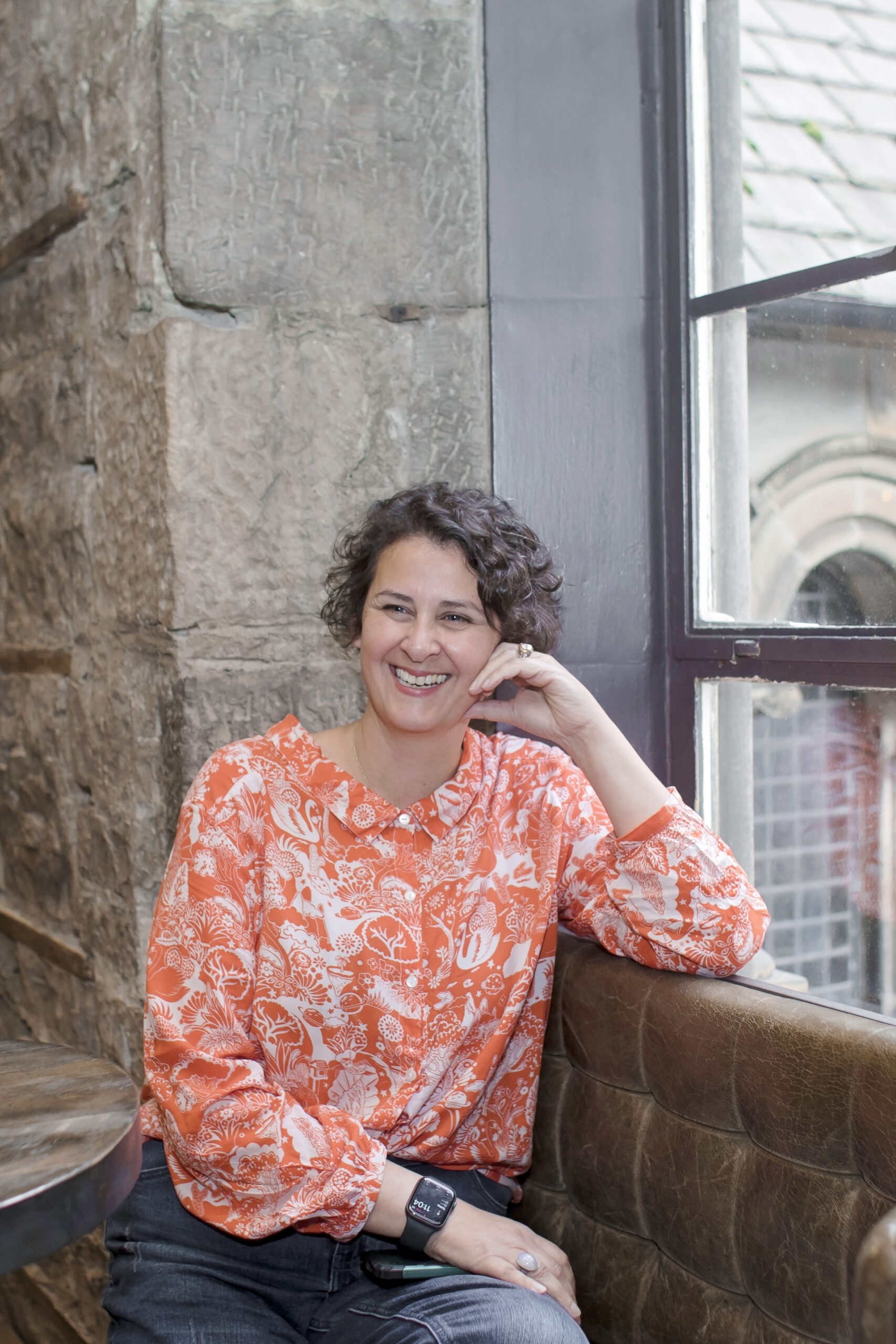
Emma Dhesi
Emma Dhesi is author mindset coach and bestseller author who helps writers let go of perfectionism, self-doubt and writer's block through her signature programme, Unlock Your Creative Block.
She is the host of the YouTube Channel, Emma Dhesi, where she interviews debut and experienced authors alike.
She is a Certified Author Accelerator Book Coach.
If this article was useful, you’ll love: