
How to write character

How to write character

Why is Character Important?

It’s important to learn how to write character because although plot is what makes a reader up pick your book, character keeps them reading. The reader has to connect with the character in some way, otherwise they feel removed from the story and stop reading.

Everyone is flawed

You don’t want your characters to be perfect. It makes them unlikable. I remember reading Tai Pan by James Clavell and I ended up disliking Dirk Struan because there wasn’t anything he couldn’t do. In the end it was tedious and I vowed never to read another Clavell book again!

We all have flaws, and that’s one of the things that make us interesting and complex. You want the same for your characters. Hitler’s one redeeming feature was his kindness to animals.

Character flaws can reveal a lot about a person’s backstory. Why are they addicted to alcohol? Why can they not commit in a relationship? Why do they skip from job to job?

5 questions to ask your protagonist

You know what your character wants, but you don’t know why he or she wants it. How do you find out? Savannah Gilbo suggests we ask our characters 5 questions:

What do they want?
This is easier for some stories than others, for example in a romance it’s for them to find love. In a mystery it’s to solve the crime. If it’s a non-genre book, it might be your protagonist wants to resolve an argument with a family member, a job promotion or even peace of mind.

Why do they want this?
Once you understand what your character wants, you need to understand why they want it. If they are looking for a new relationship, why are they not content to be single? If they want that job promotion, why aren’t they happy in their current role? If they want peace of mind, what is it that’s disturbing their equilibrium?

This underlying emotional motivation is what drives the character to pursue what they want.

What do they need?
You know what your protagonist wants and why, but is it what they need? This can be a harder question to answer. Sometimes you don’t find out until you start writing!

An example is Jane Austen’s Emma. She wants to love-match her friends because she’s bored, it’s fun, and she thinks she’s good at it. What she needs, though, is to fall in love herself.

What’s standing in their way?
There are essentially two types of conflict that stop a character achieving their goal: external and internal.

External conflicts are those obstacles that come from someone or something else, for example, the love interests existing partner, or a competitor for that job promotion.

Internal conflict is that which comes from the character themselves, for example, they don’t think they’re good enough for the love interest or they lack the skills for the job promotion.

What’s at stake if the character fails?
Knowing what your character stands to lose if they don’t get their goal will influence how your character behaves throughout the novel. What’s the consequence if they don’t get the guy or the job?

Isadora Felix says your focus should be on creating real people rather than stereotypes that fit certain genre moulds.

She points out that every human is unique, even identical twins, and so we should aim for our characters to be the same.

She suggests you mine yourself, your family, friends and acquaintances for those little details. What are your interests that your friends think are a bit daft. What are theirs? I love genealogy, but none of my friends do. I know someone who used to take part in Japanese battle reconstructions, in full costume, even though he lived in Scotland! It’s worth jotting down people’s idiosyncrasies for future characters. It’s these little quirks that can make your character unforgettable.

A common pitfall

All writers, not just beginners, tend to put something of themselves in their writing, and that’s okay. It’s hard to avoid altogether.

The trick is to be aware of it and pull back if you feel you’re using yourself too much. If you do, all your characters will lack contrast or individuality. It will be hard to differentiate one from the other.

Additional Details

Hannah Bauman says don’t forget to look at the outside stuff too. What does your character look like? How old are they, what kind of physique do they have? What about skin and eye colour? Do they have any distinguishing features?

In addition to the five questions that relate directly to your story, what do you know about their background? Did they have a happy childhood? Do they have any siblings? How did they get on at school? Do they have any special skills or attributes?

What kind of personality do they have? Are they a generally cheerful person, or is the glass always half empty? Do they laugh out loud or chuckle quietly? Are they a flamboyant leader or a steady right-hand person?

It’s important to get to know your characters. Your relationship with them will inform how your story progresses, how your character responds to the action and give you details about their backstory that can be used in the novel itself.

If you’d like to learn more about how to write character, check out what Roz Morris says about it. She’s an author of literary fiction and writes the Nail Your Novel series.


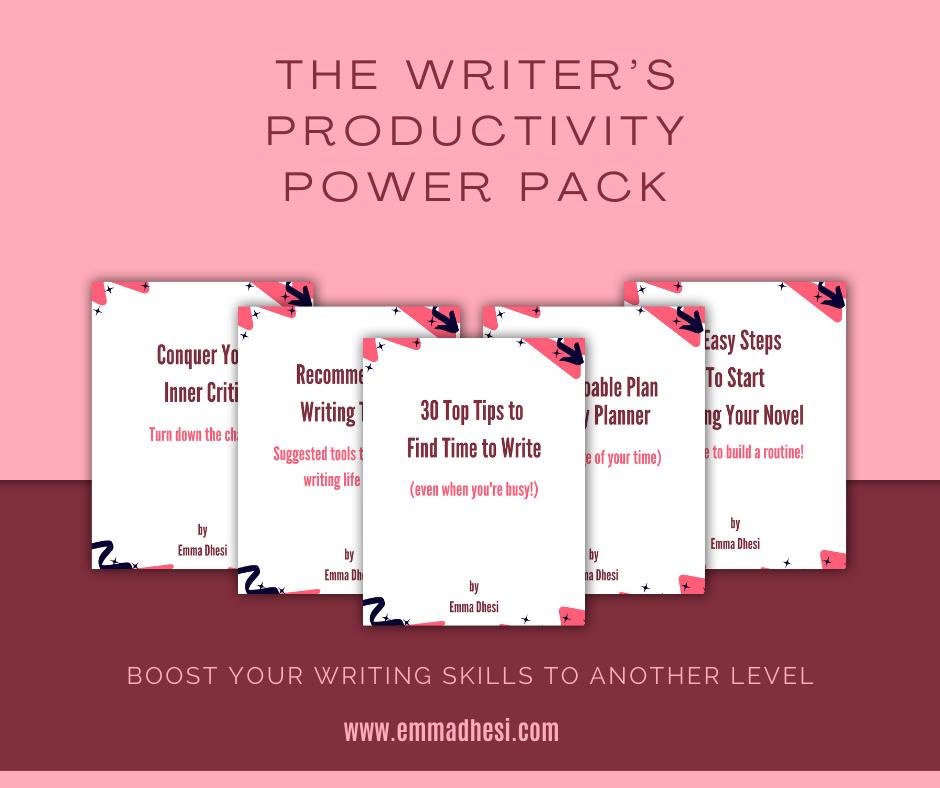
If you’re a beginner writer and are looking for something to kick start your journey, download my free mini-course, 3 Easy Steps To Start Writing Your Novel. It will help you get started.
How to write setting

How to write setting

What is setting?

Joanna Penn in her article, Write Better Settings, says a setting is more than just where the scene takes place. It adds an extra dynamic to the story if it’s an interesting or unusual place.

Courtney Carpenter emphasises that setting is just as important to a successful story as plot and character. Like Penn she says that setting is more than a backdrop to the story, it is an interactive aspect of your fictional world.

Penn concedes there are times when a scene must take place in a very ordinary setting. In that case consider what unusual props you can add into the setting. By bringing in things like photographs or trinkets you can make the scene a little more interesting.

Why is setting important?

Carole Benedict says that setting sets the mood of a story and gives it a context. It influences the mood of the characters and how they react to their environment.

But it can also reflect the society you’re writing about and can even play an active role in your story.

For example, NowNovel.com give the example of The Lord of the Rings by J R R Tolkien. Not only does the physical geography of Middle Earth hinder the hobbit’s journey, but at times the earth is a living, breathing barrier to their quest. In non-fantasy stories the writer suggests that even a character moving from the country to the city, and vice versa, can bring about challenges for them.

The setting provides significant details for a reader, but the writer mustn’t describe every last detail, just enough to draw the reader into your word.

What should you consider when writing your setting?

Jess Butterworth in her article for the Writers & Artists Yearbook offers eight tips for creating a successful setting:

  • If it’s set in a real place, research it.

Watch videos, read both fiction and non-fiction about the place, look at photographs and maps. I quite often print out photographs and put them on my storyboard. They help to remind me of the feel of the place but equally can act as story prompts from time to time.

The author Joanna Penn travels to the place she wants to write about. From that trip she uncovers her story and builds the world around it.

  • Use setting to create atmosphere

Think about what time of day it is, how the clouds hang in the sky depending on the skyline. For example, Charles Dickens uses London in a way no other writer does. In a paragraph he can transform the city into a character. There are not many who can do this as well as Dickens, so he’s well worth studying.

  • Use all the senses

These are the details that really make a setting come to life and can drop the reader into your world

  • Does the setting form part of the conflict?

Does it keep the character constrained, or keep them out? An empty house in a horror story is not just an empty house, it symbolises something malevolent that keeps the character imprisoned.

  • Use setting to reveal the character

Does the character notice the world around them? For example, the landscape, the wildlife or population. Do they view those things positively or negatively? The photographs and trinkets mentioned earlier can reveal something of your character’s backstory.

  • Balance description with pace

Find the balance between slowing the pace with too much description and giving the reader enough detail to bring them into your world.

  • The power of naming things

Naming things can give them a gravitas or importance they might not otherwise have had. A good example of this is the Weirwood tree in Game of Thrones. That tree had huge importance to the story. It’s not any old tree, it’s the Weirwood tree. It has special powers and can live forever.

  • Use specific details

In the Harry Potter series Hogwarts is described in detail, from the moving portraits on the walls to the changing ceiling designs in the dining hall. These details are drip fed throughout the series, which allows the reader to invest themselves further in the story.

If you’re writing about a real place, use the details of what you know. This helps the place to change and bring an added depth to the story.

A few extra considerations

I don’t think these are essential for the beginner writer but are interesting to consider.

Show the effects of time on setting

Evelyn Waugh’s Brideshead Revisited as a good example because his characters visit the same places before and after WWII. The was has taken it’s toll on Brideshead itself, the characters and Britain more generally. The setting is a beautiful way of exemplifying a new era has begun.

Eras of historical importance

Important events, wars, or historical periods linked to the plot and theme might include the Civil war, World War II or the gold rush of the 1800s. These immediately place a story and plonk your reader right where they need to be.


Comment below and share your tips and strategies for bring your settings to life.

If you’re a beginner writer and would like a little guidance in getting started, download my free mini-course, 3 Easy Steps To Start Writing Your Novel. It might be the kickstart you are looking for.

The Two Things That Stop Beginner Writers From Writing

The Two Things That Stop Beginner Writers From Writing

From time to time, I link to products or services I love using with affiliate links. This means that I may receive a small percentage or fee for referring you to any product you may purchase from one of those sites. It does not cost you anything. These small fees help sustain my small business. I truly appreciate your support.

Two things that stop beginner writers from writing

You might find it tough, but there will come a time when you have to stop making excuses and write your book.

You’ve dreamed of being a writer since you were a child. You have notepads of half started stories languishing in a cupboard, a drawer or even the attic.

So what are those two excuses?

Excuse Number One

If you’re a beginner writer the excuse you most likely give yourself is that you aren’t a good enough writer. This simply isn’t true. Believe me.

Why should you believe me?

Because of the number of excellent writers I know who shake their head in disbelief when I tell them how much I enjoyed their stories. Who are gifted storytellers but can’t believe they have what it takes to engage a reader.

I know because I used to be the same.

You tell yourself you’re not good enough because you lack confidence. You don’t think you have the natural talent that is absolutely necessary to write a first draft.

Because you don’t have the confidence, you dread that prospect of sitting at your desk. You fear you’ll sit there staring at an empty page. And so, you find you have the washing up still to do or some ironing or maybe even some bills to file!

I was the same. I was so scared of failure I placed one excuse after the other in my path. I ensured no manuscript ever got finished, let alone redrafted and improved.

First school, then university, then work and eventually family life were just the avoidance tactics I needed to never get on and finish the job!

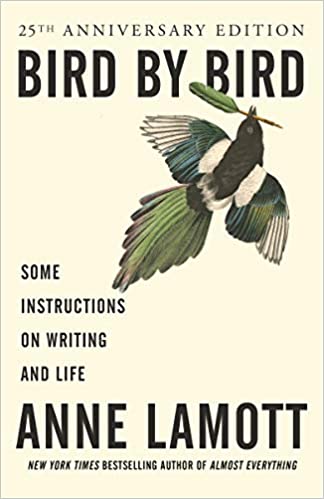
That changed when someone recommended I read Anne Lamott’s book, Bird by Bird. What a game-changer it was for me.

Bird by Bird

Anne tells the story of how her brother had a school project on birds to write. He left it to the last minute and then panicked about how he was going to write a paper in one night.

Anne’s father sat down with him and told him not to get his knickers in a twist, but simply take it one bird at a time. Eventually he’d get to the end.

This was the lesson I needed to make a mindset shift. I finally understood that I had to stop making excuses and write my book one bird at a time.


The Slight Edge, Jeff Olsen

Later, when I began my entrepreneurial journey, another book was recommended to me. This time it was The Slight Edge by Jeff Olsen. This book taught me that all I needed to do was a little bit every day.

If you’ve been following me for any length of time, you’ll know just how much I talk about this book! Olsen’s mantra is, it’s easy to do something, it’s easy not to. I realised that all I had to do was write a little each day.

That’s the same for you. Your life is busy. You have a job, you have children, you have other caring responsibilities and a social life. How can you fit writing into the mix, especially when the very idea fills you with dread?

Well, by taking one bird at a time, and by doing just a little bit every day, you break your project down into manageable chunks of time. Time you are in control of. Time you are not scared of.

emma dhesi anne lamott

Excuse Number 2

Excuse number 2 is that you don’t have the time to write. This one I absolutely understand. I used to tell myself that all the time.

I’d say, I have three children all under the age of 5. By the time they are in bed I am exhausted, there’s no way I have time to write.

But, well, that wasn’t strictly true. What I needed was to learn how to manage my time better. Turned out that was easier than I thought!

I listened to an interview with Elizabeth Kostova, who wrote the wonderful novel, The Historian. It’s quite the tomb, and is an amazing retelling of Dracula. 

She too had three young children, and she had to write when she found the time. She told her audience that perhaps she would have 20 minutes one day, and half an hour another day. 

If that was all the time she had to write, that’s when she would write. It took her ten years but she finished The Historian, it became a bestseller and now she writes full time.

You too can find the time

One of my favourite writers is the Edinburgh based ES Thomson and writes wonderful historical crime books.

By day she is a university lecturer and a single mother to two boys. At night she is a writer. She must schedule the time she needs to write ahead of time. 

That’s the same for you. You must schedule out your time to write, otherwise it will never happen. Look at your diary for the next seven days, when can you fit in a 10 or 20 minute time slot to write? 

You only need to do this two or three times a week and you’ll be amazed at how much you can get done. 

If you need a little extra help to get those writing sessions in your diary, check out my mini-course, 3 Easy Steps To Start Writing Your Novel. It’ll help you get started.

A word of encouragement

You are not alone! This level of fear and procrastination is widespread and completely normal. In time you will grow in confidence and even though you’ll never feel you write as well as your literary heroes, you’ll be able to appreciate your work and even be proud of it.

4 tips to overcome writer anxiety 

Tauri Cox offers some strategies to overcome the fear of failure and imposter syndrome we all struggle with. I’ve mentioned my favourites below: 

  • Remember that all first drafts suck. Just get it down on the page and worry about how good it is later
  • Break your project down into small chunks. It might be to write the next paragraph, page or chapter. Don’t think of the enormity of the project, but the one thing you have to do next.
  • Celebrate small wins. Give yourself a pat on the back, break out the chocolate, when you finish that difficult chapter or reach the halfway point. Give yourself credit for what you do achieve, don’t berate yourself for what you haven’t written yet.
  • Take “aspiring” out of your vocabulary.If you write, you are a writer. Use the language that is natural and comfortable to you. You don’t need big words to move someone to tears or scare them silly!

Letting go of your fears is hard, but it is doable. Let go of perfectionism by writing regularly and building your confidence.

Write regularly by scheduling in small chunks of time that you will show up for.

If you’ve been working on your novel for years (perhaps even decades) the maybe it's time to consider working with a coach.

If you have multiple versions of your novel and you don’t know which works best, are scared nobody will like your book and don't feel like a 'real' writer, then my guess is coaching is the right next step for you.

Find out more and sign up for your free Clarity Call here: https://emmadhesi.com/personal-coaching/


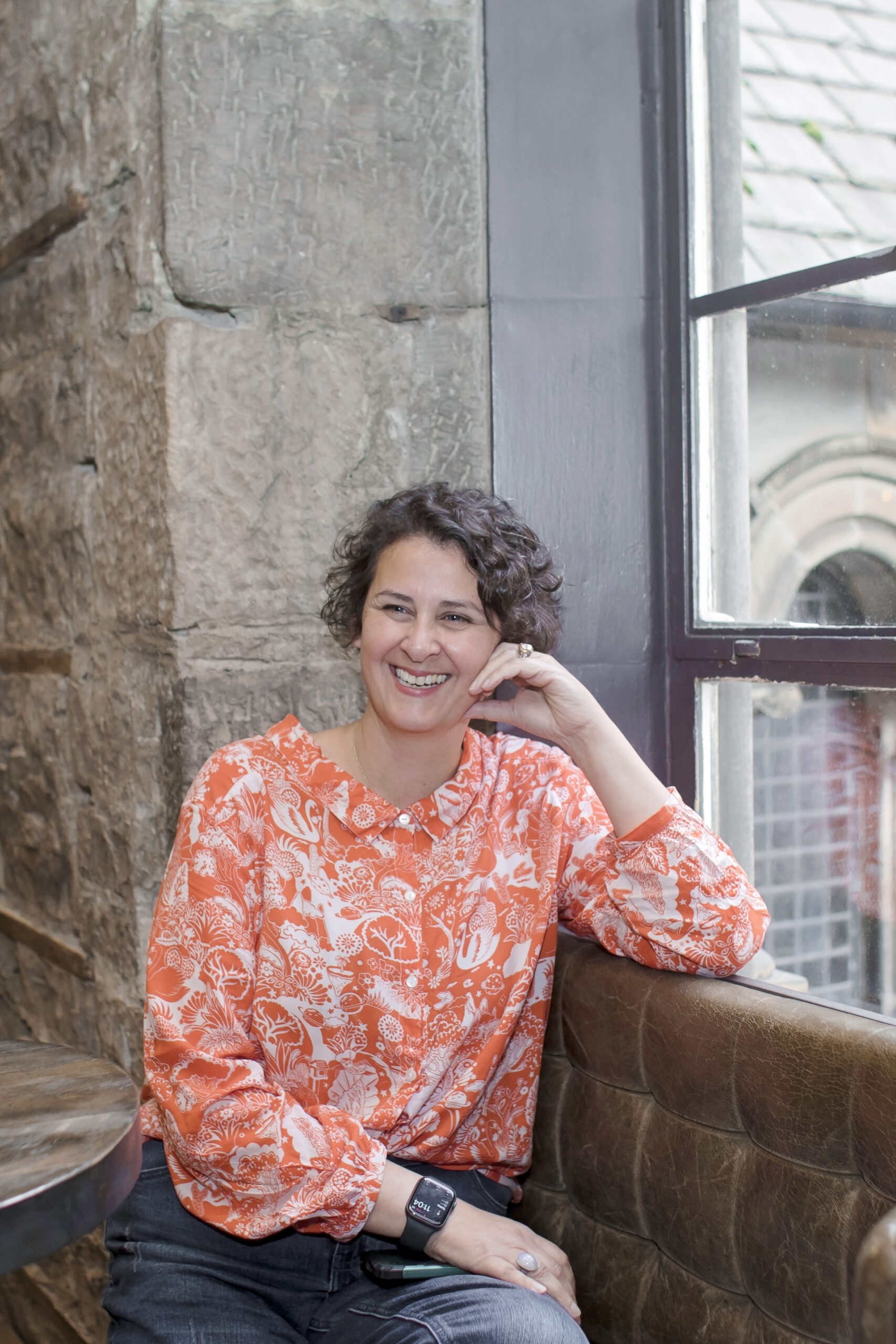
sitting woman with orange blouse

Emma Dhesi is author mindset coach and bestseller author who helps writers let go of perfectionism, self-doubt and writer’s block through her signature programme, Unlock Your Creative Block.

She is the host of the YouTube Channel, Emma Dhesi, where she interviews debut and experienced authors alike.

Through her 1:1 coaching programme, Emma helps new authors start and finish their first novel.


Emma provides personal written feedback on their pages and guides them through the emotional rollercoaster that is writing a novel!

Point of View, and how to use it

Point of View, and how to use it

What is Point Of View?

Essentially, Point of View (POV) is the person who is telling the story, the narrator.

They might be telling the story from their own point of view (1st person), or from your point of view (2nd person).

Perhaps they’re telling the story as an observer (3rd person closed/limited) or as a god-like person who can see into the minds of all the characters and can even see what’s going on off stage (3rd person omniscient). 

Why is Point Of View Important?

POV is important because it determines how the reader will perceive and respond to your story. Do you want them to be up close and personal, or do you want them to have more of a global overview?

You can either tell them how to feel in any given moment or give them the space to make up their own minds on how to feel in each scene.

NY Book Editors emphasise that ‘The point of view that you use to tell a story can influence how a reader feels about the characters or the lessons to learn within a story.’

Which Point Of View should you use?

Point of View is the perspective you give the reader onto the world you’ve created, and when you first start writing a story, it’s not always easy to work out which perspective works best.

Certainly, I’ve changed POV midway through a first, or even a second draft! What felt right at the beginning changed as the story emerged.

Caitlin Berve writes that ‘Sometimes a story is bigger than a single character or is better conveyed through the perspective of more than one character. In order to show the reader more than what anyone character knows and still maintain a closeness to the characters, authors might need to use multiple points of view.’

As you can see, the Point of View you use depends very much upon the story you’re telling. There’s no one-size-fits-all approach, which is not what you want to hear, I know!

So, let’s go through the four most commonly used Points Of View.

From time to time, I link to products or services I love using with affiliate links. This means that I may receive a small percentage or fee for referring you to any product you may purchase from one of those sites. It does not cost you anything. These small fees help sustain my small business. I truly appreciate your support.

First Person

Advantages

Seb Reilly from Thanet Writers points out that 1st person brings intimacy by relating exactly how your character is feeling in any given moment.

By doing this, the reader can empathise more fully with the character. You’re offering up the motivation and reasons a character behaves the way they do, which might otherwise only be implied.

Additionally, exposition can be crafted into the character’s musing and thought process.

You have the option of the character being unreliable, which can be hugely beneficial depending on the story you’re telling.

1st person POV has the advantage of being able to use dramatic irony. Dramatic irony is when the reader can see something that character can’t. Caitlin Berve gives a good example: ‘the reader thinks “No don’t open that door!” because they know what is behind the door while the character does not.’

If you want to use an unreliable narrator, 1st POV is the way to do. The narrator can choose either to lie about what’s going on, or simply not see it.

It’s worth remembering that your 1st person narrator doesn’t need to be the protagonist. Probably the most famous example of this is Scott Fitzgerald’s The Great Gatsby. Nick Carraway is the narrator, but Jay Gatsby is the protagonist.

Disadvantages

The flip side to all these is, of course, that 1st person is limiting in that the reader can see the story from only one perspective and may miss out on interweaving action happening around the main action.

Reilly cautions that as the author, you need to be careful your protagonist doesn’t give away too much about the story, because of course they don’t know what is going on elsewhere. They can have suspicions and hint at things, but they don’t know what’s happening off stage.

Be careful to get the balance right between your 1st person narrator getting too indulgent with their own emotions and simply observing the action. Your narrator is observing, but they are also an active agent in the scene. A tricky balance!

Second Person

Advantages

2nd person narrators talk directly to the reader, thus placing them in the action.

You are telling the reader how to feel and react at each moment. You are overtly allowing the reader to know the character’s motivations and reasons for behaviour. It’s a lovely way to have interaction directly with the reader.

Disadvantages

It’s difficult to do well. It’s a fine line between imparting too much character onto the readers, so they start to kick against what they’re being asked to feel, and too little so that they feel like an unimportant bystander.

There is no room for the unreliable narrator with this POV.

It should also be noted that is a particularly difficult Point of View to write from and you should do it only if you’re feeling confident!

Third Person Closed/Limited

Advantages

3rd Person Closed/Limited allows the reader to have a broader view of what’s going on in the story. But because the story is told from only one person at a time, it means your reader can get to know your character quite intimately.

With the 3rd person you have room for tension and suspense because the reader doesn’t know who is going to make it to the end of the story, and who is not!

Disadvantages

You keep the reader more at arm’s length. They can’t get quite as up close and personal as they might do with 1st or 2nd Point of View.

You have less opportunity to use dramatic irony or an unreliable narrator.

Third Person Omniscient

Advantages

Seb Reilly writes that, ‘Third-person allows you to float between multiple characters’. This is a great way to describe it.

Much like 3rd person closed/limited, 3rd person omniscient allows your reader more depth into your story and you can show them what the characters are feeling, even when the characters themselves don’t know.

Disadvantages

Again, though, you lose the intimacy between your character and your reader. You can’t use dramatic irony or an unreliable narrator because, through the narrator, the reader is all seeing.

A couple of things to be aware of when using the POV is that the more characters there are, the harder it is for you to establish an emotional connection between them and the reader.

You need also to be careful you don’t head hop. This needs to be managed carefully, and you must make decisions about who speaks and when.

Using Multiple POVs

Advantages

Aimie K Runyan highlights that using multiple Points of View allows you to show the world you’ve created from more than one set of eyes. It gives a 3D dimension to your story.

It adds complexity to the writing. It can allow for indirect conflict, unique interpretations of a situation or person within the story. Critically it can keep your storytelling fresh and innovative for the reader.

Disadvantages

Aimie goes on to point out that it’s essential you make each POV distinguishable from the one next to it, which isn’t always easy to do.

It can take longer to establish an emotional connection between the reader and each of the characters, depending on how many points of
view you’re using.

Again, you must be careful not to head hop. Your story must still have structure, and you must make decisions about who speaks when.

Pacing can be a challenge when you’re telling a story from many POVs. Again, you must make a decision about who is telling which part of the story and when.

Caitlin Berve says that using multiple POV allows your reader to gain a better sense of the relationship between your characters and the world you’ve created. The reader knows things your character doesn’t.

If the story is an epic one, multiple POVs can be great for imparting all the different plot points and necessary information to the reader.

A popular example would be George R R Martin’s Game of Thrones books. There’s so much information and so many plot lines that it would be impossible to tell each one from a single POV.

What if you choose the wrong POV?

Ginny Weihardt says that if your story keeps hitting a wall, consider switching the point of view. Beginning writers may groan at the idea of rewriting an entire story, but that’s how many professional writers first learned which point of view works best for them.

I’ve certainly had to do this in my writing career. It is a bit of a chore, but it’s well worth doing to ensure you get the correct narrator for your story.

If you’ve been working on your novel for years (perhaps even decades) the maybe it's time to consider working with a coach.

If you have multiple versions of your novel and you don’t know which works best, are scared nobody will like your book and don't feel like a 'real' writer, then my guess is coaching is the right next step for you.

Find out more and sign up for your free Clarity Call here: https://emmadhesi.com/personal-coaching/


Alliance of Independent Authors

Shortcuts for Writers


Do you feel as if you don’t have the time or the money to invest in editing your novel? I know an online course that can help you to transform your manuscript WITHOUT breaking the bank. It’s called Book Editing Blueprint: A Step-By-Step Plan To Making Your Novels Publishable, and it was created by Stacy Juba of Shortcuts for Writers.


emma dhesi

Emma Dhesi writes women’s fiction. She began writing seriously while a stay at home mum with 3 pre-school children.

By changing her mindset, being consistent and developing confidence, Emma has gone from having a collection of handwritten notes to a fully written, edited and published novel.

Having experienced first-hand how writing changes lives, Emma now helps beginner writers find the time and confidence to write their first novel.

Successful Author Mindset

Successful Author Mindset

Your author mindset

Do things never go your way? No matter how hard you plan, or how many hours you put in, things just seem to go wrong? 

Do you look outside of yourself for a reason as to why things have turned out disastrous, or at the very least not the way you hoped? Do you need to improve your author mindset? 

If you do, take heart, you’re not alone. I would venture to say most of us do. There are only a few people I can think of in my life who genuinely seem to have a positive outlook on life and the hurdles it presents them with. 

Most of us have, to a greater or lesser degree, a negative, or fixed, mindset. And that’s what keeps you stuck in the mud. 

How does a negative mindset impact you?

At its heart, it stops you from evolving and growing into the best version of yourself. Bernadette Balla will remind you that when you’re a child you’re naturally curious about the world and each day your mind and spirit grows.  

As you get older you lose your curiosity and your thoughts become fixed. You are who you are and there’s no getting away from it. 

This belief that you are fixed is what stops you from examining how you can change your approach to life. It’s what makes you repeat the same mistakes again and again. You feel unmotivated and stuck.  

Awareness and positivity  

For Karen Kohn of determinedtolovemondays.com, the trick to getting unstuck is awareness. She writes, ‘It can be nearly impossible to make significant life changes without working on your mindset…You may inch forward from time to time, but it’s very difficult to experience any real traction with a fixed mindset.’  

Afam Uche, an author and poet, says, negativity takes its toll on your mental and physical health. You have control over those thoughts and if you can find a way to transform the negative into the positive you can also change challenges into opportunities. 

She says, ‘Positivity isn’t standing in the rain and saying it’s not raining, it’s about finding a silver lining in the clouds’.  

From time to time, I link to products or services I love using with affiliate links. This means that I may receive a small percentage or fee for referring you to any product you may purchase from one of those sites. It does not cost you anything. These small fees help sustain my small business. I truly appreciate your support.

How can you change your mindset? 

There are many ways you can began to alter your author mindset. I’ve listed the three most popular below. They are each easy to implement but must be done daily and over a prolonged period of time. The reason being, you are trying to change a set of values and assumptions you have held for many years. They won’t change overnight. 

The 3 most popular ideas for improving your mindset are:

Journalling

Take 10-15 minutes each day and write about your thoughts and beliefs on what’s happening in your life right now. This can range from the big stuff like politics, religion, your career and marriage, to the small stuff like whether you want to attend an event or take a course. Journalling has the uncanny knack of putting your thoughts in order and helping you whittle down to the nitty-gritty.

 Gratitude

Each morning or evening write down 3-5 things that have happened in the last 24 hours for which you are grateful. The purpose of this is to reframe your view of the past day from a negative one where things went wrong, to a positive one to where a lot went right.

It’s easy to be swept away in the upset and panic of the stresses and strains of the day. It’s equally easy to forget all the things that went without a hitch. It’s the same as when you forget all the compliments you’ve received and remember only that single criticism. 

By focusing on what went right you will begin to reframe your days, view life a little more positively and build up a reserve of reliance. Resilience is the superpower you need if you want to break out of your comfort zone and try new things.   

Affirmations

Affirmations are the opposite of gratitude in that you’re not saying thank you for what just happened, you are putting out into the world what it is you want. You have to be specific. You can’t say you want world peace because that’s too far removed from you and what you can control. 

You want to make affirmation that are close to home. For example, you might want to land that new client, or find a job that pays you your dream salary. You might want to lose weight or find a new partner.

The way an affirmation works is that you don’t want something, you are something.  

  •            I have a book idea or plot line
  •            I have 100 new subscribers to my mailing list
  •            I have a back catalgoue of 10 books
  •            I understand Facebook and Amazon Ads
  •            I am a writer

 Growth mindset

By changing out of a fixed or negative mindset, you move into a positive or growth mindset. This change is what will allow you to let go of all your old preconceptions about who you are and what a person like you can achieve.

You will begin to learn that you can evolve into whoever you want to be. You can take on whichever positive mind changes you want. Suddenly a whole world of possibilities will open up to you because you are open to them.

You’ll stop blaming others for what you consider to be your failings. Instead you’ll see each failure as an experiment, a test run, something to be altered for the next time you try it.

The fearlessness you now feel empowers you to try things you would never have dared before. Now you see new results. You stop making the same mistakes and make new ones. But with these mistakes you won’t just fail, you’ll Fail Forward. And there’s a difference. Read John C Maxwell’s book to find out more about this.

 The author mindset

A fixed mindset about the kind of writer you are, or the fear of failure, is what will you back as an author. It’s what tells you, you cannot write so don’t even try. 

A negative mindset is what holds most beginner authors back. It’s what stops them from putting pen to paper and fulfilling their dream. This is more commonly known as Imposter Syndrome!

 All authors suffer from it to a greater or lesser degree. I used to struggle with it a lot. It’s what allowed me to keep finding excuses not to sit at my desk and write. It’s what allowed me to continue failing. 

How can you jump that hurdle?

 Joanna Penn, in her excellent book The Successful Author Mindset, gives you 3 strategies: 

  • Give yourself permission to write. Writing is scary and personal. We put our inner thoughts and fears and demons and desires into our work. Your inner critic will remind you of this time and again. But once you acknowledge these criticisms you have power over them. Your inner critic might continue berating you but you’ll learn not to listen. You’ll carry on regardless in the safe understanding that these feelings will pass and it’s all part of the process. 
  • Ask yourself why you’re writing. Is it for fun?
    To earn a living? To win prizes? Once you understand your motivation you can
    manage your expectations accordingly.
  • At the end of writing a book, you should feel depleted and bedraggled. You’ve put your all into your novel and it’s been worth it. Now it’s time to step back and give yourself some time to ‘refill the creative well’, as Penn puts it. 

The top strategy 

The top strategy to improving your author mindset, however, is to accept and acknowledge that the writing life is a long one. As Elizabeth Gilbert says in her seminal work, Big Magic: Creative Living Beyond Fear, “Remember that you’re nothing but a beginner – even if you’ve been working on your craft for fifty years. We are all just beginners here, and we shall all die beginners. So let it go.” 

As Joanna Penn says in her interview with the Big Gay Fiction Podcast, you are on your own trajectory. ‘we need to stop comparing ourselves to other writers.’ She says,You don’t know how long they’ve been writing, how many words they’ve written, how many different genres they’ve published and how many names they’ve used. You just can’t compare apples with apples in this writing space.’ 

Amen to that. So there you have it, the top strategy to improving your author mindset: Don’t compare yourself to others. You are on your own journey, you will always be learning, there’s no such thing as failure. 

If Joanna Penn, Elizabeth Gilbert and Ernest Hemingway say it, it must be true. 

‘We are all apprentices in a craft where no one ever becomes a master’ – Ernest Hemingway

If you’ve been working on your novel for years (perhaps even decades) the maybe it's time to consider working with a coach.

If you have multiple versions of your novel and you don’t know which works best, are scared nobody will like your book and don't feel like a 'real' writer, then my guess is coaching is the right next step for you.

Find out more and sign up for your free Clarity Call here: https://emmadhesi.com/personal-coaching/


emma dhesi

Emma Dhesi writes women’s fiction. She began writing seriously while a stay at home mum with 3 pre-school children.

By changing her mindset, being consistent and developing confidence, Emma has gone from having a collection of handwritten notes to a fully written, edited and published novel.

Having experienced first-hand how writing changes lives, Emma now helps beginner writers find the time and confidence to write their first novel.