Crys Cain explains how to co-write a novel

Crys Cain explains how to co-write a novel

Crys Cain explains how to co-write a novel

by Emma Dhesi | Turning Readers Into Writers

Interview with Crys Cain

Emma Dhesi  00:00

Hello, I’m Emma Dhesi and welcome to another episode of turning readers into writers. If you’re brand new here, welcome and here’s what you need to know. This is a community that believes you are never too old to write your first novel, no matter what you’ve been up to until now, if you’re ready to write your book, I’m ready to help you reach the end, I focus on helping you find the time and confidence to begin your writing journey, as well as the craft and skills you need to finish the book.

Each week I interview debut authors, editors and industry experts to keep you motivated, inspired, and educated on all things writing, editing, and publishing. If you want to catch up, head on over to emmadhesi.com, where you’ll find a wealth of information and tools to help you get started.

Before we dive in, this week’s episode is brought to you by my free cheat sheet 30 Top Tips to find time to write. In this guide, I give you 30 ways that you can find time to write in the small gaps that appear between the various errands and tasks and responsibilities that you have in your day to day life. I know you might be thinking that you don’t have any time to spare.

But I can guarantee these top tips will give you writing time you didn’t think you had. If you thought writing always involved a pen and paper or a keyboard. Think again. If you thought you needed at least an hour at a time to write your manuscript. I help you reframe that, you won’t be disappointed.

Get your free copy of 30 Top Tips to find time to write by going to emmadhesi.com/30TopTips.

Okay, let’s dive in to today’s episode.

After having a kid, losing her job going broke and moving across countries to live with her parents.

Crys Cain started publishing romance under a super secret pen name in 2017. She now shares what she’s learned as a full time, occasionally six figure author on the right away podcast and with the author success mastermind community. So let’s find out a little bit more about Crys and her writing and in particular, why she chooses to co write her stories and the way that she co writes them. It’s something I’ve always been intrigued to learn more about it. And so I’m thrilled to talk to Crys about it today.

Let’s find out more.

Well, Crys, thank you so so much for being here today. I’m really excited to talk to you.

Crys Cain  02:35

Thanks for inviting me.

Emma Dhesi  02:38

Now, one of the first things I often ask people is, you know, what, what was your journey to writing? How did you become a writer?

Crys Cain  02:45

I was one of those people who wanted to be a writer from from very small. So which I think is the majority of writers. It’s not all of them. That is the majority and so I wrote stories throughout school years and rarely finished anything other than, you know, a school assignment.

I remember writing, having to make up some kind of folk tale style story in grade school. But, and then I stopped kind of for college because college takes over University takes over the brain, and you stop reading for fun and you stop doing anything mental for fun, because that’s all gone to schoolwork and after I got out of university and I moved to Nashville, I had a pretty intense bout of depression, I really didn’t have any friends because I’d moved to a new area.

And my best friend did live in the same city technically, but we were at least 45 minutes away from each other. So I started attending writers meetup groups in Nashville and that really got me back into the writing brain having energy because I don’t know how people write without writer friends. I do not know how they do it. I see so many people say oh, I don’t you know, I don’t have any writer friends.

I’m like, how do you write them? Like how do you how do you get to the page without the excitement that talking about writing gives you and that’s me, but and then publishing I knew I wanted to self publish for quite a while once self publishing started and I studied it you know, Amanda Hocking happened and Joe Conrad, and they were making the big bucks and I didn’t expect to be there but I still didn’t finish anything and publish and that was what 2009 that the Kindle came out and all that craziness.

So I just kind of sat on my bum and wrote things but didn’t finish them and then I just happened to write this little romance novella, like paranormal romance novella. I want to say it was a about 2014 – 2015 and then I did finish it was the first thing I didn’t finish is a little over 20,000 words, and I just kind of jumped it on my harddrive and didn’t do anything with it.

Fast forward. I had my son in 2016, lost my job three months later, moved back to New York, from Costa Rica with the last bit of money.

My husband at the time had left in our bank accounts. And a friend of mine happened to say to me that week, oh, I found this little niche on Amazon. And we should write something in it. I was like, Oh, yeah, I’m familiar with that niche from fanfiction, I have something that I can just alter a little bit and publish it.

And I’d been in the business long enough, I’d been in publishing adjacent positions in cover writing and editing, that I knew you didn’t just publish something and then make money. I was like, yeah, we’ll publish, you know, three books or whatever. And then we’ll start marketing. But it just happened that I had the right cover for the right genre, with the right keywords at the right time.

And it sold $20 that first day live in this is in Kindle Unlimited, and I knew that wasn’t normal. So I looked at my then husband, and I was like, yo, if I just go all in on this, because I was a software developer, and I was trying, I was applying for jobs, but not really excited about going into office, if I just go all in on this, this is it.

This is my path, I’d never have to go into an office again. He’s like, well, you have to prove that you can like make $3,000 in a month, which is our baseline of living. Before you can stop looking for software development jobs.

So I was still applying and doing interviews, but writing my butt off and the second month, halfway through the month, it was very clear, I was gonna hit 3000. He’s like, okay, you don’t you can stop applying. Like we can agree on that.

And I have not dropped below that amount per month sense. And that is not normal. 

Emma Dhesi  06:58

No, I was just thinking that you’re a bit of a unicorn in that way, you know, from the first book from the first get go, that not only are you making some money, but actually making livable money as well. So that’s… 

Crys Cain  07:11

Yeah, and I don’t underplay. Yeah, I don’t underplay my hard work, or cuz in that first month, my co writer and I put out three stories. One was 20,000 words, one was 13, or 16,000 words in it. And the other one, I think, was 30,000 words. And then I think we put two out the next month and some of some of them are so low, and some of them were co right.

And I don’t downplay my hard work. But there’s so much luck that went into that other people have come into this little niche since then. And have not had that same luck, because of the writers come into niches and waves. And as in a lot of people are looking for quick money. I didn’t know that this was a genre that like was making good money.

And I happen to come in during Molo, as did my current co writer and dear friend, she came in a few months after me. And so we had during this lull, and we were producing quickly, and we really grabbed people’s attention. And then since then, because there were us and a few others who come in around the same time, we’re very clearly making money.

Other people ran in little gold rush mentality. And it became harder to make money and it just ebbs in and flows in these little genres like that. 

Emma Dhesi  08:32

Oh, so do you find that? And so do you find that now that you’re established in genre that you’re still able to maintain that level of success? Or do you find that it’s taken a dip or it changes because now there’s more people writing in that niche?

Crys Cain  08:49

I think we maintain specifically the series I have with my co writer it for both of us and she is the top earning author in our in our niche. But for the two of us the books that make the most maybe not completely for her. But our series together as the most popular thing we write.

And it is how most people are introduced to us. So that series kind of maintains us when I write solo books, they make quite a bit less. And so and different books in different series earn different levels, with our co written books, they’re all in the same world even if they’re broken into different series. So most readers see them it’s the same series. So we’ve been able to maintain really well over that series.

But we can never guarantee like any particular series is going to make a certain amount. 

Emma Dhesi  09:44

Okay. So interesting. It’s, your right there is a level a level of of luck, but I think there’s also an element of, of so right. I read very traditionally And so I’m kind of not in with any particular very niche genre. So I think there is an element, if you’re the kind of person who’s already looking for something different for something exciting, then you’re already kind of giving yourself a bit of a not Head Start, but a leg up, because you’re willing to be out there and looking for new things.

Whereas I have to admit, I stick to kind of what I see around me rather than seeking out new things. But something that’s always been kind of impressed me about us, and tell me if I’m wrong, but you have to have a very good sense of yourself and what you’re keeping the love and confidence with your writing.

So even thinking about that, that first story that you put out, thinking that you know, like a story that might fit with this genre, let me put that out and see what happens.

I think a lot of us, particularly newbies, would be going Oh, oh, let me forget about this a little bit more don’t have to rewrite the whole thing and, or don’t need to change all up, but feels like you went, I’m gonna give this a go. And you did. 

Crys Cain  11:02

I definitely did with that story. And there are two reasons for it because I’m internally, a default basket case, I have learned a lot of strategies to not be a basket case. But thanks to childhood trauma, anxiety is a default for me.

And I have learned a lot of how to manage that. And, and for it to not be a default mean for me all the time. But with that first book, one, I was publishing an under a pen name, and a shared pen name. So my co writer and I were both writing under the same pen name, whether it was co writes or solos, and two, I didn’t expect anybody to see it at all.

And I think that’s a really good expectation to have when you’re publishing your first book. Most people write a book of their hearts, a book they really want people to see. And that’s the first book they put out there.

And I think mentally, that’s probably not the best thing you can do, the best thing to do is write a book, like it’s an assignment that you kind of don’t care about, but that you want to hit all the marks that the teacher tells you, you have to mark, and then you publish that, like it’s an assignment. I think that’s the best way to start. 
Emma Dhesi  12:17

Just to get over that hole of fear of just getting it done and going through the motions almost. And then you’re absolutely right. Like it’s a good to a good approach. And so you’ve mentioned that a couple of times that you call, right. And it’s certainly one of the things that’s all it does fascinate me.

And, and by nature, I’m a bit of a lone wolf, I think many writers tend to be, but I know that you could write a new J Thorne, who we both kind of in his community.

And he co writes as well. It’s a big advocate of that. So a couple of things I’d love to ask you. And one of the first one is, do you think that co writing is more suited to certain personality types? Or do you think it’s something that we tell ourselves that this is a lone wolf? job, but actually, we could we could all cooperate if we wanted to. 

Crys Cain  13:11

I think that just like anyone can write, anyone can co write, but not everyone’s going to be happy doing so. And that’s okay. Yeah, I think everyone should try it probably once. But you don’t have to like it. And people who go into it thinking like this is a way I’m going to write faster.

Sometimes that’s true. Sometimes it is not. There’s this like dictation. Sometimes dictation will be faster for different writers. And sometimes it will actually slow people down. But for some reason for you know, maybe medical reasons, one of the reason I started dictating was pain from sitting at the computer so much.

Sometimes you just have to do things that do make you slow, because that’s what gets the work done.

Emma Dhesi  14:11

Okay, and so you’ve worked with, I think, three different corporations now. So how do you guys get together with kind of thing? Or we’d like to work together? Do you know each other’s work separately?

And like what you’ve read and still think it would be a good union? Or are you friends and then you think it’d be fun to work together? How does it work?

Crys Cain  14:33

Yeah, for me, both of those. So I think I’ve had four co writers that I can think of off the top of my head. And the first one who was like, Oh, we should write this genre. I had been her editor for quite a while.

And so I was very familiar with her style. And it was a very different style from mine. But because I was familiar with that, I was like, Okay, I can absolutely work with this and we can blend That relationships flamed out very brightly over communication issues.

And, and sadly ended that friendship because of broken trust. So that is always a risk with co-writing, if you do not both have the same importance of communication, please, I’ve got massive noise in the background, we have vegetable trucks that drive up three times a day, and we just go buy our veggies from the truck half the time, nice.

And they shut up. Okay, they shut up there I have my filter on but I can’t think I’m, that’s been out to the truck, and just Hey, I’m gonna take this this and this night, of course we have, we have our favorite track. So we make sure it’s all that. But um, my then my next co writer is the one I’ve been writing with the longest.

And that’s where we have over 20 book world with, I think we’re on series number four and five that were writing code currently. And we were both in a really dark place. My dog had passed, I can’t remember what health issues were going on in her family. And I was like, let’s just write something to distract ourselves, we didn’t really expect it to go anywhere. It was very different from anything else that either of us had read more of a soldier group trope, and each soldier finds you know, the love of their life.

And so we went dark, and we went 13 year old boy humor and just completely distracted ourselves from what was going on in our lives. And readers loved it. And so now we are 20 some books later. But after the first series, we were both like, okay, we’re done. Like that was a good experience. But both of us had frustrations that were like, Nah, I don’t really want to do this anymore.

But we came back a couple months later, because we were still really good friends. And we discussed our business moves with each other. And our schedules just bounce back and forth. And I was telling her what was going on with me. And she was telling me what was going on with her. She said why don’t we Why don’t we write another series, because that’ll help us with our schedules and our timeframes.

And I said, Okay, yeah, but I’ve got some stipulations. She’s like, I do too. And, and mine, mine were about scheduling. I didn’t I hate feeling pressed. And I hate running up against getting crunched against deadlines. And hers was it was we were currently publishing everything under my KDP account. But we started our own company, because it had proved that had made enough money to support that and moved it onto its own KDP account, so that she could access it if there was anything that needed to be changed or updated, or Amazon flops that needs to be addressed.

We both have access. And we’ve been going really good since then I we are looking at wrapping up this world, kind of this year, mostly because I want to get out of romance. It was not a genre I intended to write in, ever. And yet. Here I am. And it’s I’m a little exhausted.

It’s been over 50 books, and in less than four years. And I’m like, Okay, let me let me go do something new because one of the hardest things about romance is that it is such a tightly bound in expectations genre. So you have to learn those expectations. But once you learn those expectations, you can write an emotionally satisfying book every time.

And so I’ve gotten to a level of not mastery, I would say but but of understanding and I like tie up a journeyman level in romance. And I’m like, Okay, I’m not interested in going really any farther.

Because I’ve I’ve learned a lot best paid internship of my life. And I want to go do other things. I want to go learn other things because I’m getting bored.

Emma Dhesi  19:19

Yeah, I was gonna ask a little bit about that I, I don’t write in the series, but I do kind of wonder that about people who do Do you ever get fed up with the same world and want to expand your horizons a little bit? So I think you’ve kind of answered that one for me. But I want to kind of delve in a little bit more to the nuts and bolts of co-writing.

So I just kind of was thinking earlier so first of all, you have a if we think of it in terms of IP, you have a joint assets together. And, I’m I have delved into the property world and when people would kind of do a joint venture together. We have a contract that said, This is what you’re bringing to the table. This is what the other person is.

Do you do the same thing with your co writers? Do you have a contract that stipulates? Who’s doing what, who’s responsible for what what the royalty division? Is? That kind of thing? Or have you found it’s actually worked quite well, just being very loosely, loosely done.

Crys Cain  20:21

I should have done contracts. But I was I was too early on and, and devil may care. And so I had to do actually quite a bit of negotiation with the, the, the co-writer that our relationship failed, failed. And we chose to split the books and decided who got what. And because up until that point, I was just paying even shares even after we weren’t talking anymore, still sending the money every month.

And then I was like, hey, like, I would like to take ownership of these two books. Because we had actually written them, there were three of us that had written them. My old co-writer, my current co writer, and me, I was like current co writer, and I would like to take this and finish the series, you can have basically all the other books, which I think it was like six or seven instead.

And we’ll just call it Even Stevens. And so we had went back and forth a bit to get the contract. And like hammered out on that, and then that’s what we did, I pulled the books off handed her all the files that I had, and I kept the rights and uploaded them to my co writers in my account.

And then we’re good. Other than that, my my current co writer, because these books do make quite a bit of money, we keep meaning to to write a contract, especially because her health is is quite not good. Because if something happens to her or if something happens to me, the other one takes control of the account.

And then we’ll take a certain percentage for managing and so like 5-10 percent and then the rest of the the 40 to 45% of the earnings will go to our co writers inheritors. So we need to, we need to write that up for certain. Sure.

And we also have talked, we’ve talked a lot about having, you know, anything that you write further in the world without the other person, the other person gets a certain percentage, because of the intellectual property of the world, but then, but the other person gets the majority of it. 

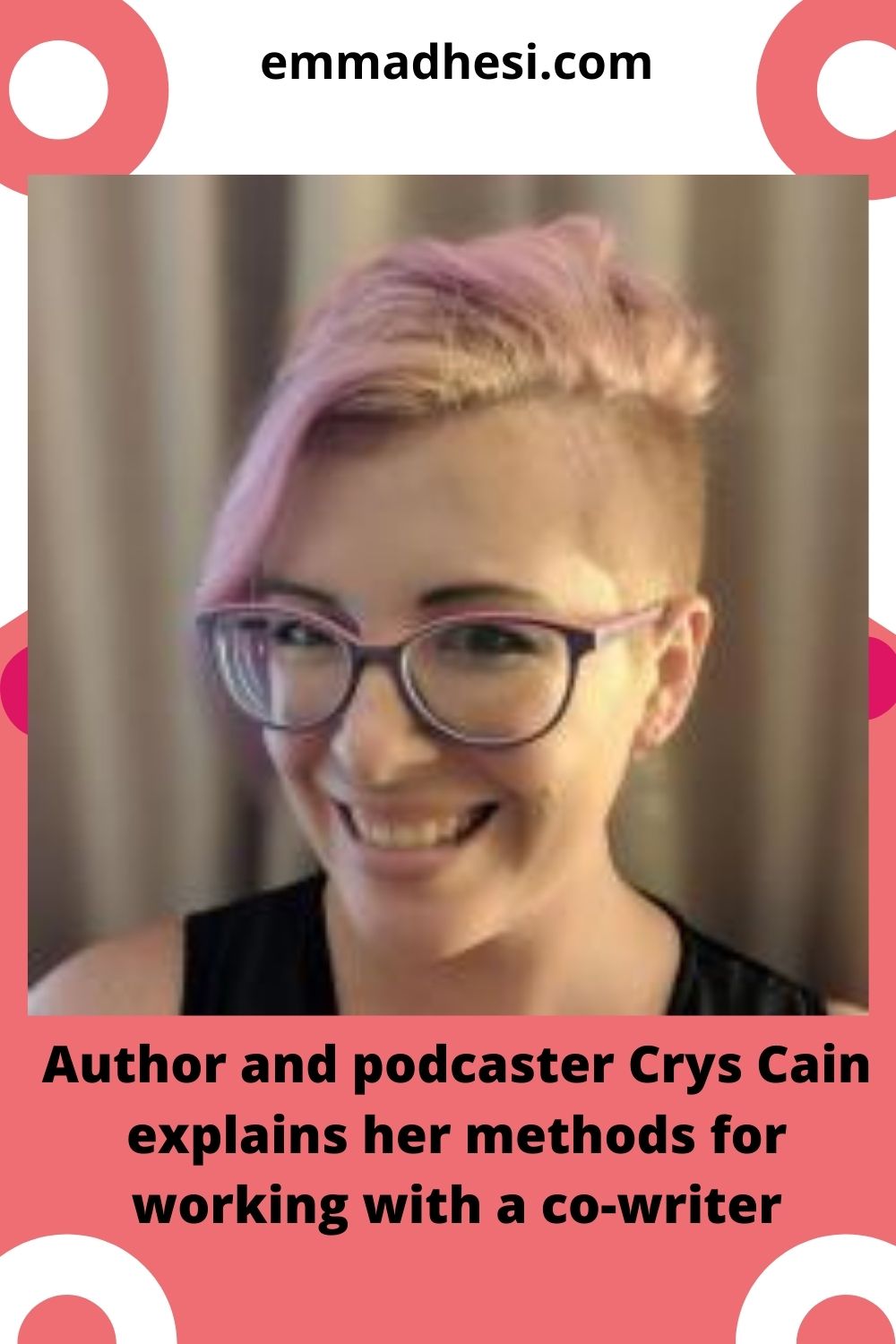
Crys Cain explains her methods for working with a co-writer.

Emma Dhesi  22:42

Okay. Yeah, that sounds like a good. Yeah. So there can be no, because even what I’ve said, I mean, I don’t know if you’ve experienced this, but certainly just in my own family life, it does the to like you and your your co writer can agree it but it doesn’t mean that the descendants agree. problems can realize that Yeah, yes. 

Crys Cain  23:02

And I’m writing a solo series in our world right now. And with her by her names on the book, and she like our intention has been for her to give it a once over past just to make sure like she’s solid with everything that’s in there before it gets published. And with health and COVID. And everything, she has not been able to two books that have been published.

But I had to argue with her to get her to take a percentage. And, and she’s like you’re writing them, you should take all the money. I was like, Girl, here’s the thing, though. If you don’t take a percentage, you will not feel like you have the right to tell me that something doesn’t work.

And if something doesn’t work, it’s going to affect our entire world.

And you’re going to build resentment. And that’s going to cause big problems for us down the line. I need you to feel like you have ownership over these books. So that you feel like you can tell me like that you don’t want something to happen for the sake of the entire world.


Emma Dhesi  23:59

Oh, that’s big picture thinking there that same ungenerous thinking too, because it would be you know, I’m sure not everybody would it would be easier to just go Okay, well, this is mine and I’m going to hold on to it. So I applaud you for that.

Crys Cain  24:14

I mean, that just leads to resentment on the line. And I don’t want that.

Emma Dhesi  24:20

So if we think about you and the lady you’re co writing with know, how does it work? So you both know, you’ve got this world, you both know the world. But how does it work in terms of coming up with story ideas, character names, and personality kind of, you know, the character development, let alone the plots?

How does that all kind of come together and work between the two of you?

Crys Cain  24:46

We’ve tried to structure these series pretty similar. It’s kind of you think of the jack Reacher books like they’ve got a fairly similar structure every time. And that’s somewhat how we’ve approached this but just from a romance point of view, so every series has a team. And those are the main characters of our series generally about six because that’s a really good number for our series.

And then in, when we sit down to plot out the first book, we figure out what the team members names are in just some basic characteristics about them and their personality.

And when we first started, because we didn’t have any idea where this was going, we really didn’t plot out an arc that was going to go from first book to last book, we have with our most recent series, we know who the bad like that there’s a hidden bad guy that is going to be revealed and dealt with by the last book.

And then we sit down, and it takes maybe about two hours. Now, we sit down and say, Okay, this book is going to be this many chapters, and it’s generally 12 to 16 for us. And now it’s gotten to the point was like, how many days do we have? How many days do we have to get this book written out? Because it takes us each day per chapter.

And so that’s two chapters per day. And so this last book, we’re like, we went on what write less days, so we’re gonna make it 12 chapters. And so next, I already have first chapter done, we’re writing it next week, we’ll have it done in a week.

And so for each of us, that’s two to 3000 words a day average. And then we sit down and we tell each other the story. We’ve gotten to the point where we don’t necessarily tell it to each other in chronological order. We start with chapter one.

And we start saying, Yeah, this happens, this needs to happen. This needs to happen.

Once we hit a point where like, ah, I don’t really know what needs to happen next, then we go to the end, because we know how it needs to end and we work our way backwards a little bit, and see how many how much room we have between that in the end, and then figure out what needs to go in where in between 

Emma Dhesi  26:45

Develop stages when you sit down for two hours and figure out the plotline. 

Crys Cain  26:49

Yep. And then our, our outlines have been anywhere from 2000 words to 7000 words, they don’t generally get to 7000 words anymore, because we’re Quick quick on it.

And then we just take turns generally writing chapters, one of the things we actually started doing in the last few books, because she’s been having trouble getting into a scene with everything that’s been going on in her life, is I will write the first half of the chapter.

And then she’ll jump in and continue it. Because she’s in the in the mode of writing them, then she can write the first half of the next chapter. And we’ve been writing middle to middle that of chapter front to chapter end.

And that’s been a really interesting and fun tactic as well.

Emma Dhesi  27:36

So do you find them that you’ve got a similar style of writing? Because that would be how do you kind of Mel that so that it’s not obvious that it’s two different writers?

Crys Cain  27:47

Because we read each other’s chapter, and make changes as we go through mostly additions rather than deletions, I discovered. And this is one of those things that differs from corregidor copy writer I discovered.

I think during our second series, I was being a little bit more heavy handed with edits, because I’ve used viewed them as suggestions like, hey, if this works for you take it if not, don’t worry, she viewed them as if I cared enough to make a change.

And I absolutely wanted it there. And so once we had this conversation about her resentment and frustration about this, I actually started making less, I started to stop making less suggestion changes and just more additive, like, Oh, I think this would add to the scene if I did this versus like, hey, instead, like, why don’t we do this.

With another co writer, we would tear each other’s chapters apart, where sometimes it would be just as much edits as it was original draft. But we were both really comfortable with that level, because we trusted the other to make it as strong.

So with both of those styles, though, the style gets pretty melded and I think, on my end, I don’t know about my co writer, I haven’t asked her this, I think I pick up a specific style when I’m writing our books versus when I’m writing other books.

Emma Dhesi  29:12

Okay, so kind of as it sounds like you’re able to kind of mold your style to fit the joint style that you’ve got there and then perhaps more kind of freedom perhaps or you can be more experiment, not experimental, but you can try new things when you’re writing your own stuff.

Crys Cain  29:33

And or even with other co writers, I can be a little bit more loose and free because like we because there’s more back and forth and writing over top of each other like it just will naturally melt there but with our books, I feel like I do Mel just slightly to that particular style, versus when I write other things. 

Emma Dhesi  29:55

Oh, and as it changed me feel over the years that you’ve been writing together and It’s gotten easier, as you know each other but 

Crys Cain  30:03

Yeah. And yeah, and just knowing more what the expectations are. And also, you know, we’ve tripped up over several things. And up, you know, for me one of those things is getting crunched against a deadline.

Right now, we’re not doing pre orders, even though pre orders work wonderfully for us, because between health and emotional things, we have gotten ourselves crunched up against our pre order deadlines, enough that we’re not going to do them, we’re not going to do long pre orders anymore.

We’re not going to put up a pre order until it goes to the editor, because we know exactly how much time we’re going to take once it goes to the editor. 

Emma Dhesi  30:41

Yeah, you know, that’s something I’m too scared to do is have pre orders.

From time to time, I link to products or services I love using with affiliate links. This means that I may receive a small percentage or fee for referring you to any product you may purchase from one of those sites. It does not cost you anything. These small fees help sustain my small business. I truly appreciate your support.

Crys Cain  30:48

My ideal is to have books done and put, like, you know, years in advance, I don’t know if you know, Rachel amphlett. But she has, I think she’s currently writing her 2022 books, because she’s already got, like, at the end of 2019, she already had all of her 2021 books and half of 2022 books done and so they were just ready to go to their next stage and they were on a calendar.

That’s ideal. Like, I love that. That’s my goal.

Emma Dhesi  31:14

Yeah, that that sounds Yeah, taking the pressure off quite a lot that you know, you’re two years ahead. That’d be lovely.

Crys Cain  31:21

Right now, like if I get sick, it’s fine.

Emma Dhesi  31:23

No breathing room. So So you are a full time writer, you’re a full time mum.

So what does the your the kind of structure of your working day or your working week look like? How do you fit everything in?

Crys Cain  31:37

I actually hired a nanny fairly early on. The original agreement was that my ex was going to be a stay at home dad taking care of the kid that did not work out very well. And so I hired a nanny who’s wonderful.

And she takes the kiddo from eight or nine depending on what there he was at my house or his dad’s house. And then until three or four, again, depending on which parent and so Monday, Wednesday, Friday, My day starts at eight. After he goes off with the nanny, she sometimes comes to the house or she just comes in picks them up and they go run around in the ocean in the sun.

And then those days my workdays can go late as late as I want. But most of the time, I just work here and there and I’ll go off. I can I don’t have a super strict schedule on those days. Tuesdays and Thursdays I get early mornings, which is my prime time for work.

I love early mornings, I’ve been sleeping until six. So I haven’t been getting like my dark hours working time. And when I can start work at four, I can get so much done. By the time eight o’clock rolls around.

But I haven’t been waking up that early. So that hasn’t been happening. And then Thursdays I have my two podcasts recording sessions scheduled. So I do work up until three o’clock on Thursdays but then I get the kiddo and we just hang out in the evenings.

Emma Dhesi  33:13

So what’s the What do you feel it is about the kind of foriegn start that the trim is…

Crys Cain  33:20

I’m just a morning person I’m a morning person there’s no no one else is awake making sounds like right now I mentioned the the truck going by the food truck. That’s a lot of fun.

But trucks go up and down. Motorcycles go up and down. I can hear my neighbor doing construction work. There’s just more noise I think and I that derails my brain a little bit even if I’m not consciously paying attention it because I live in Costa Rica and we don’t have in we just don’t have insulated houses.

The window behind me is very unusual in that it does have glass closing windows, most windows here. And most of the houses I’ve lived at our just screen windows. So you can hear sound all the time coming in and out of them.

And you know, when it’s the howlers in the two cans, that’s lovely. When it is your neighbors having a karaoke night? It’s a little different.

Emma Dhesi  34:21

Yes, I can imagine. Well, you’re painting such a lovely picture, though. You know, I’m in the, you know, dark, cold Europe. And there you are with two cans outside of Costa Rica and the beach and all the rest. Yes. Yeah. Like I don’t feel too sorry for you there.

But no, no. It sounds like as long as you get your two to 3000 words done a day, then you’re that’s you kind of good for the rest of it.

Do you do is the kind of marketing that you do for your books, the sort of admin side of things, or, you know, not to have to do too much of that.

Crys Cain  34:56

I’ll come back to that question. But I just wanted to note for listeners Like, I actually don’t write two to 3000 words a day unless I’m on a co writing book. I spent most of February not writing, because we ran up on those two deadlines at the very end of January, that wiped me out.

And I think I maybe wrote two days of February, which is not my ideal, I don’t like that. But I’m determined to write at least 1000 words a day, this month to try and avoid such a run up against deadlines again. But as far as marketing, the most marketing I do really is my email, which actually hire somebody to do because I hate doing it.

And it’s a weekly email, and I have a very set formula. Because we published monthly, I have basically three weeks of content planned, hey, here’s the pre order. Don’t forget to order it. Hey, the book is out. And then the third week is, Oh, my gosh, you guys, thank you so much for reading the book here. Some great things you’ve said about it.

If you haven’t left a review, go do so. And then the fourth week, I generally have something else going on whether it’s a sale or an audio book is releasing or whatnot. And so I generally have every week covered with something new coming out. And I yeah, I not ideal. It’s a little fast for what my ideal is, but it is what I’ve got right now.

And I’ve got a system that works. Other marketing. Yeah, I’ve lucked out in that my co writer is such a good Facebook marketer, she’s, she’s just really, it’s really natural for her to engage with, with people. And I, it’s not one on one love it small group love it, particularly writers if you’re if you’re if you don’t have one of my special interests for basically writing.

But there’s a few other things that I don’t know how to talk to you. For the most part, I score pretty high on like self diagnosis for autism. So at some point, like that’s going to be a pursuit.

But I’m just like people I don’t understand and mass, I do not understand people. But I need them to live. So. But I’ve lucked out with her being a natural that and she’d been I think in other positions with sales before. So 

Emma Dhesi  37:20

She knows what it’s all about. Now you’ve Well, thank you for sharing that. I you’ve mentioned that you have a podcast called rights away, which I listened to. And I really, really enjoy and do that with JP.

So if you can tell us a little bit about that. And what prompted you to start it.

If you’ve been working on your novel for years (perhaps even decades) the maybe it's time to consider working with a coach.

If you have multiple versions of your novel and you don’t know which works best, are scared nobody will like your book and don't feel like a 'real' writer, then my guess is coaching is the right next step for you.

Find out more and sign up for your free Clarity Call here: https://emmadhesi.com/personal-coaching/


Crys Cain  37:40

I don’t want to start a podcast to nerd out about writing for a year or two before I started it, I’m not really sure how much time but I wanted to have a clearer idea of what my focus would be, rather than just popping on and rambling.

And I tried to be an interview show at first, but then I found that was extremely draining for me to one have to schedule interviews, and then to have to do the interviews, because that involves research and deciding on questions.

And, and I was very transparent with my process as I was putting out those beginning episodes being like, Hey, guys, I’m still figuring out what works. And I tried to do some solo episodes. But those I needed to script, I couldn’t just sit in front of a microphone and jabber at it coherently, without long pauses.

So I ended up talking to my friend JP and be like, hey, you wouldn’t be interested by any chance and joining me as co host. And so we just read each other and it’s lovely. We do want to do a few more interviews with folks. We’ve got some stuff saved up. And we’re doing some fun episodes, because we’re Taro geeks as well.

And so we’ve been doing some fun Tarot stuff as far as like planning our business using Tarot or like looking at our year on our substack. And we just this morning recorded an episode on how to write a short story using Taro part one of two. And he’s done that before I haven’t. And so it’s just been so much more energetic to work with him.

And then and for any Clifton strengths geeks out there, he’s high in ideation. So when I was like, hey, if you wouldn’t mind like putting down like a few ideas of things you’d like to talk about, that’d be great. And he’s like, Okay, cool. Here’s 40 I’m like, Wow, amazing.

Excellent. Yeah, so that has been lovely, great addition. And then we have have a monthly Book Club, which is just an excuse to talk with other writers about craft and business books.

And that’s been just a blast as well. 

Emma Dhesi  40:07

Oh, okay, well, I’m definitely gonna link to that in the show notes for people so they can jump aboard and listen. And I have to say, I love the graphic that you’ve got for right away. It’s really clever. I’m looking at..

Crys Cain  40:20

That was JT he did it 

Emma Dhesi  40:22

Oh it is really good. Yeah, check it out. But you’re just before we started recording, you told me that you have started a second podcast want to tell us about that? 

Crys Cain  40:32

Yeah. So I’ve been a member of the author success mastermind for I it’s over two years, I can’t remember exactly when Jay Thorne started it. But it moved into a community format from just a small group of 12 to a larger group on Slack, flew about a year ago, and and you’re a member of this, you’re also a member of the smaller mastermind this year.

And we have, we have had questions that pop up fairly regularly, you know, both in the community. And when we’re just talking to people in general and we thought one of the really good ways for us to delve deep, since it’s hard to type everything up on slack would be to talk to each other about it on a podcast.

And so we have the author success mastermind podcast, which is a mouthful, coming out. I don’t know when this episode goes live, but as of this recording, it’s coming out on Tuesday.

So by the time people hear this, it’ll probably be live. We do have a trailer episode out there just so people can hit subscribe. And it’s it’s been fun. We banked a few episodes to start. And I don’t know we get into some good and juicy things. I like it. 

Emma Dhesi  41:55

Yeah, I’m looking forward to listening to it. Definitely. So I’m conscious of time. But before we wrap things up, I’d love to know a little bit about what you’re working on right now.

But not just your core writing stuff. I’d love to know a little bit more about what your passion project might be at the moment. What are you working on? 

Crys Cain  42:14

Yeah, I my goal is to start releasing fiction, specifically science fiction and fantasy under my actual name, Crys Cain, excuse me. And I found when I tried working on it at the same time as my romance, that I didn’t have energy, I just got distract completely distracted by one project or the other.

And I kept getting frustrated because I would either not have enough energy for the science fiction, fantasy stuff. Or I would put a lot of attention on it, and then have run up against a deadline for the romance stuff and or just be like, Oh, I need to go make money now.

So my goal is to finish up the romance stuff this year, mostly, there’ll be a few other book trailing off books that I do need to finish up in 2022. So that I can talk money way in my in my bank account, to cover me to just focus on writing science fiction and fantasy, I have a co writing science fiction project that is just kind of been meandering.

My co writer is a slow writer, and we’re doing that one differently. With romance. It’s always been alternating chapters. With my co writer, I’m doing the first draft and they will do the editing phase. And they did the outlining phase like I would pop and be like, oh, wouldn’t it be cool if they’re a structure geek. So it’s been wonderful.

And they’re a world building geek. It’s wonderful. I have another sci fi that I started kind of writing into the dark. And I have a Cozy Mystery placed on an island in Georgia.

That is that just makes me laugh every time I pick it up. And so that’s probably the first novel I’ll finish just because it brings me so much joy. And I probably have the most clarity about that one of all the solo projects I have. But yeah, they’re all kind of waiting for me to have energy.

But I plan on writing short stories in between these other romance writing projects to maybe put out there to like, just establish a presence. Maybe submit to some anthologies, and magazines, and just start trying to get myself in the habit of putting myself out there as my real self and not behind a pen name.

Emma Dhesi  44:38

Yeah. And it will be nice kind of what Joanna pen calls a palate cleanser. It’ll be nice to play. Just have like something different. Yeah, absolutely. Well, you’re a busy busy lady. My goodness. Well listen, where can listeners find out more about you online? Or can they?

Crys Cain  44:55

They can, but not the romance super secret, but I Do you have my website CrysCain.com There’s not much there. It needs an overhaul but also right away podcast.com and the author success mastermind.com and tik tok, if you’re Tik tok, it’s Crys Cain. 

Emma Dhesi  45:16

Perfect, lovely. Well, thank you, Crys Cain, very much for your time today. It was lovely speaking to you. 

Crys Cain  45:21

Thank you, Emma. 

Emma Dhesi  45:25

Well, thank you so much for joining me today.

I hope you find that helpful and inspirational. Now, don’t forget to come on over to facebook and join my group, Turning Readers into Writers.

It is especially for you if you are a beginner writer who is looking to write their first novel.

If you join the group, you will also find a free cheat sheet they’re called three secret hacks to write with consistency.

So go to emmadhesi.com/turning readers into writers. hit join.

Can’t wait to see you in there.

All right. Thank you.

Bye bye.


Support The Show

If you enjoy the Turning Readers Into Writers podcast, you can now support my time in producing the show with Patreon.

If you find that the podcast adds value and you’d like to help support the show, please consider supporting me on Patreon for $3.00 per month and you’ll get bonus podcast content, as well as a personalised thank you from me, and a shout out on the show.

Alliance of Independent Authors

Shortcuts for Writers

Do you feel as if you don’t have the time or the money to invest in editing your novel? I know an online course that can help you to transform your manuscript WITHOUT breaking the bank. It’s called Book Editing Blueprint: A Step-By-Step Plan To Making Your Novels Publishable, and it was created by Stacy Juba of Shortcuts for Writers.


emma dhesi

Emma Dhesi

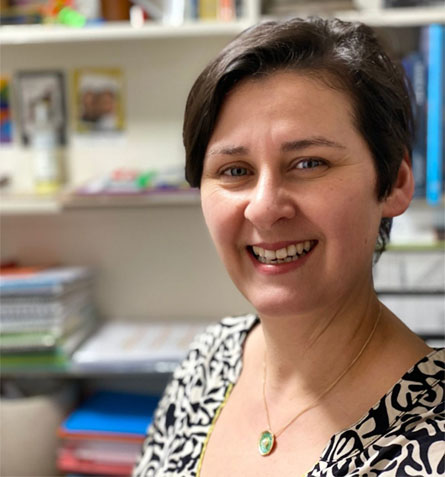
Emma writes women’s fiction. She began writing seriously while a stay at home mum with 3 pre-school children.

By changing her mindset, being consistent and developing confidence, Emma has gone from having a collection of handwritten notes to a fully written, edited and published novel.

Having experienced first-hand how writing changes lives, Emma now helps beginner writers find the time and confidence to write their first novel.
Write with confidence with non Fiction author Andrea Glass

Write with confidence with non Fiction author Andrea Glass

Write with confidence with non Fiction author Andrea Glass

by Emma Dhesi | Turning Readers Into Writers

Interview with Andrea Glass

Emma Dhesi  00:00

Hello, I’m Emma Dhesi and welcome to another episode of turning readers into writers. If you’re brand new here, welcome. And here’s what you need to know. This is a community that believes you are never too old to write your first novel, no matter what you’ve been up to until now, if you’re ready to write your book, I’m ready to help you reach the end, I focus on helping you find the time and confidence to begin your writing journey, as well as the craft and skills you need to finish the book.

Each week I interview debut authors, editors and industry experts to keep you motivated, inspired, and educated on all things writing, editing, and publishing. If you want to catch up, head on over to emmadhesi.com, where you’ll find a wealth of information and tools to help you get started. Before we dive in, this week’s episode is brought to you by my free cheat sheet 30 Top Tips to find time to write.

In this guide, I give you 30 ways that you can find time to write in the small gaps that appear between the various errands and tasks and responsibilities that you have in your day to day life. Now, you might be thinking that you don’t have any time to spare, but I can guarantee these top tips will give you writing time you didn’t think you had. If you thought writing always involved a pen and paper or a keyboard. Think again.

If you thought you needed at least an hour at a time to write your manuscript. I help you reframe that you won’t be disappointed. Get your free copy of 30 Top Tips to find time to write by going to emmadhesi.com/30TopTips.

Okay, let’s dive in to today’s episode.

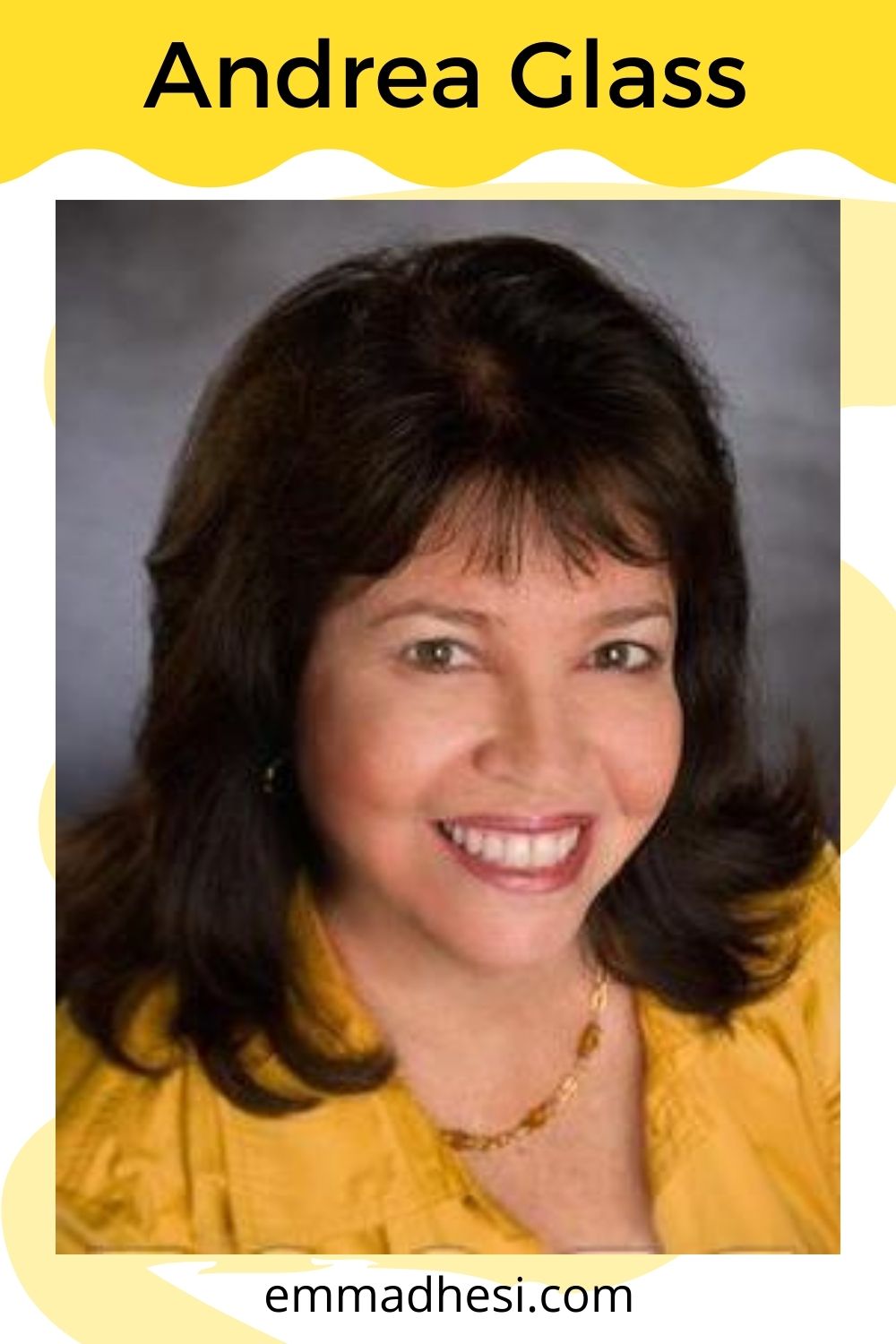
Andrea Susan Glass is an award winning ghostwriter and book coach for first time nonfiction authors. For more than 20 years, she’s ghost written dozens of books, and copy edited hundreds of non-fiction books. As a book coach, she’s guided countless new authors to write and publish their book some the bestseller status.

Andrea is a longtime instructor for the University of California, teaching classes in the creative writing and copy editing certificate programs. She wrote the best selling book, your fabulous first book, how to write with clarity, confidence and connection to guarantee that new authors would have all the essential preparation to write their own fabulous first book.

Learn more about Andrea and her book coaching programs at AndreaSusanGlass.com. So let’s find a little bit more about Andrea and her journey to coaching. Well, thank you, Andrea, thank you so much for joining me today. I’m thrilled to have you here. 

Andrea Glass  02:57

 It’s my pleasure. 

Emma Dhesi  02:58

So I wonder if you could start just by telling the listeners and myself how you got started in writing what brought you to the wonderful world of writing?

Andrea Glass  03:08

Gosh, I talk about this in my book that I started when I was about five years old. And I used to write poetry and little songs and I would make little books like craft objects. And I was just told growing up that you can’t make a living as a writer. So I always wrote but I put it on the back burner. And then I took a class an evening class in writing. And I started writing reviews for plays and movies.

And eventually, I submitted that to newspaper and I got paid for it. And the first time I got paid for my writing, I was hooked. And so I started writing articles for magazines and got paid for that too. And then eventually I had a few book ideas. And I spent probably about 10 years writing small books, kind of gift type books, and seeking an agent which I had for a while and seeking publication. And at that time, self publishing wasn’t very popular.

But I did self published a book in the 1990s. And I couldn’t sell it because I didn’t know how to sell it and we didn’t have Amazon. So I said, you know what if I wrote books for other people, and I got paid up front, and I didn’t have to worry about selling the book. So I put out a notice in a newspaper and I got my first ghost writing job and I realized that, hey, I’m still writing and this is fun, but I’m getting paid for it.

And the very first book I ghost wrote I won the San Diego Book Award for the Best structure book and that sort of clinched it that yes, I could write books. I was good at it, I could get paid for it. So I did put aside my own writing dreams for a number of years and started writers way in 2000. And I edit, copy-editing to ghost writing because sometimes a client would come with a book already finished and didn’t need ghostwriting.

And I did the cleaning up, I call it polishing your book to perfection or near perfection. It’s no book ever gets perfect and after that, then I also added book coaching because there were some people who needed hand holding from the beginning of their idea for a book, all the way for to keep them on track and to give them accountability, support, encouragement and feedback. So writers way offers ghost writing, copy editing, and book coaching. 

Emma Dhesi  05:55

So what is writer’s ways that your sort of company? 

Andrea Glass  05:59

That is the name of the company, it’s my service based business, I also do construction, I teach for the University of California. And I have held webinars and live classes when we had live meetings. I’ve taught for several of the local universities where I help live classes. And most I teach people how to write an E-book in 30 to 60 days because people are looking for shorter books and so a short ebook could be anywhere from 10 to 15,000 words, and it gets people a good start a good practice with their first book, so they don’t get overwhelmed thinking I have to write a 200 page book. 

Emma Dhesi  06:51

So I’m interested in your ghost writing. So when you were ghost writing for other people, how did you kind of get into character so to speak, or take on the voice of the person that you’re a ghost writing for? Was that kind of easy to do? Or did you have to spend time with that person getting to know the sound of their voice? You know, getting to know their voice?

Andrea Glass  07:13

Well, that’s a good question. And because every situation is unique, and I’ve never called myself a cookie cutter, writer or ghost writer, I try to customize myself to each situation. So let’s take one situation, the first book that I was ghostwriting, we got together the author and myself, and we had at that time tape recorder, and I would interview him.

And I would get the discussions transcribed so that this was really in his voice. And as I took the transcription and added to it, and modified it, and cleaned it up and pulled it all together into a book, we still had the author’s for us. Because basically, when you’re working with nonfiction, a book and nonfiction is more like a discussion. It’s like a conversation the author has with the reader.

And so I’m talking to you, and I’m telling you about my area of expertise. This particular book was about how to find honest car repair and the gentleman was building a nationwide car repair service and we found that there were many industries such as the legal industry childcare, senior care, and Car Care, where there was a lot of negativity.

So he wanted to share the tricks on finding honest Auto Care. So if I’m talking to let’s say, my target audience is a female, which women definitely have a difficult time talking to a car repair mechanics because they don’t understand cars generally. The author would say, Now, here’s what you’re going to do when you get into your car and the check engine light comes on. And so you basically find that a lot of non-fiction books will have discussions.

So when you interview the author, you’re getting the author sharing his or her expertise with the reader. Now another author I worked with had written a bunch of blogs and newsletters, so I had his voice in those particular writings that he had done and this is very common with those writing projects.

You will take content that has already been written, but isn’t in anything that looks like a book and so what we would do is create an outline for the book, basically your table of contents, your chapters, and then I would take all of this miscellaneous years of blogs and newsletters, and figure out where they went in the table of contents, and then pulled it all together with transitions and we did some more interviewing with this particular author and then of course, you give it back to the author, and then they go through it and they look at it and say,

What do I have to do to make this really sound like me, because even though the author is not a writer, they can see, when I have put something together that looks more like a book, they get a better handle on how they can modify it to, to give it what they really want to make it sound like them.

Another time I had someone do their own recording, they just talked into a digital recorder, sent it off to a transcriptionist and I turned it into a book. I’ve had people who’ve done webinars, and they had the webinars transcribed and they sent them to me, and I turned that into a book.

So it’s basically making your table of contents your chapter outline, then gathering the content, however it is from previously written material, or from interviews, or from a live webinar, and then popping it into the chapters where it goes, and then pulling it all together, weaving it together, it’s kind of like a tapestry, you know, you have to have connecting threads between the chapters, and it is definitely challenging.

For me, it’s an you have to have kind of one of a big perspective, you have to look at the whole thing as one, and then you have to look at everything in detail too. So you have to have these two different perspectives working at the same time. But it’s very rewarding, and it makes so much it gives so much reward to the to the person who wanted to write a book, but knew that they just couldn’t do it. Either. They didn’t have the time, or the talent. That’s what I usually say.

They don’t have the time or the town, or they just don’t have the perseverance. Everyone who’s written a book knows that it takes concentrated effort. Nobody writes a book overnight, no matter how many books say write a book in 30 days or write a book in a weekend? It really doesn’t happen like that. 

Emma Dhesi  12:34

No, no, it Yes, you’re right, It takes sort of consistency of time and effort. You absolutely right. And now you yourself, have written a book to help people write their book, you’ve written in your fabulous first book, how to write with clarity, confidence, and connection. and a lot of my audience certainly tell me that one of the things that they struggle with is how to feel confident about their writing, because often they’re, they’re beginner writers, their first time writers and so that that self belief is still growing, they’re still working on that.

And so what are some of the ways that you suggest to the people you work with? how they can start to build their confidence? and start to feel feel good about what they’re writing puts a putting out into the world?

Andrea Glass  13:22

Well, I’m glad you asked me about that Emma because when I was considering what to write for my first book, and that did take quite a bit of consideration I wound up doing some interviews and asking people who I would consider my target audience what their biggest challenges were, because why not write a book that meets the needs of your typical audience, then just coming up with an idea off the top of my head, and there were so many books on writing out there that I was a little bit intimidated at first,

I’m developing my own confidence in writing a book that would be a little bit different, and that would be helpful. So some of the issues that came up, were about confidence. And in my book, I talk about confidence in your writing confidence on your subject and conference in marketing. So let’s talk first about confidence writing.

First of all, I believe that confidence comes while you’re doing something, not always before, and you could look at many stars in Hollywood. Take Barbra Streisand, for example, who has always said she’s never confident she gets up out on stage. And the book that was written called feel the fear and do it anyway, some people step into what they want to do without the confidence knowing that the confidence will come while they’re doing it. Because it’s hard to be confident in something you’ve never done before.

So if you’ve never written a book, It’s hard to feel confident writing it. So one way you can start to build a confidence, of course, is writing something small, like a blog. And as soon as you get any kind of positive feedback, your confidence will start to grow. I have to tell you that being a copy editor for 20 years, when I had my first beta readers read my book, and give me positive feedback. And even some negative feedback, I was blown away. Because I didn’t have confidence in my book right away.

And when someone said, this is the book I’ve been waiting for, you know, I’ve been wanting to write a book for years. And I just couldn’t get started. And I’m going to follow your book, step by step, it’s going to be my guide. And others said, I didn’t like this, can you fix this? Or can you do that, I was just so thrilled that there were people who, whether they liked it, or didn’t, they read it, and they gave me some good feedback. So that helped to build my confidence that what I was writing was making an impact.

So I suggest people get some early readers. Whether you start off with short blogs or articles to just build, start building a confidence. And then once you start trying to book get some early readers, and don’t take the negative feedback, harshly take it as constructive criticism, because your goal is to write a book that impacts your readers.

And when you ask your readers if it’s working, and they say, No, fix it, and keep fixing it. And don’t lose your confidence, because you did make an impact, you got them to say something whether it was negative or positive. So start building your confidence as you get some positive feedback in your writing.

Now, in terms of gaining confidence in your subject, my initial fears were at some of the clients fears are that Who am I to write about this, I’m not an expert. Nobody knows Andrea Susan Glass, you know, Who is she to write a book on, on how to write your first book? Well, I twisted that a little bit. And I said, I’m writing my first book along with you, the reader and we’re going to learn this together and everything I’m learning I’m going to share with you.

So I created that kind of confidence in my subject, by saying that I can learn it and I can teach you and you can learn along with me. Also, I read voraciously. My Kindle is full of tons of books on writing, I learned, I built my confidence in my subject by striking, and talking to people in my target audiences seeing what they wanted to know and then the third area of building confidence is in marketing.

And I have to tell you, that’s going to take a little bit of time, nobody comes out of the gate, confident marketing their first book, because it’s your first book, and it’s not a service. If you’ve been in a service business, for example, I work with a lot of coaches and speakers, financial planners, service professionals, they’ve been marketing a service, but a book is a product.

So you have to learn the difference. And you have to learn how readers find books. Generally they find books, either by searching and might go into Amazon or Google look up a particular issue or look up if they’re looking for young adult fantasy, if you’re looking for women’s contemporary fiction, and they’re looking for how to get your cat to stop scratching your furniture, whatever it is, you can use the search bar, but the other way people find you is by referral or by your promotion.

So you need to understand these two different methods of marketing. Whereas people search or people get it by referral. And once you study and you and you learn and I have to tell you, there are so many ebooks and so many blogs, and so many webinars on book marketing and I probably studied intensively for two or three months because there’s two levels of marketing with your book anyway.

One is before you launch it, and one is after you launch it. So you can start to build your confidence in marketing by doing a little bit of it before you launch your book and that’s called building a platform and building a platform means getting yourself out there and letting people know about you. If you’re comfortable on social media, go for it, whether it’s Twitter or Facebook, LinkedIn, Instagram, just start conversing with people and providing information.

Find the groups if you’re in fiction or non-fiction there are plenty of writers groups and share ideas. Answer questions, ask questions, and get comfortable with promoting yourself in a very low key sort of way and you’ll start to build your confidence when people say, hey, that’s a great idea, or I really appreciated, you’re sharing that information with me and then as you grow more confident being out there in the public, because let’s face it, writers are hiding behind their computers and a lot of writers are very shy and especially now that we’re not out in the public as much.

They may not feel comfortable sharing who they are but I spoke to a friend the other day and author and I said, look, I know you just want to sit and write all day, butyou can just build it and they will come, people want to know who you are. They want to feel a connection to you as the author, so that they’d be interested in your book, people don’t just look for books anymore, they really do like to make a connection with the author and social media is definitely one way to do it and another way is to share with other authors, if you can find five other authors who might like to do a group emailing, you know, some kind of a group promotion together, then that helps you help each other that way.

So slowly, but surely, just learn a little bit about marketing and try a few things and as you get some positive responses, your confidence grows, like I said, you have to step out there and start getting positive results and keep track, you know, find out what works for you, because I had an older client in his 90s. and he didn’t want to do any public speaking.

So I would say don’t get on podcasts and webinars if you don’t want to speak, but do some guest blogging, and get on social media and do things that you’re comfortable with, because you’re never going to shine, and feel confident if you step too far out of your comfort zone. But as you step a little bit more and more your comfort zone will expand.

But I don’t, I don’t ever tell anyone to put themselves in a position where they’re not going to be their best self because they’re so uncomfortable. And there’s going to be some form of marketing that you’re going to find that you’re comfortable with everyone, there’s so many opportunities for marketing nowadays with the everybody being able to reach us where we are in the world, I’m in California and Amazon, Scotland.

So you know, nothing keeps us apart anymore. So find your comfort zone, and build your confidence slowly and, you know, you just have to do it, you have to market your book and your will. I sold one book, I was confident and when I sold two books, I was more confident and when I sold 1000 books, I was really confident.

How to write with Clarity, Confidence and Connection with Andrea Glass


Emma Dhesi  22:58

There’s so much good stuff in there, Andrea, I think also, I just want to point out to our listeners who might be feeling you know, I’m brand new to this, I have not written my first book yet. But you know, listening to you, you’ve been in the industry for 20 plus years, you’ve ghost written many, many books.

But when it comes to writing your own book, you know, you still have the same, the same feelings that all of us have and so I want the listeners to kind of know, everybody has this to have that kind of initial fear is completely normal and it’s parcel of it and I love the advice that you’ve been giving Andrea about taking it small steps and little by little, and that the confidence comes from from the action from doing and the more that you do, the more confident you become and, you know, particularly then if we think about the marketing side of it,

I love particularly for those who are doing kind of more hopefully books or development books, you can go out and sell without being salesy and as you were saying, it’s about sharing information about being of service to people being helpful to people and that’s what drives that connection and will bring people to you and your book about personal development or professional development and so really good three great ways there of growing confidence.

So thank you for sharing those with us. I know that you have, so I know that as parcel you’re helping writers you have this kind of process that you take them through and so what are some of the steps that someone needs to take when they’re looking to write their their book?

Andrea Glass  24:43

Oh, sure. I put together a checklist that helps people follow the path that they need to take. I find checklists are sort of like a plan and as you check each thing off, I find it’s a real good way to keep be self accountable.

As I said before, writers are on a solo journey for most of the time and unless we can hold ourselves accountable, it’s very difficult to stay the whole course, I have seen writers who have thrown up their hands in the middle and said, I can’t do anymore, I’m facing a blank screen or, you know, somebody challenges that come up.

So the first step that I found is the most important, absolutely the most important is what I call in my book, the author aspiration, that could be the reason that you’re writing the book, a lot of people call it the Y. If your y is not strong enough, any of the challenges that come up, can throw you off and I’ve seen this happen with clients who have hired me and then they disappeared and I’ve tried everything to contact them, and they’ve just sort of snuck back into their little shell of fear or whatever was keeping them.

So if your y has to be strong enough, and your y would be, you have this book inside you that just has to come out, or you you’re ready to build a career as an author, that’s one of my why’s I have waited long enough, and I have a lot of books in man, probably one a year is going to be my, my format and then I’d also like to have passive income, which, ultimately down the road, it’s passive.

Some people want to leave a legacy, some people have some really valuable information to share, I have a list of maybe 20 different y’s in my book, and that y will carry through everything else so if my Y, for example, is I want to create passive income, and something comes up, let’s say, a hardship in my life. I know that I have to deal with that.

And yet, keep going because I have to do what it takes to create their passive income. And I’ve talked to other people, like I said, I was talking to a friend the other day, and she says, Oh, I admire you for doing all that. I said, I’m doing what I have to do, because you write a book and then I know I have to market it. If you write your book and it sits there, I’m sorry, I’m not gonna feel sorry for you because you know that you have to do what it takes and so if my Y is strong enough, I will do what it takes and then the second most important thing is the readers why.

Why is a reader going to buy my book? I think there’s about 4500 books published each month on Amazon, and several million a year. So the reader has a lot of choices, and the reader can get a lot of information for free, as well. So why my book? Well, obviously, there’s a reader result and my result in my book is that I want to help every first time author now how to set themselves up for success before they write the book.

My book that I wrote, my fabulous first book is not a guide on how to write your book, but it’s how to set yourself up beforehand and a lot of people don’t think about that, they might just plunge right in, and then they get stuck. But if they figure out in advance why they’re writing the book, and and why the reader will buy the book and then the third thing is who that reader is? going to write a book that meets those goals, rather than a book when they’re finished with the book, and they say, Oh my God, who is this for?

And you know, when somebody says who you’re marketing, for instance, I don’t know, everyone, anytime someone tells you that their book is for everyone, you’ve got to just kind of step back and say, I’m sorry, but you can’t market to everyone. It doesn’t work that way. It just so well. Yeah, you’ve got. Yeah, and frictions even harder, because who knows that? Me an older adult is reading young adult fiction. You know, and I do like young adult fiction. So it’s, it’s difficult. But if you start off thinking, why am I writing the book? And why is the reader going to buy the book and who is the reader, then you’re, you’re off to a better start and so those are my first three steps.

The fourth step is choosing the right subject that meets those criteria because I had to really niche my subject for my book. I didn’t want to wait another book on how to write a book from start to finish, because there are a lot like that. But there weren’t that many books that set the reader up for success on what to do before they wrote the book. So that’s what my subject was and then the fifth step, which I think is really important, and I wanted to definitely get to this Is your overall vision? If people don’t, or the overall objective, I call it if people don’t look at the big picture, they get stuck.

Because some people say to me, Well, how much should I put in the book? And how long should my book be? And how many pages and how many words? They say, Well, are you planning on writing another book. Because if you are, maybe all of everything that you know about your topic doesn’t belong in one book maybe belongs in two books, or three books or a series of books.

One of my goals down the road is to write a series of 12 books. And they’re short ebooks on different aspects of book writing, so that people can just buy the one that they might need, for example, how to come up with your book title, a whole short ebook just on how to write a book title. So you have to think ahead, and you have to have your overall objective, your overall vision.

So you know how much to put in that book? And where you’re going? Are you going to just write this one book and put it all in there? You’re going to write several books? Are you going to write a book and then a workbook? Like I’m working on a workbook? Are you going to do a course? Are you going to morph into services, do some coaching.

So your overall objective is the fifth step. And it will really help you know how to position the book that you’re working on.

Emma Dhesi  31:20

I love that. 

Andrea Glass  31:22

It’s up to the big picture. 

From time to time, I link to products or services I love using with affiliate links. This means that I may receive a small percentage or fee for referring you to any product you may purchase from one of those sites. It does not cost you anything. These small fees help sustain my small business. I truly appreciate your support.

Emma Dhesi  31:23

Yeah, but there’s a strategy behind it that either this is a one stop shop, or it’s part of something bigger, and then you know how to write it and then you know how to market it and and who it’s for.

I love that you’re encouraging people to think about that big picture and that’s the strategy that comes behind it. Because often, we can get really excited about an idea and we just want to do it and get it out there and then we don’t really know what to do with it once it’s done to it’s brilliant that you’re putting that in place.

Now I know that there’s a few other steps but rather than give them all the way here today, people can actually find this checklist on your website and and so I’m going to link to that in the show notes so that people can can go and find it but it’s not your website isn’t andreasusanglass.com and I’ll…

Andrea Glass  32:13

Right I call it the write a book checklist and on the first page, you can check off different items as you go through them and then there’s an expanded version of what each of them means.

Because it really is important. If you want to take yourself seriously as an author, to have some planning behind it, and not just sit down and say, I’m going to write a book, and then all of a sudden, you’re finished, and you don’t realize who you wrote it for and how you’re going to find them, a lot of people talk about planning your marketing, even before you start the book.

And I have two opinions on that. Because sometimes it shows an author off and they get all nervous about it. They say well, I don’t know anything about marketing. And it’s, you know, now I’m scared about writing in my book. So if you’re, at least think about it a little bit. But don’t get caught up in the fact that you know nothing about marketing.

But as you’re writing it, still think about the reader still write to that reader, because you are going to have to find that reader when you’re doing your marketing. But don’t get caught up in it. And in a lot of people say oh, for a year before you write your book, start your marketing. If it throws you off, if it distracts you too much, and then don’t do it, just think about it. And maybe keep a few notes.

You know how you plan to market or, or study a little bit about it but don’t let it distract you. Because I have seen that happen with some of my clients and they they got so shell shocked. They just put their manuscripts away and said, I’m sorry, I can’t sell. I can’t mark it, I better not write a book. So you know, don’t let it sidetrack you like that.

But you really do need to think about it in advance because otherwise, you know, you spent a year or however long writing a book and there it is 200 pages for fiction, maybe 150 for nonfiction, and you don’t know what you’re going to do with it. 

Emma Dhesi  34:13

Good advice. Good advice there. Now as well as your your breakers in addition to your first your fabulous first book, you also help writing you’ve mentioned it briefly before but with coaching. And so what do you notice that are some of the common things that your clients need? Need help with? What do they come to you for coaching for?

Andrea Glass  34:37

Well, because I have the steps that I just talked to you about? Very often they will come to me with those issues like who is my target audience for this book? and how can I start the book, so that I’m reaching my goals of what my author aspiration is and what the reader result is, as I call them so the most important thing that we do is discover why this author is writing the book and who they’re writing it for, and what they want the reader to get out of it.

And then we work together to develop a table of contents. I think that’s often one of the hardest steps for new authors when they come to me, is I need an outline, I have all these ideas floating around in my head but if we create, you can call it an outline or table of contents or chapter outline, at least we have a plan.

And then all of this content that’s floating around for them can go into the different chapters. The other thing that they often need help with is a book structure. I call there’s two structures to the book, one is a book structure, and one is a chapter structure. And we all have books on our bookshelf. So I always say go take a look and see what you like, chapters, a book structure would be how you have the front of the book, you might have acknowledgments in the front.

Nowadays, if you’re writing an E book, we don’t like to put too much in the front, because when you’re going to Amazon, and you have that look inside feature, you want readers to get to the book as quickly as possible. So you try to keep your frontmatter very slim, and put as much in the back. But we look at the book structure we’re gonna do, we are going to have a prologue or we’re going to have a foreword, that sort of thing and then we look at a chapter structure, my chapter structure, I love to start my chapters with a quote, I think quotes are very inspirational.

I also like, I also put some photo images in my book, I just, especially with an E book, I just like coloring, and images and then I go into perhaps, a lesson and then I go into a story, my stories and my ghost stories about my ghost writing clients and I have a little ghost there and I thought that was really catchy and then at the end, there’s an action step. So that’s a chapter structure and I think a reader feels comfortable if each chapter is structured the same, so they get a sense of continuity.

So those are some of the issues that I do with book coaching. Another thing is accountability as I said, because we’re on a solo journey, sometimes we have trouble sticking to our schedule, just by ourselves. So with accountability coaching, I will get on the phone or zoom once a week, for 15 minutes or so with a client and check in and see if they reach their goals for the week.

Maybe their goal was to write a chapter that week. Sometimes a coaching wouldn’t involve having them send me the chapter and I would offer feedback. So there’s no different levels of coaching, basically, you know, how many hours a month Do you want to hire me for, to either do a check in or to do feedback and give you feedback, it’s really good in a sense to work with the code from the beginning, because then you’re getting feedback right away, and you’re not writing a whole book, and then find out at the end that it just didn’t work.

And so if I give feedback on the first chapter, and I show them, what’s working, what’s not working, then each subsequent chapter gets better and better, because they’ve had that feedback along the way. And then there’s also group coaching, where we would get on zoom. And I would give a short lesson. And then people could ask questions, and then there would be laser coaching, if people have a specific issue.

So there’s just different levels of coaching at different price points, based on what someone can afford and what they need and I just like to be like I said before, very customizable, and be flexible, and give people what they need to succeed.

That’s my goal. I know the joy of writing a book and I want everybody to experience that. 

If you’ve been working on your novel for years (perhaps even decades) the maybe it's time to consider working with a coach.

If you have multiple versions of your novel and you don’t know which works best, are scared nobody will like your book and don't feel like a 'real' writer, then my guess is coaching is the right next step for you.

Find out more and sign up for your free Clarity Call here: https://emmadhesi.com/personal-coaching/


Emma Dhesi  39:09

Yes, it is. It’s life changing. And when you write your first book, it can really change your life in ways you didn’t realize before. 

Andrea Glass  39:17

We use Amazon every day, every day I look at my book cover. I look to see if anybody’s written a review. I look to see my ratings. It’s just exciting. 

Emma Dhesi  39:29

It is it is exciting. That’s exactly the word is I have to admit I I still pop on to Amazon every now and again and have a look as well. But you’re expanding how you how you help rates again, you don’t sit still. And so now you have an upcoming online course as well. Is there anything?

I know it’s Judo to be released later this year, but is there anything you can tell us about it? 

Andrea Glass  39:54

Well, first I’m doing a workbook because I love action steps. I believe that Unless you take action, you’re not going to make any significant changes. So whether you’ve read my book or not, the workbook has fill in the blanks so that you can answer these questions. What is the author aspiration, what is the reader result, cetera.

And there are pages for you to write down how you’re planning out your book, and what’s your overall vision, and, and that sort of thing. So the workbook will be released in April, probably. And then I’ll be working on the course, the course will be an expanded version of the book. What I found and you and I discussed is people learn in different formats.

And we want to make all the different formats available. So however someone needs to learn, it’s available for them. And people do like online courses, because it’s a very sequential thing. If they, for example, they can, they can take most online courses or self study. So they can take it whenever they want. So let’s say you do, let’s say I have six modules. And each week you do one module.

That way you get to build on your learning in an a pace that works for you that you can fit into your lifestyle, especially people who are still working full time and working on their book. So each week, you’ll have a lesson that you can follow, do the work and then the course will most likely have a once a month Q and A live q&a on zoom.

And then anyone who has questions about the course that can answer it, my goal is to create online courses, it’s a little bit more passive, so that people can work on their own time, I find that the live ones take up a lot of time for people, they take up a lot of time for me, and I want to spend more time writing and coaching.

So when you have an online course that people can take on their own time, I think that works best for everyone and then if you have once a month a live q&a, at least they get an interaction with the creator of the course and they feel comfortable knowing that there’s someone that they can talk to if they’re having any challenges and of course, anyone can always contact me by email, or set up a free consultation on my website,

I offer 30 minute free coaching for anyone who wants to interact and get some specific help because it again, you know, we’re talking about relationships here. And there’s so many people doing what we do but you find someone that you feel comfortable with, you know, either relate to someone or not. I’ve had a lot of different teachers over the years, I’ve taken a lot of course and now I’m just working with one, marketing coach Derek Decker.

And I decided he was the one and we get on zoom once a week. And any question I have about my book writing and publishing journey he answers and it’s it’s very helpful. Yeah, yeah, to know that you’re not alone. Again, nobody can do this alone. The book writing and publishing journey is not meant to be solo, you need a copy editor, you need a book coach, need a web designer, you know, you need a lot of different people on your team and maybe you can’t afford them all at once.

But you will have to have several people helping you because if you want to do a professional job, you know, you need to have a team. 

Emma Dhesi  43:42

Yeah, absolutely. Andrea, you have given us so much great stuff in this conversation. Thank you so so much. If listeners want to find out more about you online, what’s the best way to do that?

Andrea Glass  43:56

Well, I would suggest they go to Andreasusanglass.com And they can see my programs that I offer my coaching programs. They can buy my book, they can download my free white book checklist. And they can sign up for a free strategy session or coaching session on my website, I have the calendar program and I love I love to talk to people nowadays.

I used to do it all by phone, but now we’re doing it by zoom and I find that when I talk to clients or potential clients on zoom, it’s just such a difference you know, they want to feel comfortable with who they’re working with you’re giving me your precious words and to know what you’re giving them to is so different than just going on to some anonymous website and hiring an editor coach or a ghostwriter that you’ve never met.

You don’t know if they’re going to do a good job for you and you don’t know where they are in the world. So I will encourage people to set up a consultation before they work with anyone and I’m happy to speak to anyone and even if they don’t want to work with me, at least I can give them some advice. So andreasusanglass.com and find everything you need there.

Emma Dhesi  45:20

Lovely. Well, thank you so much. It’s been a real joy talking to you today. Thank you. 

Andrea Glass  45:25

You too Emma, Delightful.

Emma Dhesi  45:29

Well, thank you so much for joining me today. I hope you find that helpful and inspirational. Now, don’t forget to come on over to facebook and join my group, Turning Readers Into Writers.

It is especially for you if you are a beginner writer who is looking to write their first novel. If you join the group, you will also find a free cheat sheet there called three secret hacks to write with consistency.

So go to emmadhesi.com/turning readers into writers hit join. Can’t wait to see you in there.

All right. Thank you. Bye bye.


Support The Show

If you enjoy the Turning Readers Into Writers podcast, you can now support my time in producing the show with Patreon.

If you find that the podcast adds value and you’d like to help support the show, please consider supporting me on Patreon for $3.00 per month and you’ll get bonus podcast content, as well as a personalised thank you from me, and a shout out on the show.

Alliance of Independent Authors

Shortcuts for Writers

Do you feel as if you don’t have the time or the money to invest in editing your novel? I know an online course that can help you to transform your manuscript WITHOUT breaking the bank. It’s called Book Editing Blueprint: A Step-By-Step Plan To Making Your Novels Publishable, and it was created by Stacy Juba of Shortcuts for Writers.


emma dhesi

Emma Dhesi

Emma writes women’s fiction. She began writing seriously while a stay at home mum with 3 pre-school children.

By changing her mindset, being consistent and developing confidence, Emma has gone from having a collection of handwritten notes to a fully written, edited and published novel.

Having experienced first-hand how writing changes lives, Emma now helps beginner writers find the time and confidence to write their first novel.
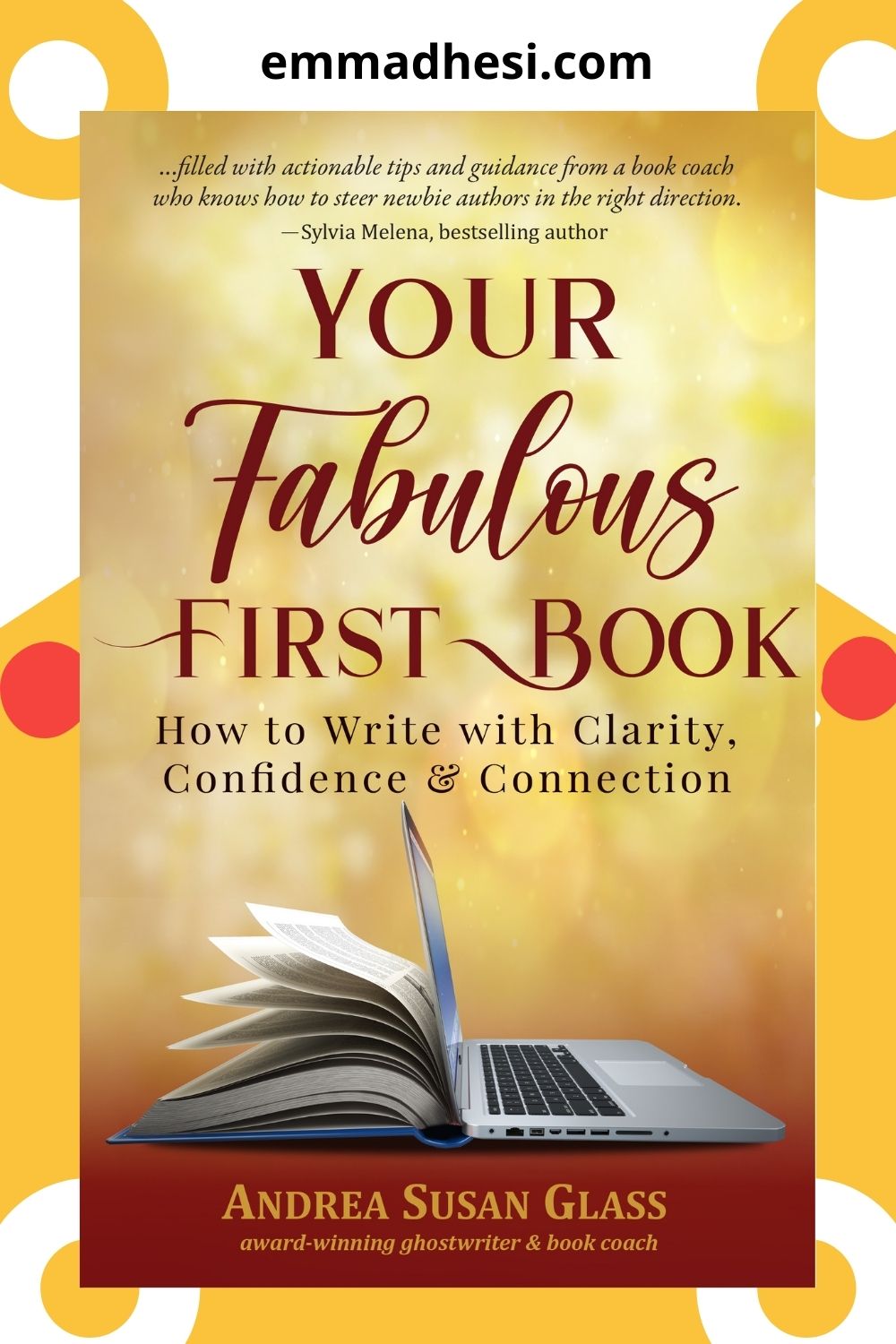
Writing short stories with Stephanie Han

Writing short stories with Stephanie Han

Writing short stories with Stephanie Han

by Emma Dhesi | Turning Readers Into Writers

Interview with Stephanie Han

Emma Dhesi  00:00

Hello, I’m Emma Dhesi and welcome to another episode of turning readers into writers. If you’re brand new here, welcome. And here’s what you need to know. This is a community that believes you are never too old to write your first novel, no matter what you’ve been up to until now, if you’re ready to write your book, I’m ready to help you reach the end, I focus on helping you find the time and confidence to begin your writing journey, as well as the craft and skills you need to finish the book.

Each week I interview debut authors, editors and industry experts to keep you motivated, inspired, and educated on all things writing, editing, and publishing. If you want to catch up, head on over to emmadhesi.com, where you’ll find a wealth of information and tools to help you get started.

Before we dive in. This week’s episode is brought to you by my Patreon page over patreon.com. for supporting the production costs of the podcast each month, you’ll receive additional conversations with each week’s guest, you’ll receive a personal thank you for me, and of course a shout out on the show. It’s an exclusive community of writers who for only $3 a month wants to support the show and ensure it continues.

If you’d like access to additional material and a shout out on the show, go to patreon.com/emmadhesi. So come on over to patreon.com/emmadhesi, where I’ll be waiting to welcome you into the family.

Okay, let’s dive in to today’s episode.

Stephanie Han teaches online at doctorstephaniehan.com, delivering women’s creative writing workshops that focus on empowerment through narrative. She authored the fiction collection swimming in Hong Kong. She’s the recipient of the Patterson Fiction Prize, a finalist for AW Pace grace Paley prize for short fiction and the Spokane prize.

And she’s also been shortlisted for an Asian books blog Award, a pen and Vona fellow, she received grants from the LA Department of Cultural Affairs, and is the inaugural English literature PhD graduate of City University of Hong Kong. She lives in Hawaii, the home of her family since 1904.

And Stephanie was actually my writing teacher when we both lived in Hong Kong. And so it’s a real treat for me to have her on the show and find out about all the amazing things that she’s been doing since we were there.

Well, Stephanie, thank you so much for joining me today. I’m thrilled to have you on the show.

Stephanie Han  02:54

Thank you for having me. It’s great to see you Emma.

Emma Dhesi  02:58

So I wonder for our listeners, if you could tell us a little bit about how have you became a writer, your journey to authorship?

Stephanie Han  03:05

Sure, I was always a kid who liked to read. And I think that’s the key I read because I could enter different worlds and spaces when I was little. We moved around every year. And we often lived in places. I’m Korean American, Asian American, where I was kind of isolated socially. And so I remember asking my mom in the 70s mom, I don’t have any friends, you know, what can I do.

And instead of the modern mom, which would impart social emotional learning skills, my mother said, read a book because if you read a book, you can always have friends. And then she dropped me at the library pretty much like that. And so that started my writing journey because I became a reader and people who read a lot, eventually tried their hand at writing, which is a natural relationship, because you want to be in dialogue with the characters or the writers or your imagination and, and make those things that exist in your mind, often real on page.

So that is really what started my writing journey, which was being a kid who didn’t really fit in, and who wanted to figure out maybe where she belonged in the world and I wasn’t a good. I wasn’t like a really precocious reader or anything. When I was really small.

It’s very slow to read, actually in kindergarten, I would have been held back and flunked now, I didn’t even know my alphabet, I think until I was almost six years old. But I quickly became a reader. So by the time I was about nine or 10, I guess several years of social isolation.

I became a pretty avid reader and then I continued reading but even through high school I had, I always loved literature classes, and I liked you discussion. But I was never a kid that necessarily excelled at writing the analytical essay I just like to read. And that’s what I think. Put me on my journey to reading and right, you know, being a writer, honestly. 

Emma Dhesi  05:16

Yeah. Well, it’s amazing to think that that was your kind of start because then we come to the, the end of your education, you In fact, were one of the first students to be issued with the first female student to be issued with a PhD from City University. Oh, no, is it the first students will stop? 

Stephanie Han  05:33

Yeah, I was the inaugural student for the PhD program in literature at City University of Hong Kong, I’m really grateful for the opportunity. I have to say it didn’t. It didn’t. It wasn’t as if I was ever ambitious to be a PhD. I was in my late 40s.

And I thought I was going to get a job teaching at that university. I had an MFA. And I didn’t have a published book at the time. So I thought it was going to the job. The chair thought I was going to get the job that sub department chair said no way is she going to get the job. I didn’t know about this, I felt upset.

The chair was kind of freaked out. And, you know, he knew my writing because I was a journalist. And you said, you know, stuff. These are hard economic times. This is after the financial crisis. And, you know, let’s face it, you’re unemployed right now. This is our time to be a writer. Would you like to be the inaugural PhD student and I was like, I’ll think about it, I’m still mad. Then I thought about it.

And I was like, okay, there’s a small stipend, whatever, I’m going to get paid to read and write for a year, we’ll see. After a year, I wasn’t really sure I wanted to do it. But by then I was in too deep, I had already gotten done a year, and they brought a they had brought a scholar in so I could work with the scholar and they financed me. So yeah, that is how I became a PhD.

And I’m very glad that I did it. I am very, very glad. But it wasn’t as if I was, you know, my whole life dying to become one. And actually, at that point in my life, I had changed a lot, I had already read a lot of the Canon that I should read. And probably if you were to ask me, do you want to be a PhD and you know, art history, or archaeology or literature, I would have picked archaeology, I would have wanted to do something totally different, you know, because I don’t know just what was something new. It’s in literature in English.

It’s an Asian American literature and specific, and I focused on aesthetics and looking at Asian American literary aesthetics in particular in the 21st century, and where the literature is heading, and how it’s not necessarily a literature, only politics. 


Emma Dhesi  07:58

But that’s interesting, given. Yeah, we’ll talk about in a little bit, but where you are now? Sure. And we’ll congratulations on your PhD. You’ve made history by being the first one, so well done.

Stephanie Han  08:08

Thank you. 

Emma Dhesi  08:09

Now, you mentioned before that you have lived in many places. So I know as a child with with your family, you moved around a bit, and then you went to boarding school. And I know also as an adult, you’ve moved and lived in lots of different places. And in fact, we met in Hong Kong, but now I’m in Scotland, and you’re in Hawaii, the good deal there.

And quite how have those experiences if they have? Or maybe, and but how are those experiences of living in different places had an influence on your writing?

Stephanie Han  08:41

I think what it’s allowed me to do is to see different kinds of perspectives, you know, moving allowed me, in a sense to go out into the world to look at the different ways that people live, to try to reconfigure what I you know, you’re you’re forced to, you know, anybody who moves from one town to another country to country, you know, has to reexamine?

Well, not, some people don’t. So I take that back. But if you are sort of sensitive you, you sort of re examine what beliefs you had, and then you have to restructure these to some degree because you’re seeing a whole bunch of people live in this way. And so what does that mean?

And so and it also, so, so this is, I think, the most significant part of moving around and what it taught me was to look at different people look at different situations, and try to see myself in terms of this idea of difference and movement. How I fit in the world. 

Emma Dhesi  09:48

Yeah, yeah, interesting. And when we were both in Hong Kong you you were my writing teacher, I had a fantastic season of writing with you. And and one of the things that you helped me with you introduced me to deep reading, which I confess I don’t do enough of. And but I wonder if you could explain for some of our listeners, what deep reading is and how it can benefit benefit us as writers? 

A Collection of Short Stories with Stephanie Han


Stephanie Han  10:15

Sure. So deep reading and close reading these are, this is foundationally a very important skill, but also, it can be a little bit miserable. It’s sort of the sweating part of writing. It’s like the sit ups of writing, like the bench pressing, writing and basically, it’s moving very close into the sentence, and trying to break down the sentence and looking at the different words, what does each word mean?

You know, if you read a line of a poem, let’s say a line in a poem, or a few sentences in, in a, in a paragraph, what is contained in these two sentences that echo and reverberate throughout the book? What were What do you know? How does this word match with this word? This syllable? How does this syllable sound with this syllable, so what you’re doing is you’re taking a microscope, and you’re moving very close. And what that allows you to do is really think about sentence structure.

How how words carry different nuance and connotative. meaning, and so it’s a practice that I think is very important if you want to write, and it helps with critical thinking. So deep reading, close reading, this is foundational to a lot of ways that we teach critical thinking, particularly in secondary, school and undergraduate years.

And as a writer, it’s important because then you become very conscious of, you know, the words that you’re putting down. Ideally, you don’t you don’t stop yourself up so much that you won’t write anything because you can’t overthink it.

But when you’re editing and looking at it, you can see does this sound beautiful? Does is this mellifluous, this the way these syllables go? Does that sentence kind of echo to the sentence at the end of the chapter? You know, you can think about things like that. And that’s important, right? It’s a work of art, literature is art. 

Emma Dhesi  12:21

So is that a skill that one would use in the first draft? Or is it generally we would go back and use that kind of loose? I think… in the revision? 

Stephanie Han  12:32

Yeah, you know what, when you’re doing the first draft, you’re kind of vomiting on the page. I mean, you just sort of putting it all out there, right? You’re trying to let your creative juices go. And then, you know, we can sometimes play with it, let’s say even on your first draft, but I would say going over it, you can think about that a little more deeply.

Because deep reading and close reading that’s really title so to editing, right? How we have to look very carefully at things. So it’s just a skill to, to use and to deploy. And sometimes, you know, when you when, when we read off, and we don’t do that, but you ever noticed when your eye catches a phrase or word, you reread it.

That’s, that’s why there’s something in there. It’s weighted, and you enjoy that one sentence and you’re like, yeah, that’s so great. That’s so true. And that’s an example of, you know, deep reading clustering.

Emma Dhesi  13:23

Okay, cool. My dad used to do that he was a slow reader anyway, but it would take an even longer, because they he, he’s the kind of reader who did love to go back and reread a paragraph or reread a page. I don’t know how he had the patience to do it so often, but that was him with great enjoyment. Awesome.

Now as a writing teacher, and you certainly were working with me and I was very much a new writer. What are some of the common mistakes that you see new writers make?

And do you have any suggestions as to how they can avoid making those those basic those kind of foundational mistakes? 

Stephanie Han  13:59

Um, one of the main things is, um, structure that you need to have a beginning and middle and end, I don’t want to get into all the details of it, because there’s lots of debates surrounding story structure, right experimental writing, or is it valid, blah, blah, blah.

But you do need a beginning, middle and end, okay? Because it’s, you know, there’s a, what we’re trying to do when we write is we’re trying to bring an idea of unity, right? We want people to feel good, when they read or after they read, we want them to, you know, your words are filling up what they’re thinking, but they don’t have words for and so, these this idea that brings unity is often idea of a beginning, middle and end.

So you need to have that. I would say that’s one of the main things. And also, um, you know, we’re people and we identify with characters. I mean, I guess, you know, you can have an animal as being a character, but we tend to and I’m speaking of prose not so much poetry which is different, which is fragments and you know, emotions and fleeting feelings often but we need a character and you need to think about this character because this character is what people will project on to so you need an interesting character, and the character does not have to be perfect.

The character needs to be interesting, and three dimensional, and we don’t have to make the character do everything, right. Because no one is right people go to reading because they have problems and nothing is more boring than reading about a perfect character, right?

That’s not the human experience, we find solace, and we find companionship and we find relief when we meet a character on the page, who seems to be going through some of the things that we go through or understanding this or that or is sensitive in the way that we’re sensitive and so making a character that’s realistic, or if you’re writing fantasy, you can make one that’s phantasmagorical, or whatever, but a character is key.

So that’s character is the action is the story. 

Emma Dhesi  16:14

Do you think the character needs to be likable? No, likeable kind of different things? 

Stephanie Han  16:20

No, no, no, there is a difference, though Americans tend to like protagonists that are sort of more likeable. I noticed that in British Literature, there’s a little more room, there’s not the expectation that the character always has to be likable.

The character can also be complicated, and not likable. And that’s also interesting to read, right? We all would love to read the villain, or we all love to read somebody who drives us crazy.

But Americans, and I think this has to do with the kind of American cultural ethos tend to lean towards characters that are, you know, it’s cultural characteristics that are likable, or you know, pioneering defy the odds, all that kind of, I mean, look at Hollywood, Hollywood’s American. That’s true. You know.

So there, it varies from culture to culture, what the expectations are, and it has to do with the cultural norms of what they think people should be. Right? 

Emma Dhesi  17:18

Right. Okay. Yes, yes. I’m just going to move on a little bit, and to talk a little bit about more about what you do. And first of all, as an instructor, and then also your own writing, as well.

But your, your, on your website, you mentioned that you when you talk about warrior women writers, and I love this race, I love would love to consider myself a warrior woman writer. So what what where did this phrase come from? And what for you is a warrior woman writer?

Stephanie Han  17:52

Okay, so I, when I was young, I read the book, the woman warrior by Maxine Hong Kingston, Chinese American writer, and this is one of the first books, it’s creative nonfiction book that was written by an Asian American woman.

And when I read this, I really liked especially the opening, the opening pages opening first chapter where there’s this, you know, woman, like, who seems to be defying, and she’s a warrior woman, conventional norms.

Previous to that I had read a book, which was also nice, but the, but the little Asian girl was doing everything a parents wanted, and it was really annoying to read. So, so the warrior, offered to kind of creative, imaginative relief, right? And so I had this previously on my website, but I started to think about women who kind of step out the conventional role in that they take a stance, they are unafraid to let their voices be heard in some way.

And what does that mean? And how does it you know, what does it look like? And I thought, it’s important for women to see these kinds of women, these different kinds of women who’ve taken the risk to let their voices be heard. And, you know, when I started it before, in my other website, it was you didn’t have to be a writer, there was a costume designer or, you know, the, you know, people who who take a stance also in their community, right community activists who may be sort of defy a social norm about how women should be.

And so I recently revived that, you know, woman warrior writer because I thought a lot about how it’s very brave for women to simply write their story on the page. To write a story down to declare that you have the right to write as a woman is really a bold act of defiance and rebellion, because everything that we are as women, is down to the interpreted texts that have set our way of living through religion, finance, culture, everything, you know, we are governed by laws and social mores that we did not write.

We interpreted them through the years, but we have not written them and women haven’t been writing for very long at all, you know, I mean, they always point to like Sappho. But the reason you’re pointing because it’s so rare, she’s the only one you can think of, you know, or more Osaki, you know, from Japan tail again, G.

But so I wanted to showcase women who can show other women that they can learn to step out into the world and raise their voices, and yes, author their lives. In other words, write their own story of who they are metaphorically. And literally, we always are offering our lives we exist in this narrative of life, where our greatest stories.

Emma Dhesi  21:05

Kind of prompted or led you in the direction or what you teach online now, and the classes that you hold, looking at intersectionality, and in particular, the experience of Asian and Asian American women.

So these are some of the concepts then that led you towards focusing on these areas?

Stephanie Han  21:25

Um, well, yeah, so I was asked actually to teach a class on Asian and Asian American women’s literature, by some students, because a lot of young Asian Americans, and do not have the opportunity to study Asian American literature in college, either the classes are not offered, or their parents told them, they should be an engineer.

And so I told them don’t take that kind of class. And so this is part of the the gap that I was attempting to fill, and also to provide a forum because there may be particular cultural notions that have found Asian women within the context of nation and how they what they’re writing about.

And so this has been a great class, I’ve really enjoyed it. And intersectionality this manuscript workshop is really for, it’s open to all women, and, you know, women who are working on a specific book project, because it’s a long haul to get through a book. And women need the kind of support to do this. And so that, you know, that has, you know, everybody’s represented in that group.

It’s really just open. And it’s a good learning experience, because intersectionality deals with this idea, it was the concept of intersectionality was put forward by a black legal scholar who stated Crenshaw, who stated that, you know, you can’t just be your race, you are also your gender, you’re also we have multiple identities, right? and, and our feminism and our ideas of self and writing are not determined by simply one thing, there are a confluence of many things and so this is what the class also attempts to do is to show women the different sides of the many different ways we are women, and to honor and to learn and to respect the different journeys we’ve traveled and to help each other, bring those words to the page, and to encourage us to go further out into the world with our individual and our own communities idea, and how do we intersect?

How do we help each other How as women do we work? You know, so… 

From time to time, I link to products or services I love using with affiliate links. This means that I may receive a small percentage or fee for referring you to any product you may purchase from one of those sites. It does not cost you anything. These small fees help sustain my small business. I truly appreciate your support.

Emma Dhesi  23:50

They’re fantastic. Yeah. I imagine that they are in great demand I can imagine women that you know, yeah. Now one of the things, again, that I saw on your website was, and I quote, The practice of writing is not always connected with the realities of publishing.

And this is something that I think a lot of writers, there’s a big gap there. And so you mentioned that some of your published works were later rejected by other publishers. Some of those rejected works, then later won prizes. So it’s really a great disparity there or how just objective fiction friction can be. 

Stephanie Han  24:32

Well, you know what? It’s not to, I’m like a professional being reject, like, I’ve been rejected hundreds of times. So many times, I could actually probably write a dissertation on it, because I’ve watched the evolution of rejections from when you stepped to send in an envelope and there was a debate like, should you send in an old envelope or a new envelope and then you’d wait for the little tag?

Should you only do one at a time with mail, that would be once every three months, you know, like this I i’ve been rejected for decades. Every story I wrote in my published collections swimming in Hong Kong was rejected with the exception of maybe one well over 100 times.

And the whole collection was also rejected multiple times and in fact, this book, after it was published and won awards, I got three years after the publication date. This is only just two years ago, I got a note from a pretty well respected editor telling me that they like the book, but yeah, blah, blah, rejecting it again.

And I emailed I said, Sorry, you’re too late. It’s already been turned in published, it already won awards, it’s out, you know, you, you’re free to reject it but maybe you better rethink some of your criteria. That’s what I did say…

Emma Dhesi  25:48

That’s very, I think, assuring for…. love.

Stephanie Han  25:52

Yeah, because what happens is, yeah, what happens is we associate publication with validation, you were valid, simply because you wrote something you are writing. And this in itself is a different view getting published, okay.

And a lot of what publication is down to is being seen, being seen by somebody for who you are inside your creative expression is, and you know, what, you them that deep and hard, because maybe in the end, I mean, I know that sounds crazy, but maybe in the end, all you want to do is be seen by one person and, you know, that’s a really long journey than to attempt to travel to publish to this.

And that when all you want is, you know, your cousin to say, you know what, you’re a good writer, I see you, I see you. And you know, that it’s a so that, I think, is what people really need to examine who they want to be seen by and where that comes from. And I think that will sort of solve a lot of the publication anx.

Because it’s about validity. But you should always separate that, because there’s a lot of subjectivities that go along with it, if I believe only 5% of the books are published by you know, yeah, so so that’s all I want to say is that you can always, always write because that’s what makes you a writer.

Publishing does not make you a writer, writing makes you a writer. 

Emma Dhesi  27:32

Yes. So well said Well said. So I’m conscious of time. And so I didn’t want to finish without asking, What are you writing at the moment? You mentioned, you’re swimming in Hong Kong there? Are you continuing with your poetry? Are you writing short stories? 

Stephanie Han  27:46

Well, right now, what I’ve been focusing on is writing a book to help women to write their divorce story. So I’m very interested in I was a writing teacher for many years, in giving women sort of semi prescriptive, you know, manuals or books to help them find their voice.

This is really my priority now. And so I’m writing one, to help women write their divorce narrative and this can be used potentially when they submit it if they can to court during the divorce and it’s also and or can be used for healing.

So I invite these women who are undergoing a divorce to please you know, join the Facebook group, Rewrite your divorce story. and sign up, I give a class on writing your divorce narrative. I’m finishing, writing a little bit of an introduction to a book of poetry and some prose that I wrote while I was in Hong Kong, because what I realized was, I used this kind of writing to try to understand where I was, and I think that a lot of people get afraid of poetry, of writing it of, of looking at it.

And poetry, again, you write for yourself can be used for yourself. So it’s, so I want to, I have my book done, but I want to give instructions about how you can use it and my book is just like a test case for how you can try to write your own book. And then finally, I’m finishing a project.

It’s a third project, and they’re all linked called Tied to a class called power journal, which is to help women write their own book of philosophy. So it’s 30 prompts, it’s based on ideas. Let’s save the eaching which are philosophical concepts and use to govern your life and you can respond to these prompts and at the end of the 30, you’ll have your own little Personal book of philosophy.

So when you’re not sure where to turn, you open your own little book, and what did you think about this concept of balance, or love? Or parents, and you have your own little Book of Wisdom? And sure, you can ask opinions of people, but you know the answer inside, and you can look at your own book, and we’re lying yourself. So these are all I’m, I’m, you know, I’m sort of finishing up all of them.

They’re almost all done. So they should be ready, boom, boom, boom. And it’s they’re really instructional guides to help women. Right? 

If you’ve been working on your novel for years (perhaps even decades) the maybe it's time to consider working with a coach.

If you have multiple versions of your novel and you don’t know which works best, are scared nobody will like your book and don't feel like a 'real' writer, then my guess is coaching is the right next step for you.

Find out more and sign up for your free Clarity Call here: https://emmadhesi.com/personal-coaching/


Emma Dhesi  30:36

Gosh, You are busy, you’ve been very busy. And and will they be? Will you be kind of looking for a publisher to do that? Or will they be really…

Stephanie Han  30:46

I think for the, I think for initially, for the divorce, writing manual, I might release that myself as an independent kind of book because it’s a, it’s like a self help. It’s a practical guide.

If I should turn it into something longer more of fiction or nonfiction piece, that would be different. But I think this guide, which might only end up being, let’s say, 15 to 20,000 words is useful is a useful little workbook type of book.

And I’m all about using my skills now to help women write their stories. That’s really what I’m dedicating my life to, at this point. 

Emma Dhesi  31:30

Lovely. So where can listeners find out more about the work that you’re doing online? 

Stephanie Han  31:36

Sure. So right now, you should go to Drstephaniehan.com, Drstephaniehan.com and sign up for a newsletter, I’m gonna kind of rehabbing and re hauling my website. But they’ll be classes up soon and also drop a line and let me know what do you want to learn about? I’m happy to you know, that’s how the Asian American women’s workshop started.

Because I had a few Asian American women say, I want to learn literature, written by Asian American women. Can you help us and I was so thrilled because that was an area where I could help them. Right. And it ended up helping other women who joined the class. So if there’s something you feel you need help with, with writing, please let me know.

Because there’s a chances are if you need help, there’s another woman who needs help, and we can have a class. 

Emma Dhesi  32:36

Wonderful. Well, Dr. Stephanie Han, thank you so so much for your time. It’s been lovely seeing you. 

Stephanie Han  32:43

Thank you Emma. Thank you so much, and good luck.

Emma Dhesi  32:49

Well, thank you so much for joining me today. I hope you find that helpful and inspirational. Now, don’t forget to come on over to facebook and join my group, Turning readers into writers.

It is especially for you if you are a beginner writer who is looking to write their first novel. If you join the group, you will also find a free cheat sheet. They’re called three secret hacks to write with consistency.

So go to emmadhesi.com/turning readers into writers hits join.

I can’t wait to see you in there.

All right. Thank you.

Bye bye.


Support The Show

If you enjoy the Turning Readers Into Writers podcast, you can now support my time in producing the show with Patreon.

If you find that the podcast adds value and you’d like to help support the show, please consider supporting me on Patreon for $3.00 per month and you’ll get bonus podcast content, as well as a personalised thank you from me, and a shout out on the show.

Alliance of Independent Authors

Shortcuts for Writers

Do you feel as if you don’t have the time or the money to invest in editing your novel? I know an online course that can help you to transform your manuscript WITHOUT breaking the bank. It’s called Book Editing Blueprint: A Step-By-Step Plan To Making Your Novels Publishable, and it was created by Stacy Juba of Shortcuts for Writers.


emma dhesi

Emma Dhesi

Emma writes women’s fiction. She began writing seriously while a stay at home mum with 3 pre-school children.

By changing her mindset, being consistent and developing confidence, Emma has gone from having a collection of handwritten notes to a fully written, edited and published novel.

Having experienced first-hand how writing changes lives, Emma now helps beginner writers find the time and confidence to write their first novel.
The Structure of Story with Ross Hartmann

The Structure of Story with Ross Hartmann

The Structure of Story with Ross Hartmann

by Emma Dhesi | Turning Readers Into Writers

Interview with Ross Hartmann

Emma Dhesi  00:00

Hello, I’m Emma Dhesi and welcome to another episode of turning readers into writers. If you’re brand new here, welcome. And here’s what you need to know. This is a community that believes you are never too old to write your first novel, no matter what you’ve been up to until now, if you’re ready to write your book, I’m ready to help you reach the end, I focus on helping you find the time and confidence to begin your writing journey, as well as the craft and skills you need to finish the book.

Each week I interview debut authors, editors and industry experts to keep you motivated, inspired, and educated on all things writing, editing, and publishing. If you want to catch up, head on over to emmadhesi.com, where you’ll find a wealth of information and tools to help you get started. Before we dive in. This week’s episode is brought to you by my free cheat sheet 30 Top Tips to find time to write.

In this guide, I give you 30 ways that you can find time to write in the small gaps that appear between the various errands and tasks and responsibilities that you have in your day to day life. Now, you might be thinking that you don’t have any time to spare, but I can guarantee these top tips will give you writing time you didn’t think you had.

If you thought writing always involved a pen and paper or a keyboard. Think again. If you thought you needed at least an hour at a time to write your manuscript. I help you reframe that you won’t be disappointed. Get your free copy of 30 Top Tips to find time to rate by going to emmadhesi.com/30 top tips.

Okay, let’s dive in to today’s episode.

Ross Hartmann is the author of the best selling storytelling book, The structure of story. And the creative director at KIINGO, a storytelling school dedicated to teaching the fundamental principles of successful storytelling. his hobbies include writing, creating tools for writers and learning the tools that help make a great story. So let’s chat to Ross and find out a little bit more about the structure of story.

Well, welcome Ross to the show. Thank you so so much for being here. And I want to just to start off with asking you how you came to be in the world of storytelling, what brought you to fiction?

Ross Hartmann  02:40

A great question, it was kind of a meandering journey. I, I went to college for songwriting, actually, which is a type of writing, you know, it’s it’s I created fictional songs. So it’s a different medium. So you have different constraints in the story that you can get across to songs. But, you know, writing has always been a part of my life.

And after, after that, I was kind of pulled toward virtual reality. I’ve always been a tech guy too. And that got me into the world of filmmaking and screenwriting, which then led me to, you know, fiction, writing, and screenwriting and storytelling in general. So it’s been a bit of a meander, but it’s been fun. It’s all been centered around bringing imaginary worlds to life, essentially.

Emma Dhesi  03:29

You are true creative writer then 

Ross Hartmann  03:32

I I’d like to think so. It’s interesting, though, I feel like I’m an analytical creative, which is kind of an oxymoron. But that’s how I like to approach it. 

Emma Dhesi  03:40

Well, you know, I’ve just been reading or I’m in the middle of reading Sean coins story grid. And he strikes me too. It’s very much an analytical creative. So you’re in good company? 

Ross Hartmann  03:50

Oh, very good. Yeah. That’s a great one, a great book.

Emma Dhesi  03:54

So I’ve just mentioned Sean Coins Story grid, but you to have your own approach to the structure of story. That’s your book that you published last year. So congratulations on that. 

Ross Hartmann  04:06

Thank you so much. Appreciate it. 

 Emma Dhesi  04:07

In it, you talk about there being tools to storytelling, rather than rules to storytelling. So I wonder if you just share with us a little bit more about about those tools and what they are? 

Ross Hartmann  04:20

Yeah, so I feel like a lot of people approach stories or story analysis, from the perspective of let’s line up our top 100 favorite stories and look at what happens in them and find the commonalities between them. Right, like find the symptoms of what makes a great story.

But I was thinking, like, what if we decided to approach it from first principles? Like, instead of just looking at what the best stories have in common, we instead say, Okay, what does a story actually need to accomplish? And can we take those core elements and build up from there? And from that, I kind of started with this idea that a story needs to one be interesting, right?

Or it needs to engage the reader engage the audience, make it so that we’re not frustrated, we’re not confused. And in other words, we don’t just want to put the book down, right, so be engaged, and then secondarily be meaningful.

The story needs to be something that we take home with us, right? Like, if you’ve got a story that’s engaging, but not meaningful, it might be something that gives you a sugar high, you have a fantastic time at the theater or you reading the book, it’s great. But then you leave the theater, you put down the book, and then it doesn’t really stick with it, you don’t really talk to anybody about it was a fun ride, but nothing really.

But those life changing books and those life changing movies, those are the ones that have meaning in their core. So I take these two central concepts of be engaging and be meaningful. And I think of those as two buckets of tools that we can use. And those that are about engaging the audience are dramatic tools.

And those that are about making the story meaningful are thematic tools. And so from there, we can build up okay, what are the tools we can use to create drama? What are the tools we can use to create theme all toward that end of making it engaging and meaningful? And the tools then are kind of picked from the great stories to see how they can support those aims.

Emma Dhesi  06:22

 Okay, I like that. It makes it feel that it’s more fluid then. And depending on the type of story you’re telling, you can pick and choose from those. So the buckets of tools that you’ve got, are they are all of those tools compulsory, or or can you In fact, pick and choose the ones that you need, depending on the story that you’re telling? 

Ross Hartmann  06:47

That’s a fantastic question. And it’s definitely not compulsory to use all of them. And I think that’s a core piece of the idea, right? Because there’s this idea in the book that I like to push over and over, like you mentioned, tools, not rules, because rules kind of imply that, well, this is a mandatory set of things that you must do in your story, if you want any chance of being good.

But that’s not really a helpful approach. I feel like I feel like the best approach is, what effect do we want to have on the reader? And what tools create that effect. And if we approach it that way, we can approach it in, in a way that really serves the story, instead of serving like the 12 step beat sheet that we found online, right.

And I mean, not to say that there’s not a place for that there definitely is, it can just be helpful to know that you have so many more options than you may realize, like, for instance, there’s this common piece of advice in the writing community, that you must have an active protagonist. And I think broadly, that’s a good guideline.

But that does cut off some stories that you can tell because there are some stories that have a passive protagonist, and they’re good stories. The Graduate, for instance, he is a relatively the protagonist of that story is a relatively passive one. He doesn’t he things happen to him. But that story is driven forward by dramatic irony, which is a different tool than dramatic tension.

And dramatic tension is the one that comes with, well, your character must be active, they must have a goal, they must go after it. Whereas dramatic irony is more like, Well, I have a secret. And I don’t want anybody to know what it is. And the question is really, when or how will that secret be revealed? And that’s what drives the story forward.

Right? So in that way, you can have other characters taking action. So it’s, you know, so many tools, so many opportunities. 

Emma Dhesi  08:50

I love it. Oh, yeah. I hadn’t thought about the sort of passive character in that way. Certainly. Yeah. Everything I’ve come across today’s I think anyway, has certainly been about the, the protagonist is the one who’s taking the action, who’s driving the story forward.

And if they’re not doing it, then then there’s no conflict. And then there’s no story. But actually, if I’m understanding your right, the passive character, there’s still conflict, but it’s coming from outside. But then there would still be internal conflict as well with their no, I guess, I guess how they respond to what’s happening to them.

Ross Hartmann  09:30

Yes, absolutely. And so if we go back to that idea that all we really need to do is keep the reader engaged, right? And so we’ve got a list of tools that can help us do that. One is dramatic tension, where a character goes after a goal and and pursues it, and then they run it.

They come across obstacles and challenges, sometimes in the form of an embodied antagonist or villain, sometimes just the antagonistic forces in the world, but  and then sometimes they have internal dilemmas regarding the pursuit of that goal, but dramatic irony is when obviously the audience knows something that one or more characters doesn’t.

And there’s this interesting situation with dramatic irony and makes us want to stick around until that, that this, that informational disequilibrium is resolved, essentially, when when the characters that don’t know, find out. So if the villain is waiting in the basement of the protagonists house protecting this house, we want to stick around and find out.

Okay, when is the protagonist going to find out right? Yeah. And so dramatic irony in that way, you’ll see this a lot with crime shows and generally antihero shows where the protagonist is doing something forbidden or illicit or illegal. And there’s always this underlying tension, will they be found out. And that’s, that’s something that really drives the energy of the of the show or the story.

So yeah, there’s a bunch of different tools that we can use, rather than just pursuing a goal. Although pursuing a goal, I will admit, it’s probably 80-90 plus percent of stories, because it’s such a powerful tool.

Emma Dhesi  11:10

But it’s good to know it’s not the only one because there are, you know, not every storyteller wants to be telling that fast paced or that that normal narrative. And so it’s nice to know that there’s options and different ways, different tools to use to tell those different stories.

Now, your book is divided into seven parts. And I love the analogy that you’ve used in it, you’ve, you’ve used the analogy of house building, which I really enjoyed. So I wonder if you could tell us where you got the analogy from? And then maybe kind of maybe give us a quick outline of those those different parts? 

Ross Hartmann  11:47

Yes, well, essentially, the idea is that when we’re building a house, there are some things that we have to get right up front, right. So if we, if we lay down on a foundation that’s going to crack, you may not notice it until later in the building process, but it’s going to destroy everything. And so it’s really important at the beginning that we almost make success inevitable in the story.

And there are certain tools that we can use to make success inevitable, like character engines, for instance, where you have a character that creates their own story, energy. And one thing in the book that I address is this idea of giving a character a void or an emptiness. And sometimes that comes from pain from the past some ghost event that they’re trying to address you’re trying to hide, or trying to fill in other perhaps not so healthy ways.

Or a character who has an obsession, right, a character who wants something desperately. This is like all the 90s Disney movies, right? They all start with this song. Well, I wish I didn’t have to be part of this life, I wish I could have something more. Right. That’s the character with the obsession, they don’t necessarily have a trauma in their past.

But that’s an example of a story engine, a character engine and it’s an example of building a foundation where your story is going to, I won’t say right itself, but it’s going to provide you with endless material. Because anytime you don’t know what to do, you just have you just threaten the character’s obsession, or, or you take it away, or you offer an opportunity.

And you can always generate more energy. So the house metaphor is start with the really, really foundational important stuff and make the rest inevitable. And so I do start with starting a story from either plotting from theme from a story world, or from a character because not all stories start the same, right? Especially when with ideas, we can start from any one of those areas.

And we can build it out depending on where we start from. And so once you have those core ideas, I go through vetting the idea, and then breaking it down into beats if you’re so inclined to do that. And then finally, once we have that foundation, we go into writing the actual scenes, which of course is where the story actually gets onto the page and comes to life.

The rest is, you know, effectively theoretical until it actually becomes a scene but it’s good to know so you can get those scenes hammered out. So yeah, the this the house idea is just to make it so that the story becomes inevitable and has a sturdy foundation. 

Emma Dhesi  14:38

It’s great. It’s great. I’m in that foundation section you do you use the word plotting, plotting from character plotting from theme just for the discovery writers out there is it do you literally mean that you encourage plotting or do you feel that the way you structure your story is equally acceptable to discovery writers as well.

Ross Hartmann  15:03

There is such a great question. So I’ll say that for discovery writers, the thing that I like to do is to not plot the beats, obviously, but rather to create engine story engines that make the story unfold naturally, in a way that comes to a conclusion naturally. So in other words, one of the tools is dramatic tension, right?

And with dramatic tension if we create a concrete goal, and we create one or more antagonistic forces, that structurally opposed to the protagonist, and we add some urgency or ticking clock, like, what’s the reason that the protagonist has to do this now, rather than later? Why can’t they just walk away? And then put something of deep value on the line stakes?

And then give the character a plan? How do they actually intend to accomplish that goal? And if you set up those elements, then you make the plot inevitable, right? And you don’t have to know exactly how things are gonna work. You don’t have to know the beats of every bit. But you just ask at any point in time, okay, my character has this problem or this goal that they’re pursuing.

And they have this plan. So let’s have them pursue that plan. And then you just write them pursuing the plan. And then well, they have an opponent, right. So something is unexpected is going to happen. Okay, well, now they have to revise their plan. And something in the story I talked about is called the disruption cycle where a character pursues their plan, but something unexpected happens.

Sometimes it’s an opportunity. It’s a problem. It’s a revelation. But no matter what, it forces the character to address that disruption, sometimes also known as a turning point. Yeah, something like that. And the character then has to address it, they enter a reaction cycle, also known as sequels and interludes, and then from there, they form a new plan and take action.

So for discovery writers, it’s important to make sure that you have these foundational tools and engines, not so much that you know, the exact beats, but so that you make the beats naturally inevitable. It’s kind of like you plant a seed that will make the plant inevitable, right? Yeah. And you don’t have to know the whole growing process, but it will work. 

Emma Dhesi  17:33

Yeah, yeah. I think sort of similar to I just because I’m a discovery writer, and I tried to just to give myself a few signposts. So as long as I know where I’m starting, and I’ve got an idea roughly where the middle of what’s going to happen in the middle, and then I cover an idea of what I want the end to be, then that gives me just enough to keep me going in the right direction.

Enough of an engine to keep me ticking along. And we see what happens as I go along. So quick breaks down, but sometimes it keeps going, and I get to my destination. So I that’s I like that I like that idea of the engine. Um, another interesting thing that you talk about in the book, which I love, I love this idea is that you talk about story patterns. And, and so how might we decide?

Which one is the story pattern, first of all, and then how might we decide which pattern is right for the story that we’re telling

The Structure of Story with Ross Hartmann


Ross Hartmann  18:32

Such a great question. And this kind of goes into the idea of beats, which maybe we can touch on more in a bit. But yeah, with story patterns, it does depend on their patterns everywhere in stories, right. And, you know, the hero’s journey, of course, is probably the most well known. And there are beats for that pattern beats that make up the different patterns.

And it sounds kind of confusing, but it’s really all it means is just the stuff that needs to happen in order to meet the pattern. Right. So if you want to tell a Cinderella story, there’s certain things that need to happen in order for it to be a Cinderella story. And likewise, if you want a rags to riches, there are certain things that need to happen.

And there are different types of character arcs too. So what I like to do is kind of like yourself, have those key moments that are known, you don’t necessarily have to outline every scene, but you know, okay, the protagonist is going to start with this moral weakness. They’ve had some trauma in their past. And that comes out in defense mechanisms, and it’s negatively harming their relationships.

Now, I know by the end of the story, I want them to learn this lesson. I want them to be able to address their past to know that it was real, but it’s not their fault. And that they can have healthy relationships by learning this, this particular lesson, right? And so now throughout the story, I have to have confront their past essentially, and have them learn from it, whether that’s in the form of another character, like an influence character.

You know, a therapist, that’s a very common archetype that helps protagonists change. But all of this is a positive character arc. And that’s one type of pattern. And of course, there are negative character arcs. There’s the corruption arc, there’s the disillusionment arc, in a pot in a sort of positive character arc, there’s the redemption arc, right? You start with a villain, and they work on redeeming themselves throughout.

But these are all story patterns that have different beats, or different things that need to happen in order for us to satisfy that pattern. And again, like like all the tools, patterns, have different effects on the audience. So some readers love corruption arcs. And that’s that there’s a certain effect and a certain feeling you get from a corruption arc and from watching, Breaking Bad, or the Godfather or the story of Darth Vader, right?

You get a certain feeling from it. And it’s different, then, you know, Woody from Toy Story or Barla from Finding Nemo? And that’s perfectly fine. But it’s important to know, what emotion we want to convey, and what kind of pattern would best help convey that emotion? 

Emma Dhesi  21:22

Mm hmm. Yes, like that. And they’ve mentioned that a couple of times. And this is quite a selfish question, because it’s something I’ve never been 100%. Sure about. So I’d love for you to answer it for me, because we hear a lot about beats. And that you, some people really love to plot down to the beats and other others don’t.

But could you tell me a little bit more about what a beat is? And I think you have kind of answered the second part of my question. You know, once a writer is decided on the pattern that they want to use, are there certain beats that they use within that pattern, which I think you’ve kind of answered, the beat sheet is, is a term that we’ve heard of? And so what what Yeah, what is it? What is a beat?

Because Is it a scene? Or is it smaller than a scene? Or is it a compilation of a few scenes?

Ross Hartmann  22:19

Fantastic question, because this is something that always tripped me up. And it’s… No, not at all. And it’s one criteria that I have with the reading community, is that the nomenclature is just all over the place, right? Like different people use different terms to mean different things. And it’s how are we ever supposed to come to the same learning, learning just makes it so much more difficult when you approach it that way?

So, okay, a beat is when something happens. That’s it. So now, the reason why it’s confusing, is because we use the word beat to mean different things. First of all, I’m acting a beat is like, a moment, like you take a beat, take a pause, take a breath. But we also use beats to mean, we use a beat in dialogue, right? Where the characters are going beat by beat through the dialogue.

And so one character might be rejecting another. And then that’s one beat. And then another character is begging the other. And that’s one beat. And then this character stonewalling. And then this character is bargaining. And then this character is walking away. And then this character is pleading, right. And that’s beat, beat, beat, beat beat.

And in that sense, a beat is just an action, or it’s a strategy in dialog to get what one wants. Now, the other reason this is confusing is because we use the word beat not just on the scene level, not just with dialogue, we use it broadly in a story, right? When we’re structuring a story, the beat sheet, and that just means something happens.

So and you know, the, it’s implied that it’s something significant that happens. But significance is relative, when you’re talking about as the scene level, something significant within the scene is not necessarily so significant when we zoom out to the broader story. And that’s why beats beat just means something that’s relatively significant happening.

And so when you have the, the hero’s journey, or, you know, almost any story structure, you have the inciting incident, right, which is the thing that typically, people say it happens around the 10% mark, and it’s the thing that kicks off the events of the story. That’s a beat. But then you’ve also got the plot point one the lock in moment, I think some people call it the predicament.

It’s when the dramatic question is raised at about the 25%. mark the end of Act One, that’s a beat. The midpoint is a beat, the crisis moment the big turning points at the end of Act 275 somewhere that’s a beat. The self revelation is a beat, the climax is a beat. And a beat just means something that happens. 

Emma Dhesi  25:08

Okay? It feels like it’s kind of like it. So either it can be dialogue, or it can be action. It can be one line, it can be a scene, but essentially, it feels like it’s an emotion that’s being conveyed that turns the story in one way or another. 

Ross Hartmann  25:23

Yeah, that’s, I think that’s a great description of it. And, you know, we can, we can also look at it, if we’re just, let’s say that we’re heavy plotters, we’re heavy outliners, and we’re outlining Act One, well, there are going to be more beats in Act One than just the inciting incident and just the end of Act One. Because there are beats that get us to the inciting incident, there are setups that have to occur, there are things there’s the refusal of the call right in the hero’s journey.

And that happens after the inciting incident, but before they accept their journey, and that’s a beat. And so, it does depend on what level we’re looking at. This is one reason why it can sometimes be helpful not necessarily to think in terms of beats, I speak in terms of beats when I’m talking about story patterns, because that’s how we kind of define a character arc. A positive character arc is the character starts with this more weakness, we have to dramatize that, right, that’s a beat that something needs to happen.

Then at the midpoint, they come they learn some lesson, or they start to see how life could be if they change their ways, they start to see some moment of harmony with the theme or with their final change. That’s the midpoint, that’s a beat, the crisis moment where all is lost to beat, the self revelation is beat.

Alright, so that’s in the context of the character arc. But when I think of terms of plotting, I like to think in terms of disruptions. And disruptions are problems, opportunities, revelations. So the inciting incident, I don’t personally think of it as a beat, I think of it as a disruption. It’s something that occurs, that presents an opportunity, a problem, or revelation.

Same with the moment where the character solidifies the goal. Something has to happen. It’s a problem, an opportunity or revelation. It’s a disruption. It’s a turning point, turning point beat disruption.

They’re all the same word for kind of the same idea, something significant happens, like you said, that turns the story in a certain direction. 

Emma Dhesi  27:31

That’s so helpful. Thank you. Of course. Certainly, as I continue along my own learning journey with writing I do. I’ve come across it that other different people, different teachers have their own terminology for what essentially is the same thing. I think James Scott bells, the doorways confused me for a long, long time until I realized, Oh, that’s an inciting incident.

That’s him that says moving into the into the kind of storyline now. Yeah. And so yes, I’m always learning. So thank you for sharing that with me.

Ross Hartmann  28:04

No, absolutely. It’s such a great question. And I think it’s also exacerbated by the fact that some writing teachers love metaphor a lot, right? So that that’s, you know, it’s when the fish jumps out of water.

And they just describe it all through metaphor, which is great for rent for getting in there the first time, but it’s hard for solidifying the ideas yeah. 


Emma Dhesi  28:26

And so, okay, we’ve got the beat. So Part Seven of the because about seeing writing, and so what for you and makes a good scene, what what are the kind of the crucial tools that we would need to incorporate within a scene to make it work and to help it keep moving a story forward or making sure it earns its place in the story? 

Ross Hartmann  28:51

That is such a good question. And such a such a big question, too, because you know, the scene is where the story happens, right? And so anything that you’ve outlined in your, your beat sheet, or your your outline, or any sort of thing you’ve given to the character’s background, that’s not real, unless it comes out in a scene, right?

So what I like to start with is first asking, okay, what does the scene need to accomplish? Just in the same way we I asked that for stories, what does the story need to accomplish needs to be engaging and meaningful? What does the scene need to accomplish, and different scenes need to accomplish different things?

So I will start by saying that scene is another word we use broadly, that can mean a couple different things. And then there’s another way we use scene, which is more specific. And, and it doesn’t mean that other scene. So broadly speaking, a scene is some period of time and location which something happens, right.

But more specifically, a scene is contrasted with what’s called a sequel or an interlude when we’re talking about scene structure. And in that sense, a scene is when there’s a meaningful disruption. Or in other words, a turning point. Some people say, a crisis point, it’s when something happens, that turns a story in a new direction.

There’s a new problem, there’s a new opportunity, or there’s a new revelation. Now, that’s a scene proper. But those aren’t the only things that happen in a story, right? If you just had every scene, problem, problem, problem, problem, opportunity, opportunity that can make for a great, fast paced thriller, right.

But if you’re not writing that, and you want a bit of a slower pace, there are these moments in between where characters digest what just happened. They react emotionally, analytically, they weigh their options, they sit with those that are the closest relationships, they mourn, they celebrate, they’re frustrated, they’re confused.

Those are where the emotions come in. And those are not proper scenes. Because they don’t turn the story in a new direction. It’s really about digestion. And it’s about feeling the emotion that comes from the disruption that we saw before. And it’s really important part of the story. If you this was one of

Unfortunately, the complaints with the latest Star Wars is that it was just action, like just revelation, something terrible would happen. And the characters wouldn’t take half a second to think about what it meant or why it mattered. And so consequently, it can start to feel the disruptions or turning points can feel less significant.

So okay, so brought so their scenes in their sequels, there’s the disruption, and there’s the reaction. So we have to think about what does our scene need to accomplish? And then this is where dramatization comes into play. Right? So there’s a piece of information we want to convey. Let’s say we want to show that our character is selfish.

Well, the question then is, how do we show that? How do we put that on the page. And the scene is, of course, where we get this idea of show don’t tell. This is where we want to dramatize and not summarize, I will probably say that there are times where we do want to tell it does have its place. But showing is a good idea, too.

So when we are going through scenes, there’s a bunch of different tools that we can use. There’s clones, there’s comparisons, there’s objects, that’s a huge, huge thing. There’s moral dialogue, where characters are giving their opinions and their beliefs, in comparison is one of the biggest ones. But that’s all for conveying information, there was this story that I thought was a fantastic example of show don’t tell using comparison.

Alright, so there’s this husband and wife, excuse me, husband and wife on in an elevator and the husband and the wife both look like they hate each other. Because they do. And they just, they’re over it. And he doesn’t, he still has his hat on, where you know, let’s say it was back in the 20s or 30s, he should have taken his hat off in the elevator or something.

And then this, the elevator doors open. And this beautiful woman walks in, and the man perks up and smiles and takes off his hat. Okay, so that right there just tells you a few things about the guy. But it also tells you a few things about their relationship.

And that information can all be conveyed silently. You don’t need any dialogue to do that. And that’s over that’s dramatization. That scene work. It’s beautiful. 

Emma Dhesi  33:40

Yeah, I just you describing that there. I immediately had this image in my head of a guy whose face lights up and the hat comes off and the wife next to…

Ross Hartmann  33:49

The wife scowls at him, right. Yeah. Exactly. Exactly. 

Emma Dhesi  33:54

So that’s, that’s kind of use of an object did you say, of how we can dramatize 

Ross Hartmann  33:58

Yes, and you can give meaning to objects, right. And then you can bring those objects back in later scenes. So now the, the hat has some significance. So if you brought it back in another scene, we would be reminded of that previous moment. And so now it has some meaning when tied to their relationship and, and how he feels about her and vice versa. So it’s objects are a brilliant thing to do with scenes as well. 

Emma Dhesi  34:26

Can you give us an example of another not an object you met? You mentioned a few things there. And I wonder if you could give us another example?

From time to time, I link to products or services I love using with affiliate links. This means that I may receive a small percentage or fee for referring you to any product you may purchase from one of those sites. It does not cost you anything. These small fees help sustain my small business. I truly appreciate your support.

Ross Hartmann  34:34

Yeah. So one is reaction, which I really love. And this is used great in the sounds of the lambs, I will say actually, comparison is another great tool and that was used in that last example I gave where we compared how he treats her versus how he treats this other woman and so we just showed a comparison with how a character acts in one situation versus a similar situation and that tells us what they value but reaction is huge.

So in The Silence of the Lambs, Clarice is going to meet Hannibal Lecter for the first time. And she’s warned over and over. This guy is dangerous, right? We, everybody tells us Don’t let him get inside your head, he’s going to destroy you basically, right? incredibly dangerous. And so we haven’t seen them. We don’t know anything.

But how the characters react is a way for us to understand something about this character nd then when she’s walking down the hallway, she sees all sorts of terrible prisoners in the in the jail. And they’re just one after the other is more terrible than the last and just saying crude things and just acting immorally.

And we get to, we finally get to him, and he’s just standing there. And he’s not saying anything. But we know he’s at the end of the hallway. That’s comparison to he is worse than all these other criminals that we thought were so bad. So we’re making use of both comparison in there and reaction. There’s so many great tools for conveying information. And you know, like how they treat them, too.

They don’t just walk him out of his cell, they put him in a straitjacket with a mask on. And they tie into a dolly. And so he doesn’t even get to walk. So that’s all conveying This is a dangerous guy. We don’t actually even have to see him do anything. It’s just all through reaction. 

Emma Dhesi  36:27

Mm hmm. Oh, it’s a long time since I’ve watched that movie. But now that you’re talking about that, I can picture it, I might have to go back and rewatch it. Such a great one. Yeah, he those examples. However, that’s that’s been wonderful. Thank you for talking me through through the structural story through the different parts, and particularly about the beats and the scenes. I’ve loved learning about that. Thank you so much. 

Ross Hartmann  36:50

So fun. Thank you so much. 

Emma Dhesi  36:52

So I know that the structure of story, that’s just one part of what you do, the book itself is just one part of what you do. And you also have a website called Kingo. And I have to admit, I’m intrigued by the name because it’s K II NGO, where did the name come from? 

Ross Hartmann  37:10

Yeah, it’s it’s a couple of things. One is just the core idea comes from creative lingo. Like just the the nomenclature of creativity and, and, broadly speaking, creating stories, but the double AI is because the URL is available, and I really liked it. So…

Emma Dhesi  37:36

Fair enough 

Ross Hartmann  37:38

To come up with a better reason. But I like it. Honestly. It’s kind of fun. Making smiley face on there somewhere. 

Emma Dhesi  37:44

Yeah, no, it’s great. It’s great. And Kiingo creative, I think is the kind of the name of the website. 

If you’ve been working on your novel for years (perhaps even decades) the maybe it's time to consider working with a coach.

If you have multiple versions of your novel and you don’t know which works best, are scared nobody will like your book and don't feel like a 'real' writer, then my guess is coaching is the right next step for you.

Find out more and sign up for your free Clarity Call here: https://emmadhesi.com/personal-coaching/


Ross Hartmann  37:50

So kiingo.com. Yeah.

Emma Dhesi  37:52

Yeah. Say that again? Sorry. 

Ross Hartmann  37:54

Oh, kingo. calm. Exactly. And then kiingo Creative is the the handle I use on most social media. Exactly. 

Emma Dhesi  38:01

So tell us about Kiingo What are what kind of the other things that you You do? Because I know you’ve got a course there’s podcast, but you’ve also kind of got other things in the mix as well? 

Ross Hartmann  38:12

Yes. Okay. So broadly speaking, it’s just tools to help writers. So if you’re a writer, and you want to become a better writer, we’re here for you. So we do that in a couple different ways. There are daily tips that we release every day.

So it’s just a little bite sized tip if you want to improve your writing, but you don’t want to dive into this massive long thing you just want a little bit every morning to inspire you get those creative juices flowing. We have that at kiingo.com/tips.

But we also have it on Instagram, Twitter every day, a new writing tip. And then with, we’ve also got a course like you mentioned, and then the book, which is sort of the compilation of all our most of the writing tips and puts it in a cohesive journey for you. So you can learn everything from start to finish. And we’re currently working on writing software, actually.

So we’re working on something that’s going to help writers throughout the entire process. So right now, there are a lot of different tools for drafting, outlining, for revising, editing, and then for formatting and publishing, right, we’re going to try to make something that can be your full ecosystem where you go you’re able to plot an outline, draft review, you can send a link to your editor, whether they have the software or not and it can track the changes and they can see all that and then you know formatting like vellum and this is pretty ambitious. we’re nowhere near this yet, but this would be the idea and and make it so it’s really a one stop shop for a writer’s process.

And and that’s what we’re working on right now. The first thing that will come out is the word processor and it will have All sorts of fun tools, there’ll be a one time fee instead of a cloud, like recurring fee.

I know people don’t like the recurring fees. There’s sinking across devices, all the different devices and version history and everything. So it should be cool. 

Emma Dhesi  40:13

I should be cool. Yeah, that sounds fun. That sounds ideal. Because Yeah, it’s frustrating, not frustrating. But there’s so there is so much out there that you have to do this software for that this software from you have it all in one place where you know, you can just do the whole process and one thing, and then send it off to be you know, if you’re doing ebooks and send it off and be uploaded. Perfect. I love the idea that you can send it to your editor and do the track changes.

That sounds great as well. And wonderful. Do you yet know when the first phase is going to be released? 


Support The Show

If you enjoy the Turning Readers Into Writers podcast, you can now support my time in producing the show with Patreon.

If you find that the podcast adds value and you’d like to help support the show, please consider supporting me on Patreon for $3.00 per month and you’ll get bonus podcast content, as well as a personalised thank you from me, and a shout out on the show.


Ross Hartmann  40:46

A great question. So for the for the actual writing processor, we’re targeting an alpha release in May, May of 2021, in case you’re listening to this in the past, and then a couple months after we’ll do a beta. And then what I also want to do is make sure that there’s a mobile app available too, because I know some people like to write on the go.

So yeah, that’s that’s the target right now, you know, there’s going to be a lot of missing features in this in the beginning, but I would love just to get everybody’s feedback and know what is in your dream writing software. What do you want to see? And hopefully we can integrate that. 

Emma Dhesi  41:26

So if anybody listening does have you know, if they do have an idea about what they would like to see you do you want people to get in touch with you and let you know? 

Ross Hartmann  41:26

Yeah, I think you know, Instagram is probably the fastest but kiingo.com/contact. I’ll also reply to that probably within 24 hours. So kiingo.com is where all the latest stuff happens if you want all the news and everything K II N G O get those two eyes in there. Please yes. 

Emma Dhesi  41:35

What’s the best way for them to do that? 

Ross Hartmann  41:38

They can contact us on Kiingo Just go to Kiingo.com k ii n g o .com/contact. You can also contact us through you know, Instagram can go creative K ii NGO, Facebook, Twitter, they’re all the same handle. 

Emma Dhesi  41:53

Cool. I shall link to those in the show notes. And are you looking for when the beta comes around? Are you have you already got people in place? Are you looking for people to beta test it for you? 

Ross Hartmann  42:03

I’ve got a couple in place, but I am open if you think that you are a good fit for this and you think he could provide some some great feedback, then I would definitely be open to it. Yeah. 

Emma Dhesi  42:13

Okay, cool. Brilliant. So you that’s what you’re working on at the moment. And and yeah, so if people want to make contact with you, you’ve mentioned a few places there, but where’s the best place to get in contact with you?  Lovely. Oh, well. It’s been a pleasure speaking to you. I’ve really enjoyed our conversation today. Thank you so much for your time. 

Ross Hartmann  42:51

You too Emma, this was just fantastic. Thank you for having me on. Really appreciate it. Your website is such a resource. And I’m excited for what you’re doing in the future. Helping writers so much. So thank you. Thank you again. 

Emma Dhesi  43:03

Oh, thank you. Well, that’s it for this week. I hope you find it useful. If you’re interested in becoming a part of a safe and friendly community of like minded writers who want to write their first novel, go to my Facebook group at emmadhesi.com/turning readers into writers. I can’t wait to see you in there. You can find the show notes for this episode and all the others at emmadhesi.com/podcast. Thanks again for joining me and I can’t wait to get to know you better soon.

Alliance of Independent Authors

Shortcuts for Writers

Do you feel as if you don’t have the time or the money to invest in editing your novel? I know an online course that can help you to transform your manuscript WITHOUT breaking the bank. It’s called Book Editing Blueprint: A Step-By-Step Plan To Making Your Novels Publishable, and it was created by Stacy Juba of Shortcuts for Writers.


emma dhesi

Emma Dhesi

Emma writes women’s fiction. She began writing seriously while a stay at home mum with 3 pre-school children.

By changing her mindset, being consistent and developing confidence, Emma has gone from having a collection of handwritten notes to a fully written, edited and published novel.

Having experienced first-hand how writing changes lives, Emma now helps beginner writers find the time and confidence to write their first novel.
Write your book with romance suspense author Sylvia Hubbard

Write your book with romance suspense author Sylvia Hubbard

Write your book with romance suspense author Sylvia Hubbard

by Emma Dhesi | Turning Readers Into Writers

Interview with Sylvia Hubbard

Emma Dhesi  00:00

Hello, I’m Emma Dhesi and welcome to another episode of turning readers into writers. If you’re brand new here, welcome. And here’s what you need to know. This is a community that believes you are never too old to write your first novel, no matter what you’ve been up to until now, if you’re ready to write your book, I’m ready to help you reach the end, I focus on helping you find the time and confidence to begin your writing journey, as well as the craft and skills you need to finish the book.

Each week I interview debut authors, editors and industry experts to keep you motivated, inspired, and educated on all things writing, editing, and publishing. If you want to catch up, head on over to emmadhesi.com where you’ll find a wealth of information and tools to help you get started. Before we dive in, in this week’s episode is brought to you by my free cheat sheet 30 Top Tips to find time to write. In this guide, I give you 30 ways that you can find time to write in the small gaps that appear between the various errands and tasks and responsibilities that you have in your day to day life.

Now, you might be thinking that you don’t have any time to spare, but I can guarantee these top tips will give you writing time you didn’t think you had. If you thought writing always involved a pen and paper or a keyboard. Think again. If you thought you needed at least an hour at a time to write your manuscript. I help you reframe that you won’t be disappointed. Get your free copy of 30 Top Tips to find time to write by going to emmadhesi.com/30TopTips Okay, let’s dive in to today’s episode.

Before we delve into the show, I just want to give a big shout out to Joe Brito who is the latest Patreon supporter of the show. It’s with the support of Joe and others like her that I can continue to bring the best possible podcast I can for you so that you can keep on learning. Keep on improving. Keep on being inspired until you write your first novel too.

Okay, let’s find out a little bit more about today’s guest, Sylvia Hubbard, Detroit author and founder of Motown writers, Sylvia Hubbard has independently published over 50 romance suspense books. As an avid blogger podcaster, Social Media Manager and digital strategist, Sylvia has received numerous awards and literary recognition for her work, pull us has had seven number one bestsellers. She’s also a speaker, literary encouragement, doula and busy mompreneur expert.

So let’s dive into the literary world of Sylvia Hubbard. So Sylvia, thank you so much for joining me today. I’m really thrilled to talk to you.

Sylvia Hubbard  03:04

Thank you. It’s an honor to be here. I appreciate this. It’s been like a, you know, the time change and everything. And I got worried. Oh, like when you said 3pm. I was like, wait, she said this. But yeah, thank you so much here in Detroit. We love. We love talking to anyone. So.

Emma Dhesi  03:24

I know from what you’ve told me that you’ve been waiting for a long time now. And I wonder if you could share with our listeners. What was the interest in writing and how you got started? 

Sylvia Hubbard  03:35

Well, it was a funny story. It actually my mom told me the story. I had invited her to one of my first workshops and someone had asked that same question. And I was like, Oh, well, I just love to write. And my mom was like, No, that wasn’t it. So according to her, she said, I used to lie to her so much.

When I was about six or seven, I just would just tell lies and blow it out of proportion and everything. So after whipping me within an inch of my life, she would turn around and tell me to write the lie down on paper, and then come back to her and tell her the lie again, read the light again. And then I got another button. So what she was doing was actually teaching me storytelling, because initially you write down what you originally thought.

And then on the second time around, you write you you are writing when you’re coming back again, the second time, you’re adding the layers of the story, the plot and everything. But it’s also in human nature that I learned that it’s not the lie that hurts us. It’s the depth of the lie that someone did to us. It’s the deceit that they did.

That’s why it’s like a white lie or gray lie or black lie. Well, it’s because of the depth of the lie that really hurts us as human beings and it just all encompass great storytelling. So I stopped lying, because it was rather painful. So my pain became my pleasure.

And my mom said, I would write all the time, all the time, every day, all day, because that’s where I got my joy from.

Emma Dhesi  05:17

So when did you take that make that step from writing stories to get out of trouble writing stories for a living? 

Sylvia Hubbard  05:27

Well, I want when I gave birth to my daughter, I was still writing, but it was kind of like, oh, I’ll just write, you know, get into a corner and just right.

But then when I held my daughter, my first daughter in my arms and looked in her eyes, I realized that I could not be a hypocrite, and raise this child and say, you know, do your dreams, follow your passions, do your goals, when I wasn’t doing that myself, I was not going to raise her to see me in that light, I want it to be able to show her how to reach her dreams and goals and passions, and show that it leads to the profit that she wants to get to. So that’s why I, you know, took that step. And, you know, I had to, you know, it was it was a drive in me as always, but it was kind of like she was the key to the car that could be driven.

Emma Dhesi  06:25

Insane, It never ceases to fascinate me that for so many women, myself included, and and other women have met as well. Having a daughter particularly can be that catalyst to suddenly realize that this other person is depending on you to set the example and, great! for our children. And so then it makes us lift and raise our game as well through today.

Sylvia Hubbard  06:49

Keeps you on your toes, because she is a smart, she’s smart as a whip. So I had to, like think three steps ahead of her at all time. So, but it just made parenting and writing even that much fun because her seeing my success.

I know, it’s so cool, because when she was 16, I was actually honored, I was surprised by an honor I didn’t realize I was gonna get I just brought her along with me. And then they called me on stage and gave me this wonderful honor of being a mom, being a writer. I was just like, Whoa, and it was just so great to see, you know, her looking at me getting something and receiving an award and being recognized for like all the hard work, she was crying, she started crying. I started crying. I was like, oh my god. So it was a great thing. But yeah, it is it’s awesome.

You know, when your children can see your success and follow it through and say, you know, they were there from the get go. And that’s really awesome to know and give, that’s a legacy I can leave towards my children. And they can pass that down to there. So..

Emma Dhesi  07:56

Well, congratulations on your awards. 

Sylvia Hubbard  07:58

Thank you. Thank you very much. Thank you. Really awesome. But yeah, I just I always tell myself, I just want to make my mom proud. So I might as well do the same so.

Emma Dhesi  08:12

So you’ve won an award and then for being a mom as well as being a writer, and you specialize in romance suspense, right? wondered if you could differentiate for me what the differences between say pure romance and then pure suspense. So for example, I know that in pure romance, there’s got to be that happy ever after ending? Definitely. Is that the same in this hybrid? That you you write it?

Sylvia Hubbard  08:37

Yes, it’s actually it is the same, you still have to stick to the rules and, and, and boundaries of each. Each each genre, you still have to stick to it no matter what. What it is, is that you’re weaving it together. So where the suspense in the romance even though in the as you see my hands, they come together, they crossover but at the same time, they’re taking place at the same time. So you’re basically taking that happily ever after.

And that that suspenseful element of either I’m going to kill somebody I am going to poison somebody, somebody is not gonna make it and you’re constantly driving that home, you know, to the reader that they might not make it even though I promised you I happily ever after. So it just keeps you more on the edge of Yes, this romance is happening all through the book, but hey, somebody’s gotta die. So when people ask me, What do I write and I do say romance suspense, they always say what does that mean?

And I say, Well, I make people fall in love and I kill somebody so hard to get a date you know, but But yeah, it It works out. So I guess yeah, it’s really fun, I guess because I’ve always loved romance. I started reading it when I was illegally 12. But and then it was just that suspenseful element of, of where the danger comes in. And I’m putting my characters in precarious situations that, you know, hey, I didn’t mean to walk through this door.

But now that I did, and my life is changing, let’s see where this takes me. So and then living in Detroit, you just never know what could come from it. So that makes it even more fun. That becomes even an extra character in the story, because the majority of my stories do take place in Detroit. So it’s, it’s kind of fun.

Emma Dhesi  10:47

Now, I don’t know Detroit at all. So tell me a little bit about how it comes into your stories?

Sylvia Hubbard  10:52

Well, a lot of people know Detroit as being the number. We are always at the top five murder capital of the of the country. 

Emma Dhesi  11:02

I didn’t know that, kind of Motown and the music industry and cars.

Sylvia Hubbard  11:06

Yeah, yeah, it is. It’s wonderful, and cars and music and everything. And but we also always at the top five of the top, murder in Detroit, in America, and then we have the highest urban African American population. In the United States, that means more black people live in Detroit than anywhere else in the United States. And that’s basically because of cars and music.

A lot of people of African Americans came here because of that, and situated their lives here and have been here, like, for long period for forever, to me, is forever, you know, so we have a very large population here. So that brings a lot of drama, a lot of a lot of variety and statuses and everything.

So I can mix up stories where, you know, someone, you know, in Detroit, you know, one block, it could be, you know, the houses are worth 15,000, the next block, they’re worth almost half a million. Okay, so that’s the variety of characters we have in Detroit, and you can’t find anything else here. We also have the largest in our vicinity, we have the largest Arab American population in the United States.

And Michigan itself has the largest militia. So you know, bringing all those elements about, you know, our love my location and where I am. I mean, in Michigan, it’s just a wonderful because we have, we actually experience so many different seasons, a lot of people come here to camp vacation during the summer, because there’s so many regions in Michigan alone, that you can go to at one time. So that’s pretty cool…

Emma Dhesi  12:59

I need to put that on my, Michigan on my destination. This one, when I’m able to travel again.

Sylvia Hubbard  13:05

It’s very Yeah, it’s very diverse. You are going to find a lot of things to do here. I love this state. You know, I love you know where I am and everything. I don’t do hot well, and I don’t do too, too, too cold. Well, so that kind of you know where I am is great. And we’re right off the lake. So we you know, we’re never going to experience a drought.

Emma Dhesi  13:29

Yeah, sounds like a wonderful setting for your stories, lots of different characters, lots of room for the drama that you have in yourself so…

Sylvia Hubbard  13:39

Yeah, so it gives me even more variety to the romance suspense element, because I can throw those in. And a lot of I think a lot of writers forget that, like your surroundings can be a character in the story itself. And it can provide even torture plot. And I remember one story I wrote, I had to shoot the guy five times in the chest, and I actually called my dad to find out, how could I shoot him five times and get him to live?

And my dad actually knew the answer right away, which was scary. He was like, he would have to be near the river about November when the temperature is about 37-47 degrees. Once he drops in there, his temperature drops immediately down to 50. And that slows the bleeding and I was like thank you daddy you so awesome.

Emma Dhesi  14:31

I am not going to ask how you knew that, I am not going to ask 

Sylvia Hubbard  14:34

I didn’t ask either, I was… I didn’t want to know. But thank you, I used that in the story.

Emma Dhesi  14:45

Tell me about your stories talking about stories I know that your most recent book is Black innocent, Innocence, Black Innocence and that’s book number five in your black family series series, right? So can you tell us about the series and even you know about This is the number five, Book number five.

Sylvia Hubbard  15:02

So I’m always writing especially for my male characters, there’s always something different about them. And I got really hung up on revenge in and just something kind of off about the black men, there’s just, they always have something off about them something either a weird fetish, or they had one of them had multi personality.

One of them was extensively fat, he had been like 800 pounds, and then he got reconstructive surgery, and it was always like an image problem for him. So it was like these black men always had like something behind them a past that. So I always say in them crazy needs love to…

Emma Dhesi  15:54

Persons, like you delve into some quite deep, quite deep issues there, you know, multiple personality disorder, kind of Yeah. dismorphia. And so that’s, that’s sounds like that’s an interest to you, as well as kind of and how multifaceted people are.

Sylvia Hubbard  16:14

Yeah, a lot of things that people, especially an alpha males, that when alpha males come on the scene, and especially in a romance, he’s perfect. He’s always perfect. He always has, you know, he’s strong. He’s this, but then I like to look at the background, how did he get that strong? You know, we as women, we always think, Okay, well, we go through the fire, we do this.

And, you know, we stand strong, because we got kids, and we can birth babies, you know, we can drop a baby and still go to work the next day, you know, we’re Oh. But I grew up with my dad. He was actually my primary, my parents got divorced early, and my dad actually took custody of us, which was kind of weird back in the 80s, and 90s, for a male to be a single parent.

And it was it was like, three girls and one boy. So you know, he was actually raised to read. Yeah, so it was it was interesting to go bra shopping with your father, you know, you’re always had these experience of going shoe shopping or something. You know, they will always that would be the first question. They always ask me, how did you go bra shopping with your dad?

We’re and it was for me, it’s normal. You know, that was my normal, but growing up with him, and he’s just I think they broke the mold when I made my dad. But getting that strength and finding that strength. I, you know, you see the man you love. And then you wonder, where did it come from? How did he get like that? You know, how did he you know, how is he so smart?

You know, how does he think fast on his feet? How is he he manages to do all of this. So with me when I create no characters I want to I explore that depth. This is how they became like this. This is why they have this foundation. I think men are like houses. how they how they are built is how strong they become. So I love to explore that foundation in the story.

And because that is what we fall in love with. When we see a man we fall in love with the house. But then we really, we really fall into that foundation because that foundation is what secures us and what makes us like oh my god, this is a man.

Emma Dhesi  18:37

So lovely analogy.

It’s all about the journey, says trailblazing author Sylvia Hubbard

Sylvia Hubbard  18:41

So yes, that’s why my black men are when I go into their head, I’m kind of just overwhelming because they’re so they they come from a long line of don’t mess with me. I have to seek revenge for what you did. And that’s where this story. Book five, it’s a standalone or like companionship book. So these are all brothers and cousins, all the black men, so they all have their own story.

So you don’t have to read the whole series in order to pick up blacks innocence. You can start the series wherever you want. But Tyler Black is the the fifth book in the series. In this story, it involves actually it starts with Lauren who we as women plan the perfect life and that’s what Lauren did. And she just wanted you know, the perfect life the perfect husband, you know, kids and the the cars and the garage and the white picket fence mansion and everything.

And she built the dowry. You know in the 21st century. She built her own dowry. She took out loans to have like this $250,000 wedding. She saved herself. She was 32 years old saved. So from marriage, because she was going to marry this lawyer. And that’s what she wanted, until Tyler comes into the picture and like destroys everything, then then all to get revenge on her husband to be. So it was all a plan to get unfortunately, Lauren got in his way.

And that’s where that’s actually where the story starts. Okay? After he destroys her what she’s left with that, that’s actually the three first three chapters, and then the whole book is just about Lauren, finding out when God when you make plans, God laughs number one. Sometimes the life that you plan is not the life that you need. And number three, you know, love is really complicated.

And you know, it’s not just, it’s an easy way to get to the door. But opening up that door and getting through it is even harder, and you really have to want it. So that’s the whole three things about this book that people will walk away from.

Emma Dhesi  21:12

What sounds wonderful, I’m intrigued. I’m really intrigued. 

Sylvia Hubbard  21:17

Thank you. It was fun, it was fun to write.

Emma Dhesi  21:22

I’m gonna change tack just a little bit and ask you about your your writing life. So I wonder, you know, do you because you’re right, so prolifically, you write, because you write both fiction and nonfiction, and you’re a blogger, and you do a moderating.

So do you? Do you with your novels? First of all, do you plan them? Do you plot them in advance? Or do you write by the seat of your pants? Do you kind of find out what’s happening as you write?

Sylvia Hubbard  21:51

So I am a pantser? with a with a drip a plotter? I throw myself in the fire, they’d be like, Okay, wait, we need a plan. So, so someone asked me how, what order do I come up with it. So usually, I’m always having characters in my head. It’s kind of like that movie glass, where it’s chairs in my head. And somebody you know, is sitting in a chair.

And if I see a flaw in someone, in real life, I’m like, Oh, I love that fault. Or I love that characteristic. And I throw them to one of the characters in the chair, when I feel that one of those characters in the chair is fully there, and I’m talking to them daily. I’m like, Oh, I like you, you’re nice. I, here’s your name, you have a great name, oh, my god, you’re just amazing, then I find somebody in another chair that they would absolutely hate.

And I bring them together and find a plot. And once I find the plot, that’s when both of them can hold the light. And I can start writing. So that’s how my writing process actually goes, which I know is strange. But that’s literally how it goes.

Once I’m holding and got them on paper, then that’s where the plotting comes in is that I need to make sure I’m hitting their three arcs, you know, and I’m going through the pyramid of making sure we got an up and down and then small up and then down. And then, we are coming to a resolution. So and of course during all that I’m weaving basically two stories together of romance and suspense, all the while trying to work out their personal problems, and the major story plotline.

Emma Dhesi  23:41

It is a lot and I think new writers in particular, that feel that they should in inverted commas, have everything worked out, it all feel kind of this nice, smooth line where they know where they’re going. But in reality, it does often start as a kind of a jumble in your head, and you’ve got all these different ideas. And especially if you’re adding a sort of Venn suspense element in we’ve got to drop clues and things. Right.

I think it’s always reassuring for other writers to hear that. Even for those who are as experienced as yourself. There’s, there is still that jumble to begin with. And then writing as you’re plotting, it slowly begins to smooth out and the path to be clear.

Sylvia Hubbard  24:25

It comes clear. And it tells us a lot about writing things down in the comments. You know, I’m often like, because sometimes well now I’m using Google Docs a lot. So I have a comment thing where I can just actually add a comment on the side and say, okay, don’t forget to add this there. Or I can go back and say, Okay, I know I needed a plot point there.

So it’s all it’s it. I tell people to write everything down even if your your whole notebook is filled with, you know, post it notes and everything right, those little notes that You know, hear in your head or warnings, you know, write them down, even if they come to nothing, write everything down. So I’m constantly You know, I’ve got notebooks I’ve got, you know, journals, I’ve, I’ve got online notebooks for every story, you know, just to kind of keep up with it.

But once they get the light, I’m, I’m there with them. I’m like, Okay, look, we can start the story. And it’s kind of like just cooking, you know, you put the ingredients out, and then you don’t know what you’re really cooking. But those ingredients look good. Let’s see where this goes. And then once you start adding everything together, you’re like, Okay, now I know.

You know, and I know a lot of OCD writers where they have to write every little plot point down. And I’m like, by that time, I’m exhausted, I don’t even want to write the story. So that’s how I know I’m a, I’m like a 95% pantser you know, with a 5% plotting element in me because I do have to in my, you know, in my suspense thing, you know, like he said, know where to put the red herring, know where to you know, where to reveal the, the Big Bang moment or the crap hit the fan moment.

You know, I do have to keep all of that in mind. And I think that’s why I do kind of write romance suspense, because with the romance is just, it’s too easy. For me, it’s just like, bam, bam, bam. But writing the suspense actually keeps me in line, you know, it keeps them you know, me, keeping that and then I have to take longer turns out that romance and ignite more fires, you know, and, you know, create more passion in order to Okay, we’re gonna wait for this suspense element to come before I reveal this big love scene.

So yeah, it keeps me in line and then makes it even more enticing to the reader like, okay, When are they going to get together? When is he finally going to say I love you? Or, you know, When is she gonna find out about the baby, you know? So yeah, that I love that I love mixing the two because it just makes the book even spicier and makes the book even just fun to write.

You know, it just, it makes me excited. And so then I just know, it’s going to just make the reader even more excited. I’m like, Oh my God, this looks so good. And then the reader is like, Oh my god, that was amazing. I was like, I know…

Emma Dhesi  27:28

You have great fun writing your stories. And that’s another thing I think is important for writers to remember is it is meant to be fun, we do this because we love it. Oh my god is… when you take it so seriously, and it’s so high and it just let it go let it flow a bit. And so giving us a lovely, lovely reminder, I listeners can’t see Sylvia space here, but when she’s talking about lights up, what a beautiful smile.

So it’s great that you’re giving us this lovely reminder. So you your 95% panter or 5% water and then in your day to day life. And you’ve got three kids as well a new.

Sylvia Hubbard  28:07

Three that I know of…

Emma Dhesi  28:09

Okay. Three that you know that.. how do you put all this together? How do you find the time to work on your fiction, your nonfiction, or blogging? You’re older you’re being a parent all those things? How do you on a day to day basis manage that?


Sylvia Hubbard  28:24

So I wake up with an attitude of telling myself there’s you can’t give yourself an excuse to fail, That’s the first thing I tell myself. Really, I you know, after I pray that I can I can make it through the day. Then because when the kids were babies, it was kind of like I had to set a routine with them. So then they understood if my fingers were on the keyboard unless you were dying.

Don’t bother me. If you’re dead you can wait. And that sounds cruel but after three kids after the third one you’re like you know what? they bounce you’re good I’m fine. So like they got into the the knowledge of knowing that this made me happy. So in order for you to be happy you have to make mommy happy.

So that’s the second rule is let the people you care about who are close to you know that your writing makes you happy and if they would like to see you happy let you write understand that this means a lot to you. So the kids were the kids after a while understood. You don’t want me to be a mommy, you really don’t want me to be.

So do what I already told you to do. But like yeah, just handling. Doing writing when I Could that’s basically what I would do is when they were little I would write when I could. So I had wireless keyboards all the time. journals, I would always have notebooks with me, I usually carry whatever story I had, or I was working with, I carried it around with me.

So even I would print it off and carry it like a baby. Because what it was, it was training me, it’s kind of like when you do have that Baby, you’re constantly putting the baby down to walk, because you’re tired of carrying it. So every day, you’re like, Okay, let’s walk, let’s walk, we’ll carry in that book with me, as it got heavier and heavier, it became a burden, I’d have to get these bigger bags, as the book got heavier and heavier.

And it was kind of like my constant reminder of, you need to work on this book, let’s work on this book, let’s get it done. So then we can get a lighter bag. So that was my, my incentive to always be writing on my books. The blogging came easy, because it was just, you know, I know, I needed fodder for my site, and just sharing my literary world with my readers and seeing them, you know, light up or writing articles about my knowledge or doing videos, about you know, what I learned today, it just became easy for me to do more and more as I shared, I learned from myself, because it’s kind of I’m not saying that the way Einstein said it, but in order to be a master, I needed students.

And, and, and you also, in order to understand something, no matter how complicated is, you should be able to explain it in layman’s terms. So a lot of times, like, I would try to explain it to my kids, you know, I’d be trying to explain it to my five year old, you know, I’d be like, do you understand? And you’d be like, no, as like, okay. So that’s why a lot of times people say, Oh, my God, you have awesome analogies.

And that’s because you try to explain something to a five year old. You will definitely understand how it works. I’m gonna tell you that.

Emma Dhesi  32:03

I love that, yeah I need I have three kids as well, I think I need to start explaining to them my writing processes and see if they can make sense to them. Because Yeah, you do explain things really, really well. And yeah, as you say, with the analogies, I really like the analogies that you’ve been given. So thank you to your children for that, that’s great.

Sylvia Hubbard  32:25

Yeah, that please don’t tell them that. 

Emma Dhesi  32:29

So how old are you children now?

Sylvia Hubbard  32:31

Well, now they Oh, good, Lord, I gotta think about it. Okay, so now the oldest one, she actually had just had her birthday. So she’s 24 years old, because I’ve been writing for 20 years, actually. Yes, she’s 24. Yep. There isn’t writing published for 24. Yeah, she’s 24. So I’ve been published for 20 years, I was like, oh, and the sun is wanting to, and the youngest one is, I think 19. 

Emma Dhesi  33:00

Okay, so they’re all grown up now. So they don’t demand as much of your attention now, you know, they don’t need you to help or get fed and all of that. So how do you? How do you structure your day Now, in terms of your writing?

Sylvia Hubbard  33:18

I actually can write more. That’s, that’s, that’s the only good thing is that I can write, I can write a lot more. But what I’ve now done is because I was writing a whole bunch while they were growing up, now I’m trying to structure my business a little bit more more organization in my business. So I’m doing a lot more blogging, a lot more literary doulas encouraging people and everything like that.

And but then I am actually structuring my writing where I don’t have to wait until they go to sleep and use 10 minutes of the time to do it or, or you know, waiting for them to come out to, you know, sports session and just typing in my car or something like that. Now, I can actually structure my time where I can sit for two, three hours, do the writing that I want, you know, that I enjoy.

And then during the day, I can go ahead and do the business part. So that’s the only that’s the only difference is that now I can structure my time. Back when they were growing up, it was like, Okay, let me get 10 minutes here. Let me get 30 minutes there. And I think as as women, we think, Oh my God, if I don’t have those three hours set time, I can’t write, but I’m going to tell you 10 minutes, you can do at least about 1000 words.

So if you take you know, 10 minutes here, 30 minutes here, you know, a half an hour here, you’ve your you know, hour and a half or something like that, you’ve done two hours of writing that day. So don’t think about it and that’s what I started to do is really break down time in terms of like not just even minutes but seconds like if I can just get something done in this in these seconds, that’s enough for me. And then when those more free seconds, you know, they take naps, they go away for just a moment.

They go bother their sister, brother, you know, so I can get things done, you know, we can do a lot in that 24 hours. So stop asking for more time in the day and start doing stuff in that free time that you have.

And in those seconds in those minutes, and I can I can tell you, it does help, especially as we become busier and busier and busier, you know, start finding out where you are wasting time, and then replace it with the things that you need to be doing that day. So that’s what basically I would do, because a lot of people say, Well, how did you get? How did you, you know, you know, manage three kids, you were a single mom, you’re working 40 hours a day, you’re running an organization, you know, you’re doing speaking events.

And it was it was just those little pieces of time that I would just take, and I unimaginable amount of things could be done in those little pieces of time. I used to tell my kids, everything takes 10 minutes, everything, I don’t care what it is, it takes no more than 10 minutes to do.

And you just have to figure out how to do it within that 10 minutes, you know, and that’s what, that’s how basically what I would do is everything, I would just look at everything and says, Okay, we’re going to try to get this down to just 10 minutes. Could be like, Oh, no, it takes hours to do it. No doubt. No doubt. We got 10 minutes, and we’re gonna break it down, and we’re gonna get it done.

So and that’s how basically now I rule My life is that if I need something important done, I just tell myself, literally Sylvia, you can do this in 10 minutes. And then the chore doesn’t seem so bad. You know, like, hey, that’s 10 minutes, I can do that. Bam, bam, bam.

Emma Dhesi  37:02

Yeah, I totally, totally agree. You don’t need those two hours. But you do just need to make use of the time that you’ve got. And 10. As you say, it’s amazing how much you can get done in 10 minutes? Absolutely. I think it’s a great philosophy.

And I think it’s a great one to have passed down to your kids. So I hope they take that one on board. And they’ll….

Sylvia Hubbard  37:19

Oh, they do. It’s fun. Because my son, he actually he’ll go to jobs and everything and he’ll get stuff done. Like right away. They just give them something. And he’s like, mom they want to move me to assistant manager.

I would like you just been working here, mom. He said, yeah. He said, I work really good. You’re welcome. You’re welcome. I taught you back that that’s me. That’s me.

Emma Dhesi  37:42

You taught there a little bit. So about your sort of philosophy around writing. And and as we’ve mentioned, you know, you’re a blogger, you’re a fiction writer, a nonfiction writer, you have podcast.

And and I know that you’re also in literary encouragement and do that. What are some of the ways in which you help budding writers? I’m guessing an element of it is understanding that they can do they can do it in 10 minutes at a time?

From time to time, I link to products or services I love using with affiliate links. This means that I may receive a small percentage or fee for referring you to any product you may purchase from one of those sites. It does not cost you anything. These small fees help sustain my small business. I truly appreciate your support.
Sylvia Hubbard  38:08

Yeah, definitely. But also, I take the approach, because there’s so many people out there trying to tell, you know, writers and authors how to do things and everything. What they’re not doing is teaching us how to tell people how to help us. You know, and a lot of times, that’s, that’s where writers get, you know, we don’t know how to talk to people, we can talk to our characters all day long.

Give me a blank piece of paper, I’m good. But trying to say, Okay, this is the kind of marketing I need, or this is the kind of writing I want to learn about. I really get into that. And so I’m encouraging them by talking, helping them talk about this is what you actually do need to do in order to get to that goal, you know, and then constantly encouraging them.

Because usually, it’s not me trying to get you to your goal. It’s you already having the answer to get there. And what I’m doing is just telling you as a doula, how to do it. That’s what doulas usually do. We already know how to have a baby. We just need somebody to tell us to Okay, breathe.

And just let yourself do it. So that’s why I usually use the word doula because I’m already finding out that you already have everything you need in order to succeed. You just need someone there to help you get to where you need to be and use the tools you already have.

Because there’s so many people saying, Oh, you have to you have to get this or you have to get this and then we’re like, Okay, well, I don’t have the money to do it. Or I know I don’t have the time to do that program. But you really already have the tools you need to get to your goals. You just need someone to say Okay, you already know how to do this, let’s just put this into this kind of format, so you can understand it.

My mom says people learn different kind of ways and trying to get people to understand the way they learn is what you need to do. So that’s basically what I am there for is to help you help yourself, help me get to where you need to be.

Emma Dhesi  40:25

I think that’s so true. I’m certainly one of those people who, particularly when I’m learning something new, I just want that more experienced person to tell me my do this, then do this, then do this, then do this. And then I’ll do it, making a few mistakes along the way. But that’s how how I learn best is by doing it, I just need that bit of guidance. So I would be up for that.

Definitely. So not only do you do that, not only are you a literary encouragement, do that, but you are the Finder of Motown writers and the Michigan literary network. And I’m wondering what prompted you to to find those organizations? 

Sylvia Hubbard  41:03

Well, I’m, I’m going to be honest with you, and say it was kind of like a selfish endeavor. So when I first got started, I was kind of I was a single mom, I was a beginning, a single mom all over again, because I was in the middle of a divorce.

And a lot of authors were out there. And this was back in 2000, when self publishing had just started to boom, you know, and a lot of them wanted you to buy their book, go into their program, do their workshops, you know, do the they wanted me to jump through hoops, you know, and stuff like that I didn’t have the time, I didn’t have the money, but I want the knowledge. So I had to sit back and realize something, writers or authors love to talk about themselves.

I was already a journalist, I’ve been a journalist in high school and for college and everything like that. So what I did was I created this website called Motown writers, quote, unquote.

And so on this website, I would tell authors, hey, you could get a great interview on here, and I’d feature your book, get a link to mine, and they’d be like, Okay, and then I could ask them whatever questions, I want it and learn whatever I want it to know, because authors love to talk about their books and what they did and how they did it. So I started this website, I put like a subscription button, you know, if you want to update and everything. So for a year, I, you know, I was doing all these interviews with all these authors and everything.

And then I went to this conference, and this girl, you know, she had this, you know, we had to put down like what group we were a part of, if you were a group, you’ll put it down there. So she had Motown writers as her group. And I was like, you’re a mix of Motown writers out there. And I thought it was another one. And she was like, Oh, my God, this is the most amazing group in the world. It gives you all this information. She does interviews, and she puts articles up, and she’s just so wonderful. I was like, I want to join this group.

When I get a membership. She was like, Yeah, but it’s free. Because all you got to do is just join and you get these updates, and it’s just so informative. And then she’s like, yeah, you just go to Motown writers.com I was like, Great, that’s, that’s my website.

Emma Dhesi  43:36

Amazing.

Sylvia Hubbard  43:41

Oh, my gosh, I go back in my my back, boy, you know, your dashboard. I see like, 75 people have signed up. And I like I you because I was just posting these articles. But there was only because, you know, I kind of just, you know, wanted the information.

I really wasn’t caring about the analytics or anything. People have been subscribing leaving comments, everything, you know, oh, my God, this is great. I was like, wow, I guess I am an organization now. I better keep it going mine as well. 

Emma Dhesi  44:15

She’s not when your blog started as well is that when you began blogging?

Sylvia Hubbard  44:19

Basically, what I was doing was a lot of B2B blogging, but it was like kind of more comedy at everything on the B2B but on here, i was able to you know, to share information because it was so much, i was interviewing authors i was realizing there was a lot more information, but we more directing authors towards they need it to be because there wasn’t information about publishing a book or marketing a book but if you go through business, small business there was a lot of information about marketing a book or copywriting or how to tell a story, engage customers and those were what we needed in order to be an authorpreneur because no one was telling us how finding these business articles or finding PR sites to, you know, say, Okay, this is how you get in touch with the media.

This is how you, you know, find a way to get on radio shows, you know, because of for businesses, it was bam, and over there, you know, they were showing small businesses how to create a business on the internet, but they were not showing authors have Matter of fact, it was so many when I started getting an ebooks before everyone else, New York Times bestseller, like no one will ever want to buy a ebook and read it on the screen. That’s the silliest thing. And she told me to stop, she’s like, stop pushing that stop pushing, being an ebook author.

That’s not something to brag about. Like, seven years later, she was calling me saying, Okay, do you know anything more about the ebook stuff? And I was like, I’m glad my mama raised me Christian, because I wanted to tell her where she could ask her question too.

If you’ve been working on your novel for years (perhaps even decades) the maybe it's time to consider working with a coach.

If you have multiple versions of your novel and you don’t know which works best, are scared nobody will like your book and don't feel like a 'real' writer, then my guess is coaching is the right next step for you.

Find out more and sign up for your free Clarity Call here: https://emmadhesi.com/personal-coaching/


Emma Dhesi  46:11

So you were really one of the pioneers, one of those very early days of self publishing in.

Sylvia Hubbard  46:19

I loved it, I bought my house ebooks bought my house, I don’t care what nobody said, 

Emma Dhesi  46:23

You were part of the gold rush.

Sylvia Hubbard  46:27

Right, it was all my goodness, it was Christmas time was the best time it’s still good. I think we’ve lost sight of like how to do it. But it’s still, it’s still a very profitable time during the holidays, to get book sales, you just got to, you just got to know your audience, and you got to just, you know, be where they are in order to get those sales. So I mean, this is a different way to do it.

And that’s why a lot of times I’m writing fake nonfiction books about, you know, the 21st century marketing, I’m really pushing that because the same things we did back in the 20th century was back in 2000. You know, it was it’s not the same now. But it’s just, it’s almost the same, but with a different twist, you know, it’s cherries on top.

So you have to take the same practices, but apply 21st century marketing techniques to it. So that’s basically it. So don’t think that it’s long dead. It’s just, it’s just a different door down the same street. So that’s basically how you can say.

Emma Dhesi  47:33

I like this, I like this. So that was a great way of learning. It was very setting up those two networks, those two groups was a really great way of bringing the learning to you. It’s very entrepreneurial of you. It’s not, it’s amazing that you’re an entrepreneur. And so if you could offer, you know, one piece of advice to a beginner writer who’s starting out today, what what might that be?

Sylvia Hubbard  48:01

Starting out today, I would say, never stop. And I’m giving you the same advice Judith McNaught gave me I waited four hours in line for this advice. Literally four hours in the coal to get up there and ask her, you know, how do you finish a book and she said, Just don’t stop. That was her only advice. I wanted to hurt her because my feet hurt.

But taking it in, I realized, it’s not just in your writing career, but in this whole endeavor of your literary career. Don’t stop just because no one showed up. Just because no one bought a book just because you know, you, you feel like you can’t get to that next point in your story. Don’t stop, just keep trying to write the book, keep trying to publish the book, keep trying to market the book.

Because in the end, it’s not about it’s not about the failures that you you had endured, but it’s about the journey that you took. And that’s where it where the payoff is going to come in. And that consistency to keep trying keep doing and making it happen is where the success is going to come from. Is that consistency to constantly keep going. 

Emma Dhesi  49:30

I love it. I love it. Thank you. And so what are you working on at the moment because I know that you are consistent and you keep going and you keep working on right now.

Sylvia Hubbard  49:41

Well, now I’m working on that my next is called essence divine. And actually my readers of my sneak readers got a preview copy. This is their Christmas package that they’re all getting.

So all of them signed up. We have a group on on Facebook, so all of them signed up, sent me their addresses, knowing that I won’t stop them to buy a book. But they got the first like two chapters of the book.

And that’s my new endeavor for 2021. Is that story, basically about a man who’s in a coma. But surprisingly, he has two kids and don’t know about it. So that’s gonna be fun.


Support The Show

If you enjoy the Turning Readers Into Writers podcast, you can now support my time in producing the show with Patreon.

If you find that the podcast adds value and you’d like to help support the show, please consider supporting me on Patreon for $3.00 per month and you’ll get bonus podcast content, as well as a personalised thank you from me, and a shout out on the show.

Emma Dhesi  50:29

And so you’re just there? Where can listeners find out more about you and your books and your doula work online?

Sylvia Hubbard  50:37

So I have my website is SylviaHubbard.com And that’s where I’m usually, you know, showing, you know, what I’m promoting, you know, what I’m talking about my literary life, and so forth. And of course, there’s motownwriters.com they can always go there.

And even if you aren’t from Michigan, because usually we promote Michigan authors, because our goals now is to get writers to their literary goals. But we do promote Michigan authors, because we want more people to know about the essence of Detroit, more people to know about that, you know, there’s a writing essence here, and you know, we create unique stories.

But I also dev out information about writing, promoting and marketing all the time. We have Facebook groups, so because we meet virtually now, virtually now, but we have experts from all over come in and share their knowledge. We have a Facebook group for meltdowns, and I have a Facebook group for my readers group as well, where we talk about my stories.

They talk about like other writers that are like me, and we discuss all kinds of things, because they have a lot of questions for me. Whoever is really weird, that’s, it’s that’s the most I think that’s a, I think that’s, that’s the hardest part about being an author is talking about your imaginary friends. Because we’re always told stop talking about your imaginary friends.

But like, we’re authors, we have to, because that’s, that’s our bread and butter. So we have to fight that knowledge of we have to talk about them. So..

Emma Dhesi  52:15

That’s a great place. Well, I should link to all of those in the show notes for anybody who is interested. Well, Sylvia, you’ve been a joy to chat to you. Thank you so much for your time today. 

Sylvia Hubbard  52:26

Thank you. It’s an honor to be here. Thank you for asking me. I was so excited. I was like, Oh my gosh, and it’s in the UK. I felt so International. I felt almost Beyonce. I was like, somebody knows me. I’m across the water now. I can’t be stopped. I’m unstoppable.

Emma Dhesi  52:47

You are I have a feeling you are.

Sylvia Hubbard  52:50

Thank you very much. Thank you.

Emma Dhesi  52:57

Thank you for listening to today’s show. Now if you’d like to find some more ways to write, you can download my free cheat sheet 30 Top Tips to find time to write by going to emmadhesi.com/30 top tips.

If you’d like to connect with me, you can find me on Facebook at Emma Dhesi author. And if you’re enjoying the podcast so far, please don’t forget to leave a review wherever you download your podcasts. It really does help new listeners find the show and of course I appreciate your support.

Until next time, keep writing

Alliance of Independent Authors

Shortcuts for Writers

Do you feel as if you don’t have the time or the money to invest in editing your novel? I know an online course that can help you to transform your manuscript WITHOUT breaking the bank. It’s called Book Editing Blueprint: A Step-By-Step Plan To Making Your Novels Publishable, and it was created by Stacy Juba of Shortcuts for Writers.


emma dhesi

Emma Dhesi

Emma writes women’s fiction. She began writing seriously while a stay at home mum with 3 pre-school children.

By changing her mindset, being consistent and developing confidence, Emma has gone from having a collection of handwritten notes to a fully written, edited and published novel.

Having experienced first-hand how writing changes lives, Emma now helps beginner writers find the time and confidence to write their first novel.