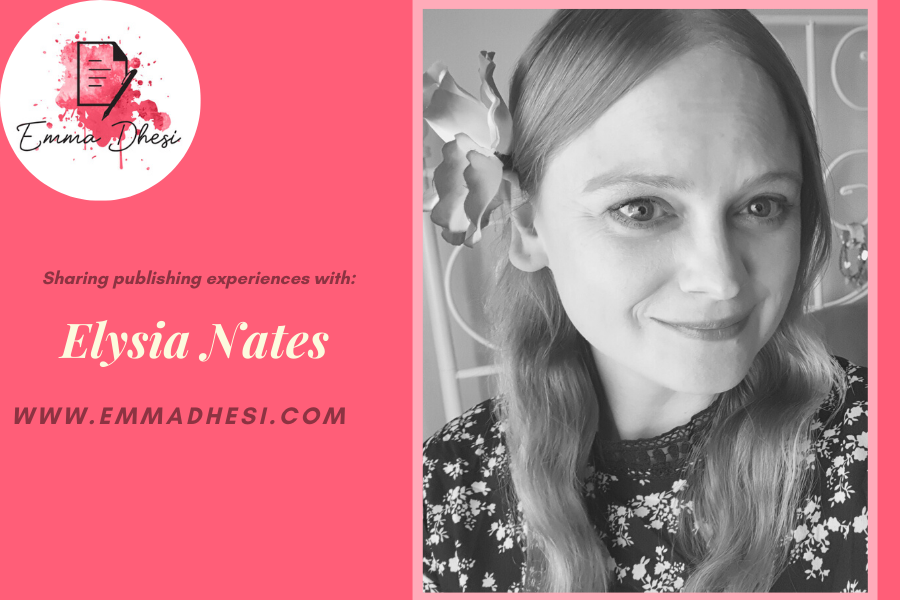
Elysia Nates on indie-publishing in Australia

Elysia Nates on indie-publishing in Australia

Elysia Nates on indie-publishing in Australia

by Emma Dhesi | Turning Readers Into Writers

Interview with Elysia Nates

Emma Dhesi  00:00

Elysia Nates is from South Australia and writes contemporary fiction. She is the single parent to a nine year old daughter. And she loves animals reading, writing, obviously, and anything to do with Molly Ringwald. So listen to our chat today and find out how she started writing her book her experiences with publishing. And if you are also in Australia, you find this particularly interesting when it comes to paperback books. If you’re a Patreon subscriber, you can hear at least he and I chat more about what happens after you’ve published your novel. Because it turns out writing the book is just the beginning. Let’s listen to what Elysia has to share with you today. Welcome to the turning readers into writers Podcast, where we teach beginner writers how to find the time and the confidence to write their first novel. I’m your host, Emma Desi. And I’m very excited that you’re here. Thank you for joining me today. Because if you’ve been longing to write your novel for forever, then this is the place to be. Think of this as your weekly dose of encouragement of handholding and general cheerleading, as you figure out how you’re going to write your first novel. Trust me, as a mom of three young kids, I know how tricky it can be to tuck some time aside for yourself on a regular basis. And even when you do find that spare five minutes, you can feel so overwhelmed that no rating gets done. Trust me, I have been there. But this podcast is going to help you in practical ways. Because once a week, I’ll be delivering an episode that gives you steps to building a writing routine, encouragement to build your confidence and cheerleading until you reach the end. Okay, let’s start. Well, Elysia, thank you so much for joining me on the show today. I’m thrilled to have you here.

Elysia Nates  02:05

Thank you. I’m very thrilled to be here. 

Emma Dhesi  02:07

I wonder if we could just start with you telling us a little bit about yourself. And what prompted you to start writing.

Elysia Nates  02:14

Now, I’m a 39 year olds, South Australian. And I started writing stories in primary school, you know, just the normal school projects, but I enjoyed it a little bit too much. And then when I was 14, I started thinking seriously about the idea of writing a book. And I actually sat down in my dressing table and wrote four characters names and the way I perceived them in my head and wrote a little synopsis first story. And then over the course of 25 years, I kept coming back and forth to it. And then it just became my book.

Emma Dhesi  02:50

Wow, I didn’t realize that. So you’ve been I should been working on this for 25 years, it was a real passion project then

Elysia Nates  02:58

It is very much so. And it’s not as if I was writing constantly for 25 years, they’d be you know, sometimes there’d be a year where I didn’t get an opportunity to write but I write little things in my phone or write notes on a piece of paper. And I always came back to it.

Emma Dhesi  03:14

Uh huh. I think I actually talked to somebody recently who was similar. But you’ve beaten her record, she’d been working on hers for 10 years. So I think you’re fixating at that. I think that’s quite normal, isn’t it. And a lot of people will sort of start writing perhaps as a teenager. And then life takes over and we go away, and we do the other stuff. And we come back to it go away and come back. That’s certainly sort of what happened to me. I remember being 16 and writing my first attempt at a well, you know, a young adult Ruby. script. I still remember the title. It was that crazy April, but I don’t remember anything about what happened. We should have a good class. And so, um, wow. So you’ve been writing that for a long time. And so tell us a little bit about it. Because it’s, it’s, maybe it hasn’t always been, it’s got quite a fairly dark theme to it. For somebody who started writing at a young age.

Elysia Nates  04:13

It did buy the theme of all because I had ovarian cancer at the time. So I was going through some pretty atypical adolescent things. So that’s sort of shaped the story.

Emma Dhesi  04:25

I see that at such a young age.

Elysia Nates  04:28

Yes. So it opened my eyes to things that you know, people that age No, we don’t have to think about about you know, your own death and things like that. So, it does seem quite dark but the the book is not meant to be dark. It’s it’s meant to be about the way we cope, that the cancer could almost be a metaphor is whatever you cope with in your life. If it’s a divorce, if it’s an anxiety or anything, it’s just about the way you cope with things and the central character copes with her thing which happens to be cancer by pretending her life is movie.

Emma Dhesi  05:03

I can relate to that. So tell us a little bit more about it.

Elysia Nates  05:11

So the central character is Mackenzie. And she has terminal cancer, and has been given a guideline of about 12 months to live. And the story basically just follows her and her sister Evie. And the two male characters are Oakley and Luke. And it’s just about their circle. And how even though Mackenzie is the one with cancer, the book shows that her whole circle was affected. And it’s not just McKenzie that’s coping with her impending death. It’s her whole friends. And they’re also not living as they should be, because of what’s going to happen. But it’s meant to read uplifting. And I always had this idea in my head that I wanted people to read it as if they were watching a movie. And the piece of feedback that I’ve had so far, people say they can visualize it as if they’re watching a movie, which is just all I wanted to say. 

Emma Dhesi  06:05

Oh, that’s perfect. Oh, that’s great to have that feedback and know that that you’ve achieved what you wanted. Yes. So I don’t know if you can remember all the way back then. But I’m thinking about who might have been your influences when you first started writing? And then maybe. 

Elysia Nates  06:20

I can remember. Okay, cool. I read a book called mill, called loving April by Melvin Burgess. And I’ve never read anything because that authors again, but I read that novel, and I was obsessed with it. I forced my sister to read it, I kept going on about it said you have to read it. And she read it. And she didn’t like it. And I got into a fight with her. I said you didn’t read it properly. And I insisted that she read it again. And I ended up reading it maybe 30 times that year, I was obsessed with it. And just the fact that someone could just completely make something up that someone can get obsessed with. I thought that’s what I want to do. I thought it was amazing.

Emma Dhesi  07:02

And do you still feel that passionately about the stories that you read? Now, who might be your inspiration now?

Elysia Nates  07:08

Sally Rooney, I’m a big fan of like normal people. I started reading that after I put my daughter to bed. And then come 1am I still wanted to keep reading. So I finished that book in one night, I couldn’t put it down. And then the next day was Saturday, and I went shopping. And I was thinking about Connell and Marianne, I couldn’t get them out of my head as if I just finished speaking to them. So Saturday night, the night after I finished putting my daughter to bed, I read it again. And again, just the fact that someone can completely make something up that people get obsessed with. That’s amazing that you can give someone an avenue to completely get lost in and forget about their own life and think that you’ve actually met Marianne and Connell. You know, that’s, that’s what I want to do. I’ve always wanted to create something like that for someone, even if it’s just one person.

Emma Dhesi  07:54

Mm hmm. I love that passion that you thought, I wonder if that intensity of kind of falling into another world and being consumed by another world? Do you think that is something that you’ve always had? Or do you think that might that was a kind of a response to, to what you went through with the cancer, the idea of perhaps not wanting to be in my own life wanting to have this other life? And that was a sort of escape routes? And but it’s still something that you you turn to now.

Elysia Nates  08:26

Yeah, I think, um, you know, back then I was very, almost robotic. And it wasn’t really, because it was quite heavy. I didn’t really process it as if it was happening to me, I was just concerned that mum was upset. And that dad was having to work a lot. And then my sisters were sad. So I just focused on them. And I think that’s sort of where I’ve got the whole coping mechanism is if you pretend it’s happening to someone else, or if you’re watching it on a movie. So I did become very passionate about thinking about things from other people’s perspectives then.

Emma Dhesi  09:02

Well, that’s a really good trait to have a thing because a writer isn’t is when you’re developing characters and trying to differentiate one character from the other. I think both of us, especially in the beginning, and I am guilty of this as well making notes as to like ourselves until we get more practice that, that they’re developing them. Wow. Okay, so now tell us when your book was published.

Elysia Nates  09:28

Um, so I published it on KDP last month, and then we had dumb shipping issues getting it here in Australia, unless you paid like 40 or $60. So I’m in the progress. Yeah, but it’s really hard to import books here. And I think the bulk of my people who will want to buy it or so yeah, so I had to go to Ingram Spark, which is what I’m in the process of doing now, because they have a distribution firm in Melbourne. 

Emma Dhesi  09:56

So let’s let’s go back to KDP for a moment, so For those listeners who aren’t yet at the publishing stage KDP is the platform that you use to publish on amazon books. Have you opted only to do a paperback? Or are you also doing ebooks as well?

Elysia Nates  10:15

At this stage, I’ve only done paperback. I haven’t familiarized myself with the formatting for ebooks. And that some I’m very old school, I’ve never actually read an E book. But I have to acknowledge the fact that that’s the world we live in. So I do need to go down that road, but I’m putting it off as long as I can.

Emma Dhesi  10:32

So interesting to hear because and somebody that I follow online, Joanna pen, she used to live in Australia, she’s back in the UK. No, but that was what prompted her to actually get a Kindle back in what was it? 2009 2010 because I didn’t realize this that books are so expensive and difficult to get hold of in Australia. And she was saying that that just kind of changed everything for her and, but not you you’re you like the touch and the feel of the of the paperback? 

Elysia Nates  11:02

Yeah, I’m a bit stubborn. If I like the paperbacks, everyone else has to get the paperback sort of first and then I’ll okay the and eventually into the book. Not yet.

Emma Dhesi  11:12

Not yet. So, then, so because of the difficulties of getting the book from Amazon, over to Australia, and you’ve, you’ve said that you’re going with Ingram Spark, so I wonder if you could tell us a little bit about who Ingram spark I and and your experiences with them so far.

Elysia Nates  11:31

So Ingram Spark, I believe, are also an American company, but they have a warehouse here. Whereas Amazon, the Amazon, Australia is completely separate to the rest of the world, which I didn’t know. So Ingram, sparks formatting, and processes are all very, very different to KTP. And it’s been very frustrating because I’m not very tech savvy. Whereas KDP was pretty straightforward. But I am struggling a bit with Ingram Spark. So I’ve had to email the poor girls at the Help Desk many, many times and really bothered them. And I promised them all a copy of my book. And they’re all very lovely, very accommodating. They humor me when I insult myself. So I don’t have anything bad to say about them. I just I do find it a little bit more difficult. But that’s probably me. 

Emma Dhesi  12:22

Well, I’m sure no, no, I mean, I’ve only unpublished ebook, and I found that to be the simplest and the least daunting, which is why I’ve resisted doing paperback so far, because we’re one of the things is trying to work out the spine, the cover for the spine, and that involves maths, and I’m not very good at numbers. I’ve had to do the same. So I haven’t gone to spike yet. And what do they format their books very differently to Amazon as well. So say the book cover that you’ve gotten the spine cover that you’ve got? Do you have to have new ones made up for Ingram Spark.

From time to time, I link to products or services I love using with affiliate links. This means that I may receive a small percentage or fee for referring you to any product you may purchase from one of those sites. It does not cost you anything. These small fees help sustain my small business. I truly appreciate your support.

Elysia Nates  13:07

So the interior I was able to just transfer over that was no drama, but the cover? Yes, the templates completely different. On KDP, I just opened up their template generator and uploaded my image onto it, there was no dramas, but with engram, it doesn’t, you open the PDF, and it doesn’t actually let you edit it unless you’ve got certain programs. And I couldn’t get the right program to do it. So I ended up messaging my friend crying, saying it’s never going to be republished and Australians can never read my book, because I can’t figure it out. But she finally figured it out for me. But I think the spine still doesn’t quite match up, I think a little bit of the front cover is going to curve over onto the spine that I’ve resigned myself to the fact that that’s probably it might look good. I’m just ready for it to be done. Thought last month, I’ve done it all with the KDP. And now I feel like I start again. So it was it was quite disheartening.

Emma Dhesi  14:03

It’s a great point that you raised. I think it Sam, there are pros and cons to both traditional and independent publishing. And you know, we kind of know the pros and cons of, of traditional publishing. But with indie Yes, it’s really easy to do, you can write your book, get it edited and put it up straight away. Another benefit is you can edit your book at a future date, you don’t have to go back to the publisher or anything. But another part of that job of being an indie writer is being the publisher as well. And so with that comes its own set of skills, and I’ve chickened out, as I say and haven’t yet ventured down that particular skill set. So that’s a good point you raise for people now want to move on a little bit towards the sort of the day to day business of being a waiter. So I am I can see in the background, your your daughter is there, and I knew that you’re a single parent So you have your hands full. And so how do you manage to fit your writing time in around any day job, parenting responsibilities and just having social life as well?

Elysia Nates  15:12

Well, you know, in an ideal world, I would very much love to be a full time writer, but we all have bills to pay. And as he said, I am a single parent. So I do work, I work in aged care, I work 60 hours a fortnight support part time, but it is still quite taxing. And then I have my child and you know, the normal housework to do and grocery shopping. And we have a dog and guinea pigs and rabbits. So generally, it’s 10 o’clock at night. And I find I’m not the most disciplined person, when it comes to my writing, I’m not someone that says, I’ve got this half an hour block, I have to write, there’ll be some days where I genuinely do not feel like writing and I don’t force myself. But usually, I would rather get everything done. And then instead of sitting down to watch a movie, or instead of scrolling Facebook, I would much rather right. So if you want to do it, you find time to do it, even if it’s 10 o’clock at night.

Emma Dhesi  16:07

Mm hmm. Absolutely. And do you find that your that your what you must do, because you’ve written your book, because for me, I’m in bed by 10 o’clock at night. So it’s a treat that you’re just starting? So can you get it? You know, say would you do 10 to 11? And that’s enough, and were you able to keep going?

Elysia Nates  16:26

Well, I don’t get a lot of sleep. So I generally right from about 10 to 1130. And now I get up about six days, I don’t really get a lot of sleep. But I’m dysfunctional in that way. I’m quite nervous, anxious person. So I don’t need a lot of sleep.

Emma Dhesi  16:44

And so for each of your writing sessions, it sounds like you’re perhaps quite instinctive writer. But I wonder do you have? Do you know that you want to write this particular scene or chapter or that you want to edit a particular chapter? Do you plan ahead where you’re going to do? Or do you just sit down with your laptop or your pen and paper and see what happens

Elysia Nates  17:05

Well, it takes me a long time to get new material out. Because generally, every single time I start writing, I read from the beginning again. So every time I start writing a new chapter, I read from the beginning, and I edit that as I go, and then I write a new chapter. So it takes me a long time to get there. But generally, I know what I want to write that night, because I’ve written little notes in my phone, and that during the week, or I’ve heard a song on the radio that made me think of something I want to put in. So it all builds up in here. And then I just use that time at night to get it out on the laptop.

Emma Dhesi  17:39

Okay, so it’s quite a nice mixture. Not exactly of plotting as such, but certainly planning ahead and giving yourself some some pointers about what you want to write next. But I’m intrigued though about, you know, say you get to, I don’t know, halfway through the manuscript, few quarters the way through the manuscript. You still right from the very beginning, at sorry, do you still read from the very beginning and go all the way through?

Elysia Nates  18:03

Yeah. 

Emma Dhesi  18:04

Wow, I’m impressed. I’m such a slow reader. I don’t think I could be up all night. I think if I was to do that.

Elysia Nates  18:10

I usually am only 10,000 words into my second book. So at the moment, it’s not really that text thing, but with my first book, towards the end, I would only read like the last the previous five chapters. Right, usually, right, right, right back to the beginning up until about three quarters of the way through that I just kept going to the last five chapters. 

Emma Dhesi  18:34

And so that gives you enough of a feel for where you’ve been, and get back into the swing of things and then the tune as well. For good.

Elysia Nates  18:42

I think it’s inevitable, the more you write the story develops a bit. And it might make the characters change a little bit. So I like to go back and make sure that there’s a continuity with the storyline and events that are going to happen. There was seedlings of that within the character there. And so it’s all a bit more natural. 

Emma Dhesi  19:01

Hmm. So then, if you’re, if you’re kind of editing as you go along, you must have a very sort of clean draft at the end then. And you still go back and then do another fool edit.

Elysia Nates  19:15

Yes. And then even when I published it, I still found mistakes.

Emma Dhesi  19:20

It’s it’s feels inevitable. I’ve been going through back through both of my published books, and have been finding Yeah, more errors and how you think how did these escape they’ve escaped me. They’ve escaped re editor, they’ve escaped the beta readers and still, there’s one or two that slipped past it.

Elysia Nates  19:41

It’s infuriating. But then someone pointed out there’s literally mistakes and Stephen King novels so.

Emma Dhesi  19:48

Got to take comfort from that and being an indie I think that’s the advantage is you can immediately go back and fix it. And so the next person gets it gets the corrected one. And now we are for anybody listening. In the future, we are we’re in where are we we’re at the end of October 2020, was we’re recording this, which means the majority of the world is still in a degree of lockdown. We’ve just been through nine months of quite heavy lockdown. I think in Australia, you’ve had you kind of quite turbulent year, I think you’ve had a lot of fires this year as well. So, and there’s been lots going on, how have you found and been kind of postponed for a great period of time? Have you found it beneficial? as it helps your writing? Or has it hindered you? How have you found it?

Elysia Nates  20:39

And will I’m in South Australia, so we had maybe just a couple of months of lockdown. But for the last few weeks, not so much because we don’t have active cases anymore. It’s very different in Melbourne. But for me, I didn’t really struggle during the lockdown period because I’m quite introverted. I don’t really like going out very much. So listen out to tea with my family, that sort of stuff. I did miss but you know, we still we drove to each other’s houses and just kept our distance mum would be at the front door, and we’d be on the one that so we still maintained that emotional connection. And then, yeah, didn’t really fit the rest of my life because I don’t go out every month anyway.

Emma Dhesi  21:20

But you did you have to homeschool?

Elysia Nates  21:25

Um, no. So, route, my daughter, Ruby, her school broke up a week early. So there was just one week that she was at home and I was working from home at that time. And she’s, you know, she’s a breeze to look after with really good mate. So she just let me work. And the next few days, I didn’t actually have to educate her, which is a good thing. Because you know, I don’t understand that. That stuff. It’s worked out well.

Emma Dhesi  21:51

Of that did work out well. So you’ve had quite a good lockdown, then? I am. Yeah, I find it. I like you. I’m happy to be at home and having the excuse not to leave the house for three days. I was very happy with that. But I certainly found having the kids home and doing the homeschooling just bumped things around, but the routine around and so it took a little while to re recalibrate and find a new normal as the as the describe it. So tell us what are you working on next, you mentioned that you have a new project.


Support The Show

If you enjoy the Turning Readers Into Writers podcast, you can now support my time in producing the show with Patreon.

If you find that the podcast adds value and you’d like to help support the show, please consider supporting me on Patreon for $3.00 per month and you’ll get bonus podcast content, as well as a personalised thank you from me, and a shout out on the show.

Elysia Nates  22:25

I do so in my service parking lot. Also, in my writing career, in my head, I’ve always had five books that I want to write. And I let my daughter pick the second book, because I have them all written down. Which book should I write next. So she picked the one that I’m working on, which is called benched. And that’s basically because I’m always about human connections. I like the way people interact with each other and important experiences and coping mechanisms and all that sort of ways at the core of what I write about. So bench is about a lost female teenager, and I lost my old teenager and the one thing that connects them, which is the basketball bench.

Emma Dhesi  23:06

Ahh case, it’s got the sports theme. So..

Elysia Nates  23:13

Relationships and human connection or coping mechanisms, again, the benches just sort of a little bit of a metaphor.

Emma Dhesi  23:21

 I like that. And is that mmmm… is the new book is that are e-book as well?

Elysia Nates  23:27

Yes. 

Emma Dhesi  23:29

Cool. So who are your why eh? Who do you admire whose work you admire in that in that genre?

Elysia Nates  23:37

I’m not really like Anna Todd.

Emma Dhesi  23:41

Is she?

Elysia Nates  23:43

Asked the series

Emma Dhesi  23:45

Which theory sorry?

Elysia Nates  23:46

After series 

Emma Dhesi  23:48

After series, and that she an Australian writer at all or??

Elysia Nates  23:52

Not, she’s American-Russian.

Emma Dhesi  23:54

Okay, but she’s that’s the kind of guessing it’s a series. So is that what you’d quite like to do as well have a series about the same characters? Or do you prefer to do a standalone book?

Elysia Nates  24:06

Definitely makes sense. I have no desire to write series. 

Emma Dhesi  24:10

Yeah, no need me neither. It’s funny how it grabs some people as being a is wanting, you know, really to get to know those characters in those worlds and tell more stories about them. And I find I get a little bit, I’m ready to move on to new people by the end of the end of the book. 

Elysia Nates  24:26

And particularly like with my first book, because I’ve been working on it basically my entire adult life. I found it very hard to let them go. But I needed to I felt like I’d spent a long time with them. And they were ready to go into the world and I was ready to create new characters and there was nothing else that I could do with them. So I would never want to write a sequel or anything like that. I like creating new stories and new characters.

Emma Dhesi  24:52

And so weird inspiration for this one come from.

Elysia Nates  24:57

My daughter plays basketball and it was really I saw her sitting on the bench one day. And I always thought that it is sitting on the bench, you know, you might feel awkward or not part of the team, but she was so into it, she was sitting on the bench cheering for her teammates and everything. And it just just got me thinking that she still belongs on the bench. And that’s what the synopsis is, is to belong.

Emma Dhesi  25:20

That’s nice. That’s lovely. And, and so I’m just thinking, where can listeners find out more about you and about your books online.

Elysia Nates  25:34

So my online presence at the moment is pretty non existent, which is why I’m trying to go down the avenues meeting lovely people like yourself and sort of trying to ascertain what I’m actually meant to do. Because you know, it’s one thing to write the book and finish the book, and then publish the book. And then beyond that, I don’t really not. So I’ve started following different people on Instagram and join some writers groups. This is like the first time that I’ve ever publicly spoken about my book. So because I’m so just happy enough, a couple of my friends read it. I always just thought as long as I don’t lose money, and I want a couple of people to hopefully enjoy it, then I feel like I’ve achieved my dream. So I really do feel like I’ve achieved my dream. So anything else, like talking to people like you, this is just a bonus.

Emma Dhesi  26:20

It’s funny isn’t it?

Elysia Nates  26:23

A work in progress.

Emma Dhesi  26:25

And but we can find your book on Amazon at the moment. Is that right? 

Elysia Nates  26:29

Yes. 

Emma Dhesi  26:29

Okay.

Elysia Nates  26:30

Unless you’re in Australia, then. Yes, do I think Prince Bach?

Emma Dhesi  26:34

Well, I’ll put a link to the to Amazon UK anyway. And people can go from there and find it on on their local. Well, Elysia has been lovely chatting with you. Thanks so much for your time. And good luck with the new book.

Elysia Nates  26:51

Thank you very much. It’s been lovely to me. I love your accent by the way. 

Emma Dhesi  26:54

Thank you! Well, thank you so much for joining me today. I hope you find that helpful and inspirational. Now, don’t forget to come on over to facebook and join my group, turning readers into writers. It is especially for you if you are a beginner writer who is looking to write their first novel. If you join the group, you will also find a free cheat sheet there called three secret hacks to write with consistency. So go to emmadhesi.com/turning readers into writers hit join. I can’t wait to see you in there. All right. Thank you. Bye bye.

If you’ve been working on your novel for years (perhaps even decades) the maybe it's time to consider working with a coach.

If you have multiple versions of your novel and you don’t know which works best, are scared nobody will like your book and don't feel like a 'real' writer, then my guess is coaching is the right next step for you.

Find out more and sign up for your free Clarity Call here: https://emmadhesi.com/personal-coaching/
 

Alliance of Independent Authors

Shortcuts for Writers


Do you feel as if you don’t have the time or the money to invest in editing your novel? I know an online course that can help you to transform your manuscript WITHOUT breaking the bank. It’s called Book Editing Blueprint: A Step-By-Step Plan To Making Your Novels Publishable, and it was created by Stacy Juba of Shortcuts for Writers.
 

emma dhesi

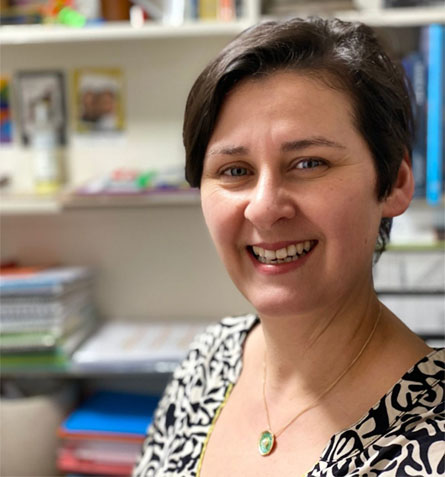
Emma Dhesi

Emma writes women’s fiction. She began writing seriously while a stay at home mum with 3 pre-school children.

By changing her mindset, being consistent and developing confidence, Emma has gone from having a collection of handwritten notes to a fully written, edited and published novel.

Having experienced first-hand how writing changes lives, Emma now helps beginner writers find the time and confidence to write their first novel.
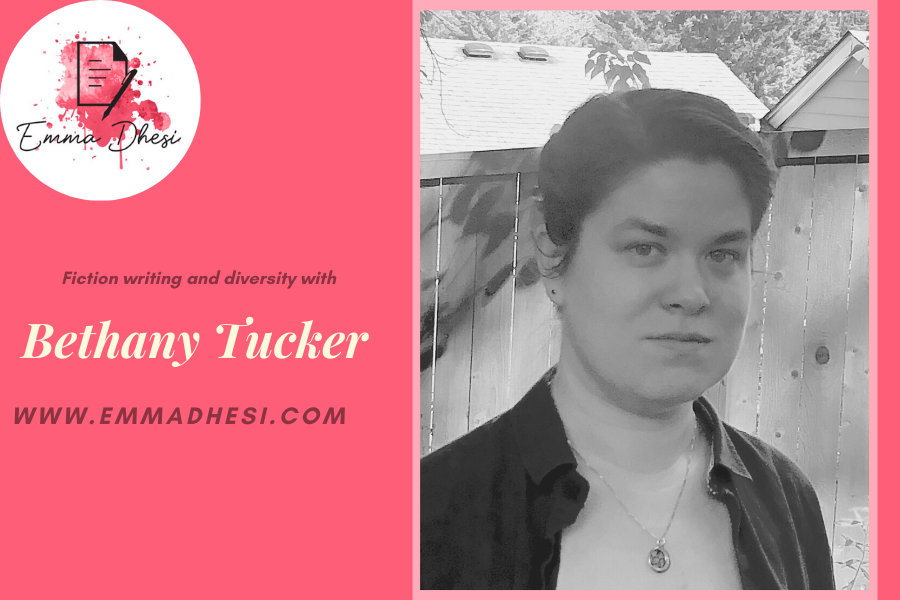
Fiction writing and diversity with Bethany Tucker

Fiction writing and diversity with Bethany Tucker

Fiction writing and diversity with Bethany Tucker

by Emma Dhesi | Turning Readers Into Writers

Interview with Bethany Tucker

Emma Dhesi  00:00

Today’s episode of turning readers into writers is an extended edition. I have a fascinating conversation with why a writer Bethany Tucker, all about diversity, diversity and writing. Diversity isn’t just about race, but it’s about gender, sexuality, disability, neuro divergence, and all the other ways that human beings differ from one another. It’s about acknowledging that we each come from individual backgrounds and life experiences. Bethany talks about her own history and experiences coming from a diverse family as she does. Bethany gives us a framework for what diverse actually is. And we delve into what personal bias is, and how to recognise it, and what we can do about it. This really is an episode worth listening to jam packed full of practical suggestions, ideas on how to find sensitivity readers, and encouragement to look out with our own cultural norms, and see the other as human as well. So please do join me in Bethany today, as we chat about all things writing, and diversity. Welcome to the turning readers into writers Podcast, where we teach beginner writers how to find the time and the confidence to write their first novel. I’m your host, Emma Desi. And I’m very excited that you’re here. Thank you for joining me today. Because if you’ve been longing to write your novel for forever, then this is the place to be Think of this as your weekly dose of encouragement of hand holding and general cheerleading, as you figure out how you’re going to write your first novel. Trust me, as a mom of three young kids, I know how tricky it can be to tuck some time aside for yourself on a regular basis. And even when you do find that spare five minutes, you can feel so overwhelmed that no writing gets done. Trust me, I have been there. But this podcast is going to help you in practical ways. Because once a week, I’ll be delivering an episode that gives you steps to building a writing routine, encouragement to build your confidence and cheerleading until you reach the end. Okay, let’s start. Well, welcome, Bethany, I’m so glad to have you back on the show again, but we’re going to be talking about quite a different subject today.

Bethany Tucker  02:37

Very different. I’m really excited. Thank you for having me back.

Emma Dhesi  02:40

A pleasure, a pleasure. So we’re gonna be talking about diversity today, particularly diversity and writing. And we were chatting OFF AIR just before and we were commenting on the fact that there’s not a lot of information out there about how writers can be more inclusive than their writing. So I know that you’re kind of looking to step into that space and help people like me be more aware. Yeah,

Bethany Tucker  03:06

I think I think I’ve been given this incredible privilege to kind of stand there and talk about it. It’s, it’s a scary topic, I find a lot of people are very afraid to talk about it. And I can’t avoid talking about it. My husband is black. And my family and I went through this whole transition of just talking about race and having to integrate in that because I grew up incredibly white. I lived in entirely white communities. And then I went to university. And I was homeschooled. So they put me into this. I was considered an at risk student. So they put me into this at risk pre orientation. You showed up a week before everyone else and they gave me more help. Well, I walked into the room the first evening when they have the the opening ceremonies, invite everyone in for this pre orientation. And I’m one of like two white people in the room. Later, I found out there were like three others. But I looked around and I went from I didn’t see anyone who looked like me. And that week just opened my eyes and I also met my husband that week.

Emma Dhesi  04:20

And so so question for you would be how when you walked into that room, and you didn’t see anyone else like you Do you remember how you felt in that moment,

Bethany Tucker  04:29

incredibly intimidated, incredibly intimidated. I am a very short woman. And everyone looked like I mean to me at the time everyone looked like I’d walked into like a basketball team and everyone was taller than me and louder than me. And they seem to know each other and I didn’t know them. And I was I also had that very natural like, I gotten the messaging that these are people at risk. These are people who might not do well in a college campus. And my university had literally targeted everyone who was not white as at risk, which should tell you something about the US and how we deal with race and how, how the access to higher education at this elite. Because I was fortunate I got a huge scholarship, I was able to go to this elite, private liberal arts college. So, yeah, that’s, that’s the group I went in with. And they absolutely had my back. It was amazing. we bonded over that week. But it was it was intimidating. It was uncomfortable. We talked about race, we talked about prejudice. We talked about the the barriers just for these other kids with me to get to university. And the fact that the other students in the school didn’t really expect them to be there. Oh, like there was there’s, there was a divide, like we stayed grouped together as we went through. And I got very comfortable with them, they became my people. But obviously, married, we’re still together or what, like 16 years later. But I had to get comfortable listening to the tears, I had to get comfortable listening to the anger. I had to get comfortable watching that. This is a space where we’re going to talk about the difficult things. You don’t talk about the weather. You talk about what’s real. 

Emma Dhesi  06:32

Okay. Okay. So yeah, I can imagine that was quite a culture shock. I’ve only had one experience like that. And we went to India. And we were there with the Mumbai bombings. And a few days later, we were out shopping. And then there was the thought that everybody kind of thought that there was another bomb going off. So everybody kind of hit in different shops. And, and so we ducked into a shop, and we were the only white faces in the shop. And there was that feeling of, you know, as white rich tourists, you’re the reason we’re being attacked. And so we just kind of felt everybody’s eyes on us. And, and it’s the closest I felt to being that feeling intimidated in that way because of the colour of my skin. Yeah.

Bethany Tucker  07:21

And that should have been one of your stories, didn’t it?

Emma Dhesi  07:25

That’s right, yeah, my short story. That’s funny. Um, so let’s then let’s get down to the nuts and bolts, then diversity is such a hot topic. And, and as we record this, it’s coming up to November. So it’s in 2020. So it’s coming up to the US election. And I know that race relations are a very hot topic in the States right now. But diversity is not just the colour of your skin, there’s a whole range of other things that are included within diversity. So what, what is considered diverse?

Bethany Tucker  08:04

Okay, so your audience is wonderfully global. And I love that. So I’m going to speak to that. I’m an American. I’ve lived abroad. I’ve lived abroad in China, Japan, Korea, and I’ve managed to visit Canada, so many more places to go. And I’m going to acknowledge there’s privilege in the fact that I can say I’ve been to all those places, so many people don’t have a passport to let them go there, let alone an education or skill set. So but coming from that perspective, diversity is whatever is not considered the the norm. And norm for English literature has historically been a white man, maybe a white woman. I’m going to roughly give an age range as well. Between the ages of like 15, and 4040 is a little high. I mean, there are many famous stories outside of that range. But a lot of genre fiction, especially nowadays, is in that heroic age, that people like go and do things. So diversity is anything outside of that. But if you’re writing and say China, each diversity would actually be someone who’s not maybe Han Chinese, so a different minority group. And I don’t read a lot of Chinese literature. I’m not actually versed enough in Chinese to read it, but it would be outside of like whatever is considered standard for your culture. So hot button topic for China would be writing a positive story about someone from Shin Jang who’s Muslim, that would be explosive. Probably from what I read it their news that go to BBC See news, you can read up on that it’s very contentious right now in a very heartbreaking way. So think about where you’re at, think about what you see in your language in your literature all the time. And then diverse for you is going to be anything outside of that.

Emma Dhesi  10:19

Okay. Okay. So we’re, it’s not just male, female, it’s not just white, black, but it could be a disability of some sort. It could be a stutter…

Bethany Tucker  10:30

I wrote out bullet points on this. I mean, it diversity happens. And like the biggest categories would be religion. So anything that’s not like Protestant, or in England, maybe Anglican. Until recently, in the US, even being Catholic would be a more diverse religion. neuro diverse neuro divergence. So neuro divergence can cover people who are extraordinarily gifted, or people who are on the autism spectrum, or anyone who has like a mental disability, or even neuro divergence can cover people who have like, like depression, or bipolar, schizophrenia, these are all things that I’m excited to see showing up more and more in literature, but they’re still not as common in literature as they actually are in our world.

Emma Dhesi  11:24

Mm hmm. So like, the people you see writing, and the stories that do contain these characters, do they tend to be written for what you’ve seen to be tend to be written by younger, a younger writer than a older writer?

Bethany Tucker  11:42

I see older writers branching into it, having the clout to do it. Okay. And I see younger writers needing to write their own story. So I would say it’s a spectrum of answers. 

Emma Dhesi  11:54

Well, that’s good, that it’s from all different ages as well. Yeah. And so Okay, so that’s great. So now we kind of have an idea of what diverse characters are and essentially anything out with what we in our as individuals considered to be normal, in inverted commas. Something else that sort of I struggle with a bit, a bit quite a lot, trying to recognise this as the idea of personal bias. So we each of us, as individuals have personal bias. And but there’s, it’s so intrinsic within us all parts of us that it’s hard to recognise it. And I wonder if you could speak to that a little bit, either, how we show personal bias and things that we might kind of be looking out for when we want to investigate ourselves?

Bethany Tucker  12:48

get uncomfortable, you need to get uncomfortable? That’s the easy answer. The more the more useful answer, to be honest, is you have to create a structure of awareness of yourself. And this is going to sound like I’m moving a little bit away from writing. But essentially, writing comes from within. And this is personal development. Doing this well will mean that you have to internalise concepts, and it’s going to affect more than just your writing life. But if you’re asking these questions, you probably want that. So you, it happens on a day to day basis, because when we sit down the board at the keyboard, and we’re like going into the writing, like we just go and you you’re working with the characters, you’re not thinking, Oh, I’m going to be a socially aware person today and create balanced characters, like we might intend to, but when you’re like, Okay, so Susan’s going to go to this place, and she needs to do this. So she finds this clue. It gets messy really fast. And all of those subconscious biases and things are just going to show up and you’re not aware of them because you’re trying to write. So this happens in layers. It happens before we write. It doesn’t always happen exactly why we’re writing that first draft or the first beat. And then it happens while we edit. It can happen while we’re editing the outline. It can happen at any point after we write that first draft, we have enough perspective to look at it. I mean, it’s really hard to even catch our comma problems when we’re writing, let alone like a race problem. So you have to pay attention to what you just trust and pay attention to what you don’t trust and ask yourself why. If you’re walking into a store, and you’re trying to build this awareness for yourself of your own biases, they are invisible to us and walk into a store and say who here and my clutching my purse when they get too close to me. And who here would I leave my purse with even though I don’t know them? those answers will show you really quickly. What you might have going on the insight that you like or don’t like, or you might even come back and be like, Bethany, I’ve got really good reasons not to trust this person, you’re crazy. And that’s okay. We all have lived experiences that tell us who’s safe and who’s not we have, we have biases, because they are part of what we have evolved to protect ourselves. There’s too much information coming in. And our brains create these shortcuts, we socially create shortcuts, so that we can just get through life, like who do I talk to? Who do I don’t in group out group behaviours. Otherwise, we would be dealing with everyone out here in front of us making too many decisions at once. So give yourself some grace. And start with really simple questions. And I will start with the question Who do you trust and who do not trust, I have personal biases against Korean businessmen. And I am very painfully and embarrassingly aware of this. However, I got them through very painful experiences, I worked in Korea, I had some very not good experiences with Korean men around work. And then I came back to the US and I worked with another Korean company, who were frankly doing very unsafe business practices, and they put me and my husband at risk. So now when a Korean company approaches me, I have this I have this bias, I don’t start from a place of trust, because I’ve learned not to. And this can, this could have, I could have done this with, say, a Mexican business. I could have done this with anybody else. It just happened to me this way. So when I come up against this, a man from Korea, I checked myself, I enter that point of I’m going to watch my more my actions around this more closely. I can’t drop that protective behaviour, but I can drop the decisions I make and watch them before I finalise them. 

From time to time, I link to products or services I love using with affiliate links. This means that I may receive a small percentage or fee for referring you to any product you may purchase from one of those sites. It does not cost you anything. These small fees help sustain my small business. I truly appreciate your support.

Emma Dhesi  17:00

Right? Okay. I like that idea of, you know, just when you’re in a show, but supermarket or something and having a look around you and thinking, yeah, that’s such an easy exercise to do. And I imagine it’s I’ve never done it. But I imagine it’s very, very telling. And so if you discover that you do have some if one has a form of bias, what’s the kind of next step about that? Is that just as a div analyse why you might have that bias? And then once you’ve established why you might have that bias, what do you do, about it. 

Bethany Tucker  17:37

So there, there’s actually quite a lot you can do about it. One of the reasons that we distrust people, is we have these myths and stories in our culture, they come from our religion, they come from our history, they come from our families. I have during the process of doing all this and covered a lot of them that came from my family. And once you hear these stories, they feel really comforting. They’re like normal, they’re just inside of us. And we need to get uncomfortable with being comfortable with those stories. So it’s, it’s the story of the other Do you understand ingroup outgroup behaviours? No. Okay, so Ingrid about group behaviours, some people might call it tribal, but it’s really about these are the people in our circle, these are safe. And the everyone outside that circle is other. And so othering someone puts them outside the circle, people will, in we’ve evolved to do this and we still do this, you can see on the playground, will change themselves, so they don’t become the other, like the child will change themselves to stay with their their group and so be acceptable. And then if you’re outside that will you look different, you sound different, you’re weird. And then you can other than, and you don’t have to deal with them. So once people look for your others, the person’s you don’t trust the people outside your, your innate circle, and then go get familiar with the other because the other is the unfamiliar most of the time. Once you become familiar with something, they’re no longer so distant, and they’re not so easy to write off, they become humans. So when you become familiar with someone’s story, you You know what, like somebody hopes and dreams are what they want to do, where they want to go to college, what foods they like to eat. You have started humanising this caricature that you had because even though someone’s in front of you in that store, and you’re clutching your purse, they’re a caricature. They’re not a full human. In your experience, you’re just getting some impressions from their looks the way they’re walking, get to know them and and sometimes we can’t start by Walking up and saying hello, which is what I did with my husband, I walked up and said, but read a book, go, go look for a book with someone like that looks like this other that you’ve identified it, read about them, read a blog about them. Watch a movie with people that look like this, start putting stories in your subconscious that makes this other human. So you can’t push them beyond that circle. Because as much as a lot of us will say, and we have the best intentions. I love everybody. Well, a buddy has to be a person to us. It’s easy to say, well, will they just do this? And like I, I took a class in college that focused on Egypt and the Muslim Brotherhood, and the Arab Spring and all that. It was taught by a god guy from Iran. And it was an absolutely amazing class. But I watched my classmates othering these Egyptian Muslims, in the videos, we were watching and stuff. And because they looked so different, they acted so different. For me, it was an extremely uncomfortable experience because I grew up in a Christian cult. And as I’m watching these videos, I didn’t see other I saw myself as a child. So I’m sitting there watching people other what I found familiar because we had two different background experiences. Um, they didn’t see these people’s hopes and dreams. They couldn’t fully humanise them because they had no context. It wasn’t that my fellow students were bad people. They just hadn’t experienced humanising the other.

Emma Dhesi  21:48

So say it just explained to me again, so because you have the upbringing that you’d had you didn’t feel that they were other is that because you both you’ve both grown up or lived in very, very religious very, what one might describe as extreme? And yeah, ringing so even though they believed in different things, they both had that same intensity and that same devoutments, is that what you mean

Bethany Tucker  22:13

partially, and some other things it’s it’s misunderstood exactly what ultra conservative Christians believe in ultra conservative Muslims believe there’s a lot of overlap. They both come from similar backgrounds. They are both people have a book, they both come from the Judeo the the Old Testament, and they built on it, Allah is just a different language for God, we worship the same God, I say we I’m no longer part of the Christian religion. But I’m culturally still part of it. As you can tell, the artefacts are left in my language. So they are worshipping the same God in different ways. And they have the Quran, we have the New Testament, so we both have additional books. But the cult that I grew up in the women, almost all of them covered their hair. So they had head coverings, and we wore dresses to the ground. And women were subservient to men. The they our outline on the TV screen looked familiar to me. Okay, and they’re the words and language. So yes, we, and that’s something you can explore yourself is what in here? Can I find myself? use that as a thread to get closer? There’s a mother in here, yes, maybe Her skin is black, but she’s worried about, you know, daycare for her child. I have a connection with that now. So, use those strings to find ways that they are not different from you.

Emma Dhesi  23:47

Okay. Okay. So we have this lovely exercise where we can examine ourselves in the shop, for example, just looking at how we respond to the different people. And we examine that and we, we just start to question it, I guess, you know, just having Think about it, having a question, wondering why it might scare us or intimidate us and then start to investigate it, as you suggest, possibly as simply as saying hello to somebody, or maybe watching some media or a film or reading a blog. And do you think that, um, is that enough? Or, as writers particularly kind of bring this back to the world of writing is and is not enough for us to check our bias. Is that enough for us to write about? Somebody? I’m going to use inverted commas? No, but you know, diverse, it. That is not enough for us to do as you know, I’m, I am mixed race, but I look white, and I’ve had a very Western sort of upbringing. And so is that enough For me to write about somebody who comes from Ghana, perhaps, you know.

Bethany Tucker  25:05

I think the answer depends on who you choose to write about. To a certain extent, um, the answers I’m going to give are contentious because this is a conversation that’s going around. We had a book here in the US published recently called Mexican dirt. And it’s created a lot of negative press. I haven’t read the book myself full disclosure, but it was written by a woman. I think she’s at least part white. I think she has some other background, but she’s not Hispanic, she’s not Mexican. And in the book is about a woman from Mexico who owns a bookshop, and then, in some fashion makes it to the US. I think she probably comes here illegally, from what I’ve heard. So a lot of people came out and said, Well, why would a white woman write this book? And she was like, well, I did my research, and I love this people group. And I feel they’ve contributed a lot. And I just, I wanted to do this. And people came back and said, Well, you know, a Mexican woman would have never thought this or done this. And I’m not Mexican. I’m not going to make a judgement call on that. But I would say that getting sensitivity readers, once you’ve written it is really important. I’m sure we’ll talk about that more later. I think digging in trying to become familiar. It also depends on what level you’re writing, like, is this a secondary character that shows up for a couple pages? Or is this your main protagonist, and the level of detail and understanding will depend on how much this character is on on screen on the page, okay. So I would say, if this is something you’re really struggling with, put in a minor character, work with it a little bit, build up your comfort level, build up the build up ways that you can check what you’ve produced, and let it happen a little bit organically. You if you are writing a full protagonist from another country, you need to educate yourself, frankly, you got to treat it like historical fiction, and really dig into it. If this is a if this is a community or something you’ve grown up inside, still do your research. But think about also the perspective of the character you’re writing. Are they inside this culture you don’t know anything about? Or are they living next to it, maybe you’ve lived next to a Hasidic Jewish community, and your character lives next to a historic Jewish community. And then you have some Hasidic Jew characters show up, you’re going to be able to use your perspective, because you live next one. But if you have a character from that Jewish community, become more part of your story, then you need to get into their experience a little bit more and say you’ve lived find out what they how they view you if it becomes important to the story. So perspective, your POV is going to matter so much.

Emma Dhesi  28:14

Mm hmm. Yeah. Yeah. I think that’s a great way to approach as you say, kind of like as if you’re doing historical research or, or a genre that involves in depth research, and you have to have a good a good knowledge of it. 

Bethany Tucker  28:30

Yeah, I’m sorry, I can’t tell you any of this is easy or quick. That’s not.

Emma Dhesi  28:36

No, it’s not it is difficult. And it’s such a hot potato right now. It’s, um, and I think because of that, it’s it’s scary. And I wouldn’t be surprised if a lot of people opt to not do it, because there’s such fear around it. But do you think that um, yeah, do you think it’s important that majority writers, white writers are because we’re, you know, we’re in the West talking about, and North America, Western Europe? Do you think it’s important that white writers do include diverse characters in their stories? And if they are scared to write about those characters? How could we? How would How would you suggest encouraging them not to be so scared and turn to try it?

Bethany Tucker  29:31

Um, I’m not sure I can encourage anyone not to be scared. I was frankly nervous and scared to do this podcast just because it’s such a hot button topic, and I live with this every day. But I can say that it’s worth walking through the fear. You’re not going to get rid of the fear. But it’s absolutely worth going through it. So backing up to the first part of the question, and I’ll come back around to the fear because there are ways to work with it. I promise. Is it important for majority writers? So in this case, we’re in English, so mostly white, to write minority characters, especially racial, diverse characters. And I would say, yes, and here’s why. We, as writers, are carriers of our own culture, and particularly as, because we’re speaking in English carriers of our culture, in this language, we dominated. So in a way, what we write and I actually studied political propaganda in university, which has been amazing. We craft a vision, I’m not sure if you’ve heard the term imagined communities. No, but it’s this idea that we create in our head, we collectively have this imagination of what our community is. And part of the way that’s created is through art, music, and literature. And in literature, story creates this imagined community, and in what shape who shows up in our stories is who we imagine we are aligned with who is in our sphere, who is in our society. So historically, we have left out most of these characters, or we have regulated them to roles of servants or villains, etc. We have imagined this community in where these people play these roles for us. And we are not going to be able to get away from the effects of that imagination, because it’s baked into our classics, is baked into the myth of those who speak English natively. So the only thing we can do going forward is to choose to not continue to make that myth, because that’s the only way we’re going to move past the racial violence that’s happening in my country. Now, the tensions that are happening in other places, our children need to imagine a country and societies, an English speaking society that spans the world that doesn’t have these things. And that’s only going to happen if what we bring into ourselves starts to change that. Does that make sense? 

Emma Dhesi  32:23

I think so. I think what I’m understanding is that as English native English speaking writers, it’s important for us to reflect that our English speaking countries are broader now than just a European Caucasian. And that needs to be reflected in all stories. As our society changes.

Bethany Tucker  32:46

Yeah, I’m going to give some real world examples, because I got very much collegiate there for a minute. So this is not a sob story. I’m not looking for pity. My husband and I came back from China, we’ve been working there we returned to to make a change in his job. We moved to Chicago, which is a heavily segregated city. And he started looking for work in cybersecurity, but mostly technology. That’s what his degree is in, he’s certified in the field. Our myth solidary, in this country, steers towards having black people in places of support. He would, he sounds, he has very international English, he does not sound black. He does not have intercity language tones or syntax. He would have these phone interviews. And then he would show up, and they would offer him a job. Like 30 $40,000. Under the job he applied for in the support department. He would apply for the network engineer, and they’d offer him a help desk position, once they saw him. And this happened over and over and over again. And not just in Chicago, it happened in other cities in this country as well. And that’s because if anybody you talked to who interviewed my husband would say, Oh, no, that’s just what he he was qualified for. But people who were less qualified than my husband applied for the same jobs and got them. Right, because we have this subliminal bias. And it’s in our culture, you can say I’m not racist. Well, you’re part of it, because it’s in your mind. You see someone and you assume what they are. Mm hmm. So so what we have to do is, you you need to change that. And that happens by happening it show up like, literature is an amazing vehicle for social change. We spend time with it, we get emotionally invested in it. It’s not like hitting people over the head saying, you know, you have to be kind to everybody and everyone is equal, rah rah rah hitting the streets, yelling at people is good for creating noise and attention, but doesn’t get inside our hearts and souls, and then subconsciously change our actions. Mm hmm. Stories, one of the most powerful vehicles that exist in the world, we writers have this amazing, amazing position that we’re in.

Emma Dhesi  35:26

Yes. Yes. Yeah, that’s so true. But what what you say about once it gets in, into our hearts as well, and we can relate to somebody, whether it be a fictional character, or a real one, we can relate to them in some way, then it doesn’t matter what colour of skin, what disability what sexual preference they have, there’s a connection there. And then when you have a connection, you have some solidarity and some empathy and and it builds from there doesn’t it?

Bethany Tucker  35:55

So going back to like, how do you check your personal bias, build empathy, we don’t want to admit we don’t have empathy, but we don’t have empathy for what we can’t relate to. So we have to build that we have to create it. So I would say as majority writers, we carry this knot, this burden, this responsibility, this privilege, of helping craft this conversation. And if we care enough to admit that there’s a problem, then yes, we should be doing it. Is it scary? Yes, it is absolutely scary. Um, but it’s worth it. Because we, I know I want my children, the children I don’t have yet or the children I will adopt, I want them to live in a world where, where they don’t, if they marry a black man, they don’t have to plan on getting into a fight at the border, to get their husband back home, that’s happened to me. I want them to live in a world where they don’t have to worry about getting shot. Because if I have children, there’ll be black. And that is a really real possibility. So if you care about that, and go go beyond just race go beyond just like I’m talking about black people a lot, because that’s my family. But, um, you have a lot of races, racial diversity in the UK. So I’m sure you have your own different challenges.

Emma Dhesi  37:31

Oh, yes, definitely. I you know, I don’t think, yeah, we are, we are not perfect over here, either. We get a lot of things wrong as well. And, and I think what’s happening in the States has had a ripple effect over here, not just in the UK, actually, but also in other European countries as well. So it’s, it’s them. It’s, some of it’s been positive, or some of it is having a positive impact globally, not just not just in the US in North America, in the States. But yeah. But I’m glad you made that point, though, that it’s not just about race, it’s also about gender, it’s also about disability and the other things that we consider to be to be other. Gender is another thing, I don’t know if you’re happy to talk about that. But gender is also another hot potato. And I can say it’s, it is a subject or it is a character I would at the moment, as we’re having this conversation, it’s certainly a character would not want to include. And that’s because I’m, it feels to me, like it’s changing every day, the language changes from month to month, that the the spectrum of genders and sexuality changes from week to week. And it feels like you know, you would write a story and by the time it’s published, it’s completely out of date. And you’d be getting everything wrong and you know, you’d be getting slandered for it. I don’t know if you’ve got thoughts on that. Or if there’s anything you could sort of talk to about that.

Bethany Tucker  39:09

Yeah, so I completely sympathise with that. I’m queer by myself I’m bisexual. And the range of gender identity and sexual orientation which are two different things out there, it can be even intimidating me. Um, I don’t identifies bisexual because I’m attracted to men and women, as as men and women. I have a very definite pull towards a feminine and a male and I incorporate both my sister identifies as pan.

Emma Dhesi  39:50

Which I’ve never heard of.

Bethany Tucker  39:52

So she did tell us that the pansexual she she doesn’t really care if you even look or code. Like a man or a woman, she’s she’s open to people who don’t necessarily code masculine or code feminine no matter so you can be born male, but gender present female, but not be trans. That’s, that’s totally possible.


Support The Show

If you enjoy the Turning Readers Into Writers podcast, you can now support my time in producing the show with Patreon.

If you find that the podcast adds value and you’d like to help support the show, please consider supporting me on Patreon for $3.00 per month and you’ll get bonus podcast content, as well as a personalised thank you from me, and a shout out on the show.

Emma Dhesi  40:19

See that’s just blown my brain. 

Bethany Tucker  40:23

Well, side note very quick gender presentation is a social construct. It’s not something we are necessarily born having to do. So what a woman does or woman looks like is time and place culture dependent. Does that make sense?

Emma Dhesi  40:45

Gender wise. Yes. Yeah.

Bethany Tucker  40:51

Yeah. So, I have very strong attractions towards social constructs of male and female, I find them both attracted, my sister is not as attracted towards social contracts and male and female, she does not care where you fall in the spectrum. So she and I have different romantic identifiers, as smart as were our attraction. And it’s been fun to talk to her about it, because I didn’t know much about pansexuality even though I was literally bisexual myself, and you think I’d be on top of all of this. We aren’t we people who are queer, and LGBTQ plus, we don’t spend all day thinking about it. And that’s practically what we would have to do. So if you’re a writer trying to figure it out, I sympathise with you. So what you really do is pick, pick the one that you’re doing, and research just that identity, if you can. Pick up a book by someone who identifies as that. Try. There’s support groups out there, there’s professors who teach queer and Gender Studies reach out to these people who are literally there to educate. And you’ll be surprised how much these people want to communicate, we’re, we’re usually, if we have set ourselves into a space where we’re publicly accessible, means we pretty much do want to talk about it. So don’t try to figure out the whole thing. Don’t it’s too big, it’s too much. Pick, pick one. Try to figure out that one. But it also realise you talk about the scariness of it changing. Um, I don’t change that much. That what the language, the identifiers, they change, but, um, some people even argue that like bisexuality is its term we shouldn’t use anymore. It’s a dichotomy term, and we shouldn’t have this dichotomy. Well, I’m attached to it, it’s my identity. So there’s always going to be people who are like, no, the old term works for me. And there are people out there and be like, Well, no, this term, you know, I find this term offensive, well, you find it offensive, I find it useful. Am I going to use it on you know, I’m going to keep it in my own space, I’m going to try and to not trigger you in any way. But, um, it’s my turn. For now, no one’s given me a good reason not to use it. So when you’re when when you’re facing that overwhelm, pick one grounded in time, and then try to be competent in your decision and then go forward. We have to do that all the time. And you don’t know. And if someone comes back to you, and it’s like, Hey, how about this, then you can be that person who’s always learning. I, I published a book, I published three books, it’s an ongoing series about a girl who doesn’t realise that she is bisexual or pansexual. And she doesn’t really have a strong identifier of male or female, she’s had to pretend to be male in her life. And she’s ended up in this grey area in the middle. And I had a beta reader literally, like yell at me over it and tell me that I was damaging trans youth. Well, the fact of the matter is, one this beta reader wasn’t trans. And, I hadn’t written a trans character. I’d written a gender queer character, a character that didn’t have strong identity one way or the other. So someone might yell at you. And they might not be right.

Emma Dhesi  44:47

Yes, good point.

Bethany Tucker  44:49

Think about where they’re coming from. Think about why they’re yelling at you. And give yourself the grace to say no, this is the story. I told this is how my reader identifies because my character goes back and forth. She’s not sure. And if you ask her what pronouns are she set in a fantasy world, she’s like pronouns. Like, that’s not a thing when she’s pretending to be a man, she’s not pretending she’s just in that masculine identity occurs, then everyone uses male pronouns on her. And, but she was born female, and her closest people were introduced to her in that manner. So she might think of herself as both, but her closest associates might use female on her butt as she grows, that changes, because she gets close associates to only think of her as a man. And she lives in this very messy space in the middle. So I totally had even though I’m by I totally had a mental health counsellor read the book, who, who deals with sex and sexuality? And we had some really deep topics on Okay, so this is how the character is, how do I make sure I communicate this and non damaging way? Mm hmm. So it’s, it’s probably good to have someone who can look at it and be like, Alright, I spewed this story on the page, I did my best, but it gets someone else to look at it. Because even if you are an expert on it, you’re not on the outside looking into your work. And your work takes on a life of its own when viewed through someone else’s eyes. 

Emma Dhesi  46:27

Yes, absolutely. Absolutely. And we do you want that we do want people to our readers to formulate this this world in their head and to picture it and become a 3d place for them. But we you’ve mentioned it before, and you alluded to it there just now as well, that it’s important to have sensitivity readers. And where might one go about? You know, where we find find a sensitivity there? It’s not a you know, I don’t know what maybe there are Facebook groups that that for that. So there seems to be a Facebook group for everything these days. Maybe there is that thing? Where might you start? So when you actually when you think you have used sensitivity readers before? Where did you go to find yours?

Bethany Tucker  47:10

I’m, I’m blessed with a very diverse friends and family group. So I went to them. Yeah, and so I would say, start looking around if you you know, start in your community or your community online or your community elsewhere, like your group actually has a fairly diverse range of writers. And so for some things, your audience might be able to talk to each other. And then I would say there’s a place I just found them. I read one of their part of one of their handbooks, I haven’t managed to get through all of it, because I’ve been writing. Let me make sure I have it salt and sage, saltandsagebooks.com. They have the most impressive lineup of sensitivity readers that I have been able to find

Emma Dhesi  48:08

I’ll link to that on the show notes.

Bethany Tucker  48:10

Yeah, they are also putting out a series of books. They seem to be available wide. I found them on Amazon first. But I think they’re available wide. That are like let me get the title. Exactly right. The first one I saw was writing while black. And it’s Yeah, how to No. Come on up, please. Yeah, how to write black characters and incomplete guide by salt and sage books. And they’re putting out more of these handbooks. So that would be a good place. for drilling down no one book is going to cover everything. But their their prices seem to be pretty reasonable. This is emotional and mental labour. So in pretty much all cases I would expect to pay for this consider it a service. One it can be taxing on your sensitivity reader to delve into topics that are potentially painful for them. In even if you don’t intend to write something, there may be something in there that is hard for them to process and then they have to formulate it and find a way to tell you about it. Okay, so it takes time and money. Well, time they could be spending and a lot of people who are sensitivity readers, they may not be very high in the social economic sphere, at least in the US. Sometimes I think what people call poor in the UK is different than what we call for come see us. We have issues anyway. So I would start with salt sage, we’d see is usually pricier but They are a good place to start. They have deep professional resources. And then I would start with your local Reddit groups like who I would just ask, I would I would put up a post in your local writers groups. Be prepared. There is contention out there on whether or not we should use sensitivity readers. Oh, really? Yeah, it’s a it’s a been a drawn out fight. There’s one side saying we absolutely should do it. And the other side saying it’s censorship, and we should write our stories the way we see them. And that’s it. I fall pretty much in the middle, I think we should pay attention to sensitivity readers. And we should weigh what their feedback is. And if their feedback is this character would never do this. And they can give me a reason that I need to sit there and talk about it, I need to think about that I, I probably need to enter into dialogue and explain to the sensitivity reader what I’m trying to accomplish, and get feedback on whether or not that’s possible, because they’re likely to come back and say, Well, you could get it done this way. And it would be true to the culture or true to the identity. And then your story has gotten even better. So I don’t think it’s a black and white question. The opposite end of the scale is censorship. If you feel you are being censored, I would take a moment and try to be honest about yourself or whether or not what you’re trying to write is good to put into the world. That that’s hard to say, but you might be writing a story and you’re like, well, this is the way the world is. and black people are lazy bums and contribute to crime. And your sensitivity reader comes back and like this character is really triggering for me. And this seems really negative. And you’re like, Well, yeah, that’s what I saw. Well think about it, could you if that’s really the character you saw, and I’m not going to say all black people are Paragons of, you know, goodness, my husband would get on here and to me out and talk about everything needs to be improved. But the fact of the matter is that all these groups are complex. And so if you have a true negative, if you if you do say you have a criminal, and their skin happens to be dark. Well, can you add anything else into the story? Can you balance it out? And can you work with someone to help you get to that balance? 

Emma Dhesi  52:33

Because that kind of leads into my next question, which was going to be you know, and should waiters always adhered to the views of their sensitivity to other b2b there. Besides, like, you know that there’s a lot of this, I guess, like storytelling, telling, in general, there’s an element of it, which comes back to your intuition and what you feel to be right, and having to think about what does your gut tell you? Is that the right thing to do? Or the wrong thing to do? And is it true to the character that you’re writing about? Or have you just thrown it in to the mix of sake of it?

Bethany Tucker  53:04

Yeah, I think there is a danger of say, writing a white character who has black skin. Or, or writing a Hindi character, that pretty much is Christian, but say they’re Hindi, but you never like see Hindi practices in Hindi thoughts? Mm hmm. So in that case, I would say, writing true to the character, think about whether your characters really what you’re saying your characters. That goes back to literally the bias we talked about at the beginning of this call is like, you know, who do you trust, but then then you’re taking it to the next level. And it’s a dialogue. That’s what I would always come back to. It’s a dialogue. It’s a dialogue between you and the character. It’s a dialogue between you, and your own culture and biases and experiences. And it’s a dialogue between you and then your sensitivity readers, and anyone who’s giving you feedback. Mm hmm. I had one more comment about reaching out to our circles. It is okay, to protect yourself while you’re doing this. I have been kicked out of a writers group over discussions of race and literature. But again, look at who’s doing the screaming look at who’s doing the contention and the fighting. It’s okay not to belong to every group. It’s okay if people disagree with you. If you’re the one working towards diversity, if you’re the one trying to open things up, if you’re trying to learn if you’re in that open space, you’re going to be threatening to some people. So when you put that post out, I’m looking for sensitivity readers. Just allow yourself to pull back allow yourself not to engage in the comments if they turn negative. If you’re on Facebook, just just hit that turn off comments. button. And know that that’s not the safe place to do it, if you can only do it online and not in person, I mean, most of us are online with our lives these days. But going forward, this is a podcast that will be around for a while. It’s okay to protect yourself and approach degrees. And don’t feel guilty about it. It’s okay.

Emma Dhesi  55:22

That’s kind of a nice reassuring notes to finish on. Because there’s so much for us to think about when we do want to write about diverse characters, it can be daunting. So it’s nice to have that little bit of reassurance from you there that, you know, we don’t have to feel like we’ve got to fit in with everybody that’s going to be impossible, and that we can walk away. And if it all gets too much, and then approach it small steps at a time. 

Bethany Tucker  55:48

Yeah, take take time, if you need to peruse and private and read those books, one of the reasons I said media, like if you’re overwhelmed, like some people get into this, and they’re like, Oh, my gosh, my culture has hurt this other culture so much. You’re not a bad person, if you need to take a deep breath. Being able to walk away is a privilege. But it’s okay. If you need to take a deep breath and come back tomorrow, as long as you come back. But don’t feel like you need to take all of this on, there is so much going on. You’re one human, you don’t have to take on the global experience all at once. Nobody can do that. There are days that I turn off Facebook, I walk away. I don’t choose to read everything that crosses my, my thing. There are days I’m like, I can’t read this book. It’s okay. Just stay with it.

Emma Dhesi  56:42

Now I’m going to shift us on a little bit shift tack a little bit and then talk about you and your upcoming podcast. You have a new podcast coming out in the new year. I wonder if you could tell us a little bit about it.

Bethany Tucker  56:57

Okay, so this really, it’s the same topic, we’ve been talking about writing and diversity. It’s so big, Marielle Smith and I – I think she’s been on your podcast before.

Emma Dhesi  57:12

She has she came in last August and did an Author Accelerator. She is a tarot reader Tarot expert as well. So she talked to us about that.

Bethany Tucker  57:21

Yeah, she’s also a really good editor. And she’s, she’s, um, beta reading one of my books right now, actually. And she is a writer herself. So she’s also taught the lead gender in colonial studies at the university level in the Netherlands. So we got to talking and she had this project going, she asked me to come on, and then it grew. And so we were like, okay, we’re going to be podcasting. This because it’s going to take too long to get the book out. And this is a conversation we need to be having now. So the, the nothing is finalised yet as far as names and titles, but the subject will be reading diversity and how to do it. And we’re going to be breaking it down a lot more. So each podcast, we will focus on a much smaller segment, like like one particular group, or one particular way of doing it, and how to work with our biases, etc. If you want to find out more about that, just go to the art and science of words, and hit the contact on the left hand side is at the bottom menu, hit contact and shoot me an email saying that you want to be on the list. And I will let you know, as that develops should be out around January first we should start publishing those. 

Emma Dhesi  58:37

Yeah, it’s not long, it’s gonna fly. And that’s such exciting news. And I think a podcast that’s really, really needed because in preparation for our conversation today, I did look around podcast looking to understand more about the subjects that we’ve been talking about. But I didn’t find I don’t think I found anything. I don’t think I found one episode even that refers to diversity and writing. A lot of it was about business and, and human resources. So I think it’s, it’s needed and it would be, it would be great for a lot a lot of people I think.

Bethany Tucker  59:14

It’s why I got so excited when you propose this topic. I was like, Yes. Because you propose this topic to me, as Marielle and I were starting to talk before we decided to do anything. And then it was like, oh, I’ve already Yeah, this is perfect.

Emma Dhesi  59:29

serendipity is all been coming together for you. Right? So that’s really interesting, too, is you’re gonna have the podcast and then later next year, you’ll have a book as well. So that could be a backup resource for anybody who needs it.

Bethany Tucker  59:42

Yeah, and we really want the podcast to be a conversation. So if if anyone listening has more questions, like please send them in. We’d love to like be relevant and helping people as they go. 

Emma Dhesi  59:54

Fantastic. Now I feel it would be remiss of me to not mention your own fiction, you are a fiction writer yourself. And you write under the name of Mustang rabbits. And you’ve been got your Adelaide series. So how’s that going? And we’re we’re in the series are you right now?

Bethany Tucker  1:00:14

Three out of five are out. And the next two should be out next year. So I’ve reviewed the been good. It’s been exciting. I’m looking forward to getting the series finished. And then, then we’ll see what happens. I’m also releasing under Sierra Darren, that’s dark epic fantasy.

Emma Dhesi  1:00:35

Oh, gosh, you are busy. Oh, my goodness.

Bethany Tucker  1:00:37

Yes, I’m very busy. I’m a little crazy.

Emma Dhesi  1:00:42

Well, where can readers find your Adelaide series? Where are those available?

Bethany Tucker  1:00:47

They are available wide. So if you can’t find them in a bookstore, let me know they should be out. They are on Kobo Barnes and Nobles, Amazon. I know they are in the major Australian store, which is escaping me right now.

Emma Dhesi  1:01:03

Dymocks? Angus and Robertson.

Bethany Tucker  1:01:08

Yes, they are there. I know. They’re in the big stores in the UK as well. So you should be able to find the Adelaide series wherever ebooks are sold. If not tell me I will try to fix it.

Emma Dhesi  1:01:19

Great. Well, I should link to those as well. Well, Bethany, as always, it’s been an absolute pleasure talking to you. You are a mine of information not just about this, but I always enjoy talking to you about craft and editing as well. So thanks for joining me.

Bethany Tucker  1:01:34

Thank you for having me, it’s so much fun to talk to you.

Emma Dhesi  1:01:39

Before you go, I want to tell you about my Patreon page, whenever anyone supports the show, it expresses just how much you’re enjoying the content and how much you wanted to continue your support helps maintain the podcast and keeps it going. It means I can create better resources for you. When you’re listening to the podcast or checking out the webpage, it means I can focus on getting a higher reach of audience. And when we get a higher reach of audience, we can get more guests, guests that are really going to help you and then who knows where it’ll go from there as a new podcaster and someone who’s starting out and finding their feet in the podcasting world. Just as I’m helping you find your feet in the writing world. I can’t do it alone. I always need help. So I’d love it. If you would support the show by signing up. There’s just one to $3 a month. And for that I’ll make sure that each week I’m delivering the best podcast I can for you and as a way of saying thanks. I’ll give you a personal shoutouts on the show. So check out the page@patreon.com forward slash Mr. Desi that’s pa t ar e o n.com. forward slash Emma Dhesi See you next time.

If you’ve been working on your novel for years (perhaps even decades) the maybe it's time to consider working with a coach.

If you have multiple versions of your novel and you don’t know which works best, are scared nobody will like your book and don't feel like a 'real' writer, then my guess is coaching is the right next step for you.

Find out more and sign up for your free Clarity Call here: https://emmadhesi.com/personal-coaching/


Alliance of Independent Authors

Shortcuts for Writers


Do you feel as if you don’t have the time or the money to invest in editing your novel? I know an online course that can help you to transform your manuscript WITHOUT breaking the bank. It’s called Book Editing Blueprint: A Step-By-Step Plan To Making Your Novels Publishable, and it was created by Stacy Juba of Shortcuts for Writers.


emma dhesi

Emma Dhesi

Emma writes women’s fiction. She began writing seriously while a stay at home mum with 3 pre-school children.

By changing her mindset, being consistent and developing confidence, Emma has gone from having a collection of handwritten notes to a fully written, edited and published novel.

Having experienced first-hand how writing changes lives, Emma now helps beginner writers find the time and confidence to write their first novel.
Science Fiction With Steve Exten

Science Fiction With Steve Exten

Science Fiction With Steve Exten

by Emma Dhesi | Turning Readers Into Writers

Interview with Steve Exten

Emma Dhesi  00:00

Steve Exten believes in the weirdly possible, and that in the vast starry soup we call The Universe is certain we are not alone. He says there are such things as fair folk and the woodland Green Man. And why shouldn’t there be ghosts? What are ghosts anyway? Steve reads maps as you might read a book, especially the Ordnance Survey maps, they have, he says so many stories to tell, and on so many different levels. Not surprisingly, he has a love of geography, as well as social and mediaeval history. When Steve started writing about the atom spheres, mobile phones were still the size of suitcases and smartphones weren’t even a smart idea. He lives with his wife in South Gloucestershire, just across the river Severn from Wales. Let’s find out what these atoms fears are anyway, shall we? Welcome to the turning readers into writers Podcast, where we teach beginner writers how to find the time and the confidence to write their first novel. I’m your host, Emma Desi. And I’m very excited that you’re here. Thank you for joining me today. Because if you’ve been longing to write your novel for forever, then this is the place to be. Think of this as your weekly dose of encouragement of handholding and general cheerleading, as you figure out how you’re going to write your first novel. Trust me, as a mom of three young kids, I know how tricky it can be to tuck some time aside for yourself on a regular basis. And even when you do find that spare five minutes, you can feel so overwhelmed that new writing gets done. Trust me, I have been there. But this podcast is going to help you in practical ways. Because once a week, I’ll be delivering an episode that gives you steps to building a writing routine, encouragement to build your confidence and cheerleading until you reach the end. Okay, let’s start. Well, thank you, Steve, for joining me today. Thank you so much. I really appreciate your time. And I wonder if you could tell us a little bit about yourself and how you got into writing?


Steve Exten  02:18

Well, I started writing, trying out children’s stories and things. And some strange ideas about different things, different influences on that. But so I wrote some storage children’s stories for my granddaughter who was about five at the time. Now she’s 35. And I never actually finished them. So I thought about I was I thought the only way into writing was through traditional publishing, I didn’t really understand how it worked. So I just wrote anyway, because I liked it. So that was about 30 years ago. And then life happens, doesn’t it so you everything gets in the way you move house or you you’ve got a job or whatever. So so everything sort of went on the back burner for a while. And then and then I did I did write some stories that were absolute rubbish and really boring. Even even after I’ve read them myself. I thought they were great at the time. But after reading them, I thought this is terrible. And then I thought I had this idea about Have you seen the film, little soldiers, small soldiers had this idea about what what if we were invaded by a small, but an army of Small Soldiers. And I had this idea about writing a story around that, but they they grew in size from 12 inches tall to about six foot. And so then I had another idea. What What if there was people around that there there but you can’t see them? A bit like elves and fairies. So then I’ve thought wonder if I could write a story that would would like if I could hold a story together over 100 pages? Well, 190,000 words later. Wow. Yeah, I had I had this huge story which I started in 1998. Before technology was really as it is now. You know, when when when a mobile phone was the size of a suitcase and and things like that. So now we got smartphones. So I wrote this huge story, which ended up as about 670 pages. But in that story I created History. And I, and I based it around a holiday resort in space. And then, and then a disaster, found the family on a one time holiday, and then something goes wrong, and then it gets fired back in time. And then it pops up 30 years later, and you have created a time scale and a landscape. So now I thought, Well, I’m not gonna be able to, because I was still thinking you still had to go down the traditional route, I didn’t really know, when you go on Amazon, and you see all those books, you think, Well, they’ve all been lucky, they’ve all managed to find publishers and agents, I didn’t realise you could do it, publish it yourself. So once I found out you could do that, I thought no one’s gonna want to buy 670 pages of a story they never heard before. So I wrote another, which are published at the end of September, about two of the main characters and how they got together. It’s sort of a lead in it’s a it’s a magnet to the other one, which I’ve now written the magnet for that one. So it’s, it’s, it’s a leading story about two of the main characters and how they get together and how the disaster happens. And what are the instances that creates everything else?


Emma Dhesi  06:33

I see. So I can tell from what you’ve said, then. So you’ve been writing a lot over the last 30 years or so. So you’ve got a real big back catalogue of words there. So how do you balance your writing time with the rest of the family life and, and that, you know, the paid job that we all have to do.


Steve Exten  06:55

And when I wrote the big one, started in 98, since I started writing that one, I moved house twice. I’ve had lots of different jobs, I’ve worked to work too broad. So and I’ve been to college, so that just got interspersed with what I would how I was living. Like, when I have time, I write a lot. When I don’t have time I fit it in in between times, I work 37 hours a week, I start work very early, I finish about three in the afternoon, I usually have a sleep, and then I then I in the evenings, I write for two or three hours before I go to bed. And Fridays. While I was right, I was designing, I was doing cover design this morning. So I’ll do my own cover doing that. And over the weekend, I might do some writing, I don’t really have a routine, I do it. Do it when I’m in the mood. And I might write for an hour. And then I might have an hour’s break and have a coffee, then I’ll start again.


Emma Dhesi  08:05

And when you when you do have a writing session, do you do you have a goal for that session? Do you use it just for a set period of time, or maybe to write a scene or perhaps to write a certain number of words.


Steve Exten  08:23

If I can get writing and I’m in the flow, I can probably do a couple of 1000 words, two or three hours. And, I tend to write. And then the next day I’ll read it through and edit it. And I tend to go back several, pages or several chapters and read it through. So it always, even if I’m to two or three months apart, it’s always going to have the same flow to it. So when I wrote the 190,000 word one, and I’d left it for two or three years, because of circumstances, I went back and re read it. So all of the current flow at the time. So I don’t necessarily have a set goal. So at the moment, I’m trying to design the cover, so I’m spending all time on that. It is however it happens at the time really can’t be more specific than that. 


Emma Dhesi  09:27

That’s fine. That’s just that’s the way you write. But some people do have a kind of word count they work towards others. It’s just the amount of time we’ve got available and others, you know, as the Muse takes them, so it’s that for everybody.


Steve Exten  09:40

Now, I tend to sort of randomly, really. So I’ve decided to write the collection of stories around that instance, that caused everything. But I’m not going to write them in order. I’m going to write them how I feel at the time.


Emma Dhesi  09:57

Is that the same for your novel writing as well? Do you write in a linear fashion, or do you write depending on which scene it is, and what’s taking your, your inspiration that day?


10:07

When I wrote the longer one, but got a got the whole basic story written, but then I realised I got an awful lot of loose ends. So then I had to go back into it and tie up all the loose ends. When I wrote, the short one I’ve just written, I used quite a bit of work from one of the other story, took a section out, and then wrote it in a linear manner. And also, when I wrote the one I’ve just published that was, I wrote it all in one draft, and then went back in and then seeded in other little bits. So they all tie up with the other stories as well.


Emma Dhesi  10:46

Nice. And with your stories, I guess more with the big one that you wrote. Did you plot that? Or did you did that sort of was that more discovery writing and you what happened happened kind of thing?


Steve Exten  11:02

I tend to start off with a plot. And then it tends start writing itself. I tend to try and stick to the plot as best I can in general. But if it looks like it’s going in an interesting direction, I’ll follow that direction. And then at the end, it seems to have worked quite nicely. The general idea is I know what how it’s going to start, I know how it’s gonna finish. What happens in the middle is what happens really.


Emma Dhesi  11:39

I’m guessing then that because of the size of this, your first one, the big one, that is an epic story is an epic, sci fi. 


Steve Exten  11:50

Well, I’ve been trying to analyse that it’s not really really sci-fi at all it’s, it’s, it’s common, everyday life in a extraordinary situation, really. Because I’ve created my own universe. So I’ve got once one set of peoples living in the other side of the galaxy, in a society that’s advanced of our own, but it’s everyday life. That way, you don’t have to explain anything. So that’s based around everyday people, but they just happen to be on different planets. So they’ve got a society that’s that planet hops, where we hop between towns, That way, I can create a bigger landscape, and I can have more races of people. And then, because of this thing that goes wrong on this holiday result, they pop up in England, just before the Norman Conquest, so then I’ve created a history that goes up to the First World War. So then you end up with a fairly advanced technology meeting up with a primitive, a relatively primitive technology and people. That’s because they’re from this as survivors from a different metabolism and a different spectrum. They can’t actually be seen by the people they’re living parallel with. So you’ve got modern technology, relatively primitive modern technology, and people that have had to develop that don’t have much technology at all. All at the same place, at the same time. 


Emma Dhesi  13:43

Okay, so chaos ensues.


Steve Exten  13:48

It was one point I had three different, no five different races of people, all in the same place at the same time.


Emma Dhesi  13:56

Right. Interesting. And a lot for use, keeping your head all these different, different peoples. 


Steve Exten  14:04

Yeah, it was tricky, but I’ve got two races of people who are who are advanced, I’ve got Englishman. So you got upper and lower class Englishman? And then you’ve got three, three races of people who were survivors, and one race of people who are a mixture of the two. So all in the same place.


Emma Dhesi  14:32

So when I was reading about the about you and about the books. I thought to myself, no, what is an AtomSphere? So I wonder if you could tell us what that is.


Steve Exten  14:44

Yeah, AtomSphere is the holiday resort. Imagine, imagine Disney World in space. So it’s an orbiting satellite holiday is Have a series of spheres that are collected together that looks like the atom emblem you see on nuclear devices. 

From time to time, I link to products or services I love using with affiliate links. This means that I may receive a small percentage or fee for referring you to any product you may purchase from one of those sites. It does not cost you anything. These small fees help sustain my small business. I truly appreciate your support.
Emma Dhesi  15:10

Okay. Okay. So where where does the inspiration for all of this come from?


Steve Exten  15:16

Right at the top of my head. I don’t know that I wanted to come up with a, an explanation for green men, fairies, elves and fairies and mythological green men of the forest. I also wanted a story that involves stone circles. And so that’s all to do with the survivors from the AtomSpheres disaster. So what what happened was these spheres which are huge, about two kilometres in diameter, gravitational engineering, masterpieces, things that each one is a holiday resort all on its own. And they’re all joined together by loops and circles. And and what happens is purely by accident, they’ve got randomly floating spheres, which they have adverts on called ad spheres. Getting in, in line, and when they all get in line when they, they shouldn’t get in line. But when they do get in line and the sun’s rays are on them, it creates a force field, one of them disappears.


Emma Dhesi  16:34

So that feels like an echo of the standing stones perhaps?


Steve Exten  16:40

Yeah, well, the standing stones, I’m not going to give too much away. The standing stones link up, the standing stones are all to do with the beacons that are on the outside of the spheres. And the skin, the skin of the spheres, when that crashes into the planet and gets buried in the landscape, the standing stones, or the circles have beacons that are left behind. And they and they’re still emitting a signal. And it’s that signal that’s being emitted that they pick up 30 years later.


Emma Dhesi  17:16

I see yes. Okay.


Steve Exten  17:18

So that’s, that’s the big story. And the little story I’ve just published, is about the last people to see that sphere before it disappears. And what it does to their families. And coming back later, and then it’s and then you’ve got to the main characters, how they get together. So the one I’ve just published, which is Club 5 Eight Zero 6, is the romance between two of the main characters. And then the reader magnet that I’ve just written, which I’m just drafting and doing the code for, explains the disaster again from a different angle. So and then what I’m going to do is break down the large story into two separate stories, and they’ll stand up quite nicely on their own. And that will just let them take shoot, they all pivot on the instance of the of the disaster but from different directions.


Emma Dhesi  18:32

I wonder if I can just take you back a moment. And just for those listeners who don’t know what that is, can you explain what a reader magnet is?


Steve Exten  18:41

Well don’t really know much myself, but I’m having having gone into this publishing business and signing up on that SPF 101 course (Self Publishing Formula) , and all that sort of stuff. First thing that Mark Dawson said was you need a reader magnet. And basically, from how I understand it, giving something away for free to encourage people to to sign up. So anybody who’s on my mailing list, which is 11 people at the moment, next month is going to get a free a 40 page short story.


Emma Dhesi  19:23

That’s marvellous. Well done. I’m getting your first 11 people because everybody’s got to start somewhere. You know, everyone’s got to start with that first person. So Fantastic. Well done you you’re growing your list steadily steadily. So yeah, that’s a nice way of introducing people to your characters and to to your your big body of work. So I was interested that your and said that the the big piece does not have a title by the way.


Steve Exten  19:49

The big one?


Emma Dhesi  19:50

Yeah. Or a working title.


Steve Exten  19:54

I had it published and printed through Ingram spark a about four years ago. But I never really did anything with it. And I gave it the title of Spherios. Okay, that’s, that’s the name of the sphere that disappears.


Emma Dhesi  20:09

And so Spherios, you mentioned that you were thinking, what you’ll do is you’ll split it into two. Is that right?


Steve Exten  20:14

Yeah, so I’m gonna split Spherios into two. So one will be called Spherioa. And the other one will be based around a journalist. And that’s probably going to be called Lomax, which is what her name is. So two of the main characters.


Emma Dhesi  20:33

And well, those books, will you be able to read them as standalones do you think? Or will they be very much that have interlinked, you know, a sort of overall story?


Steve Exten  20:42

I think, all four, which would be the magnet, club 5 Eight Zero 6 Spherios, and Lomax, you can read them all individually, I’m going to give them numbers, because they’re going in a collection, it’s the number, it’s the order I’ve written them in. But you don’t have to read them, you can read them in any order you like, because they all do sort of linking together. And I also think, I’m also going to do the big body of work under the name of the AtomSpheres and its Legacy. And I’m going to publish that one as well.


Emma Dhesi  21:19

And so the legacy suggests that maybe this is the next generation along or the outcome


Steve Exten  21:26

Yeah, so I’m calling it a legacy, the leg, it’s, it’s all derived from that instance, where it all went wrong. So they’re all derived from that. They’re all linked to that. And because it’s a legacy, it means I can write about anything that relates or refers back to that. 


Emma Dhesi  21:51

Okay, you’ve got big plans. There’s lots of hair, there’s no stopping, you now,


Steve Exten  21:57

Yeah. I started writing it. The idea was to supplement my pension. And now I’m not sure not sure what’s going to happen. But yeah, I hope to retire soon.


Support The Show

If you enjoy the Turning Readers Into Writers podcast, you can now support my time in producing the show with Patreon.

If you find that the podcast adds value and you’d like to help support the show, please consider supporting me on Patreon for $3.00 per month and you’ll get bonus podcast content, as well as a personalised thank you from me, and a shout out on the show.

Emma Dhesi  22:13

And now you’ve you’ve said in your bio, that you’ve got an interest in the faerfolk and the Green Man mysteries. So do you have a love of, I want to say the sort of pagan stories, as well as history, you’ve said that you’re interested in history as well. But I wonder if you kind of enjoy the kind of fairy stories as well.


Steve Exten  22:35

Well, if you think of it as Midsummer Night’s Dream, and so yeah, I like pagan stories. I like history. I like Bernard Cornwell, the mediaeval Saxon Viking histories. Well, I like any history and the pagan stuff, yeah, stone circles.


Emma Dhesi  23:00

I love a good stone circle myself.


Steve Exten  23:04

I also like the ones like Terry Pratchett and, and his satire, which was good, which is quite a lot of satire and Shakespeare, like Shakespeare. Yeah. Green Man.


Emma Dhesi  23:25

Well, listen, I’m, I’m conscious of time, we’re just supposed to run out of time. But we do have enough space to ask you to let people know where they can find you and your books online.


Steve Exten  23:37

I’ve got a Facebook page, and Steve Exten and the AtomSphers Legacy. And I’ve also got a book, which is on Amazon at the moment, at £2.99 ebook.


Emma Dhesi  24:03

Fantastic. Well, I’ll make sure I link to those in the show notes. Well, Steve, thanks so much for your time today. I really, really appreciate you taking time out of your day to speak to me. Thank you.


Steve Exten  24:13

Thank you very much. Thank you.


Emma Dhesi  24:17

Thank you for listening to today’s show. Now if you’d like to find some more ways to write, you can download my free cheat sheet 30 Top Tips to find time to write by going to Emma dhesi.com forward slash 30 top tips. If you’d like to connect with me, you can find me on Facebook at Mr. Desi author. And if you’re enjoying the podcast so far, please don’t forget to leave a review wherever you download your podcasts. It really does help new listeners find the show and of course I appreciate your support. Until next time, keep writing

If you’ve been working on your novel for years (perhaps even decades) the maybe it's time to consider working with a coach.

If you have multiple versions of your novel and you don’t know which works best, are scared nobody will like your book and don't feel like a 'real' writer, then my guess is coaching is the right next step for you.

Find out more and sign up for your free Clarity Call here: https://emmadhesi.com/personal-coaching/


Alliance of Independent Authors

Shortcuts for Writers


Do you feel as if you don’t have the time or the money to invest in editing your novel? I know an online course that can help you to transform your manuscript WITHOUT breaking the bank. It’s called Book Editing Blueprint: A Step-By-Step Plan To Making Your Novels Publishable, and it was created by Stacy Juba of Shortcuts for Writers.


emma dhesi

Emma Dhesi

Emma writes women’s fiction. She began writing seriously while a stay at home mum with 3 pre-school children.

By changing her mindset, being consistent and developing confidence, Emma has gone from having a collection of handwritten notes to a fully written, edited and published novel.

Having experienced first-hand how writing changes lives, Emma now helps beginner writers find the time and confidence to write their first novel.
Be Audacious With Dom Brightmon

Be Audacious With Dom Brightmon

Be Audacious With Dom Brightmon

by Emma Dhesi | Turning Readers Into Writers

Interview with Dom Brightmon

Emma Dhesi  00:00

Woohoo. Dominic Dom Brightman DTM is an award winning speaker and certified member with the john Maxwell team. He is the best selling author of going north. tips and techniques to advance yourself stay the course the elite performers seven secret keys to sustainable success, and a contributing author for crappie to happy sacred stories of transformational joy. Don hosts the going north podcast, a top rated self help podcast that interviews authors from all over the world. His mantra is advance others to advance yourself. In the episode he has some great tips on how we can improve our mindset to make sure we stay resilient, and even give some advice. If you’re thinking about starting your own podcast, let’s find out what he’s got to say. Welcome to the turning readers into writers Podcast, where we teach beginner writers how to find the time and the confidence to write their first novel. I’m your host, Emma Desi. And I’m very excited that you’re here. Thank you for joining me today. Because if you’ve been longing to write your novel for forever, then this is the place to be. Think of this as your weekly dose of encouragement of handholding and general cheerleading, as you figure out how you’re going to write your first novel. Trust me, as a mom of three young kids, I know how tricky it can be to tuck some time aside for yourself on a regular basis. And even when you do find that spare five minutes, you can feel so overwhelmed that no rating gets done. Trust me, I have been there. But this podcast is going to help you in practical ways. Because once a week, I’ll be delivering an episode that gives you steps to building a writing routine, encouragement to build your confidence and cheerleading until you reach the end. Okay, let’s start. Well, Dominic, thank you so much for joining me today. I’m thrilled to have you on the show. 

Dom Brightmon  02:14

thrilled to be here with you, Emma, thrilled here to be with you. 

Emma Dhesi  02:18

Now, I was interested that you’ve said that you were a voracious reader. And I wonder, you know, since an early early age, and I wonder what it was in those early days that drew you towards to books and stories and maybe you could share some of your favourites with us. 

Dom Brightmon  02:34

Sure thing so what drew me to becoming a voracious reader, funny enough was actually dealing with life setbacks, because with a, I’m pretty sure like, we’ve all had books that we’ve been forced to read in grade school that we didn’t like to read. And it made me hate reading at one point. And Funny enough, but this was even after getting a part time job in a library no less, that actually having some setbacks in life where there were some miscommunication issues with the boss, among some other things of dealing with some family issues that led me to realise you know what something has to change. And in life, at least once a minimum, we’re all gonna have a desire to change. And that the mizzu, the leadership section of the library, picked up a book by john C. Maxwell. And then that just led me down the rabbit hole of really loving books again, and just reading great books like thinking for change. That’s one of them. Definitely a great book, like no matter who you are, what your background is, that’s a definitely good book, because we can all pick up some tips on how to become a better thinker. And Heck, even, especially when it comes to writing where that is a mind process. It’s a mental process. And that even one of my favourite questions from that book is what good will I do today, and just getting your mind ready to do something good at thinking or something positive and setting your intention for the day and even the alchemist by Paulo Coelho, like, that’s one of the few fiction books that I’ve read. In the past few years I’ve really enjoyed and just stuff like that, to really get yourself going. So really just setbacks in life and falling in love of reading because, like, no matter what the book is, like you can learn from whether it’s fiction or nonfiction, where you can learn something new that you can apply to your life and change your life for the better and not butter. 

Emma Dhesi  04:25

Yeah, no, I absolutely agree. It was in doing a lot of those sort of mindset, reading a lot of the mindset books and and trying to change my thinking, that’s one of the things that prompted me to get my writing life in gear and kind of decide, okay, do I want this or do I not? And so it’s nice that the skills that we can learn perhaps in one industry, we can then transfer them into another industry that’s more relevant to ourselves. But that’s interesting. You said that you you were working in a library because libraries will in the UK I do they are I don’t know about in the States, but in the UK, they’re a bit of a hot topic, right? Now because there’s less and less funding for them, but it’s still something that we need. The big debate around is, are these still relevant in today’s world in the 21st century? And what are your thoughts on that? 

Dom Brightmon  05:15

Yes, I’m glad you brought that up, because I really get a chance to talk about it. Because from working in the public library for 13 years in the states like it, I’m not sure how it is for the UK, but they are a huge community centres, especially with the huge sky high unemployment rates, even before COVID that we have, we’re dealing with where people still looking for jobs. And the thing is, like with lava, especially public ones, like from cradle to the grave, we basically serve everyone getting folks to really get into the reading early. And when they become teenagers do some teen programmes with them, college, they may need some textbooks or some extra books or the research papers. And adults Heck, even when they have kids a place to take their kids to and when their senior citizens, they may get some new technology, where tech savvy librarians now where that’s basically a requirement to help folks get more used to using their iPad, their tablet or smartphone or something like that. And even some folks who actually didn’t plan to well for life and are still looking for employment even after retirement. So it’s one heck of a community resource in that given in the states with COVID, thanks to the county funding, we’re actually we’re able to extend our Wi Fi to reach the parking spots at the parking lots of our buildings. So that way, folks can actually still use the internet during COVID. Because not everybody has high speed internet. And it’s really just stuff like that, Heck, even right now. Like there’s even a small programme where we actually give free meals to kids in the school district during this whole pandemic thing because a lot of kids like the school is really where they got their chance to eat. So basically being a community resource, because that’s probably the biggest argument of maybe making that transfer of thinking it as a place of just for books and card catalogues, when those probably don’t even exist anymore. Most libraries to really seeing it as a big resource, where it’s not just books, it’s the people behind the books, like you myself are both authors. There’s humans behind these pages here, whether they’re gone or still here. And those folks have at least once a library at least once the check out a book or Nate, were inspired by that. And just us as a community inspirational hub to help folks realise like, hey, libraries is still needed. It can be a community resource. It’s not just a storehouse for books. It’s an information sanctuary. 

Emma Dhesi  07:44

Mm hmm. Yeah, I think we’re, we’re not quite as far down that track as you guys are over there. But we’re certainly moving towards it being more of a community hub. So I hope that helps. And it will in the long run, keep libraries there and keep because there are people who need them as you say, No, Euro you your first book when you were at the tender age of 23. So what made you feel that you wanted to write a book at that point in your life? And how did you go about actually doing the writing of it? 

Dom Brightmon  08:15

Sure things so after the whole, voracious reading rebirth, of basically dealing with some life setbacks, I went to a Toastmasters meeting. And for those who don’t know, Toastmasters International nonprofit organisation, basically go and become a better speaker and communicator, and a leader. And there was this one club I visited out in kaysville. And they had a guest speaker that evening by the name of Daniel alley. And he was around 25, at the time, and I was around a good 2220 2221. And he gave this speech on how to act like a leader. And his acronym for that actually went to being audacious, contagious, and tenacious. And for those that are writing, you have to be audacious enough to actually set out to write a book. And then you have to be audacious enough to hit Publish. And then you have to actually be audacious enough to go out there. Promote the book is another thing, too. You can write all day, you can publish books all day. But if no one knows about it, then what’s the point? And you have to be contagious, you have to basically market yourself, and then get to the point where you’re contagious enough in a good way that folks know about you enough. And then you have to be tenacious, to keep going, no matter what happens with all the setbacks that happened. And now granted, that wasn’t the version he gave, but those the same three words. And he had this book called, you’re the boss, and I was like, wow, like it. Like this guy is a couple years older than me. Millennials still still got glasses, and didn’t have all the extra weight back then skinny as me and everything. And he had this book about the book from a wind home, read it, and I was like this guy’s writing about the same stuff I’m reading about. So that inspired me to eventually write a book and came across another book called The magic of getting what you want. And in that book, I mentioned how you should write your own personal obituary. Well, for some reason I wrote that was going to be a best selling author of multiple books. And after that activity, a couple more months down the line, I met this wonderful lady. And I was handing out these wonderful reading lists to people called the 100 books or dynamic living, as opposed to business cards, because business cards usually go in the trash. And if your face is known, and folks don’t remember it, then good luck with that. And she looked at the list, she looked right back at me looked at the list, look right back at me and asked me where my name was on this list. And I was like, Nah, my name is not on the list, cuz I’m not an author. And she’s like, Hey, why don’t you write a book? And I’m like, I think I’m good. This is after the obituary activity like that. I’m not gonna do it. And just like, Hey, you know what, even better? How about a year from today? How about we both write books and a year from today? We could say we’re both published authors. And I was like, Yeah, nice. Sounds a little too intense. I think I’m good. And then after the session ended, I basically did some soul searching and realised You know what, maybe I should probably write this book because I did some deep thought was like, I did put this in a obituary, well, why don’t I go ahead and actually go and make this thing happen. So that was around 2015. That year when the dare happened. And then October 2016. Right before November 1, it says, that was the day that that conversation happened. My first book was published, because I basically still took her up on that dairy, even though we never really shook hands to make it official. Because I had to wake up and realise like, hey, because it’s like, sometimes you don’t get things instantly the first time, sometimes the another knock on the head, or sometimes the process some things. 

Emma Dhesi  11:51

Yeah, so maybe it sounds like it was there was that little bit of them? And we all get it done with that little bit of fear that says, Oh, no, I’m not ready for this. I can’t do it yet. And then it takes a moment to galvanise and think, Okay, do I want this? Is this on my obituary? Right? I’ve got to step up to the plate, and I’ve got to do it. So that’s really interesting. It took me about a year to do. So how did you actually go about writing the book? Did you pen and paper computer dictates? How did you do it? 

Dom Brightmon  12:20

Definitely the first two, the pen and paper then the computer because that soul searching moment happened in one of those Toastmaster meetings where there’s a q&a session that was required for the presentation. And my buddy of mine who wrote a book of his own, asked me in the q&a session, like hey, Don, when’s your book. Now module, that quest had nothing to do with the presentation, I was giving it all. So he just saw an opportunity just to put a fire under my butt. And when I went ahead and declared that mean, that was gonna happen. I ran home and started writing furiously, I wrote like 14 pages of raw content, like whatever was came to me as a stream of consciousness, the pen was on fire. And then I went through like a little hibernation period for a few weeks, because that was no, I was like November when that happened. Then December happened. And then January 2016, I picked up the book project again, and set out every weekend to get in the coffee shop. And that’s another thing about writing, you got to be in your own place to productivity to write, like if you need to place with ambient noise, like a coffee shop, or just have music on your headphones. Like I listen to music a lot when I write, because it usually provokes like a lot of different thought and helps me to remind remind me of certain things, and really just taking it so deciding a time to write like in one of the episodes where he mentioned how you have to have a writing routine. And Time management is definitely a requirement. Like really just being aware of how much time you have and using it to your advantage and scheduling it. Because that’s really where the magic happens. Because every weekend after work, I set aside time to write. And also I would keep pen and paper with me in my car. So that way, if something happens to me, especially after a workout session, because if you do is sweat, you’re eventually going to have something to come out of your head and inspire you. And just basically ink it when I thought it so when you so it could when you think it when it comes to mind like that. So that was really part of it. The other piece was basically typing in all the stuff I wrote down. So I’m basically editing my thoughts as I’m going around before actually submitting it to an editor. And that was the process for book number one, because with the writing, it’s a lot faster than typing, at least for me. And usually, it’s a lot Not only is it faster, it actually sticks a lot better when you see it on paper in your own eyes. And then as you type it in, you’ll be like, oh god, what influence was I under when I was writing this? And you’re like, oh god, no, let me go ahead and change this up or polish it up and make it even better. So there was actual writing happening with the book there was still writing and typing.

From time to time, I link to products or services I love using with affiliate links. This means that I may receive a small percentage or fee for referring you to any product you may purchase from one of those sites. It does not cost you anything. These small fees help sustain my small business. I truly appreciate your support.

Emma Dhesi  14:57

Now that’s very similar to myself. Actually. I can ingredient that I love that bit of handwriting, there’s a connection between the brain and the hand isn’t there in it, you can just let it all out. And then when you transcribe it onto the computer is like having that first edit, and you can start to shape things and tighten them up. So, yeah, we work in a similar way. I like that. And now I I kind of tell my students that having the right mindset being in the right frame of mind is half the battle to writing your book, no matter whether it’s fiction, nonfiction, memoir, whatever, because it takes resilience and it takes and commitment because it’s, for most of us, it takes quite a while to write the book. It’s not something you do in a couple of days. And and I wonder if you have any thoughts on some of the ways that agents can perhaps develop a more positive mental attitudes towards their towards their writing? 

Dom Brightmon  15:52

Yes, yes, indeed. So for positive mindset to develop it, I like to drop the rave method, that’s something that I use for rock solid optimism. And the acronym rave stands for AR. So the RS for reading, reading great material. So make sure you read Emma’s books and a bunch of other great books out there. The A is for audio immersion. So if you’re listening to this podcast right now, then you get a gold star. And then there’s the V for visual stimulation where you’re making sure you’re having your eyes set on something positive, everyday, like having quotes like heck even. I’ll even pull up one of these sticky notes I got right here. I’m not sure folks be able to see it on the zoom thing. It says always focus on the payoff, where I basically keep Inspirational Quotes and Sayings because that even Daniel actually brought him on as my coach at the time when I went to his home, like he had sticking to him and his girlfriend has sticky notes everywhere have goals and inspirational sayings. So you basically have to have your environment ready, kind of like with the P o. p, the place of productivity earlier, when you’re being in your place of productivity. It’s got to be in a place where creativity is allowed to flow. It’s making sure it’s an area where it’s not too much cluttered, because I’ve actually talked to a declutter expert before a couple of them. And they said things which I agree with is effect that creativity flows a lot better than the open room where it’s not cluttered. Because if the room is cluttered, you think, oh, crap, I got these books everywhere, got all these papers everywhere, it’s like making sure your space for writing is clean and open and ready for you to take action and letting that creativity flow. And of course, the E is encouragement, encouraging yourself and others because it’s great to encourage other people, we all need it. And it’ll pay off where it’ll come back down to you down the line. And we always have to encourage ourselves to especially when we get up in the morning and actually doing the business for ourselves and still having a day job to fund our creativity habits. Because very, because very few folks make money off of writing. And if they make money off, right, it’s because of all the systems they have around it. Like a bunch of big name authors, you pay attention and do some studies on them. Heck, even books in the personal development space, like Brendon Burchard, like his, he basically buys all of his books themselves, himself gives them a wave to people. And they send them to his online courses like James Patterson has a bunch of Ghost Riders with them writing all these books cranking out almost like crazy, probably a book a day almost appeals like with him. It’s like rabbits at given Joanna pen with all the stuff that she does. Like she has a podcast, the audio book, and uses her one book to create multiple streams of income. So basically remembering yourself to encourage yourself. So just a quick recap of it, the our reading great material, a audio immersion, the stem visual stimulation and encouragement, encouraging yourself and others to stay positive. 

Emma Dhesi  18:53

It’s a great acronym. I love that that’s superior. I’ll be I’ll be remembering that one. Sweet. And just kind of following on from that slightly. You’ve said that there are three skills that millennials in particular needs to develop, which as I am long past being a millennial kind of amused me. So I wonder if you could share that with us. And I wonder if they’re also clickable to the writing life? 

Dom Brightmon  19:18

Yes, they are. One of them is building strong relationships, especially with people of high value. Now everyone is valuable everyone is I’m not saying no one is more valuable than other. But I’m just saying there are some people on a scale, they may be a one. And some may be an eight if you want to be around more eights than ones because some ones are those who may have not and gotten over certain things and they try to spread their misery around others. So making sure that you’re around people that that are actually positive now she helped you even call you out on your bs from time to time that helped me to be better. So building those relationships and applause Writing because in this big, small world of the internet, if you pay attention to people, like a lot of books are starting this podcast nowadays, like the book itself, the writings, one thing like that, I think there’s still a part of the world where they think the writing is the hard part. Yeah, it’s hard, especially for a fiction book, because you have to have all these characters and stories have to make sense. And, really, you have the main character, Mom, but every side character thinks of the main character in the story. But you have to also, like keep the relationship thing in mind. Because there may be like podcasts like, like Emma’s podcast, you may want to get onto hers, just listening and subscribing to hers. And so sharing your posts and everything, so that we can be on the radar. And if you do it enough, and then when you get close to close to your book release, then you’ll have one outlet to get your message out there, because you still have to promote your work. And Heck, even strangers, or sometimes the new family in a way, like there’s this one quote, where it says that friends are God’s way of apologising for your family. And that’s depending on your situation, of course. And just having those relationships of wonderful people and building them up is definitely skill. Number one, skill number two is communication. And that can go in multiple ways, because there’s written communication, of course, writing a book, verbal communication, public speaking, and of course, the selling of your stuff as well. And that can branch off into copywriting and so many other skills. So communication would be number two. And number three would basically be financial literacy. Because that’s something that a lot of folks aren’t taught in schools, like I remember, I don’t even think I’m sure folks out in the public schools in the States, but I had a consumer math course. And that was like 12th grade. And that was 12th. Grade now is one class, like God forbid, who knows what they may have gotten in the public area. Because to be honest, depending on the area, some schools don’t teach the things that people should know. So the three skills would be building strong relationships, especially with high value people, communication, written verbal, and although the good stuff, as well as a third one, which would be financial literacy,

Support The Show

If you enjoy the Turning Readers Into Writers podcast, you can now support my time in producing the show with Patreon.

If you find that the podcast adds value and you’d like to help support the show, please consider supporting me on Patreon for $3.00 per month and you’ll get bonus podcast content, as well as a personalised thank you from me, and a shout out on the show.

Emma Dhesi  22:12

and action, which is so important, and so I think undervalued, and certainly here in the UK, we stopped doing any kind of, we have the option to stop doing any kind of sums or math at the age of 16. But even a lot of what we’re taught in those classes, it’s not relevant to your day to day life and trying to manage a budget and live within your means. So yeah, I’d love to see a big overhaul in that. I keep thinking I might be a rich woman by now doing more at a younger age. Maybe not, anyway, awaits you. I’m going for it. And now you have a podcast to call going north. And tell us about the podcast and why you started it. 

Dom Brightmon  22:56

Sure thing. So the podcast was an original idea. I was going to start that before ever writing a book was on my radar. Because folks would tell me for years, I’ve got this great voice radio, and oh my god, cool. Right. So podcasts should be a good way to use it for good. I don’t know what they’ll my podcast is going to be about. But I decided you know what, let me go ahead and start one. Then after publishing my book in 2016, six months after it was published, I lost my father, after as long battle with all summers. And I slacked off on the marketing for obvious reasons, grief and everything. And I realised You know what, I should probably get back to marketing his book. Here’s my first one. And I said, I got another one coming out. Two years after that. So want to start a podcast. And after talking with a buddy of mine, and that kind of goes with the whole relationship building thing, I talked it over with a buddy of mine over coffee, and she was like, Hey, why don’t you call your podcast going north podcast because you basically have a brand new year, because going north that’s usually my response to people when they ask me, how’s it going? And the book is called going north. So why don’t you make the podcast going north? I’m like, you know what, I think I’ll do that. Because virtually gonna call it the Mr. Music and reads podcast. And it just ended up being about that. And then then, basically, every Monday and Thursday, a new episode goes up. It’s an interview with an author, different author, no matter what the job well, of course, if it’s politics or something I like to delve into politics, especially when it being election year, people are kind of going stark raving mad this year. But visually if it’s except for like, politics, or maybe like maybe something dark like most folks like it, I’ve had multiple offers on my show. I’ve had about about 331 episodes in so far. And every Monday and Thursday, a new episode goes up. I’ve interviewed a bunch of others before, fiction, nonfiction, and of course me You’re always welcome to come on the show too, because I’m always looking to return the favour for fellow book casters to really get their message out there because it’s bigger than me. It’s like yeah, I want to promote my But this is really a better way to promote myself as a brand as well, because podcasting, there’s a million podcasts out there. And not everybody is going to keep their podcast up. Like there’s that pod vaping thing where folks, like have like a few episodes up. And then they feel like you know what? I’m not a millionaire yet. I don’t see a Joe Rogan contract, some acquit. Even though Joe Rogan has a whole life outside of his show for decades before he even got that contract. So really, the podcast happened because I wanted a new way to market my book. But to make it bigger than me, I made it all about having a place make a platform for authors get their voices heard, because that’s something I needed. When I first published my book is no one knows what they’re doing. Like you can know everything in the world and still not know what you’re doing because you’re stuffed, apply a certain tactic a certain action to a certain specific time of the day, and then reassess what happened after that action happened. So that’s basically where the podcast came from. 

Emma Dhesi  26:02

Fantastic. Yeah, we need them spacey can’t, there can’t be enough spaces for new authors coming up and trying to find a space for ourselves, especially when you know, for the indie world, particularly when there’s just so many plates to spin at one time, whether it be the craft of writing, the publishing, the promoting, or the right side of it. And there’s such a lot to sort of take in. So I’m always looking for, for good podcasts. So when I should certainly be adding you to my subscribe button. Now, if we find anybody listening out there, who perhaps has written a nonfiction book, or has a love of a particular genre, for example, historical romance, for example, and they’re thinking, yes, you know what, I love this topic, and I’d love to start a podcast about it. What tips might you give somebody who’s is thinking about dipping their toe in the water? 

Dom Brightmon  26:55

Sure thing. So knowing your why is definitely the main thing, because that’s what’s gonna keep you going. Like if money is your reason for starting a podcast and look for something else, like you have a better chance of network marketing, then a podcast if you want to make money from it. And getting your wise definitely the main thing and knowing your audience is something that I wish I would have known when I started my podcast, because after watching other folks in the podcast based I realised you know what I kind of messed up that name because it it on one hand, it’s like, you know what, maybe I screwed up in a, in a way in a bit, because I didn’t know exactly whom I just was like, Oh, just everybody. And there’s the phrase of if you’re speaking to everyone, you’re not speaking to no one. And at the same time, it’s like, you know what, at the same time, want to keep it diverse for people. So knowing your why knowing your audience, and always promoting your work to because like that, like with anything you do, you can’t just put something up there once and then just wait for folks to walk past and just grab like 10 million copies of it, or press download 5000 times a once on it. Like you have to actually get out there and do the work like with the mindset work. Like it’s, you have to have the right mindset going in. And definitely while you’re in the trenches, so to speak with it. So basically knowing your why, why you want to do it. And basically knowing your audience for the work. And Heck, even as another tip like going where other folks have gone like one of the past guests on my show, she actually mentioned how one question she wished you’d be asked more often, instead of how do I become a best selling authors? How do I become a great author. And one thing you can do that is by paying attention to those in your space, like with historical fiction or historical romance, like, like check out the genre, head over to Goodreads and see some of the top authors in that space, see what they do, and see what the folks are commenting on that page, and then serving them. And you basically can find your own metaphorical congregation, if you add value first, and see what they like, see what they dislike. And if you can add something that they’re looking for that that author isn’t giving them, that’ll give you another edge. So those are just a few things that I wish I would have known started my podcast and for authors who want to go the book casting route of not only being a book writer, slash author, but also a podcaster. 

Emma Dhesi  29:21

Yeah, it was great that you get started though, I think, half the battle sometimes just getting started. And then you can learn as you go along. And the advantage of being an unknown as that you can make a lot of mistakes before you start to build any of your audience’s following and, and try and learn from them as best you can. And so I’ve got to sort of follow up questions. One would be you produce a twice weekly podcast, that’s a lot of work. And how do you fit that in around everything else? Do you have a team that works with you? Are you are you a bit of a lone ranger like me? 

Dom Brightmon  29:54

Lone Ranger like you definitely a lone ranger swag because I’ve gotten better with the editing over the years because like when I first started the editing was hell at my tech didn’t work properly. And my guess is sound wasn’t as great. So outsource the first episode because I know what that was that I was doing. And then eventually as a watch enough YouTube videos and followed enough where I got to the place where I’m comfortable with editing. And heck even getting over my semi perfect hearing of hearing every Ohm that the guest says, I bet so he got over basically the editing piece and just still doing it. So I usually fit that in like with with the editing, it usually takes at see a good half hour if I do a deep focus with it. Now if the if it’s one of those long episodes, and of course can take an hour or two. And Heck, even sometimes just basically putting aside Thomas sketches like okay, hey, this is the first edit, I’m gonna put the music in the intro, and everything else at once and just having things preset, like have a few preset intros have a few outros already pre recorded and just rotate them out. And then with the actual interview piece in the middle, like the meat in the middle, just editing any background noise and things like that, that’s really, I do it just making the time for because we all have the same amount of time, we just have to choose what we decide to put in it, you have to really kind of schedule everything in a way. And I’ve actually become more reliant on my Google Calendar more than before, because I’ve noticed that a lot of folks recently mentioned how to do lists, even though they’re great starting out. After a while they keep getting bigger and bigger. And all these rabbits aka tick box appear on the list. And you’re like, Oh crap, how to get this done, as opposed to schedule where you set aside some time to do it. So basically scheduling, just about everything is setting aside time to do it. And that even having fun with going back in the conversation and writing things down that you didn’t hear the first time. 

Emma Dhesi  32:01

Yeah, yeah, no scheduling. I’m a big believer in scheduling. And it disappoints me sometimes I do because then I used to think of myself as quite a rebellious person who just went by the seat of their pants, and now everything is on the calendar. And I don’t know if it’s just a sign of age or just being more organised. I’m not sure but yeah. That’s my second follow up question to that was you talked about, you know, it’s all very well making the product, whether it be a book or a podcast episode, where you’ve got to let people know about it. So where can people find out about your podcast and your books online? 

Dom Brightmon  32:40

Sure thing so if you head over to DomBrightmon.com. Dom.Brightman.com you find everything about me the podcast and all things dumb, and everybody else that knows about dumb been on the show. And if you head over to that wonderful website, you’ll get a free gift called the 21 lessons learned from two plus years of podcasting. It’s my gift to your wonderful artists, wonderful listeners, for those who are looking to start a podcast and want to get a nice little glimpse of what’s really behind the scenes of it. So yep, DomBrightmon.com. 

Emma Dhesi  33:11

That’s lovely. Thank you so much for joining me today. I really enjoy chatting to you. Thank you. Whoo, right 

Dom Brightmon  33:17

back at you, I appreciate you.

If you’ve been working on your novel for years (perhaps even decades) the maybe it's time to consider working with a coach.

If you have multiple versions of your novel and you don’t know which works best, are scared nobody will like your book and don't feel like a 'real' writer, then my guess is coaching is the right next step for you.

Find out more and sign up for your free Clarity Call here: https://emmadhesi.com/personal-coaching/


Alliance of Independent Authors

Shortcuts for Writers


Do you feel as if you don’t have the time or the money to invest in editing your novel? I know an online course that can help you to transform your manuscript WITHOUT breaking the bank. It’s called Book Editing Blueprint: A Step-By-Step Plan To Making Your Novels Publishable, and it was created by Stacy Juba of Shortcuts for Writers. 


emma dhesi

Emma Dhesi

Emma writes women’s fiction. She began writing seriously while a stay at home mum with 3 pre-school children.

By changing her mindset, being consistent and developing confidence, Emma has gone from having a collection of handwritten notes to a fully written, edited and published novel.

Having experienced first-hand how writing changes lives, Emma now helps beginner writers find the time and confidence to write their first novel.
Write as your life allows, with Eric Swanson

Write as your life allows, with Eric Swanson

Write as your life allows, with Eric Swanson

by Emma Dhesi | Turning Readers Into Writers

Interview with Eric Swanson

 Emma Dhesi  00:00

Growing up in Minneapolis suburb, Eric Swanson has spent his life engrossed in stories with a wide scope from being frightened by Stephen King’s it to being enthralled by Orson Scott Card’s Ender Wiggin stories, the written word of others has grabbed Eric and often refused to let go. Many of his favourite novels have been read multiple times. From an early age Eric was a fan of all things science fiction, with a leaning towards the dystopian and post apocalyptic the future fascinates Eric no end be that a realistic or a wild eyed and far fetched future while he annually binges on Battlestar Galactica. For he dreams of worlds people and happenings yet to be written. Eric lives in Austin, Texas with his wife, two children and a pair of golden doodles. His first novel, Micah Trace and the Shattered Gate is a science fiction epic and the first in series, and in today’s episode, he tells me all about it. So let’s get in and listen to what he has to say. Welcome to the turning readers into writers Podcast, where we teach beginner writers how to find the time and the confidence to write their first novel. I’m your host, Emma Desi. And I’m very excited that you’re here. Thank you for joining me today. Because if you’ve been longing to write your novel for forever, then this is the place to be Think of this as your weekly dose of encouragement of hand holding and general cheerleading, as you figure out how you’re going to write your first novel. Trust me, as a mom of three young kids, I know how tricky it can be to tuck some time aside for yourself on a regular basis. And even when you do find that spare five minutes, you can feel so overwhelmed that no rating gets done. Trust me, I have been there. But this podcast is going to help you in practical ways. Because once a week, I’ll be delivering an episode that gives you steps to building a writing routine, encouragement to build your confidence and cheerleading until you reach the end. Okay, let’s start. Off. Fantastic. Eric, thank you so much for joining me today. I really appreciate your time. I wonder if you could start off by telling us a little bit about yourself and how you came to be a writer. 
Eric Swanson  02:33

Sure, you’d happen very much by accident. But it’s it’s been something I’ve been interested in my entire life. I always joke with my mother all the time that the first story I wrote when I was 10 years old, I sat down and wrote a story about a bunch of my friends playing on a baseball team. And it It went from, you know, a couple page story to ended up filling six spiral notebooks with this story. Yeah. And, you know, again, it he, I don’t know if it was any good. He could because I was 10. But that that sort of itch to create sort of always, it was there. It was always there. I think everybody’s life asks them a question. Right. And I think people don’t necessarily struggle finding the answer I think people struggle with the first part is figuring out what that question is. And, you know, I’m married, I’ve got two kids, they’re in high school now, which is mind blowing. But, you know, the writing thing has always been something I’ve been interested in, it’s always been something that I suppose I’ve been somewhat good at. And this has given me an opportunity to use those skills to get a story out there that I think will resonate with people once in a while to actually really market it. I’ve got a couple things going from a marketing perspective that really, to this point, my sales have been, you know, friends and family. 

Emma Dhesi  04:12

Well, that’s up because we’ve all got to start somewhere, isn’t it? And I think it’s such a brief thing, and not something that everybody does is even just to press publish, to take that deep breath, have that faith in yourself and go for it. And, you know, we’re all I think all of us are always nervous about doing it the first time because it’s huge. And we’ve told our friends and family about and of course we always want people to like it. But and so, you know, just being able to press publish, I think is a huge, huge step forward. And it’s just the beginning of the journey. 

Eric Swanson  04:46

That’s absolutely true. I can actually empathise with that, but we’ll call it button fear, right? literally like sitting with my hand over the button thinking Should I really do this? You know, I’ve got 12 reviews so far. The 11 fives and one four star on Amazon, which is great. Three of them are actually can people I don’t know, which is kind of interesting. Even. Right, right? Um, oh, it’s so there is a lot of fear to it, especially if it’s not an impersonal store. You know, because there’s a lot of I mean, obviously, the story is sci fi oriented. So it doesn’t really apply to much of my life. But the themes are, I think, sort of evergreen is still a phrase. Yeah. 

Emma Dhesi  05:41

And so how long did it take you to write this first book years? 

Eric Swanson  05:48

Between starting and actually writing the last word in the first draft, it was about a year and a half. 

Emma Dhesi  05:57

What’s good, you make good, you could be sat down and said, I’m doing it? 

Eric Swanson  06:02

Well, so So you’d asked earlier about the whole philosophy and syntax of writing a series. And what I did is I sat down and started outlining the first story. And it wasn’t until I was done, outlining what I thought was the first story that I realised that that wasn’t the first story. That was the first two stories. And then, as I started thinking about what I wanted to do with the books, just in terms of the story, and themes and the character development, this image popped into my head of what will end up being the last scene of the sixth book. And so I’ve, you know, begin with the end in mind. 

Emma Dhesi  06:50

So does that mean that you have, you’ve planned out the all six nodes, so you know, what’s going to happen in in all six in series? 

Eric Swanson  06:57

So I’m actually 100 pages into the third book right now writing it, I know exactly what’s going to happen. stem to stern in books three and four. And books five and six, I have high level outline. 

Emma Dhesi  07:11

Okay. And in your series does and is there an overarching storyline that covers them all? Or each one not standalone, but can be read independently of the others? No, they’re serialised. This is such a, I’m always in such admiration of people who can do that, who can have that big overarching plotline. And then the smaller ones in each group as well. 

Eric Swanson  07:39

Well it’s been one of the one of the struggles is sort of, and I know I say this, as someone who’s, you know, only sold a couple hundred copies of a book. So like, Who the heck am I. But I think one of the things that really successful authors struggle with sometimes is tending that garden. In that, you start telling this story. And I think as authors, we’re inclined to think that every aspect of our story is beautiful and compelling. And, and it’s going to hook people. So I think what, what happens sometimes is that the garden tends to get overgrown, and you have too many characters in too many places, and too many things going on. So I’ve tried to balance introducing new characters over the course of the second and third books. And some of the some of it is by nature of the story, then moving from one world to another, you have to introduce a lot. But, but I’ve tried to be mindful of that, because some of my favourite books, they’re great. But you get to the point where there’s sort of a war and peace chapter. And it’s all about this one character that you meet for five minutes, and then they’re gone. And I just, I was trying to avoid having too many points of focus. Mm hmm. 

Emma Dhesi  08:58

I remember talking to another author as well. Emily Thompson and she was saying that one of the wonderful things actually about writing series is if you discover a character that you love, you don’t need to squeeze them into that first or second book. In fact, you can bring them in later on down the line, maybe the third or fourth book, because you know, you’ve got all this space to play with. And so you don’t need to let go of those characters necessarily. And but you can swap them in at another time. And as someone who will narrate standalone, I had a bit of envy there explore Yeah, that that must be nice to know that you’ve got that room to play with. 

Eric Swanson  09:32

Yeah, there are actually a couple characters there are two specifically that come to mind that are in the first book that don’t appear until the third See, and they’re so so and then the state of the characters changes meaningfully between that those two points in time. And then I’ve got this is sort of a sickness, right but as I’ve been writing, as the universe has kind of developed in the books characters will mention historical happenings. And as in writing, I’ll start writing about, you know, then just mentioning this thing happening, whether it’s, you know, a year ago, 50 years ago, or in the far flung history of the universe. And I’ll, I’ll take that chunk and say, You know what, at some point, I want to write more about that. So I have another 14 stories that take place at some point in the universe, where that sort of that lightning bolt hit me. And I was like that, I want to talk about that. 

Emma Dhesi  10:35

And talking of universe and something else I admire about people who write sci fi or fantasy, is that that element of world building, or universe building? So for you with this series, how have you gone about creating this this new world? Is that something that you planned beforehand, something that’s been in your mind for the last 10 years? Or is it something you’ve sat down and strategically worksites? 

Eric Swanson  11:03

So I know, there’s the what’s the glitter? What are the phrases? pantser and plotter? Hmm. I’m a weird hybrid of the two in that I do from the final draft? Well, it’s a screenwriting software. We don’t need to promote it too heavily here, but there’s a function in the programme that allows you to build like a beat board almost. Okay. Right. And so what I do is I use that to outline the stories. Mm hmm. And that’s, that’s where all the outlining all the character arcs are outlined, where all the broader story beats are outline, and then where eventually I start actually outlining, you know, individual happening, happenings as I’m trying to tell the story. Oh, so I think the outline is probably the equivalent of, I don’t know, 60 or 70 pages, okay, which isn’t huge, but you know, 

Emma Dhesi  12:03

that’s pretty hefty. 

Eric Swanson  12:05

Yeah, I mean, it’s, it’s, so basically, what I do is I come up with bullets for each of the scenes. And then I just start writing. So it’s, it’s like half plotter, half pantser. Um, you know, I’m not really writing, I’m not plotting out anything like down to the word or down to the paragraph. But it’s here, two or three lines about what I want to accomplish in the scene, you know, how I want to move the story forward, and then I sit down and start writing. 

Emma Dhesi  12:33

Fantastic. And it’s quite, it’s quite useful to have that even just having those bullet points, because then it just gives you a little bit of focus, a few signposts along the way to help you keep on track. But I’m also interested though, kind of the idea of you know, of place names of people, names of vehicles, transport spaceships, and whatever else that might be in this world that you’ve created, or even languages or jobs, and that kind of thing to you are those things that come to you, as you’re writing, or those things that you have, you’ve developed beforehand, 

Eric Swanson  13:10

I would say that the concepts for the most part have been developed beforehand, in a lot of cases, character names, location names, they sort of as I’m writing, I’ll sort of get a feeling for a character or a place or thing. And in a lot of cases, what I’ll do is I’ll take a word that I think defines that person, that character that whatever. And then I’ll start looking for translations in different languages of that same word. And then I’ll sort of bastardise the word right to just turn it a little bit from a phonetic perspective, or make it a little easier to read. And use that. Oh, cool. 

Emma Dhesi  13:58

I like that idea. That’s really nice. And you still get the essence of the character of the place, but a really unique twist on it. I like that. 

 Eric Swanson  14:07

Yeah. Well sort of give you an example. In in the story, I invented a sport, that sort of this so that I think there are things I’m going to back up for a second, I think there are things that sort of define societies, right. So the things that define societies are their faith, or lack thereof, right, depending on what society we’re talking about. Sports, politics and media. So I think you can learn a lot about society by watching their entertainment, by getting a sense for you know, what they do to pass the time how they talk to each other, how they legislate how all of that. So the way I’ve introduced this alien world And then the way in the second book, I’ll introduce the second planet. It’s through those lenses. It’s it’s through the political lens, it’s through the entertainment lens, it’s through the religious or faith oriented lens. And so I created a sport for the story. And the sport in the book is called antiseptic, which is a sort of mucked around version of the word for victory in Arabic.

 Emma Dhesi  15:27

Like it, that’s

 Eric Swanson  15:30

it just, you know, it’s um, it’s something I’ve had a lot of fun with.

From time to time, I link to products or services I love using with affiliate links. This means that I may receive a small percentage or fee for referring you to any product you may purchase from one of those sites. It does not cost you anything. These small fees help sustain my small business. I truly appreciate your support.

Support The Show

If you enjoy the Turning Readers Into Writers podcast, you can now support my time in producing the show with Patreon.

If you find that the podcast adds value and you’d like to help support the show, please consider supporting me on Patreon for $3.00 per month and you’ll get bonus podcast content, as well as a personalised thank you from me, and a shout out on the show.

Emma Dhesi  15:36

Mm hmm. Yes. Okay. So not in kind of like with your, your flossing is a bit of a hybrid to some of the things you have thought about beforehand, perhaps they’ve been kind of mulling around there in the back of your brain for a while, then other things are kind of more instinctive and arise as you’re writing. And that’s something that feels right for that place, or that character. I like that. Now, when you are writing, and how do you balance that out, having that writing time that you need balancing that out with? I don’t know if you have a day job, but I know you’ve got a family. So how do you lose out?

 Eric Swanson  16:13

incredibly difficult. You know, frankly, it’s sometimes almost impossible. And I think, I think, especially given the world we live in right now. Right? The the side hustles, the passion project. If they’re not bringing in meaningful income, right, you’ve got to focus on what is. So you know, and frankly, one of the things that’s been tough about this period is trying to balance you know, keeping the full time job played spinning, making sure that, you know, knocking the cover off the ball there, so to speak, so that, you know, things are stable, and then finding time for everything else. And right now, yeah, writing is one of those, everything else’s. But unfortunately, just by virtue of the world we live in, and kind of the circumstance we’re faced with right now. It’s, it’s not at the top of list.

 Emma Dhesi  17:21

Okay, I should just find so for anybody listening in the future, but and, and Eric and I are recording this in October 2020. And so we’re still kind of in the height of the coronavirus pandemic, and everything is a bit crazy this year in 2020. So just to put that in perspective, for anyone listening is the future. Yeah, yeah, I know, I can totally understand that. I think even listening to interviews with professional writers or full time writers, just having schools closed down, everything being changed, even though our profession is is very home based or very sort of insular, it’s just as it still throws everyone for a loop, it’s still mentally is quite a rejigging of things, isn’t it?

 Eric Swanson  18:03

It is it is. And it’s, it’s, it’s a tough thing to balance. And again, in a lot of cases, almost impossible. So like, I think what’s important for people who maybe find less time than others do to write, I think the key is, it’s two things in my mind, it’s a Don’t feel bad about that. I think it’s really easy to sort of, let’s say, take a break unintentionally, from writing your story. And I think some people get a little more disappointed by those breaks than they should. And so maybe sometimes it’s also maybe sometimes they get, they get sort of wrapped up in the idea that, oh, I wanted to have, you know, 20,000 words written by this date. And I’ve got 12. Right, right. And there’s this, there’s this sort of defeatist mindset that I think can kind of weigh on you, as you’re writing. And that it can it can come through in the voice. So just, I guess, if I were to give anybody advice, I would say, you know, write as your life allows, and don’t, don’t feel bad when your life doesn’t allow that to be, you know, two hours every day.

 Emma Dhesi  19:23

Exactly. Agree. Yeah. You got to give yourself grace. Sometimes life life has a way of throwing a curveball every now and again.

 Eric Swanson  19:32

or an entire year of curveballs.

 Emma Dhesi  19:36

So and the kind of normal year normal time and when you do sit down to write, do you tend to have a goal for each writing session? Is it maybe a set period of time or word?

 Eric Swanson  19:48

Like don’t I should, but I don’t you know, I think that’s something that that’s something I’ve always considered establishing Don’t saying hey, if I’m going to sit down and write, it’s going to be for, you know, an hour. And I’m going to do, I don’t know, 1500 words, right? 2000 good words, something like that. But again, I think that if I set really strict goals on myself for the hour that I can steal to do that. I just feel like, if I don’t hit that number, even if it’s a great 750 words, I’m still going to be disappointed by it. Okay, and so I so I try not to set a word count goal more. So just, you know, can I find half an hour? Can I find, you know, 45 minutes? Can I knock out? You know, maybe this one beat that’s been sort of bouncing around in my head, like a pinball. That kind of thing.

 Emma Dhesi  20:50

Okay, cool. So that is giving yourself that flexibility that you need around everything else. And you mentioned just some beats there. And before you mentioned, first draft, the software first draft. So is that you’re using first draft again, the second book? Is that the sort of approach that you’ve taken, I wonder if you could tell us just a little bit more about the idea of the beats and how that works for you in your planning?

 Eric Swanson  21:16

Yeah, yeah. So Emma, final final draft is actually a screenwriting software. So it’s a little bit it’s not, I don’t think generally thought of as a, an author’s tool. But essentially, what it is, is basically there’s a feature in the programme that basically lets you build a like a sticky board, where you’re basically putting post it notes, digital post it notes up, and you can organise them, move them around change colours, things like that. So, you know, it allows you to organise thoughts and allows you to organise character arcs, it allows you to organise, you know, all sorts of things, it is something that I’ll be using for the foreseeable future. I mean, I’ve like I said, I’ve got the third book and fourth books fully outlined in that tool. And then I’ve got five and six, sort of at a high level outline. And then the other dozen plus stories are sort of sketched out in separate documents in the same programme.

 Emma Dhesi  22:15

And so do you quite like that beats and approach because I used and Jessica Brody’s save the cat, which is also kind of derived from a screenwriting idea of using these different beats. And I find it very useful. I really like the way it was laid out. And that’s something that seems kind of resonates with you as well, rather than than having chapters and plot points. The idea of these different beats resonates. 

Eric Swanson  22:40

Yeah, well, and because again, it’s, it’s less about, the outlining is less about what’s happening in the story, and more about what I’m trying to convey. So in a lot of cases, it’s like, I’ve had situations where, as I’ve been writing, I’ve realised that a certain beat belongs earlier in the story or later in the story. So being able to sort of shift things around visually, it helps me to on the street. Mm hmm. Yeah. It helps me kind of straighten my mind out as I’m, as we’re getting ready to read again. 

Emma Dhesi  23:20

And do you tend to write quite linearly? Or do you sort of jump in and out, depending on what mood takes, you. 

Eric Swanson  23:27

No, it’s linear. I often wonder, like, you know, could I do that? Could I, could I write the end and then come back, and I think, because it’s half plotter, half pantser. I think if I wrote the end, and then wrote the middle piece, I think the middle piece would influence the end of the point where the end wouldn’t. It would be the same, but there’d be elements to be different. 

Emma Dhesi  23:52

Okay. Okay. And so I wonder, Is there anybody as well, apart from their first draft? Is there anybody that you kind of turn to, for sort of craft advice or who particularly inspires you when it comes to raising? 

Eric Swanson  24:08

Sure. So, in terms of advice, I actually have a small group of friends that are sort of like my beta reader group. And so you bounce things off them. I’ve got a friend in California that was introduced to me by a mutual friend who, you know, he’s read chunks of it. And then my parents actually, as well have they were the first people to actually read the first two books. And then and then what my mom is a writer, she was more technical professional writing. But you know, that it’s a it’s a small group of people that I trust to be honest with me, right? It’s always sort of a Okay, you know, read the And legitimately, if it’s terrible Tell me and said rather know now, but no, I mean, you know, the feedback has been good. The advice has been good. You know, there have been both my kids play hockey. So I wrote I do a lot of writing in hockey rinks. So there’s occasionally in the draft, there’ll be like weird typos. Just because it’s like, oh, Puck hit the glasses, I was typing, and I just kind of like, reset my mind in a weird way. And that’s, it’s good to have people that you can talk to about this stuff. You know, a lot of the inspiration originally for the story came from a TV show that a TV show and a couple of ideas that my wife and I were watching together a lot. So there’s, you know, a bunch of different stuff I’ve bounced off of her. And it just it it all kind of meshes together in a very weird, beautiful way.

If you’ve been working on your novel for years (perhaps even decades) the maybe it's time to consider working with a coach.

If you have multiple versions of your novel and you don’t know which works best, are scared nobody will like your book and don't feel like a 'real' writer, then my guess is coaching is the right next step for you.

Find out more and sign up for your free Clarity Call here: https://emmadhesi.com/personal-coaching/


Emma Dhesi  26:07

So tell us about the series tell us about? What sounds about the first book first of all, the world that it sets in? And who’s in it? 

Eric Swanson  26:16

Sure, sure. So the book is called Micha Trace and The Shadow Gate. And it actually starts on Earth, about 35 years from now. And the idea is sort of put the reader in this version of Earth that’s a little bit further down the roads, some of the technology that we are thinking might pop up some of the technology we may not want to pop up. And sort of throwing that out there. And then pretty quickly, there’s an abduction of about 100,000. Humans very violently, very publicly. And then then the story stops there. And that’s the first chapter is this, this really traumatic, very public abduction of 10s of thousands of people. So yeah, 

Emma Dhesi  27:14

I’m sorry, straight into the action. 

Eric Swanson  27:17

Yeah, I think that’s, that’s important in terms of hooking people, story jumps for centuries, and actually takes place on another planet. And it’s the planet that these, these 10s of thousands of humans were taken to. And they were genetically altered in order to provide a resource pool for this alien race, the sun that their world orbits is older than ours. So the radiation from the sun is degrading their genome over time. And the only way to fix it, because they can’t fix the star is to patch their gene pool. So there, they created this hybrid race of half human half alien people, as a, as a resource pool to patch that genome. The broader genome. story focuses on Michael trace, who was genetically engineered to be the mimic or body double for the king of this alien world. So he looks exactly like the king shares every aspect of his aesthetic. But if everyone knows there is a body double, right, the value of that, that tool is sort of limited. So when he’s in public, he wears a hood that hides his face. So he has the most famous face on the planet. But very, very few people know that it’s his. And over the course of the other part of the story, he’s in court, you know, listening to sort of the goings on of, of that world. And a couple travellers mentioned Earth, and he knows he’s half human. He knows his story, so to speak. And they start talking about how, you know, humanity is isolated. And they’ve basically built this incredible net of defensive technology around the planet. Because after that, that that taking happened after that episode, the entire human race basically looks to the sky, and to this jump gate that the aliens used to leave when they had everyone. But now that the date at the end of that kidnapping humanity, nuked the gate and broke it. So the gate is, it’s so big that they can’t knock it out of orbit because if they do, it’ll come down to earth in large chunks and kill millions I think. So they’ve spent for centuries humanity has looking at this broken gate or The planet. And so rather than, like most traumas in human history, right, they fade because they’re not right in front of your nose. This just, it’s always there. It always, it’s always reminding people of what happened. And out of fear, they’ve created this insular society, they’ve created sort of a, john, this is more of the second book. But that’s what, that’s what these travellers end up making Micah aware of, is the plight of humanity. And so he’s struck with this desire to go back to her. And, yeah, and basically, now that the, the, the royal family that runs the planet, now his planet is a little more benevolent than maybe the ones that, that it orchestrated that episode. Okay, so so his goal is to go to Earth, fix the gate, and help them understand that, you know, the rest of what’s out there, which, as far as they know, is just their planet and Earth. So it’s not like most sci fi where they’re, you know, thousands of races, and we’re blue skin people and anything like that. It’s really just those, those two planets. 

Emma Dhesi  31:19

Okay. Sounds very exciting. Lots of drama and tension. Yeah. And so I know that you have quite a big month coming up soon, because you’ve got a few releases. Do you want to tell us about those? 

Eric Swanson  31:32

Sure. So yeah, within November at some point, you’re going to see the second edition of the first book, which is mica tracing the shattered gate, a friend of mine, that actually been on LinkedIn, and did a couple charcoal drawings for me. So I’m going to include those in the second edition of the first book. The second the second book, which is called Mike retrace, and the two worlds that comes out along the same time, as well as the audio book for the first book. 

Emma Dhesi  32:04

That is very exciting getting your first audiobook right there. 

Eric Swanson  32:07

Yeah, when it’s funny, and, you know, most, most authors when you start exploring the audio book idea, that gets expensive, quickly. Mm hm. And I don’t know what it is about me or this process, or the timing of it. But I keep running into people who, when I share with them, what I’m doing, they say something to the effect of, well, I have this specific skill set, or I have this specific, whatever. And I’d like to help you. 

Emma Dhesi  32:37

Wow, serendipity serendipity. Yeah. So it’s conscious of time, Eric. So I wonder if and if you don’t mind, just letting people know where they can find out more about you where they can get their hands on your book. 

Eric Swanson  32:50

Sure. So the website that has a little bit of a about me a little bit about the books is Eric-Swanson.com. And then the book Micah Trace and the Shattered Gate is on Amazon, and exclusively right now. But at some point, it’ll be a little more broadly available. 

Emma Dhesi  33:07

Fantastic. That’s lovely. We’ll be sure to put links in the show notes to both of those. Well, Eric, thank you so much for your time today, I really appreciate you sharing with us your experience of getting into writing how tough it can be to balance all the things, but also really the excitement and joy that you get from as well. So thank you so much. 

Eric Swanson  33:25

Thank you.

Alliance of Independent Authors

Shortcuts for Writers


Do you feel as if you don’t have the time or the money to invest in editing your novel? I know an online course that can help you to transform your manuscript WITHOUT breaking the bank. It’s called Book Editing Blueprint: A Step-By-Step Plan To Making Your Novels Publishable, and it was created by Stacy Juba of Shortcuts for Writers. 


emma dhesi

Emma Dhesi

Emma writes women’s fiction. She began writing seriously while a stay at home mum with 3 pre-school children.

By changing her mindset, being consistent and developing confidence, Emma has gone from having a collection of handwritten notes to a fully written, edited and published novel.

Having experienced first-hand how writing changes lives, Emma now helps beginner writers find the time and confidence to write their first novel.