Writing Tips For Character Development

Writing Tips For Character Development

Writing Tips For Character Development

by Emma Dhesi | Turning Readers Into Writers

Why is character development important?

It’s said that it’s the plot that makes a reader pick up your book, but it’s the character that keeps them reading. It’s vital that you have an interesting and engaging (although not necessarily likeable) character to keep your reader interested.

What is the character development?

The character development is what happens to your character within the plot. It’s the internal changes that go on in your character as the plot progresses. It’s their psychological evolvement.

When your story begins your character has a set of beliefs and opinions with which they are happy to stay. It doesn’t matter if your character is happy or not in their life or with those beliefs, it’s what they know.

By the end of the story they have changed, if not all, at least some of their key opinions and beliefs. So they may start the story as shy or unhappy, but by the end of the story they are confident and much happier, ready to embrace life.

How do you work out character development? How do you know where to start? I suggest you start with these 5 questions:

Character Worksheet For Writers

1. What do they want?

This is more obvious in some stories than in others. For example, in a romance it’s to find love. In a mystery, it’s to solve the crime. If it’s a non-genre book, maybe your protagonist wants to resolve an argument with a family member, get a job promotion or even find peace of mind.

2. Why do they want this?

Once you understand what your character wants, you need to figure out why they want it. If they are looking for a new relationship, why are they not content to be single? If they want that job promotion, why aren’t they happy in their current role? If they want peace of mind, what is it that’s disturbing their equilibrium?

This underlying emotional motivation will drive your character to pursue what they want.

3. What do they need?

You know what your protagonist wants and why, but is it what they need? This can be a harder question to answer. Sometimes you don’t find out until you write!

A good example is Jane Austen’s Emma. She wants to love-match her friends because she’s bored, it’s fun, and she thinks she’s good at it. What she needs, though, is to fall in love herself.

4. What’s standing in their way?

There are two types of conflict that stop a character from achieving their goal: external and internal.

External conflicts are those obstacles that come from someone or something else. For example, the love interest has an existing partner or there is a competitor for that job promotion.

Internal conflict is that which comes from the character themselves. For example, they don’t think they’re good enough for the love interest or believe they lack the skills for the job promotion.

It’s this internal conflict that’s the really interesting bit. What they need deep down inside them, and what’s holding them back from realising it, is what gives your character development extra depth and makes them more memorable.

5. What’s at stake if the character fails?

Knowing what your character stands to lose if they don’t get their goal will influence how your character behaves throughout the novel. What’s the consequence if they don’t get the guy or the job?

The Hungers Games by Suzanne Collins is a good example. It’s very clear what’s at stake for Katniss – her life!

From time to time, I link to products or services I love using with affiliate links. This means that I may receive a small percentage or fee for referring you to any product you may purchase from one of those sites. It does not cost you anything. These small fees help sustain my small business. I truly appreciate your support.

A common pitfall

All writers, not just beginners, tend to put something of themselves in their writing, and that’s okay. It’s hard to avoid altogether.

The trick is to be aware of it and pull back if you feel you’re using yourself too much. If they all share your opinions and react in the way you would, their character development will lack contrast or individuality. It will be hard to differentiate one from the other.

It’s one reason I try to use people I know in my stories, particularly friends or people I’ve met who are larger-than-life. It’s almost like the more obnoxious or theatrical they are, the better a character they become!

Everyone is flawed

You don’t want your characters to be perfect. It makes them unlikable. I remember reading Tai Pan by James Clavell, and I ended up disliking Dirk Struan because there wasn’t anything he couldn’t do. In the end, I found it tedious and vowed never to read another Clavell book again!

We all have flaws, and that’s one thing that makes us interesting and complex. You want the same for your characters. Nelson Mandela was a powerful activist and an outstanding leader, but by all accounts he was not a good husband and father.

Character flaws can reveal a lot about a person’s backstory. Why are they addicted to alcohol? Why can they not commit to a relationship? Why do they skip from job to job?

Flaws are key to character development.

Additional details

Besides the five questions above that relate directly to your story, what do you know about their background? Did they have a happy childhood? Do they have any siblings? How did they get on at school? Do they have any special skills or attributes?

What kind of personality do they have? Are they generally a cheerful person, or is the glass always half empty? Do they laugh out loud or chuckle quietly? Are they a flamboyant leader or a steady right-hand person?

Don’t forget to look at the outside stuff too. What does your character look like? How old are they, what kind of physique do they have? What about skin and eye colour? Do they have any distinguishing features?

It’s important to get to know your characters. Your relationship with them will inform how your story progresses, how your character responds to the action, and gives you detail about their backstory that you can use in the novel itself.

Character Worksheet For Writers

If you’ve been working on your novel for years (perhaps even decades) the maybe it's time to consider working with a coach.

If you have multiple versions of your novel and you don’t know which works best, are scared nobody will like your book and don't feel like a 'real' writer, then my guess is coaching is the right next step for you.

Find out more and sign up for your free Clarity Call here: https://emmadhesi.com/personal-coaching/

 

emma dhesi

Emma Dhesi writes women’s fiction. She began writing seriously while a stay at home mum with 3 pre-school children.

By changing her mindset, being consistent and developing confidence, Emma has gone from having a collection of handwritten notes to a fully written, edited and published novel.

Having experienced first-hand how writing changes lives, Emma now helps beginner writers find the time and confidence to write their first novel.
Alliance of Independent Authors

Shortcuts for Writers


Do you feel as if you don’t have the time or the money to invest in editing your novel? I know an online course that can help you to transform your manuscript WITHOUT breaking the bank. It’s called Book Editing Blueprint: A Step-By-Step Plan To Making Your Novels Publishable, and it was created by Stacy Juba of Shortcuts for Writers. 

 

Silence Your Inner Critic

Silence Your Inner Critic

Silence Your Inner Critic

I watched an interesting class hosted by Caroline Donahue on the Inner Critic vs the Creative Self.

You all know what the Inner Critic is. It’s that loud voice that goes off like a car alarm when something unexpected happens to you. It’s there as a preservation mechanism and grew out of the beliefs you developed when you were a young child.

The critic wants you to be safe and keep you out of harm’s way, and it’s very persistent.

The Creative Self is much quieter, but in a way is much more confident than the critic. Because it is so quiet and unassuming, you don’t focus on it. It’s easier to ignore the Creative Self, but it’s the one that makes suggestions and comes up with the good idea.

Silence Your Inner Critic

by Emma Dhesi | Turning Readers Into Writers

The iceberg

Caroline Donahue asks you to think of your Creative Self as an iceberg. The Critical Self is the small bit you see above the waterline. It’s the conscious bit of our thoughts and ideas. 

The critic itself lives on the pinnacle of the iceberg. It’s the voice that wants you to achieve perfection and be the best at everything you do.

Donahue says it’s the tiny voice at the top of the iceberg that leads to an unenjoyable writing life and unsustainable creativity.

However, below the waterline is the Creative Self and, like a real iceberg, it’s the largest bit of your brain. But it’s the bit you usually ignore. 

That bit is the subconscious bit of your brain and contains all the creativity. But your Critical Self keeps it submerged in a large ocean, so you rarely get to see it.

Where does the Inner Critic come from?

As mentioned above it’s the voice that appears when you try to do something new or unexpected. It comes from the beliefs you developed between the ages of 4 and 7 and is very hard to ignore or change.

Rather than try, Donahue encourages you to engage with your Inner Critic. If you can listen to it and make it feel valued then you can calm it down. It’s much easier to live with that way.

Remember, she says, you’ll never satisfy your Inner Critic. No matter what you tell it, it will want more.

Did you do a BA in English? Now you need an MA in Creative Writing. Got the MA? Now you need the PhD.

Do you use a certain pen to write your first draft? You need to use a different one. Then you’ll write the best book ever.

You want to write that story? No, this story will make you famous.

Donahue encourages you to re-engage with your Creative Self. She says this is the relationship you need to work on, but it’s not always available. The Creative Self usually emerges when you’re doing something else, for example cooking, knitting or washing-up. 

It’s a well-known anecdote that people get their best ideas in the shower. This is because you’re not thinking about your work in progress, you’re thinking about something else, which gives the inner Creative Self room to breathe and blossom.

From time to time, I link to products or services I love using with affiliate links. This means that I may receive a small percentage or fee for referring you to any product you may purchase from one of those sites. It does not cost you anything. These small fees help sustain my small business. I truly appreciate your support.

So how can you engage your Creative Self?

Donahue suggests 4 ways:

1

Move your body. If you have a problem you can’t work out, don’t sit and “grind it out” but write the problem down and then do something else. This might be to go for a walk, a run, do some yoga or even the ironing. By moving your conscious brain on to something else, you’ll leave space for your unconscious brain to solve the problem.

2

Play. Think of something you enjoy doing and spend more time doing it. That sounds too simple, I know! If you enjoy singing, drawing, jigsaw puzzles, or model making, spend more time doing it.

If you’re not sure what you enjoy, she suggests journalling about what you used to do as a child and see what comes up. Is there a way of integrating your childhood games into your adult life?

3

Senses. Use things like candles, soft lighting, specialty, essential oils or comfortable clothing to engage all of your senses and feel more stimulated. When you feel comfortable or special or glamourous in your place of writing it will help you feel more creative too.

4

Unconscious gateways. By this, Donahue means using things like tarot and journalling, or even meditation to reach the subconscious part of your brain. Tarot is something I’ve only recently come across as a tool for writing, but Donahue suggests using it as a signpost for the Creative Self to respond to. It’s not a way of predicting the future, but a way of accessing the subconscious.

How can you make your writing more fun?

Caroline Donahue echoes Elizabeth Gilbert and emphasises that your creative life must be a fun life. She encourages you to move away from the idea you’ve got to be disciplined and instead try to make things more fun. 

If it’s fun, you’re less likely to procrastinate. If it’s fun, you’re more likely to write.

She emphasises the importance of replenishing yourself after writing. This is what Joanna Penn calls refilling the creative well. Find something you love and indulge yourself. This will ensure you come back to the editing or a new manuscript with a fresh mind and renewed joy.

Look at your own writing routine. What can you do to make it more fun? When I’m needing a little bit of a lift I have a bottle of children’s Bubbles and when I need to, I’ll blow the bubbles all over my desk. It gives me a quick thrill, makes me feel playful and my office a slightly more fun place.

Conclusion

Donahue concludes that you will never truly conquer your critic, and nor do you want to. You need your critic to keep you balanced. What you want to do is acknowledge it, make it feel valued, then say thank you, but I’m going to write, anyway.

Equally, you need to give your Creative Self the space to grow and bloom. You want to develop that relationship and have fun with it.

She cautions that this is an ongoing process so carry on listening to your critic but balance it out with a lot of fun! 

If you’ve been working on your novel for years (perhaps even decades) the maybe it's time to consider working with a coach.

If you have multiple versions of your novel and you don’t know which works best, are scared nobody will like your book and don't feel like a 'real' writer, then my guess is coaching is the right next step for you.

Find out more and sign up for your free Clarity Call here: https://emmadhesi.com/personal-coaching/


Alliance of Independent Authors

Shortcuts for Writers


Do you feel as if you don’t have the time or the money to invest in editing your novel? I know an online course that can help you to transform your manuscript WITHOUT breaking the bank. It’s called Book Editing Blueprint: A Step-By-Step Plan To Making Your Novels Publishable, and it was created by Stacy Juba of Shortcuts for Writers. 
 

Top 5 Time Mangement Blogs For Authors

Top 5 Time Mangement Blogs For Authors

Struggling with time management?

I’ve asked, and time management is one of those things that all new writers struggle with in the early days. Originally I thought this was because they didn’t have enough time, but I discovered that the problem for some is they have too much time!

Which camp do you fall into?

Top 5 Time Management Blogs For Authors

by Emma Dhesi | Turning Readers Into Writers

Recent time management hurdles

Nobody could have predicted the tumultuous pandemic that’s swept the globe this year. It took us all by surprise, and no one had time to prepare. That includes writers.

Perhaps you had plans to either start your novel, do some research or even finish that elusive first draft, but it was all shot to pieces when lockdown kicked in.

As well as watching the news bulletins as the virus spread you had to grapple working from home when you didn’t have the workspace, or homeschooling kids while working full time.

I don’t know about you, but it took me around a month to find my feet and a “new normal”.

In most places we are coming out of lockdown, returning to work and moving towards another “new normal”. It will no doubt take another few weeks before we find our feet again.

To help you continue with your work in progress, I thought it timely to pull together some information about time management. We all need help to make the pivots at home and reframe what we expect to achieve in a day or in a week.

Each of these blog posts, and the one podcast in the list, will help you do this. I’ve surmised each post to make it easier for you to determine which will be most useful. 

1.  9 Time Management Tips For Writers, Joanna Penn

In Joanna’s article, 9 Time Management Tips For Writers, she stresses that time management isn’t about creating more time in the day, but being more efficient with the time you have available. 

Step 1 is to work out how you actually spend your time. Step 2 is to work out how you want to spend your time. She offers simple strategies to work out both.

She later outlines 9 ways you can maximise your time to ensure you get your writing done.  These include making use of your work downtime, batching tasks, saying no!, delegating jobs, and changing your smartphone settings. Joanna goes into more detail about each of these, and more.

2.   How Should Indie Authors Manage Their Time, Debbie Young for Self Publishing Advice 

Debbie Young emphasises taking a businesslike approach to time management. If you’ve worked in consultancy, this might resonate with you. 

By keeping a check on how she was spending her time, Debbie was more realistic about what she could achieve in a day, schedule in downtime to recharge her batteries and shed the feeling of running to stand still.

Debbie highlights some time management apps you can try to keep a better eye on how you’re spending your time.

From time to time, I link to products or services I love using with affiliate links. This means that I may receive a small percentage or fee for referring you to any product you may purchase from one of those sites. It does not cost you anything. These small fees help sustain my small business. I truly appreciate your support.

3.   Time Management For Writers, Maggie Linders

Maggie Linders has put together a list of 15 time management tools you can use to track exactly how you spend your hours.

They include well-known ones like Google Calendar and Evernote, but also less universally known apps like Rescue Time and My Life Organised.

If you’re having trouble staying focused on your WIP, Maggie believes that these tools will help you keep track of your to-dos and use your time more efficiently.

4.   Making Time To Write, K M Weiland

K M Weiland is an epic fantasy writer, well-known blogger and writing coach. She has published her excellent book Structuring Your Novel on, well, structuring your novel!

Weiland keeps things simple with only 2 rules for making time to write. They are being consistent and guarding your time zealously.

Being consistent is the number one guiding principle you’ll hear from almost every author, from Stephen King to me. That doesn’t mean writing every day, but it does mean writing regularly. 

Weiland quotes Peter De Vries, ” I write when I’m inspired, and I see to it I’m inspired at nine o’clock every morning.” 

The second rule Weiland has for her writing life is to guide her time zealously. This is particularly hard for new writers because they often feel guilty for taking time away from their family or friends. In the early days it feels selfish. 

However, as the writer it’s up to you to set the boundaries. If you don’t tell your family and friends this is your writing time how will they know? And if you don’t honour that writing time, why should they? 

5.   5 Ways To Write Your Novel, Australian Writers Centre

Most of us begin writing when we still have a day job. For me that was when I was a full-time parent, with three children under 5. For you it might be doing shift work at your local hospital, working long office hours for your international corporation or even working all the hours for your own business.

The Australian Writers’ Centre team asked, how can you write and hold on to the day job. They are 5 ways to write around your other commitments.

One of the best ways they suggest is is to remember that you are writing even when you’re not writing! Don’t underestimate all the thinking time that goes into crafting a story or a character. You might not be literally sitting at your desk calmer but your head is working, your brain is working on your novel even while you do the housework, pick up the kids, do the grocery shopping, etc.

Other ways you can work around your day job is by being focused, being consistent, scheduling your time and finding your ideal writing place whether it’s the garden shed, or your local cafe.

Plan Like A Boss, Dani Thomson

If time management is something you really struggle with, and not just in your writing life, I highly recommend checking out Dani Thomson.

She has free tools and strategies to get you started, and if you need extra help, she has an online programme called Plan Like A Boss.

When you’re a writer, you are the boss, so planning and managing your time like one will kick-start your writing career and ensure you make the most of the time available to you.

Go HERE and find out more.

If you’ve been working on your novel for years (perhaps even decades) the maybe it's time to consider working with a coach.

If you have multiple versions of your novel and you don’t know which works best, are scared nobody will like your book and don't feel like a 'real' writer, then my guess is coaching is the right next step for you.

Find out more and sign up for your free Clarity Call here: https://emmadhesi.com/personal-coaching/


Shortcuts for Writers


Do you feel as if you don’t have the time or the money to invest in editing your novel? I know an online course that can help you to transform your manuscript WITHOUT breaking the bank. It’s called Book Editing Blueprint: A Step-By-Step Plan To Making Your Novels Publishable, and it was created by Stacy Juba of Shortcuts for Writers. 

 

The 4 Folder Method with writing coach Rhonda Douglas

The 4 Folder Method with writing coach Rhonda Douglas

Learn The 4 Folder Method with Rhonda Douglas

by Emma Dhesi | Turning Readers Into Writers

Writing mentor, Rhonda Douglas

Rhonda Douglas is an award-winning Canadian poet, fiction writer and writing mentor.

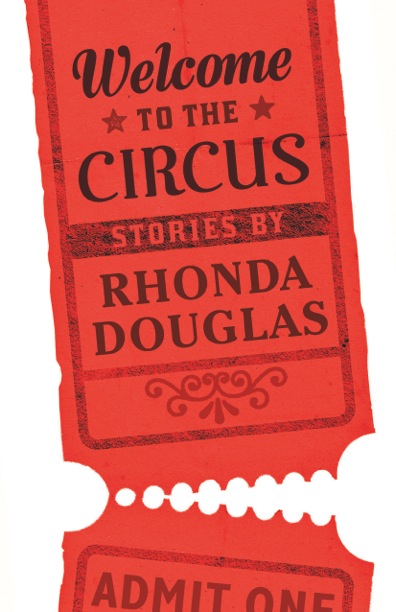
She’s the author of Welcome to the Circus (Freehand Books, 2015), How to Love a Lonely Man (Apt. 9 Press,  2013), and Some Days I Think I Know Things: The Cassandra Poems, (Signature Editions, 2008). 

Her writing has been published across Canada and has won awards from The Malahat Review, Arc Poetry Magazine, Prairie Fire and Room Magazine, among others.

In 2012, Rhonda received her MFA in Creative Writing from the University of British Columbia. She is also an alumna of the Humber School for Writers and the Banff Centre Writing Studio. Originally from Grand Bank, Newfoundland, Rhonda now lives in Ottawa, Ontario.

Publishers’ Weekly said her short fiction collection Welcome to the Circus “bubbles with originality and daring” and is “an exhilarating read.”

From time to time, I link to products or services I love using with affiliate links. This means that I may receive a small percentage or fee for referring you to any product you may purchase from one of those sites. It does not cost you anything. These small fees help sustain my small business. I truly appreciate your support.

Be strategic

Rhonda explains how she found her publisher. She was very strategic in her approach. She worked out who she wanted to work with, and which publishers would align with her work.

She made a list and methodically queried each one in turn. That forethought paid off, and she quickly found a publisher who loved her work and wanted to work with her.


Community plays a big role

Rhonda emphasises how important finding a writing community has been on her journey. It’s not always easy to find, but once you do, the camaraderie is priceless.

Not only can they pull you up when you’re feeling creatively down, but they can offer practical suggestions and advice for the next step in your writing career. Which was exactly what happened to Rhonda.


Creativity Coaching for authors

If you’ve been feeling stuck lately and need to find your way back to the page Rhonda can help with 1:1 coaching over a period of 3 months. The 3 months are essential for you to get the best out of the programme, and of yourself.

Rhonda will help you work through issues standing between you and your best work.

She offers an initial FREE 30 minute session so you can determine if you’d be a good fit to work together, so feel free to reach out and explore further.

Find out more

If you’re interested in learning more about Rhonda’s work you’ll find her at her Resilient Writers page on Facebook and her website, https://rhondadouglas.com/

If you’ve been working on your novel for years (perhaps even decades) the maybe it's time to consider working with a coach.

If you have multiple versions of your novel and you don’t know which works best, are scared nobody will like your book and don't feel like a 'real' writer, then my guess is coaching is the right next step for you.

Find out more and sign up for your free Clarity Call here: https://emmadhesi.com/personal-coaching/


emma dhesi

Emma Dhesi writes women’s fiction. She began writing seriously while a stay at home mum with 3 pre-school children.

By changing her mindset, being consistent and developing confidence, Emma has gone from having a collection of handwritten notes to a fully written, edited and published novel.

Having experienced first-hand how writing changes lives, Emma now helps beginner writers find the time and confidence to write their first novel.

Gretchen Rubin’s Four Tendencies

Gretchen Rubin’s Four Tendencies

Gretchen Rubin’s Four Tendencies

Gretchen Rubin is one of my go-to life hack gurus. She’s written five books examining habits and human nature. The most well-known one is The Happiness Project. Over the space of 12 months she examined 12 areas of her life including work, family, pleasure and fitness and figured out ways she could make herself happier in each.


She followed this up with Happier At Home and Better Than Before. But my favorite is her fourth self-help book, The Four Tendencies. The Tendencies are described as ‘the indispensable personality profiles that reveal how to make your life better (and other people’s lives better, too)’.

Gretchen Rubin's Four Tendencies

by Emma Dhesi | Turning Readers Into Writers

The Four Tendencies

As part of her ongoing investigations into understanding human nature, Gretchen Rubin realised that by asking, ‘how do I respond to expectations?’ we gain an additional layer of self understanding.

One of the inspirations for writing the book was the number of questions she received from people asking how she quit sugar so easily.

In 2012 Gretchen stopped eating sugar and once she’d decided she stuck to it (you might not know, but sugar is more addictive than cocaine so it’s no wonder so many of us struggle to eradicate it from my lives!).

What made Gretchen different?

This was the question she asked herself and which led her to research on why some people find making life changes easier than others.

What she discovered is that all of us fall into one of Four Tendences – Upholders, Obligers, Questioners and Rebels.

The Four Tendencies

As part of her ongoing investigations into understanding human nature, Gretchen Rubin realised that by asking, ‘how do I respond to expectations?’ we gain an additional layer of self understanding.

One of the inspirations behind the book was the number of questions from people asking how she quit sugar so easily.

In 2012 Gretchen stopped eating sugar and once she’d decided she stuck to it (you might not know, but sugar is more addictive than cocaine so it’s no wonder so many of us struggle to eradicate it from my lives!).

What made Gretchen different?

This was the question she asked herself and which led her to research why some people find making life changes easier than others.

What she discovered is that all of us fall into one of Four Tendences – Upholders, Obligers, Questioners and Rebels.

Why does it matter? 

Have you ever wondered why you can never keep New Year’s resolutions? Or can you keep resolutions and wonder why others find it so difficult?

This was something that perplexed Gretchen Rubin until, as she says, she had a Eureka moment and understood that the simple, decisive question was, ‘how do you respond to expectations?’

Inner Expectations and Outer Expectations

Rubin’s research uncovered that it’s how we respond to the expectations we set ourselves, and the expectations others set for us that determine how we navigate the world.

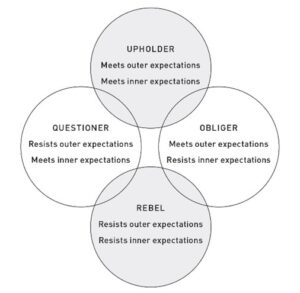
You can see from the diagram below that everybody sits somewhere between two tendencies, but for the purposes of this article, I’m sticking with the absolute tendencies.


Four Tendencies


These Four Tendencies are with us from birth, they’re not something we learn and are not dependent on any kind of parenting style or upbringing. Surprisingly, they are not connected to whether you are an introvert or an extrovert.

Why it’s helpful to know your Tendency

I am a very contradictory person and it serves nobody, least of all myself! If Gretchen could help explain why I make life so hard for myself, then this was the book for me! She did not disappoint.

The Four Tendencies helped me understand how to manage and get the best results from myself.

It’s important to know there is no best or worse tendency. There are happy and healthy people in all of them.

Knowing your tendency is the key to unlocking the best way for you to write your book. Use the knowledge to ensure you can be your best self and increase your chances of success.

The four tendencies quiz

If you want to know what your Tendency is, you need to take the quiz! Click below to do the quiz.

The Four Tendencies

Let’s take a brief look at each of the Four Tendencies and how you can apply them to your writing life.

The First Tendency – Upholder

Meets Outer Expectation, Meets Inner Expectations

Gretchin Rubin is an Upholder, and that’s why she found it so easy to quit sugar!

Upholders tend to be self-directed, they meet deadlines with no problem, keep appointments, and manage tasks unsupervised. They don’t depend on reminders.

Being able to meet the expectations of others and of themselves is very freeing for Upholders because they know they will achieve any target set.

Upholders Who Write

If you’re an Upholder you are at an advantage. Not only will you get yourself going, but you will meet any deadline you or your agent set you.

If you’ve promised to have the first draft in by a certain date, that draft will be ready.

The struggle you might have as an upholder is patience with others. If your editor doesn’t get your draft with revisions back to you on the expected date, if your book cover isn’t ready by the time you want to publish for or your book formatted hasn’t met their deadline, the result might be a difficult relationship.

The Second Tendency – Questioner

Resists Outer Expectations, Meets Inner Expectations

Once a Questioner decides on something they will follow through with little difficulty. They have the self-direction of Upholders.

Questioners are committed to information, logic, and efficiency. If you’re a Questioner, you will gather the facts, make a decision based on those facts, and act accordingly.

If somebody asks you to do something, you will want a logical reason why you must comply. If it makes sense to you, you will internalize that expectation and act upon it.

The downside to being a Questioner is that you can take the questioning too far! It becomes exhausting.

Also, if you don’t like the answer to the question, you might refuse to follow through on the instruction or request. That can cause conflict, both at home and at work.

Questioners Who Write

Questioners may get caught down the research rabbit hole. You’ll spend so much time trying to understand every aspect of your fictional world that you never get round to doing the actual writing.

However, once you’ve decided to write, you’ll write the manuscript promptly.

A potential solution to never-ending research is for Questioners to set themselves a deadline.

It’s useful to have an accountability buddy because a Questioner working alone may become, as Rubin writes, frozen with indecision!

From time to time, I link to products or services I love using with affiliate links. This means that I may receive a small percentage or fee for referring you to any product you may purchase from one of those sites. It does not cost you anything. These small fees help sustain my small business. I truly appreciate your support.

The Third Tendency – Obligor

Meets Outer Expectations, Resists Inner Expectations

You probably know if you are an Obligor. You are the person who can never put your needs first.

Obligers are the biggest group of the Four Tendencies, and the ones that people count on the most. 

If you’re an Obligor you’re good at meeting deadlines, you volunteer to help other people, and will turn up to help a friend in the middle of the night.

Obligers get along most easily with the other three tendencies.

There is the danger that an Obligor will burn themselves out in their desire to meet the expectations of the world. Letting somebody down is simply not acceptable.

Obligors Who Write

Obligers work incredibly well with an accountability partner. Whether that be another writer or a writing coach.

A word of warning. If that partner doesn’t hold you accountable, or is unreliable themselves, you will fall short.

A way around this is to be part of an accountability group so that if one partner falls short, there’s somebody else they are to pick up the slack.

This is where a paid for editor or book coach will be worth their weight in gold.


The Fourth Tendency – Rebel

Resists Outer Expectation, Resists Inner Expectations

Rebels what they do what, when they want, how they want. 

As a Rebel your natural inclination is to resist if someone else tells you what to do.

Rebels are the smallest group. I’m a Rebel, and we often lack self-control and take pleasure in going against convention. You love to confound people’s expectations of you.

Rebels value authenticity and honesty. We like to establish our own ways of doing things and once we have we will do it enthusiastically.

Rebels Who Write

Rebels write what they want, as much as they want and when they want. 

However, once we’ve made the decision to write the book, it will get done. It’s just that the decision making process isn’t a smooth one!

This might become difficult once you have an editor and a deadline, because you don’t want to adhere to the rules. But, by reframing our appraoch to a deadline we can achieve great things.

For example, rather than think an editor is trying to tell you what to do, know that you have the choice to finish the book or not. What do you want?

Alternatively, you could make a bet with yourself that you’ll never get your book finished on time. Your response? Don’t tell me I won’t finish my book, I’ll show you!


Conclusion

Gretchen Rubin concluded that “the happiest and most successful people are those who have figured out the ways to exploit their tendency to their benefit and, just as important, found ways to counterbalance its limitations.”

Figure out how to exploit your tendency to your benefit and you’ll go a long way with a successful writing career.

If you want to read about the Four Tendencies in more detail, you can do so HERE.

Don’t forget to take the quiz, which you can do HERE.

If you’ve been working on your novel for years (perhaps even decades) the maybe it's time to consider working with a coach.

If you have multiple versions of your novel and you don’t know which works best, are scared nobody will like your book and don't feel like a 'real' writer, then my guess is coaching is the right next step for you.

Find out more and sign up for your free Clarity Call here: https://emmadhesi.com/personal-coaching/


emma dhesi

Emma Dhesi writes women’s fiction. She began writing seriously while a stay at home mum with 3 pre-school children.

By changing her mindset, being consistent and developing confidence, Emma has gone from having a collection of handwritten notes to a fully written, edited and published novel.

Having experienced first-hand how writing changes lives, Emma now helps beginner writers find the time and confidence to write their first novel.