Time blocking with Dr Rachel Grosvenor

Time blocking with Dr Rachel Grosvenor

Time blocking with Dr Rachel Grosvenor

by Emma Dhesi | Turning Readers Into Writers

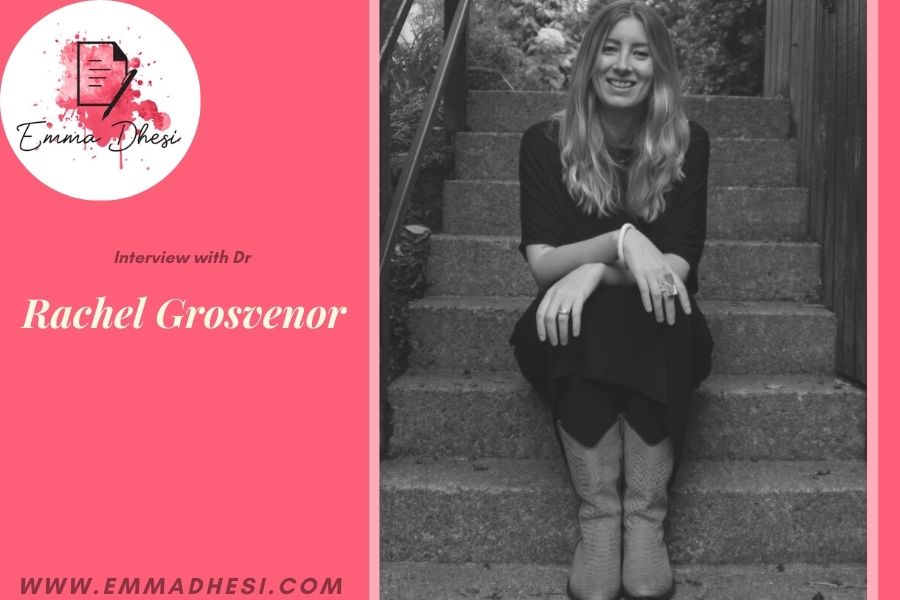
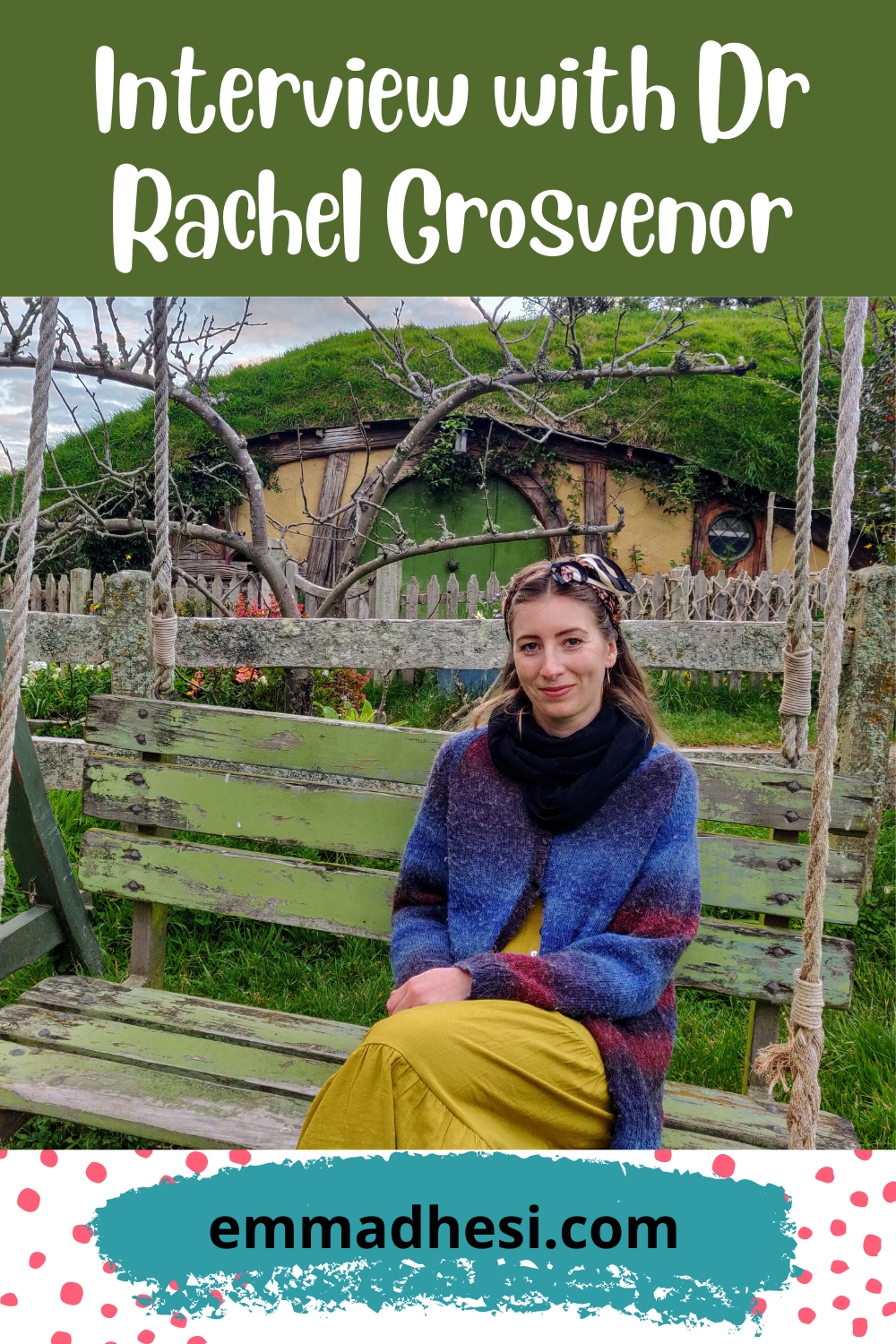
Interview with Dr Rachel Grosvenor

Emma Dhesi:

Rachel, thank you so, so much for joining me today, it’s lovely to have you on the show all the way over on the other side of the world.

Rachel Grosvenor:

Thanks very much for having me.

Emma Dhesi:

My pleasure. So I always like to start by asking my guests, you know, tell us about your journey to writing and to editing and coaching.

Rachel Grosvenor:

Yeah, well, my journey to writing started when I was a child, so I read Lord of the Rings, when I was ill impairs the kid. And I was in bed for like, three weeks, I called up my mom and I was like,

I’ve just read the first one a lot of the rains, and you’re gonna need to get to the second one library, because I can’t believe it. And it was the first time that I was truly like, immersed in this world.

And I just couldn’t believe how good it was. I was bought up the road from sarehole Mill, which is where Tolkien developed the idea for the Shire and things like that.

And it’s a big reason why I’m talking to you from New Zealand now. So, right, I started writing Lord of the Rings fan fiction. When I was a kid. That’s how I began my writing journey. And I was like, obsessed with it.

And when it came to like, time to go to university, I was like, Okay, so the only thing I really want to do is be a writer. So I looked at courses and creative writing. And I went to bath spa university to do that.

And then when I finished that, I didn’t want to stop. So I did my MA in creative writing.

And then after that, I still didn’t want to stop. So I did my PhD in creative writing. And that’s really how I came to be where I am now, I’ve just always wanted to write, so I’ve kept doing it and yeah….

Emma Dhesi:

You know, you’re, you’re actually a bit of a rare beast, I think in that because so many people I speak to, as a child had this idea that they might want to write, but then life takes over and they go off. And they do let myself actually go off and do all sorts of other things that have nothing to do with writing.

And then later in life, kind of come back to it. We’ve taken what I like to call the scenic routes. But yeah, well, it’s wonderful to hear them that you know, this was it.

You knew right from day one, this was going to be your, your passion, your reason that was so to speak. But like Elizabeth Gilbert, that was the same for her, I think, wasn’t it?

Rachel Grosvenor:

Yeah, I was, I’m really lucky to have a very supportive mother, who was like, if you want to be a writer, go do creative writing. Absolutely wonderful. You know, she was never like, oh, you know, what are the job prospects?

She was always like, let’s do something you’re passionate about so…

Emma Dhesi:

That can make all the difference candidates have somebody to say yes, follow your passion, rather than why don’t you get a degree first and do that as a backup plan? Exactly. Yay.

So I cannot let it pass though, that Lord of the Rings is what took you to New Zealand? Yes. Is that Is that true? Is that literally what you thought? That’s it? I’m going

Rachel Grosvenor:

Yeah, well, it’s obviously Peter Jackson’s version of rather rings, because Tolkien’s was very much more like England. But I, you know, loved the films as a teenager, and I really wanted to come to the Shire, they have Hobbiton here, the set where you can visit and you can sit in the green dragon and have a pint of ale.

And I really was like, This is what I want to do. So yeah, that was a big, big part of the reason I came to New Zealand.

And I’ve had some wonderful times that Hobbiton since Hobbit Appreciation Day dressing up as an elf and going there. And, you know, I’ve met so many people here who feel the same, which is wonderful. It’s very cool.

Emma Dhesi:

Normalizing it, that’s great. Yeah. But New Zealand’s an amazing place. I had we had a fabulous three weeks there once.

And then I did work with a lady who she went for a holiday, she came back to London and hand immediately handed in a notice and said,

No moving, that I’ve fallen in love. And off you went. And yeah, ever after. As far as I know, it is an amazing place.

Rachel Grosvenor:

It is. It’s beautiful here and the people are so friendly. But it just it just feels very welcoming.

Emma Dhesi:

Mm hmm. Yeah. That you mentioned there that you you’ve, you’ve done your a beat your ba your ma and then your PhD. So I don’t know if you’re able to kind of divide them in any way. But I wanted to, you know, what did you feel that you got from each of those?

You know, what, what did the BA teach you that made you think? No, I want to go on and do the MA and then on?

Rachel Grosvenor:

I think when I was doing my BA I was very young. And you know, I was still learning how to study really, you know, it was the first time I’ve been at university.

And so really what I learned from that was how to kind of create a project and write to a specifications and something that spurred me on to do my ama so took a year out was that I realized when I finished my BA, that I didn’t take full advantage of the opportunities that I’d had.

And I realized that actually, I wasn’t knocking down lecturers, doors, to ask them what they thought about things. And I realized that not everybody wanted to talk to me about writing, and that it wasn’t something that other people were necessarily passionate about.

And I really missed it. Because of that. And I thought, you know, you had three years with all these people who wanted to talk to you about this subject, and you didn’t take full advantage of that, like, you should have jumped in more.

That was a huge push to apply for an MA, because I really wanted to get back to those people who I could talk to. And I was a totally different student from ima. I was staying late. I was, you know, knocking on lecturers, doors and being like, Oh, so you mentioned this, let’s talk more about that.

And then at the end of that year, I was really lucky that my supervisor said, you know, I think you should do a PhD in this, like, what do you think?

And I was like, I think that sounds amazing. So, yeah, I was really excited to do that. By the time I did my PhD, I fully understood, you know, self led learning, and how to, basically how to write and how to give peer review.

And that was really, one of the most amazing lessons was learning how to give feedback and peer review, and editing and things like that. When you’re doing your BA, you’re in your first year. And people are saying, you know, what do you think of this writing?

It’s really hard to answer. And it’s really hard to give that feedback, because people don’t necessarily teach that. How do you give feedback.

And that’s actually when I was lecturing, and teaching adults myself to first class was always on that. This is how we talk to each other.

This is how we give feedback to each other. Because that’s really important. It’s really important to make sure that people leave feeling positive, but also like they’ve got something to work on.

Emma Dhesi:

I might circle back to that later, when we talk about coaching and stuff. That’s, I think that’s invaluable.

I am but but I want to stick with your writing for now. Because I know you’re right across many forms, you do long form short stories, novels, and across different genres.

So is there any one that you particularly like, and that you’re more drawn to than the others? Or how do you decide what you’re going to write when?

Rachel Grosvenor:

It’s a good question, like my first novel was literary fiction.

And I read a lot of literary fiction and fantasy, those genres that I am drawn to in a bookshop. And it was a heavy novel. And by the time I finished it, four years later, I were kind of exhausted by it.

And I really thought, You know what, I just want to take a break with something fun. And I started writing this fantasy. And I was reading like Terry Pratchett, and things like that. And I started writing this book, and I thought,

This is really fun. Like, I’m having a really good time with this. So after I finished that novel, I moved on to what I’m writing at the moment, which had two companion novels. One of them’s currently being edited.

And then the other one is currently being written. And they are, it’s a genre that I loosely refer to as wild west fantasy. Oh, yeah. So the fantasy element is a little bit more which crafty, then say, you know, fantastical. But that’s what I’m really enjoying.

At the moment. I spend a lot of time at the stables have ridden horses my whole life. And I’m using a lot of that in there. And also, the landscape here really inspires me. You know, sprawling landscapes and mountains and things like that.

So yeah, but one thing that is always the case of my novels is there’s always a strong female main character. Always.

Emma Dhesi:

And so where do you get those ideas from given? Does it start with the protagonist?

And then do you just kind of feel your way into what what type of story it’s going to be? Or do you have an idea ahead of time of, okay,

I’ve written something fun. Now, I want to be a bit more serious, or is does the news come to you? In fact,
 

Rachel Grosvenor:

it does depend on my second novel, I had this idea of a it’s about 100 year old woman who’s retired from a university and she basically takes down a totalitarian government. And I love it. I really, she just came to me, you know, this like badass, elderly woman.

He wasn’t going to take no for an answer. You know, she wasn’t done and If they I will say characters come to me first they’ll just be sitting and then I’ll think of someone and be like, I like you, I like you. And I’m gonna see where you go. But I am a plotter.

Okay. So once I’ve got my character, I really sit down and think, Okay, what is going to happen in the story, I really like using the three act method that really helps me. But I, I love to plot because I didn’t plot my first novel, and it was incredibly stressful for me.

And I’m not the kind of person who can just, you know, see what happens, I have to plot it. But even if ideas come to me, I can add them into the plot, you know, it’s not that I’m really rigid, I just need to sit down and work that ahead of time.

Emma Dhesi:

So okay, and so if so you have a kind of loose, overarching knowledge of what’s going to happen in the story? Or do you like to delve down deeper and have more, almost a sort of chapter by chapter knowledge of what’s going to happen?

Rachel Grosvenor:

Yeah, I have a chapter by chapter knowledge. And something I found at university was that I felt like, once I’d got an essay plan essays were essentially written.

And that’s how I feel about novels. So once you’ve got a chapter planets, like, what that’s done, the novel’s written, all I’ve got to do is fill in those gaps. And that really helps me.

So that’s what I do with that. Yeah.

Emma Dhesi:

It’s always interesting how different people work from you know, I think it was I think it was PD, James, I wrote about, read about who should start off with the plot, and then fill in the plot.

And the, the outline got so so detailed, that it became a novel, and it was just kind of joining everything up as she went along. And then other people who just have an idea and fly with it, and then have all the work to do at the back end.

But yeah, this is slightly different. So I want to change tack just a little bit, because one of the, the, the questions I get asked a lot, and one of the things that my audience talk to me a lot about is finding the time to rage.

No, we’re all sorts of so busy now. I always think that since the advent of email, life has just sped up beyond belief, nothing, there’s no time breathing room anymore. So they’re always looking for suggestions, ideas, how to balance that time between family, we’re having a social life, and fitting in the writing.

And so I wondered, how does that work for you? How do you balance your professional life, your writing and your private life?

Rachel Grosvenor:

Yeah, it’s an interesting question, because they don’t teach you at university how to balance time. And that was something I struggled with, you know, when I was doing my PhD, it was full time.

And I was also working two jobs. And I, you know, I had a job in the daytime at the university, and I was teaching creative writing to adults in the evening.

And it was a lot, and I wanted to spend time with my partner, and I wanted to, you know, see my mom and all that stuff. So I, I had to teach myself. And what I learned was, methods that work for me are time blocking, and task batching.

And those are productivity methods that I find really powerful. So time blocking, and task. batching is essentially the act of looking at your calendar, and pulling together tasks and focusing purely on that one task.

So sometimes I think of my attention, like a hose, you know, there’s water coming out, and I need to focus that water in one place only. So my whole calendar is blocked out from you know, it might look like kind of bizarre to some people, it’s got sleeping time in it, it’s got, you know, breakfast time in it, and it’s got reading time in it.

It’s got work time, and it means that I never have to say to myself, Okay, what am I doing next? Because it’s actually planned out for me. I know exactly what to focus on at that time.

\And I know that if I’ve got an hour of writing time and an email pops up, it’s not time to look at emails right now, there is a time to look at emails, but that’s later on, that’s already planned out. So I don’t have to change that direction of water, essentially, from that hose.

I can just keep it focused, time blocking task. Batching has changed my life. And it’s no exaggeration to say that it literally enabled me to complete my studies while working and seeing people that I loved.

And that’s what I still do today. And I will say that this year especially has been the biggest year of personal growth me because I have added into that new planning methods like reverse engineering my goals, and making sure that I have goals for the year and that everything is linked into those set goals.

You know, I literally have four goals for the year I go through my calendar Everything is highlighted to match that final goal.

And if I can’t highlight something, then why am I doing it doesn’t need to be done. And things like that are very powerful. Yeah,

Emma Dhesi:

Yeah. Great. So that’s wonderful. I think that will speak to a lot of people who are just looking for that way to be more productive. But the idea of Yeah, blocking everything out and taking away.

Because once you’ve done that, then you’re taking away a lot of that decision fatigue. And that, oh, what should I do now? franticness that there is no, you know, exactly.

You can move on and do it. I’m going to ask, do you act as being as busy as you are? Do you still manage to write every day or several times a week?

Is that still something that you, you plan for?

Rachel Grosvenor:

Yes, I block out time to write three times a week, I’m not one of those people who writes every day. And I you know, I say to people that I work with, you don’t have to write every day, it doesn’t work for everybody.

And you know what, it just doesn’t work for me. And that’s okay. And it can be stressful. Sometimes, you know, Stephen King’s book on writing, as I write every day, including Christmas Day, including this, including that, I just cannot do that. That is not how I work, and that’s fine.

So, and this is what I say to people, you know, routines have to fit with you, you can try another writer’s routine, but it probably won’t work for you. So it’s alright to say you can write everyday and that is awesome.

I used to work with someone who wrote 1000 words a day, I mean, fantastic. But for me now. So I write about 4000 to 6000 words a week.

Emma Dhesi:

And that’s all though, isn’t it? Because then that’s how that’s how you write a novel. It’s just about being regular or being consistent with it doesn’t have to be all day every day.

Rachel Grosvenor:

Exactly. It’s just like climbing a mountain, you know, you just got to put one foot in front of the other. And sometimes, you know, I’ll sit down and I’ll be like, now I’m gonna write 3000 words. But actually, what comes out is 1000 words, but that’s all right. You know, that’s okay. I know where I’m going with it. And that’s fine.

Emma Dhesi:

Yeah. And, and I wanted to ask you about the creative tap, and whether that also how that helps you and how that helps the students that you work with?

Rachel Grosvenor:

Yes, so the creative tap is all about learning how to turn on creativity.

Basically, it’s about not waiting for inspiration. I think when you start to write a lot of people think that writers, you know, wait for inspiration to hit. But actually, the act of writing means that if you wait for inspiration, you’re probably not going to get much done,

I don’t find inspiration knocks on your door that much, you sort of have to force it. So the creative tap is essentially the act of practicing how to be creative on demand. So what I say to people is, you know, what you want to do is you want to first of all work out one of my most creative, so for me, it’s the morning,

I get most in the morning, some people write in bed at night, and they find that really works for them. Everybody’s different. But once you know that time period, that you’re at your most creative, if you practice being creative during that time, it’s going to be much easier for you to sit down and write.

And I say to people, you know, if you sit down, and actually the words, don’t come try something else, try free writing, try writing exercise. And even if that’s not working, get out a paintbrush, do anything creative for that set amount of time, and you will find that the creative tap is much easier to turn on. So it’s basically a way of teaching creativity. Yeah,

Emma Dhesi:

in training your brain at signs like to just No, I’m just trying to think of an example. You know, like you brush your teeth or whatever, it’s just an automatic thing that you do, you knew that when you go to the bathroom at night, that’s what you’re going to do. And think of a bit more of a better example.

But we do get, we do get used to things and things become second nature. And so when you know that this is when you’re sitting down to write, it’s not a big deal anymore. This is just okay. This is my writing timeless. Yes, a bit of the brain on.

Yeah, absolutely. And I like your suggestion there of even if the music isn’t coming at that moment in time when you sit down, but just to stick with it, to try some different exercises to get a paintbrush out. Try and do something that will start engaging that side of your brain.

Really good suggestion. And so So yes, I’ve mentioned before that you’re not only an author, but you are a book coach, and you’re an editor.

And I thought it might be useful to just differentiate the those two different roles and the part that they play in in shaping and producing a book basically.

So can we start with the book coach, what does the book coach do?

Rachel Grosvenor:

Yeah, absolutely. So as a coach, I basically work with authors on whatever their issues are, essentially. So I find that authors come to me at various stages.

And my most recent author They came to me because she was on, you know, the fifth draft of a novel. And she really wanted to get that finished now, and she was saying, I just need to have some kind of a plan to move forward.

How can I do this? You know, so that’s what we worked on. And, and I get different authors, you know, some people come to me and say, I have an idea, but I don’t know how to turn this into an offer, actually. And then we’ll work on how to do that together.

So it’s everything from Okay, I can’t find the time to write to I’m not really sure what the next step is.

And I’ve got a wonderful client in Australia who had never pitched to an agent before, but she had a meeting. So we had a big coaching session on okay, this is how you, you know, pitch your novel, let’s break it down.

And we rewrote her synopsis into like a pithy, short, five minute talk, and she ended up getting a full manuscript depress, which is really great. So yeah, so yeah, it’s, it’s essentially, whatever your writing issue is, I help people to move forward and find a solution to that.

And coaching is really about the client, you know, it’s about what is going on with them.

So although I have experience in writing, and a background in coaching and things like that, it’s not necessarily about my experiences, it’s all about how I can help them move forward with what they want to do, and investigating deeply into what they believe will help them as well.
Interview with Rachel Grosvenor:


Emma Dhesi:

Yeah. So the coaching side, as you say, is very much about the person about the author and what they’re going through. But the editing side, then presumably, is more about the the work itself.

Rachel Grosvenor:

Yes, absolutely. So I do developmental editing, copy guessing, I will say developmental editing is my favorite, because I just really enjoy going through a novel. And then I write an editorial report, which, you know, is anything from 12,000 to 25,000 words.

And it’s essentially, it’s a, you know, it’s an in depth essay on their work. And it looks at everything to do with narrative characterization, dialogue, consistency, I go through everything, and then send it back to them. And then we have a coaching session afterwards, once they’ve read it.

And we just discuss, you know, what they think of my comments whether they’ve got any questions and how we can move forward.

So yeah, and copy editing is basically all the other stuff. It’s grammar, it’s, you know, where’s that comma? Is it in the right place?

Emma Dhesi:

Oh, you must have a good brain for detail, I don’t think.

And so I’d love to know, because you, before we started recording, we both mentioned that we we work with coaches, too.

And so I wondered, what are some of the things just from your own experience that you found beneficial from working with a coach?

Rachel Grosvenor:

Yeah, I think it’s so powerful to work with a coach. And I think not a lot of people realize what coaching is, it feels like it’s a fairly new idea.

So people are maybe a bit confused about it. But coaching is very much about working toward the future.

So it’s not so much about the past. And what’s happened, it’s how can you move forward. And in my personal life, working with coaches has just really helped me first of all, in my business, I’ve got a business coach, and she is amazing. And she’s really helped me work out just how to move forward.

And what to do next, because when I started my business, you know, I really had no idea. I’ve been editing and working and coaching under the guise of another company for a while, but I didn’t know how to do this alone.

And I didn’t know anything about marketing really, or anything about that. So she really helped me figure out a path forward.

And also, there’s something amazing to be said, for someone giving you that time to speak. It’s a rare thing that you sit with someone and you have that space, they hold space for you to say anything you like.

And that’s really magical. And it can lead to some incredible realizations.

Emma Dhesi:

Yeah. It’s those intangible things I think is where coaching comes in.

That it’s not the the planning and the strategy and the words or anything, but it’s the kind of the relationship between you and your coach and what comes out of their conversations together.

And those wonderful kind of aha moments that you have, either about yourself and your own attitude to your writing to your work to your family, or about how you want to move forward and the kind of future that you want for yourself.

So I totally agree. I think it’s, it’s a bit hard to kind of quantify it because it’s the moments that you least expect it that the magic happens.

But yeah, so So worth doing. Absolutely. So you mentioned briefly that you’re re editing a book Right now, and but you’re also writing a book right now.

But I know that you’ve been working on something else for, for your audience as well as starting in the new year. So could you tell us a bit about that?

Rachel Grosvenor:

Yeah. So basically, I wanted to offer my audience and clients a way to plan their writing year, because I know that when you are heading into a new year, it can be a bit overwhelming. And you look at your plans, and you’re like, how am I going to do this, this is actually going to happen.

And then you set new year’s resolutions, and you’re like, I’m going to write a novel, but then you kind of forget, and you’re not sure really what that means. So I developed this, it’s called The Ultimate writer’s planning workbook.

And this is exactly what it is. It’s 60 Plus pages of okay, what are your goals, this is how we reverse engineer them.

This is how we fit them into your schedule. This is how you time block, this is how you task batch, this is how your year is going to look. And that’s going to be available from the first to the 15th of January. And it’s essentially just going to be okay, going from, I want to do this.

This is actually how I do it. Now I’ve got a written plan.

And I find that having a written plan and having everything planned out really limits overwhelm and limits those feelings of stress. Because actually, you can just sit down and say, It’s alright, I know what this looks like.

And I know how this is gonna work. And it’s really great to end the year, you know, if you could end 2022, having written that novel, what an awesome feeling that would be,

Emma Dhesi:

it would be. And I’d love that. And so I love that you’re giving people a roadmap to share your techniques in the way that you are so productive and give them those steps and how they can work out for themselves. And the idea of reverse engineering, which I think is quite a lot of people. Yeah, it was certainly new to me when I heard about it.

Rachel Grosvenor:

Okay, yeah, lovely.

Emma Dhesi:

So tell us where can listeners find out more about you. And not only your coaching, but your your fiction as well.

Rachel Grosvenor:

So I am mostly active on Instagram. It’s Rachel Grosvenor author, and also my website as well, which is the same title Rachel Grosvenor author, Grover has a silent s in the middle, which might trip a few people up. But yeah, so that’s, you know, I do blog posts every Thursday.

And they’re about productivity, craft, coaching and publishing.

There’s like a wealth of information there. I offer to PDF booklets on writing as well, just if you sign up to this subscription service, and I send out newsletters and things like that. So I like to, I like to give a lot of information. I spend a lot of time kind of serving. So you know, that’s my why essentially,

I want other people to just be able to write because I think that we can all write if we’ve got that dream. We can all sit down and do it. It’s just about finding a way to do that.

Emma Dhesi:

Wonderful, Rachel, that’s fantastic. Thank you for sharing that with us. And I’ll make sure I linked all of those pieces in the show notes as well. It’s been wonderful learning more about you your writing the work that you do. And so thank you so, so much.

Rachel Grosvenor:

Thanks for having me. It’s been lovely

From time to time, I link to products or services I love using with affiliate links. This means that I may receive a small percentage or fee for referring you to any product you may purchase from one of those sites. It does not cost you anything. These small fees help sustain my small business. I truly appreciate your support.

If you’ve been working on your novel for years (perhaps even decades) the maybe it's time to consider working with a coach.

If you have multiple versions of your novel and you don’t know which works best, are scared nobody will like your book and don't feel like a 'real' writer, then my guess is coaching is the right next step for you.

Find out more and sign up for your free Clarity Call here: https://emmadhesi.com/personal-coaching/


Alliance of Independent Authors

Shortcuts for Writers

Do you feel as if you don’t have the time or the money to invest in editing your novel? I know an online course that can help you to transform your manuscript WITHOUT breaking the bank. It’s called Book Editing Blueprint: A Step-By-Step Plan To Making Your Novels Publishable, and it was created by Stacy Juba of Shortcuts for Writers.


emma dhesi

Emma Dhesi

Emma writes women’s fiction. She began writing seriously while a stay at home mum with 3 pre-school children.

By changing her mindset, being consistent and developing confidence, Emma has gone from having a collection of handwritten notes to a fully written, edited and published novel.

Having experienced first-hand how writing changes lives, Emma now helps beginner writers find the time and confidence to write their first novel.
How to get your book published with bestselling author Emma Robinson

How to get your book published with bestselling author Emma Robinson

How to get your book published with bestselling author Emma Robinson

by Emma Dhesi | Turning Readers Into Writers

Interview with Emma Robinson

Emma, thank you so so much for joining me today and really, genuinely delighted to have you on the show.

Emma Robinson:

That’s lovely to be here. Thank you for inviting me

Emma Dhesi:

A pleasure. A pleasure. Well wonder if you wouldn’t mind just starting off telling us about your journey to writing and what brought you to where you are?

Emma Robinson:

Absolutely. So this is a story I’ve talked quite a lot. I do go into primary schools a little bit. And I tell the students there that I’ve wanted to be a writer since I was their age. So probably a lot like the listeners to your podcast, I think that urge to become a writer that starts quite early.

And for me, I’ve got a vivid memory of being in a primary school classroom when I was around nine or 10. And there was a book by a girl called Jane Fisher, who was about the same age as me that had been published. I don’t know if people remember them.

They’re all about fruit and vegetables. And having always been an avid reader. That was the moment I think that I thought hang on a minute, maybe I could do this, maybe I could be a writer.

So I guess from that point on, I’ve been stories throughout sort of Secondary School University, I was always writing bits and pieces of stories and never really finishing anything. So I’d be inspired to do about three or four chapters.

And then it would cut, you know, life would get in the way. And then as I approached my 40th birthday, I thought well, actually, I need to put up or shut up, I need to actually write this book that I’ve been talking about writing for a long time.

Or I need to stop saying I’m going to do it. So that’s what I did the year I turned 40 I actually finished what was a very, very rough first draft of my first novel, the undercover mother. And in many ways, I think although it taken me a long time to reach that point.

I don’t think you know, by that time I had young children a job, a lot of friends you know, but you get to nearly 40 We’ve accumulated hopefully a lot of friends.

And I don’t think actually I would have had the material to finish a novel until I’ve got to that point so that’s what I tell myself anyway when I explain why it took me so long but yeah, so that that was the the first finished novel.

Emma Dhesi:

Oh, gosh, your story is very similar to mine in the it was getting towards that 40 mark and thoughts myself. Do it or move on? Yeah. Do that first draft or less? Go.

Emma Robinson:

Absolutely, absolutely.

Emma Dhesi:

But so I can absolutely relate to that comment that you made about, you know, starting lots of projects and never finishing that was something that I experienced.

And I think it did take me to get to be a bit older before I had that patience to sit down and just get on with it.

Emma Robinson:

Yeah. Yeah. And it is that getting on with it isn’t I mean, I think the best writing advice I was ever given was just get in the chair and write, you know, because that’s even now, you know, I’m about I’m currently writing my ninth book.

And even now, you know, I’ll wash up all tied to my husband said the house is never as tidy as when I’m doing a first draft.

But you know, that’s essentially it, isn’t it? It’s just sitting there and going and going until you get it done.

Emma Dhesi:

But yeah, yeah. And it sounds so simple.

Emma Robinson:

Exactly that.

Emma Dhesi:

And you mentioned your husband there. I know that you’ve got a busy family life, two kids and a dog.

And so how do you balance the family life with the writing and promotional work?

You do that going into schools? who write with other, you contribute with anthologies? And how do you fit it all in?

Emma Robinson:

I would say, boundaries and boxing off my time is vital for me. So I also teach I’m three days a week in school teaching anyone GCSE. Yeah. Yeah. I don’t know how much longer I can sustain that, to be honest.

But yeah, so for the last, or since I was published four years ago, yeah, I’m continuing to teach three days a week, the children are kind of two in the twin size. Yeah, and then the writing. So I kind of feel like there’s three areas of my life that I need to juggle.

And up to this point, how I’ve managed it is by really ring fencing my time. So when I’m in school, I stay at school until my schoolwork is finished, I don’t bring work home, and I get everything done.

And when I’m at school, my students have the best they have every part of me, you know, I’m focused on them. And in getting that done. Once I come home, I’m mum, and that’s my time.

And then when I have writing time, so I have Tuesdays and Fridays, I’m at home without the children. And, you know, one of the weekend days, that’s my writing time, and I have to be really focused. And I have to write in that time.

So I don’t have the luxury of sitting down and thinking, Oh, well, you know, I’ll get a bit done, I have a, I use an app called pacemaker, which I love. And I would recommend to anybody listening to this that finds it hard to keep themselves going.

Because pacemaker is free app, pacemaker dot press, and you literally plug in the amount of words you need to do, how long you’ve got to do it.

And it will tell you how many you’ve got to do each day. And if you do more or less, it will, it will kind of kick itself around.

And I find that useful. So I’ve been very, very focused. And I don’t think I realize how important that was until lockdown. So during lockdown, I had my children home, I had to teach from home via via Google Classroom. And I had booked still to write.

And I found that a very, very, very difficult time because suddenly all these boundaries and all these ring fenced parts of my life, blended. And emotionally, mentally, intellectually, in every way. I found that really, really difficult.

So I’m only just I would say getting out of that now, because school is starting to get back to normal, the kids are back at school. And my time is now I can go back to that. So So yeah, I would say for anyone with it with a busy life, keeping your writing time as precious time.

So for example, on my days off, I will frequently have friends say, Oh, you’re home, let’s meet for lunch. Let’s do this, let’s, which is lovely, don’t get me wrong, it’s lovely. But I can’t, I can’t, you know if it’s something special I will.

And I’ve also learned that if a friend wants to meet up I’ll say, well, let’s meet for breakfast. Because I can do an hour first thing because because for me I need a run at it when I’m writing.

I can’t snatch half an hour here and there because it takes me half an hour to get back in up to speed of where I want to be. So it’s far better for me to meet for breakfast.

And then from 10am I’m at my desk until three o’clock when I click the kids. And I’ve got you know, I’ve got a run at it. Whereas if I met for lunch, it would destroy the whole day.

So so it’s kind of, I guess, working out how you work and ring fencing that time but I’m also extremely fortunate to have a husband who’s hugely supportive.

So when I’m kind of stressing about deadlines, obviously now I’m published I’ve got deadlines to me. It’s not just my own writing it’s I’ve got to get it back to my editor.

So you know if I’m if I’ve got my back against the wall on a deadline and I’m getting stressed, I will just go away for a weekend so I’ll find a cheap premiere in relatively close to home far enough.

A way that I can’t pop back, but not so far that I’m wasting time on a car. And I will literally lock myself away in a premier room with a bag of stuff from Tesco and not move from Friday night to Sunday afternoon.

Get it done. So yeah, so that’s my process. That’s my process.

Emma Dhesi:

I love that. Thank you for sharing that with us, I kind of took away from that you have to have strong boundaries

Emma Robinson:

Yeah, no. Yeah. So initially, my daughter was and be quite tough with yourself and honor those boundaries.

And ring fence is a word that I use quite a lot, making sure that they that you honor those and that you give the that writing time the importance that it needs. I wonder if I could just take you back to before you. Before you were published, or when you were first started writing?

Did you always have those two days available to you? Or did you at one point did you need to fit that writing in amongst a full time job or having the kids at home full time? still at home. So I’m trying to think actually, maybe my son was still at home as well.

I’m trying to think when I was No, I think they were both still at home. He was I’m not good with maths. He was born in 2000. And yeah, I think they were both still at home, or he was maybe just going to school. So no, that was a lot more difficult.

So then it was about writing into the night. So you know, I would get them to bed or some nights my husband would take over bedtime, my children are not good sleepers have never been good sleepers. So that was always a bit of a trial.

And I would often sit there and write into kind of one two in the morning. But each time one of them would probably wake up and I’d be putting them back to bed again. So yes, I think that was more of having to write into the night, really at that stage.

But in some ways that was easier because I didn’t have that my did work deadlines were self imposed.

So I would say it was less effective. It took me longer to do so I you know, undercover mother with revisions and sending out to agents and things.

Probably I say it took me my year 43. But it was another couple of years on top of that, before I got the publishing deal for it.

So yeah, I think really, there was a lot of nighttime writing, then I’m writing around them.

So if I just happened to get lucky during the day where they were both playing, I could snatch an hour with my laptop. But it Yes, it was a lot more ad hoc then.

Emma Dhesi:

So great example there of when it’s important to you will find it you’ll find a way to make it work for you.

And so for any of our listeners that is looking for those gaps in your day, or gaps in your week where you can make that your waiting time and order it and sit down and give it to yourself as a treat and a gift

Emma Robinson:

Absolutely and I watched no TV during that time apart from with the children.

Absolutely not. So it’s quite funny I now there’s so many TV series, which I’m catching up during lockdown, particularly that I was catching up on that people watched six years ago that I have no clue about for me, it’s all new TV, because I just didn’t you know it was TV or writing.

That was the choice really. And I couldn’t give up reading. So TV man. Oh,

Emma Dhesi:

I bet you’re glad that you made the choice to write it’s because it just rang my goodness.

And so you mentioned there the querying. Couple of years there.

What advice do you have for any new writers who are starting out, they’re looking now to find an agent or a publisher, they want to go that traditional routes?

Emma Robinson:

Okay, so I’d say there’s a couple of things to think about. One is in terms of the traditional route, if you want to go to the big publishers, the big name publishers, you’re going to need an agent, which I’m sure they know.

But there, there is a second route. So I’m with a digital first publisher, Butcher, who are part of Hachette Tisha obviously a big publisher, and put your digital imprint of Hachette.

And a lot of these digital first publishers will take direct submissions without an agent, which is what I did. I did submit to agents at the same time, but I also sent sent the whole manuscript to butcher as well.

So as some of the smaller imprints as well, so smaller publishers will take directly rather than through an agent. But But either way, I think, really, it’s, it’s in many ways, it’s a numbers game.

So first of all, you need to really be clear on who you’re submitting to just sending out as a blanket send out is pretty fruitless, because particularly if you’re going on to agents, websites, they agents and publishers are very specific about what they’re looking for.

So if you’ve written a sci fi romance, there is absolutely no point submitting to an agent that only represents horror or literary fiction. So you need to be really clear, and there’s lots of resources out there for that.

I used a website part of Jericho writers, which was called agent Hunter, I’m not sure if it’s still called that.

And that’s an online database of agents which is similar in I guess, to what probably most people use it to the writers and artists yearbook, which is very useful, and it’s very expensive, so just get it out but use it at the library Don’t buy a copy.

I shouldn’t say that. But you know, they are is quite expensive that that the agent that that’s useful, but I found agent Hunter was good because it was updated during the year. And the thing is in this industries, agents move around quite a lot.

And people in publishing move around quite a lot. So yeah, so do your research, find an agent that you think or a publisher that you think wants to publish the kind of books that you’re publishing.

Another route is follow agents on Twitter, because a lot of agents and I’ve seen two or three this week, which I’ve tagged unpublished trends in where agents are opening up because I, some agents will only have a few months in a year where they’re accepting submissions, and then they’ll close their books.

So if you’re on there, if you’re following them on Twitter, you’ll be the first to hear about that. So yeah, so keep an eye on what’s going on. And then I would say, don’t focus all your desire on one agent.

Because I think that’s the root of disappointment. If you you know, there, there are so many people out there, and there’s so much luck involved. In the whole thing, I’m probably being a bit random now.

But I know that when I had undercover mother published, my wonderful editor, still, my editor now had just got back from maternity leave. And my book was about a woman on maternity leave.

So you know, the stars aligned for me perfectly. And it’s sometimes that little bit of luck, that actually makes a difference between you know that there’s so many great books out there that don’t get published, because there’s so much luck. So don’t be despondent if you’re sending out and not getting response, because you only need one response.

So kind of keep going. So yeah, I guess in summary, it’s do your research on the agents, keep an eye on the agents on social media, particularly Twitter, I think is quite useful.

And then start sending out, I sent out a batch of six, I think, the first time and kind of every time you get a rejection, and expect the rejections because then they hopefully won’t hurt quite so much.

Or that they will, you know, when you get a rejection, then send another one out, you know, keep it going, keep going.

And listen to feedback. Because if you’re really, really fortunate, the first aid when the first agents that rejected me very, very generously, gave me three pages worth of feedback as to why or why undercover mother wasn’t ready for publication.

And she was spot on in every single respec and it was immensely useful. So although it was a rejection, she did me a huge, huge favor.

So if you get anything other than a standard response, take that as a real positive, because it means that they think you’ve got something, yeah, they’ve taken that time to actually read the whole thing.

Absolutely, absolutely.

Emma Dhesi:

Wonderful kind of feedback there and an insight there into the business of publishing.

Because I think as you know, when we’re new, we’re excited. And all we see just the published authors out there, and the best sellers, and we think that that’s what it’s all about, and wouldn’t it be marvelous, but actually, the harsh reality of publishing is that it is hard is tough.

As you mentioned, it’s a numbers game, there’s an element of luck. The industry is shrinking in many, many ways. So bearing all of that in mind, just to kind of manage, not necessarily expectation, but that level of taking it personally and feeling that it’s not good enough.

But I love to your advice there about, you know, going looking at the smaller and smaller imprints like butcher, that going that digital first route, which I would imagine not many people are aware of. And so that’s something really good to look forward because you are great.

They aren’t factoring in a lot of my favorite writers with them. And then they information as well to the advice about going to agent hunters through Jericho writers and the yearbook, of course, such great tips. So thank you for that, Emma, that’s really helpful for my listeners.

Thank you. Fantastic. So you mentioned your, your first book there, which as I mentioned in your bio is, is a much more humorous look at family life.

And then you’ve made the transitions into the kind of what we call women’s fiction, I guess, which are the more kind of heartfelt emotional stories.

So what made you make that switch from one to the other?

Emma Robinson:

I guess? Well, I really, I can credit my editor at Butcher. And that’s one thing if you get an editor that you work really well with.

So, you know, as I say, we’re currently working on our ninth book together. And she’s been amazing it not just managing each book, but kind of helping me shape my career quite a lot.

So you know, which is fantastic if you get to work with someone that kind of gets your writing and gets what you’re trying to do.

So yeah, as I say we the first three books were all more humorous. Sales of the first two are okay, the sales of the third one pretty poor.

So I’d signed a three book deal and I thought, right that’s me down that’s me. You know, I can remember to Two or three days of schlepping around the house like Sylvia Plath kind of dressed. In black. It’s all over, it’s over.

And this is part of publishing, I think, is a bit of a roller coaster remote writers, by definition, I guess a quite empathetic, which means we really feel every part of it, don’t we? So yeah, so I, you know, and then we had a long phone meeting to talk about it.

And she was so so lovely, and so complimentary about my writing. And she said to me, I just feel like you’ve got a best seller in you. And we need to think about, you know, what we need to do next.

And her books are fantastic at looking at reviews, looking at what sells, they’re very commercially focused.

And what she said to me was looking at my reviews, the part of my novels, even though they were humorous, the part of my novels that readers had responded to in reviews were the more emotional storylines, were the moments where maybe she had made them shed a tear.

And she said, I think that’s where we should go next, I think we should, you know, look for bigger issues, look for the emotional side of things and kind of move away, not, you know, not move away from the humor completely, because I hope that there are lighter moments in in my book, still, because no one wants to read something that’s depressing all the way through, you know, they are emotional, but I hope this did a light element to.

And she said, that’s the way to go. So that’s when I wrote my son and daughter, which was about a mother struggling with a daughter, who she thought might be autistic. And then I kind of went into, and that book did a lot better.

And we’ve moved on and on and on in that vein. And I think with each one, I’m getting a little bit braver in terms of the subject matter, you know, that I’m covering, which is really scary every time because when you’re writing about things that people have happened to them in their real life.

And there’s a lot of a responsibility with that. And, and it’s scary. And I live in fear of someone saying, No, you got that wrong.

But yeah, I’m loving it, I’m really enjoying kind of really digging deeper into myself and into the stories.

Interview with Emma Robinson


Emma Dhesi:

And did you find that in terms of your own writing style, and the way that you approach a manuscript?

Do you find that shift quite easy? Or was there a sort of transition period?

Emma Robinson:

I don’t know, I think relatively easy, because I think in all three of the previous books, there had always been a thread in it.

That was quite emotional. And I like emotion. You know, I like nothing better than a real movie that I can cry to.

So you know, so, again, there’s that whole thing about reading in the genre that you want to write, you know, I’ve always read books that make me cry.

So in terms of this writing, I don’t think it was a huge shift. In terms of trusting myself maybe in terms of making I fell out.

I think it makes your list for me, I think it may be a little bit more vulnerable, because obviously by then I had, I haven’t got big platform, I’m no Jodi pickle, but I had followers, I had readers, and I was scared that they would say, Hang on a minute, we buy your books to make us laugh.

What are you doing here? And secondly, I think it’s that, again, that whole thing of getting it wrong. And I think I grew up very much in a home when when things were tough, we’d laugh about it, you know, you can’t do that with my own children.

You know, let’s try and cheer ourselves up. Let’s laugh. And I think you can hide behind laughter. I’m getting a bit deep here.

But I think you can hide behind laughter quite a lot. And when you kind of peel that back, and you have the bear emotion, you kind of are making yourself quite vulnerable. So I think the very long answers your question is, I don’t think the writing was more difficult.

But I think the emotional connection and the vulnerability was more difficult.

And I think I still find that difficult. Every time that I write because I think right, this is the one where people are going to start pointing the finger and saying how dare you? But But yeah, no, it’s I think it’s harder.

But I guess if it didn’t make me feel like that the writing wouldn’t be good.

Emma Dhesi:

Yeah, a lot to be said of that, that that I think women for race people who write women’s fiction, those darker kind of more realistic stories, almost as writers we are having to kind of dig into a side of ourselves, that maybe isn’t the nicest part of ourselves that we can pull out these characters in these stories.

And I think vulnerable is absolutely the right word. I certainly always worried that people will think my character’s or me and have I done that. And do I say that? Yeah, absolutely. Yeah, kind of have that little bit of distance can be tricky.

But you’ve mentioned too as well that your subject matter.

And that’s getting you’re getting more and more brave for that, I think was the word that you use. Yeah.

So where do you get your story ideas from? And bearing in mind that as writers we come up with a million ideas a day, how do you determine

Okay, which is the one that is going to stick and actually Will you can develop into a full storyline? And do you have a process for that?

Emma Robinson:

Yeah, I think process is probably giving it a bigger day than it actually is. It feels a bit more random than that.

But I think what I’ve learned is, I think there’s two things. By nature, I have things I want to write about, rather than plots that come to me. So I think I want to write about emotional abuse, or I want to write about what it would be like, for x to happen to you.

And I kind of pitch these ideas to my editor. And she says, Yeah, it’s really great. But here’s the actual plot about like, we need a plot. So I think what I’ve learned is that I, I,

I love the what if I think God pick up particulars excellent at this, what would you do if, and I’m very fortunate, again, to be 47 and have lots of friends who have had lived many lives, and be able to steal bits and pieces from them.

I listened to people all the time. I’m very nosy I love to learn about people’s lives. And for me, I often have an idea, which isn’t enough for a story. And I’ll write that up, and I’ll store it on my computer and put it in the back of my head. And then sometimes another idea will come to me.

And then I think, right, if I put those two together, that’s a plot. So to save my child, the one that’s just out, my brains gone on my main character’s name.

That’s terrible. The mother? Gosh, it’s because it’s because I’ve been writing today the new one. So that one’s gone from my brain. So the mother in that happy? No. Libby’s the daughter? Oh, my gosh, it’s really embarrassing.

Emma Dhesi:

Gonna look it up. You carry on?

Emma Robinson:

Yeah. Okay. It’s really embarrassing. But yes, so the mother that obviously has everyone’s nightmare, her daughter is dangerously ill.

And that’s a nightmare. But there’s not a plot there. That’s something we can relate to. It’s an idea, but it’s not a plot. But then I had the idea of, and I was actually guided to this for this one by another writer, friend, we were talking about this.

You’ve got this idea that if What if you had to go to the person that you least wanted to go to for help.

And that had come from a conversation, a lunch with a friend, who had just escaped from quite an emotionally abusive relationship.

So that was an idea that had been at the back of my head for maybe two, three years?

And then I suddenly thought, right, if I put those two together, now we’ve got a dilemma. Now we’ve got a plot.

So I think, yeah, I think it’s kind of picking up bits and pieces all the time and just letting my brain chew on them and then to bang together.

And I have the plot. And that’s kind of my process not

Emma Dhesi:

it’s a good process there. And I think it’s certainly one that Stephen King always, I think talks about, isn’t it? It’s that what if you’re being hurt, then that’s how you take something ordinary and kind of make it extraordinary.

Yeah. And Anna? Anna, thank you.

Emma Robinson:

Because I’m writing about Julia at the moment. So all I can think of is Julia.

Emma Dhesi:

Julia for a moment, because we can’t come back to her.

But that’s yeah, so that idea of what if is really an as I think it’s kind of sparks the brain then to think in slightly different ways. Outside the Box, yeah.

Emma Robinson:

And also pushes, pushes you because another thing that my editor says to me frequently is right, you need to up the stakes, up the stakes, you know, because I’ll say, Oh, this could happen. She’ll say, Yeah, but she can easily get out of that you need to up the stakes.

Why can’t she? And sometimes I feel like I’m literally throwing all these horrible things at my characters.

But that’s, you know, there’s no point giving a character a dilemma where the reader can think, well, she just needs to do this.

You know, we’ve all watched those awful TV shows where all films and the characters running all over the place. You think that’s ridiculous.

Just go there until the person that and it’ll be fine. You don’t know there can’t be an easy out for the characters. Otherwise, there’s no dilemma.

Emma Dhesi:

That’s it? Yes, it and so that’s where that kind of why people say you’ve got to be so mean to your characters, so that your reader can feel that tension and that sticks through. So your most recent book to save my child, it was published last month, but congratulations.

Thank you. Um, so what can you tell us about that? You’ve sort of hinted at it, but what what more can you tell us?

Emma Robinson:

Yeah, so basically, it is from one point of view. So the like, the previous couple of books had actually been a split narrative between two characters, which I’ve done a few times, and I’m doing again at the moment. So it was first one sort of stayed with one character.

And I and I needed to do that because I needed to read to really feel the dilemma that she was going through.

So Anna was a single mother to live as a six year old girl and chapter one dB collapses. They go to hospital, and Libby has a kidney disease and Anna is not a donor, she cannot be a donor, she’s not match for kidney transplant that her daughter needs.

Nor is anybody else. So, because of her love for her daughter, she would do anything for for a daughter, like every mother would, she has to then go to her ex partner who she’s recently, only months previously managed to get away from, who was as we begin to find out, not a very pleasant man and, and that kind of unfolds as the novel goes on.

So I think what I really wanted to explore is this whole thing that a mother will do anything for her daughter with her child, in terms of sacrificing herself, and, and just To what lengths a mother will go to make sure that her daughter is safe and well.

And obviously, there are other twists and turns along the way. There’s other characters that come in. Hopefully, there’s a couple of other characters who are nice characters to kind of give a bit of balance. So it’s not, it’s not tense all the way through.

But I think what I enjoyed most in this book is the gradual unfolding of Ryan’s character, the Father’s character, because having spoken to quite a few people about that kind of partner, that sort of narcissistic, emotionally abusive partner, it opened my eyes really, to how common it is.

And possibly I’m being very naive here. But I hadn’t realized how many women have been in a relationship with someone like that.

And I’ve had quite a lot of feedback from people, which has been quite humbling, to be honest. Because again, as I said, previously, as soon as you start to realize how many people have experienced this, that responsibility to convey it, in a, in the right way, becomes even more important.

So I’ve never had an all out baddie before, I think so I really did enjoy that aspect of it. But also it to keep that tension going the whole way through for for Anna. And that was quite a challenge as well. But yeah, I really, really enjoyed writing.

And I’ve been really, really blown away by the reviews, which has been fantastic.

From time to time, I link to products or services I love using with affiliate links. This means that I may receive a small percentage or fee for referring you to any product you may purchase from one of those sites. It does not cost you anything. These small fees help sustain my small business. I truly appreciate your support.

Emma Dhesi:

Right, right. Quite right. And so in terms of research for a new subject, like the kidney disease, how did you go about that was, again, this was some such an experience that you knew through somebody else, were you able to talk to them was online? Did you speak to any medical staff? What did you do?

Emma Robinson:

Again, what so always, for me, the first stage stage is to go to YouTube, because I think there’s a million, it’s amazing what people will put on YouTube. That’s very personal. And it’s a really good first stage, because when I, I did speak to people that have had kidney transplants, I’ll speak about that in a second.

But I think you can’t keep going back to people and asking them questions, you can a couple of times, but I can’t be, you know, saying someone can have an hour of your time because I have another hour of your time.

So I like to think that by the time I’ve speaking to somebody that’s experienced it, I know which questions I need to ask. So I’m not using too much of their time. So I start off with YouTube and get some general information, work out what might work with my plot, what I can use.

So for example, I can’t explain too much detail, a little giveaway stuff in the in the book, but there are a couple of things that happen. And in the latest stage of testing for whether or not Ryan is a donor, which I got completely from a YouTube video on someone’s experience, and I thought that would be a great plot twist.

So sometimes the research feeds the plot, which is also interesting. Yeah, so when I’ve got that I then normally, I’ve I usually no pizza, a lot of the things I’ve written about I do know people that have been through similar things.

But weirdly, I don’t know anybody that’s had a kidney transplant. So I literally put on my Facebook, any of my friends knows anyone that’s had a kidney transplant that would happily spend an hour answering some questions on the telephone.

And I was very fortunate that two of my friends knew people who were willing to do that.

So I had long telephone conversations with two people that had had slightly different experiences. One of whom was given was donated a kidney by her father and the other one by a stranger.

So it was really interesting to hear the two different stories and work out how what you know what I want you to do.

And that is immensely helpful, because I close my questions, and they answer them. And it is amazing how honest and how open people are willing to be and generous with their information.

And then also, as they’re talking, sometimes they will say things which again, like I say, will feed into the plot and I think I have to use that in the book because it’s such a great, a great thing.

And you know, and 95% of what you’re told will not make it into the book and I think you need to be careful to not you know, this is not a book about how to do kidney transplant, you know, no one’s gonna read this and they know everything about kidney transplants.

All I’m looking for those three or four really specific details. that if someone reads it that has had a good chance that they’ll say, Yes, she’s done our research, yes, she knows what she’s talking about so…

Emma Dhesi:

A good a good thing to mention there is that that 95% doesn’t make it in.

Because sometimes I think, if we’ve done a lot of research, we really want to demonstrate that we’ve done that. And then we can end up just kind of info dumping, look, what I’ve done

Emma Robinson:

Exactly that my editor has got a really good way of talking about she says about, you know, getting that plot first, as like the skeleton of the story, and then you can lay on the things that you want to talk about.

But the plot drives what you put in it, not the other way around.

So you’re not kind of writing about a kidney research you’re writing, I’m writing about a mother who has to make a big decision, you know, and that’s what I’m writing about. And the everything else is incidental.

Emma Dhesi:

So it sounds like your editor is very involved in the process, she doesn’t just come in at the end and look at your first draft or even your second draft. you’re discussing this with her as you go along.

Emma Robinson:

Yeah, I would say that’s happened more with later books. So you know, the first three, I kind of delivered as it was, obviously, the first one I did, because that’s what I submitted. But the next two, even I, I kind of submitted a first draft and then we talked about it.

And then I think there’s a couple of books where the structure legit was quite big. And you don’t have to check it out once I’d written it from three perspectives. And she said, Actually, I think you want it from one perspective that was happening ever after.

So it was a huge structural edit. So very quickly, we kind of realized that actually, it would be better to have a, you know, I now submit quite a detailed synopsis. Before now almost a chapter by chapter synopsis, I am a planner, not not a pantser.

And she will have input there. So that really helps a great deal. And then for this particular book that I’m writing at the moment, I’ve written it, I’ve written a first draft, but I know. I know it’s not right, you know, it’s fine.

But I know it’s missing something. So I sent it to her and said, I need your magic wand on this one. I know, I know, I’m missing something. I don’t know what it is. And we had a lovely lunch last week, we spoke for about two and a half hours about lots of other things.

But We then talked about the book. And she’s very talented at beyond tech, that sort of helicopter view.

I think when you’re a writer, you’re so close to the plot that it’s sometimes difficult to see what it what it’s missing. And, and that’s the other advice I’d give people about.

I know it’s hard when it’s your book, baby, but not being too precious about it, because you are too close to it to realize. And I think there’s that famous quote, isn’t it? If someone tells you there’s something wrong with your book, they’re probably right.

If they tell you how to fix it, they’re probably wrong. Which you know, which I think is great. But I think with with my editor, she’s she’s great at saying, you know, this is what, what it is.

And I left that meeting, after feeling quite Oh goodness, I’ve lost my way with this. I left that meeting, excited to get back to it.

And you know, and start. And I knew she’d kind of just hit that nail on the head of what I was really trying to do with the book. So yes, she’s very involved, very involved

Emma Dhesi:

Shows how important that having a relationship is absolutely so openly and constructively.

Emma Robinson:

And I would say sorry to it. But just because obviously your listeners are possibly not at the stage of having an editor for the first book, so I had beat it. I had friends, writer friends who were BETA readers, so I did the Jericho writers self edit calls, which is absolutely fantastic.

That’d be ALPA teaches that course and it’s not cheap, but it was the best thing I’ve ever done for my writing.

And from that there were a group of five of us who were trying to get published. And we used to, you know, we lived all around the country, we would meet up once a year for a weekend.

And we would send each other things and be to read for one another. And if you can get that it’s it’s so vital, is, you know, there’s things like whole characters where I thought, you know, this character is well rounded and great.

And they’d say, Well, that character is not very likable.

And I think what you mean she’s not likable, she’s lovely. But clearly it hadn’t come across on the page, because you’re too close.

You know, those characters like your best friends. So, yeah, it’s really vital to get somebody else’s eyes on it, I would say.

Emma Dhesi:

So how long for you? No, no, because your ninth book? My goodness, yeah. How long does it take you from initial idea to? Let’s say, final draft?

Emma Robinson:

About five or six months? Okay. Yeah. So two books a year, two books a year. I’m publishing them when I’m not pushing because you’re publishing of mine.

Yeah, two books a year. So yeah. First Draft. I would say that probably a bit. It really fair is actually I would say, Yeah, first off about four months, and then two months of edits. Yeah.

Emma Dhesi:

Okay. Yeah. That’s a nice ballpark for Yeah. And for me, too. And so you’ve mentioned Julia, I think I remember rightly.

So tell us about that, if you can, what you’re working on at the moment.

Emma Robinson:

Yeah, it’s still in quite a quite an early stage. But this is another sort of jewel narrative.

So two mothers again. So these are two mothers that have been friends in the past.

They met when the children were young, and probably sort of drifted apart, they’re both very, quite different. And then a big thing happens, which I can’t talk about, but it’s a big thing happens.

And they’re kind of thrown back together. And it’s, again, it’s a kind of what it for one of the mothers, it’s kind of, you know, how far what would you go?

How far would you go for your daughter. And for the other one, it’s, her journey is a bit more internal, and it’s a bit more realizing, and taking stock of life a little bit, and I’m being really vague there. But it really is in embryonic phase.

And I think, should anyone from should my editor catch this, I’ll be in big trouble.

So yeah, I’m being very vague, but it’s to mothers get all my books are about mothers. And all my books are about female friendship.

Because female friendship, it’s and it’s really important to me, and has, you know, been big in my own life. So it’s something I really enjoy writing about.

Emma Dhesi:

Oh, lovely. Well, I’m excited for that one. That’ll be next year now, I guess.

Emma Robinson:

Yes. I think March or April, April, I think next year. Lovely.

Emma Dhesi:

Lovely. Oh, well, just to round off, I’m just working listeners find out a little bit more about you and your books online.

Emma Robinson:

Right. So I’ve got a blog called motherhood for slackers. So if they want anything that’s a bit more fun.

You can visit me and motherhoodforslackers.com. But I’ve also got a relatively recent website called emmarobinsonwrites.com.

So which does need to be updated? But yes, you’ll be able to find me on Facebook on Twitter.

So on Twitter I’m at at Emma Robinson UK.

Emma Dhesi:

Okay, that is great. Well, I’ll link to those in the show notes.

Emma, it’s been a joy speaking with you shared so generously about your own experience and your own thoughts and your own processes in your writing life.

I really appreciate the time you’ve taken today.

Emma Robinson:

You’re very welcome. Thanks for having me.

If you’ve been working on your novel for years (perhaps even decades) the maybe it's time to consider working with a coach.

If you have multiple versions of your novel and you don’t know which works best, are scared nobody will like your book and don't feel like a 'real' writer, then my guess is coaching is the right next step for you.

Find out more and sign up for your free Clarity Call here: https://emmadhesi.com/personal-coaching/


Alliance of Independent Authors

Shortcuts for Writers

Do you feel as if you don’t have the time or the money to invest in editing your novel? I know an online course that can help you to transform your manuscript WITHOUT breaking the bank. It’s called Book Editing Blueprint: A Step-By-Step Plan To Making Your Novels Publishable, and it was created by Stacy Juba of Shortcuts for Writers.


emma dhesi

Emma Dhesi

Emma writes women’s fiction. She began writing seriously while a stay at home mum with 3 pre-school children.

By changing her mindset, being consistent and developing confidence, Emma has gone from having a collection of handwritten notes to a fully written, edited and published novel.

Having experienced first-hand how writing changes lives, Emma now helps beginner writers find the time and confidence to write their first novel.
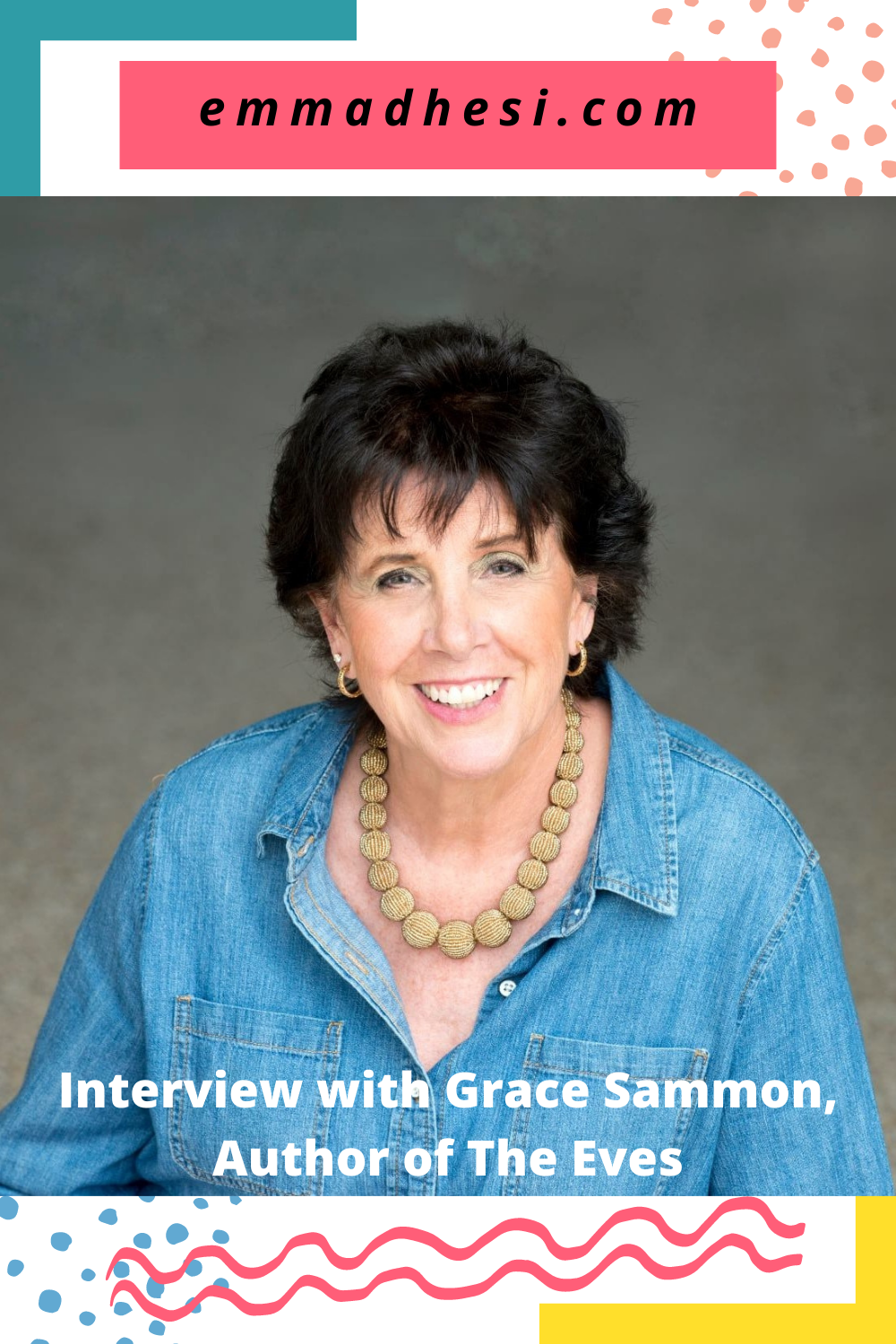
Interview with Grace Sammon, author of The Eves

Interview with Grace Sammon, author of The Eves

Interview with Grace Sammon, author of The Eves

by Emma Dhesi | Turning Readers Into Writers

Interview with Grace Sammon

Grace Sammon is an entrepreneur, educator, speaker and author. She has started and managed to for profit and to not for profit companies.

And she has travelled to 35 states in America and to eight countries overseas. recognized in who’s who in education and who’s who in literature.

Grace is utilising skills built up over the decades as she reinvents herself with her award winning fourth book and debut novel The Eves as well as weather returned to one of our early loves radio.

The Eves is an intergenerational story about lives lived well and lives in transition. It is a novel that challenges us to ask who we want to be in the world regardless of our age.

Grace brings that quest for a good story, and a drive to keep contributing to her new radio show the storytellers each episode captures the stories of authors and others who leave their mark on the world through the art of story.

Grace is a member of the Women’s Fiction Writers Association is director of membership for one of the fastest growing Facebook groups because roadtrip and a contributing moderator of the rate review.

She is currently working on several anthologies and sketching out her new novel. So let’s have a chat with grace and find out more about the Eves her debut novel, the storytellers her radio show and what she is working on next.

Well, Grace, thank you so so much for joining me here today. I’m thrilled to be speaking to you.

Grace Sammon:

Emma I am thrilled to be with you. I love popping over across the pond to Scotland today.

Emma Dhesi:

And I always kind of start my interviews by asking my guests What was your journey to fiction?

Grace Sammon:

Well, it was actually a long journey, even though I always wrote and always enjoyed writing. My first three books are all in the area of education. So switching to being a fiction writer was quite honestly a surprise.

I had been travelling 200 days a year on my educational consulting job, and that was getting exhausting. And my mom had died. My father was ill my children were grown. And I thought, Who am I in this story of life anymore.

And as I began to wrestle with that, I began to fantasise about what a really perplexed character and a complex character who was facing those same issues might feel like look like and wrestle with which issues.

So I created the Eves. And all of a sudden I was a novelist.

Emma Dhesi:

That’s nice. I love that they just this inspiration came and, and then it sort of came from your own chapter of life and the thoughts that you’re having about, okay, where I’m at a crossroads here.

You know, how does this impact me and where am I going to go from here? That’s quite often how story ideas come to me as well.

Grace Sammon:

Well, I was going to say as an author, you know, we tend to write the book we want to read And there was just no other book out there.

And that is a whole other thing. You have such a wonderful world into the whole world of publishing and writing, you know that that whole journey is made more difficult to get published, especially if you don’t have another book that you can say to a potential agent.

My book is like that book. So in creating and writing the book that I wanted to read, it was then also a publishing challenge, if you will, but yes, very much from my own experience.

And I think readers feel that, you know, they feel when an author is really connected to their story.

Emma Dhesi:

Mm hmm. Well, you’ve mentioned the eaves as your debut novel.

And it is a beautiful story. As I said, before we started recording, I recently read it.

And it’s all about Jessica, who is telling the stories of the women that she comes into contact with on a sustainable farm. But I wonder if you could give us a little more detail into that and what the story’s about.

Grace Sammon:

Thank you. So Jessica, is basically a hot mess. She’s in her late 50s.

She’s lost her connection to her children. She’s basically given up on her career, her looks, she hasn’t given up on her vodka, and she has not given up on her lies that help her get through every day.

And she has a very, very bossy friend named Sonia. And I hope everybody listening has a very, very bossy friend. Because Sonia says to her, you will stop hiding, you are hiding from the world, you are not making your mark on the world.

And I have this group of women that I want you to meet, I want you to catalogue their stories.

And Jessica wants none of it, but realises she is lost enough. And she doesn’t want to disappoint Sonia.

So she starts writing the oral histories of these women and the youngest character is 15 and the oldest one is 94.

And she starts writing the characters of these older women. And as she does everybody’s story changes.

Emma Dhesi:

Yeah, it’s a particularly Jessica’s, it felt like as well.

And it’s one of the things I really enjoyed about your writing was how, after each kind of, after certain kind of deep conversation she has with other people about their lives, she would have a realization about her own life and you did it very subtly.

About You know, for example, you mentioned the vodka.

No, remember, just as an example, after a conversation she’d had with somebody, she decided not to finish that mug of vodka that was beside her import it down the sink and I thought it just little things like that gave us a clue into how her slowly but surely she was evolving and changing and coming out of this key that she’d been hiding in by on her own.

I’m intrigued to about the love interest in her story, whose name for the moment has just popped out of my head.

Grace Sammon:

Which character?

Emma Dhesi:

A man in her life? Oh, Regulus Oh Yes. What was the inspiration behind Roy and and why was it important to give her you know, that kind of companionship.

Grace Sammon:

Writing is an interesting character. One of the things that readers and reviewers say about the book in general, is that if you love a character driven novel or if you love a place driven novel, you will love the Eves because the characters are so well developed and and I love that as an author. Truth be told, however, Roy Gillis is word for word, my husband.

He there is no there is no wonderful creativity about how I cast Roy. And it was important for me to have Jessica, meet Roy fall in love with Roy. Because her transformation as you alluded to, is very complete. You know, she’s such a hot mess.

As I mentioned, she’s broken in so many ways. And I wanted her to heal in as many ways as possible. And that, for me was very realistic. I’m married to my Roy Gillis only nine years. So it’s relatively new for me.

And I wanted to also address the idea of love at a later age and intimacy at a later age.

Our bodies that was something that was very important for me to write about, you know, my body at 68 Unfortunately, or fortunately, is not the same body I had when I I was younger, a young mom, even 10 years ago, it’s amazing how there seems to be this little meter, after which you pass.

It’s like the point of no return, you realize you’re never going to have that flat stomach again. And coming to terms with that, and also been able to talk about that, candidly, was important to me. So there is a love scene between Jessica and Roy.

And I think it probably should have happened about five chapters before it did. But I couldn’t figure out how to write about it. I was like, oh, no, no, no, no, I don’t. I don’t want any touching.

Emma Dhesi:

It’s so tricky. It is a tricky sort of scene to navigate doing a love scene and how, how subtle you want to be and how not, and what will readers like and what will they not? It’s, it is a fine balance, I think. But I think you did it very well.

I also wondered, I was sort of thinking about the now that I know that Roy is your husband, I need to think about what I say. But one of the things I wondered about the two of them is because he’s very steady, stable.

And she’s not. And I wondered if you know, he had she adds a bit of excitement to his life that he can, he doesn’t have, you know, he’s not that type of character. So she gives him that kind of mood, a bit of a kick, a bit of excitement.

Grace Sammon:

It’s true in reality, and in the book, in my reality, and in the book.

Emma Dhesi:

It Well, I wonder about this reality then. And so Jessica is, she’s far from perfect, as we’ve alluded to, and could come across, as you know, some people might not like her. And, and I wonder how you did you?

Were you worried about that, that people might not like her drinking that people might not like that sort of slightly more prickly or slightly more outspoken side of a character?

Is that something you worried about when you wrote about her?

Grace Sammon:

I’m so glad you asked that question. Because in your own writing, your own characters aren’t always you know, the person you want to embrace right away. And I think that that’s a risky thing sometimes to do for an author.

But I also think it’s a very real thing. In truth, I don’t think I worried about it at any point, because even though Jessica is probably not is not my favorite character, she is very human, Lee flawed.

And I thought readers would be able to see, she’s flawed.

She’s not a bad person by any means. But I use a beta group of readers always to test the waters to help me with where plot should go, just to give me a feedback on the overall process, if you will, I also use beta readers in a very selfish way, in that if a beta reader, if I’m not done my piece, a beta reader will say, give me the next chapter.

And that’s very motivating. To me. It’s very, it’s egotistical. And it’s like, oh, they want the next chapter. So that is a piece that I considered critical to any writer to have a beta group. But in my beta group, I had at least three people who said, she is so unlikable, you will never get published.

One person said, She’s a liar. I won’t even finish this book, she is a liar. Oh. And so that gave me pause to really rethink her, I don’t think I changed her eye may have changed some of the language around her.

There’s a wonderful expression that the wonderful author Lainey Cameron uses, I think it’s called pet the cat, you know, so if you have a bad character who’s doing bad things, someplace along the line, he has to pick up a cat and pet the cat and feed the cat and then all of a sudden he becomes likeable.

So I love that lane. You taught me that piece. So I don’t think I did change her considerably.

But putting her out there in the world as flawed. Once I knew that people would think she was very flawed was a cause for concern.

Emma Dhesi:

Mm hmm. Certainly, I the the women that I write about are often start out very imperfect. And I have to admit, it is something that I do worry about whether people will like her and want to carry on, but for some reason, she still, you know, I keep writing she comes out the way she comes out.

And that’s, that’s the way it goes.

Interview with Grace Sammon

Grace Sammon:

Well as in, you know, to and people who are not writers will not necessarily resonate with this, but the characters take on a life of their own. And just like I couldn’t ask you to behave differently.

After we finished today. You know, you are a real entity and our characters are real entities. And when they act out of character readers also pick that up. They’ll say, oh, you know, Jessica would have never done that.

Roy would have never done that. You know, you mentioned Rye is very, very steady.

I can’t imagine a point where Roy would have yelled at Jessica for anything, because the readers would have said Ryan would have never done that.

Emma Dhesi:

Yeah. Now, you mentioned just before, we’re about talking about the road to publication.

And I wonder if would you be happy to share a little bit about that journey with us and how you went from having your finished manuscript to finding finding your publisher.

Grace Sammon:

That’s a wonderful journey. And I love to be asked that question. So my very, very first book in education was self published, made me quite honestly, a good bit of money. But I really struggled with that self publishing concept, particularly in the area of education.

Because I wanted to be vetted, I wanted to have that juried process, if you will. So my second book was published by Corwin press, as was my third book.

And those are incredibly, I thought would be very difficult road to publication, because as I said, they have superintendents and Dean’s of universities, and so many people who vet it and check the data and do a myriad of things to make sure that the volume is valid, if you will.

I sent out 16 letters to various publishing houses for my first book in education. And I think I had 14 responses or it was a ridiculous response rate, and very gratifying as well. In the world of being a novelist, it’s a very, very different route.

First of all, you don’t as many of your listeners will know, your, don’t ever send it directly to a publishing house, you send it to an agent, you have a 1% chance of getting an agent, you don’t even have a very good chance of hearing back from an agent whether they want it or not.

So there are some other routes, you can go without an agent.

And you can just Google those, you know, publishing houses that submit without an agent, and I could have gone that way. My brother Rick salmon has written 46 books, mostly in the area of photography.

The first I think 39 of them were traditionally published, which is now the word I use his 40th, one was independently published. And as I was searching around for agents, he said, This is ridiculous, you’re wasting too much time become an independent published person.

And I didn’t understand the subtle switch that has happened, in my mind anyway, between traditional publishing and indie publishing, I now even separate out self publishing as differently.

Because the indie world, even though we are technically self published, if you will, we tend to have book creators, as you know, I listened to a fabulous podcast on your show, about how do we do this and get such a professional product together.

And that was a very brilliant show on your part, by the way. And I think that I work very closely with a company called Writing knights, and a man named Chad Robertson, who is a brilliant editor and a absolutely fabulous book developer.

So I started working with him and he did all of the things that authors need to do if they’re going to go that self publishing route, which I now call indie route, you know, nobody says to Robert Redford’s Independent Film Festival, Oh, those are just indie films.

Those are real valid films. So making that mental switch was important. But then there was also a trick, because and this was the trick.

The traditional self published, or indie author gets their ISBN number, and it goes up on their Kindle version in their Amazon, and they’re usually Barnes and Noble. And there may be different vehicles, to the listeners that are listening to your show as well.

But those then cannot be carried in bookstores because bookstores can’t afford to get them at those rates, and they’re not returnable, and etc. So I worked closely with Chad Robertson, and we re issued the eaves under upstream press. And I had a different ISBN.

And now it can be in bookstores, bookstores may or may not carry it, but they can carry it they can carry it for a profit. People can go to independent bookstores, which I think are so important in our culture and say could you order me a copy of the eaves under this ISBN.

So the learning curve and the journey to that type of publishing was also immense.

Emma Dhesi:

It shows just how vast the publishing world World is even for us, you know, humble indies, but also how it’s evolving, you know, and listen a lot to Joanna pen and Jay Thorne who were in the indie space back and when it first started and listening to what the experiences they had 10 years ago, compared to how it is now, and that even on Amazon, you can publish a hardback, for example. It’s just evolving and changing all the time.

And it’s one of the exciting things about it. And, and even that move kind of, towards the more hybrid model, where you get the boost the best of both worlds, an author can retain a lot of their independence, but they still get the benefits say, of having a publishing house, advise them, guide them, help them with the technical side.

So it’s just wonderful how it’s evolving. Very exciting.

Grace Sammon:

Very exciting, and also very quickly evolving. I would tell you, almost nobody asks me who has who’s published my book. It never happens. And I do. I think I’ve done 56 interviews, perhaps on the book.

I’ve done various guest appearances, if you will, at retirement communities and libraries. And nobody ever says, Well, you know, are you published by Random House, they just don’t care anymore. What they want is accessibility to good stories.

Emma Dhesi:

Good stories, so keen. Now talking of stories, you have your radio show called the storytellers. So I would love for you to tell tell us about it.

From time to time, I link to products or services I love using with affiliate links. This means that I may receive a small percentage or fee for referring you to any product you may purchase from one of those sites. It does not cost you anything. These small fees help sustain my small business. I truly appreciate your support.

Grace Sammon:

This is a real gift to me to have this radio show, as you know, because you were kind enough to read the eaves. It’s a story about never been done, regardless of your age. So the old lady’s transform, and many things happen to them, Jessica transforms, and many things happen to them.

And I think if I’m really honest with myself, deep down, I thought that in writing the book, I was done, I had finished the book that I got it out in the world. And I thought I was done.

And the surprise to me at 68 is that I’m not done. And that has mentioned or emerged in so many different ways. Certainly the way my social media has taken off the opportunity to speak with you in Scotland today.

But also with the radio show, I was had the great gift of being interviewed by a woman named Dr. Gail Carson. And she wanted to talk to me on her show, spunky old broad.

And the reason for that was because she loved the idea that I was writing about older women and she was 83 at the time. So she interviewed me on her show, we talked partly about entrepreneurism, and publishing, and we talked a lot about the story.

And she called me about two weeks later, and she said, I loved our episode, I want to give you your own radio show, whatever you want to talk about, I want you to have your own radio show.

And I said, Oh, I can’t do that I’m done.

And she just laughed at me and said, No, you’re not done. Remember, you just wrote that book.

So she and I spoke and she offered me a radio show on her station. And I did it. I think I’m into Episode 13.

Now, and I think 13 launched yesterday.

And it was just such a gift of her seeing something in me that I did not see in myself. And that’s also a theme in the book. And I think for so many of us and for so many of us as women, we don’t see ourselves as others see us.

So having Gail, give me the show, if you will was a huge gift. She was supposed to be guest number six on the show. And she literally passed away the day before we were taped.

Emma Dhesi:

Oh, I’m so sorry to hear that.

Grace Sammon:

It was really sad and shocking. And I’m so blessed that I got to meet her for minerals.

For a minute of my life. She was like four foot three and had more energy at 83 than I will ever have.

Emma Dhesi:

So sounds like you’re enjoying doing storytellers.

Grace Sammon:

I am in very surprising ways. I enjoyed being on both sides of the microphone, which is a surprise to me. I love putting together the puzzle of what a good interview looks like. I love doing the research.

I like finding the quirky things out about my guests. And I like the development of a different kind of conversation too. And you know, you’re on both sides of the microphone as well. So it’s just a joy. I’m very, very surprised.

I love that people resonate with it. Mm hmm. So basically, we focus on authors and others who leave their mark on the world through the art of story.

I’ve done mostly authors, but I interviewed this amazing newscaster the other day, who was with President George Bush, when he learned of the terrorist attacks.

She was As a follow, or she followed as a very young reporter, Martin Luther King and his wife, and went to the house as they were getting the news, because they had become friends that he had been murdered.

So it’s not it’s all of our stories, because I think we all have a story to tell.

Emma Dhesi:

Oh, gosh, fascinating. I’m just going to change tack a little bit. And I wanted to chat to you a little bit about the women’s women’s fiction writers Association.

You’re a member and I’ve recently become a member because I did want to connect with, with women who are writing the same kinds of stories as me about women’s lives.

And I wonder, do you feel that it is important to build that kind of community writing, author, community, and maybe to have that kind of network around you?

Grace Sammon:

I think it’s essential. I’m a relatively new member to WF WA, myself, the women’s fiction writers Association. It is a remarkable organization that I know I need to get more involved in.

I haven’t found the bandwidth in my time between some of the author things and getting the storytellers up and running. But they have a wonderful weekly newsletter, where they talk about volunteer activities, they talk, they celebrate certain authors.

So it’s a platform to get your feet wet in if you’d like. They do a monthly podcast, they post questions. So if you go to their Facebook page, you’ll frequently see an author posts something that says, My characters a little bit unlikable. Is that a risk?

What do you think about that, and you can kind of test the waters that way, because it’s such a supportive community.

So I’m so glad that you joined WF WA. And I think that network of authors has been such a support to me in this work in the last 17 months, 16 months, because we become friends.

And that’s something I especially at my age, I really kind of poo pooed the host social networking that you create real friends, I was like, no real friends are real people in real life that you can sit down and have dinner with.

And the idea that I can call up now 30, 40 authors if I needed to, and say, I’m really struggling with this, or I’m doing a Facebook Live, would you hop on with me is amazing. And we’re very honest and supportive group to each other.

And there are just a couple of people who really stand out. I already mentioned lady Cameron.

She’s somebody who’s won like 10 awards. And on her book, the exit strategy with her book, she just won. I can’t remember what her 10th award was.

Emma Dhesi:

Or 11th award. It wasn’t a crazy number.

Grace Sammon:

It could have been a crazy number. It’s hard to keep up.

But she immediately posted and said and congratulations to everybody else who was a runner up a finalist, whatever. She’s just amazing that way.

Julie Cantrell is similar. She was doing a workshop this week. I don’t know if you saw her social media posts.

But she was doing this workshop and Sharon to cat who’s another wonderful author was running to it and literally face planted on her way, and very horribly messed up her face.

And Julie Cantrell hopped on her social media showed a picture of Sharon to cat and said, We need to support this woman look at here, she was coming to my workshop lifting me up.

So lets everybody go over to her page and like her and follow her and send her a note of congratulations.

And that those are the two standouts in my mind. But the opportunity to lift people up in share and support is just amazing.

Emma Dhesi:

It is. And I hear so much more than I used to about the benefits of community that more people are looking for community and not just, you know, not just a big giant Facebook group where there’s 1000s and 1000s.

But actually a specific community where there’s joint interest and that support and lifting people up, as you mentioned.

Yeah, thanks for sharing that with us. So I’m conscious of time. But before we go, I’d really love to know, what are you working on at the moment?

Are you working on novel number two?

Grace Sammon:

I would love to tell you that’s a true story. I was so happy to talk to a fellow author, another great reason to have fellow authors.

We’re both working on our second novel. And I just asked her the other day said how many pages have you actually written she said 14 And I said, Oh, I’m so happy.

I think I’ve got three. So I have three novels at the back of the eaves.

I talked about writing one. I have three novels in my head. But I’m doing a lot more short story. We’re not article ready and I can’t even call them short story.

So I’m doing a lot of short, independent article writing at the moment.

I hope I have another book in me because truly, I’m never as happy as when I’m sitting there, and something forms in my head.

And sometimes it trickles down into my fingers and onto a keyboard and then onto a screen that that is magic to me. I don’t know how it happens.

I don’t know how we as humans do that. So I have three maybe in my head, and I hope they turn into real books.

Emma Dhesi:

Oh, me too. Yeah, I’ll be looking out for those. Yes. If any of our listeners would like to find out more about you, or more by the eaves? Where can they do that?

Grace Sammon:

Probably the easiest way to find me is on gracesammon.net and my name is spelled not like the fish.

It’s s a m m o n. So gracesammon.net and there you can find all the storyteller episodes are loaded, you’ll find biographies.

There’s lots of extras, there’s music that inspired the Eves.

And there’s some wonderful pieces of music up there.

There’s recipes, there’s questions, there’s book club guide, so lots of things available on gracesammon.net, they can always email me and they can email me at Grace at gracesammon.net or, you know, the ever present Facebook.

I’m at Grace Sammon, just my name. I also have an author page, but most authors aren’t on their author page as much as they are on their personal page.

So they can direct message me on Grace Sammon, and over on Instagram, I’m at Grace Sammon writes, as in Grace Sammon writes books.

Emma Dhesi:

Oh, perfect. I will make sure that I link to each of those in the show notes.

That’s wonderful. Well, Grace, it’s been a pleasure speaking to you. Thank you very much for joining me,

Grace Sammon:

Emma. Pleasure anytime, a real honor.

Emma Dhesi:

Well, thank you so much for joining me today. I hope you find that helpful and inspirational.

Now, don’t forget to come on over to facebook and join my group, turning readers into writers.

It is especially for you if you are a beginner writer who is looking to write their first novel.

If you join the group, you will also find a free cheat sheet there called Three Secret hacks to write with consistency.

So go to emmadhesi.com/turning readers into writers. Hit join. I can’t wait to see you in there.

All right. Thank you. Bye bye.

If you’ve been working on your novel for years (perhaps even decades) the maybe it's time to consider working with a coach.

If you have multiple versions of your novel and you don’t know which works best, are scared nobody will like your book and don't feel like a 'real' writer, then my guess is coaching is the right next step for you.

Find out more and sign up for your free Clarity Call here: https://emmadhesi.com/personal-coaching/


Alliance of Independent Authors

Shortcuts for Writers

Do you feel as if you don’t have the time or the money to invest in editing your novel? I know an online course that can help you to transform your manuscript WITHOUT breaking the bank. It’s called Book Editing Blueprint: A Step-By-Step Plan To Making Your Novels Publishable, and it was created by Stacy Juba of Shortcuts for Writers.


emma dhesi

Emma Dhesi

Emma writes women’s fiction. She began writing seriously while a stay at home mum with 3 pre-school children.

By changing her mindset, being consistent and developing confidence, Emma has gone from having a collection of handwritten notes to a fully written, edited and published novel.

Having experienced first-hand how writing changes lives, Emma now helps beginner writers find the time and confidence to write their first novel.
Get inspiration for your story with Steve Adams

Get inspiration for your story with Steve Adams

Get inspiration for your story with Steve Adams

by Emma Dhesi | Turning Readers Into Writers

Interview with Steve Adams

Steve Adams is a writer and playwright and has been widely published.

He’s won a Pushcart Prize and Glimmer Train’s Short Story Award for New Writers, been listed for a “Notable Essay” in Best American Essays.

He has also featured in a number of anthologies. 

Steve has been a guest artist at the University of Texas, and his plays have been produced in New York City. He’s a writing coach and freelance editor in Memphis. 

His first novel, Stay with Me a Little Longer, will be published by the University of Wisconsin Press in Fall/Winter 2022.

Emma Dhesi:

Well, Steve, thank you so, so much for joining me today.

Steve Adams:

Nice to be here. Thank you.

Emma Dhesi:

So I wonder if you wouldn’t mind just telling us a little bit about how you got started in writing and what brought you to where you are today?

Steve Adams:

Yeah, be glad to it is because it’s such a long story for me, it’s very circuitous. How do you the truncated version, but basically I was I was going to, in a University of Texas in Austin, and I was one of these people who was lost, didn’t know what they were going to do.

Like, I think a lot of artists are various points, right? But I stumbled into the theater program there. And I studied acting for two years, I wasn’t a very good actor. And they kicked me out after two years, but it was Think, think I’m just really glad they did.

That’s one of the best things that happened to me, because I wasn’t early good. And I didn’t want to be trying to do that. And I stumbled into a portrait clerk course by a guy named Albert Goldbarth, who is a big, actually American poet.

But he was he was younger than he was, you know, just teaching and it was like, lights went out on my head, and I Oh, these are my people.

This is what I’m supposed to do. And so what happened then is after I got the poetry going, and I just I had been so under exposed to it, and it just, again, like lights gone off my head.

And I went back circle back through the theater program, because that’s where I was getting my degree.

And I took up playwriting and that was exciting and fun and suddenly I was getting attention which I needed and and at that point, I and here’s where again, it’s it is long, but I moved to New York I’ll try to keep this short moved to New York and enjoyed you had the wild time New York writing plays getting a little productions here and there. Never thought I would write probes.

I never thought I would write prose at all. And and but then I decided I should write screenplays. I love New York, I went to Los Angeles thinking oh, I’m gonna be a famous screenwriter.

And I wrote a stack of bad screenplays and and I just was not natural at that. I have friends who love it there. But I it wasn’t my city didn’t feel right in that world of screenwriting. didn’t feel right.

And, and so I tried to get philosophical and told myself, Well, it’s time for me to give up writing and be practical and, you know, get a real job and do the normal things. And it didn’t work for me.

After about two months, I started going kind of crazy. It’s like, I need to write something. So I started writing prose for the first time. And, and at that point, I think earlier, I didn’t have the endurance for it. But at this point, I was just so hungry to ride and it just, I felt like a horse just running through a field. And so that’s where I started writing prose.

And, again, I go, Oh, this is it. You know, why did it take me so long, but this is what I want to do. And so from that point on, I was mostly wrote short pieces. And I actually got some published immediately. And I think it’s because I’d had all the playwriting training and all the other stuff. And so I wasn’t totally off, you know, I had a lot of foundation for what I was doing.

But and then that I started to get my MFA. And I went to New York, and it got me MFA and live, there’s some more and, and that’s, that kept going on and, and the thing with coaching, how this came around, was, like, the American economy kind of collapsed in 2008.

And I lost my wonderful new york day job, I love day jobs, you know, you punch a clock, and then you ride on your own, you know, you have keep the lights on, and you’re not dependent on. Although now I have this is my, it’s not a day job. I actually really loved the coaching.

But what I did is I lost the day job, so I had to find a new way.

And I always just love talking about process and writing with people. It’s just what I do. I mean, I’ll chase them down that street too, so we can talk about it. And and so I had friends suggest I tried coaching, I don’t even know people did this.

And so I started up and slowly developed, you know, people who wanted to work with me over time. And, and that’s all I do, I coach. You know, either I do what I call developmental editing for generally larger projects. Sometimes short, short work, too, but the big projects are big and…

Emma Dhesi:

I wonder if I could just take you back a step. Because I was really interested in what you said about, you know, going from screenwriting, to sort of prose writing, and you said you didn’t think you had the endurance for it. Yeah.

And it’s so interesting that you say that because I Think of writing a full length play or writing a full length script. Equally is has a level of endurance, that’s just as tough.

But did you find what did you sort of find the main difference there? And when you met when you talk about endurance, is it? Because with the with the script, it’s dialogue? Mostly? Or was it just because it was a new a new form for you?

Steve Adams:

Right? Well, I think actually, that I mean, most of my plays out, I was MIT that that were successful, they were 1x, I was still doing short form stuff. Because that was my natural, I could just do that I didn’t have to think about it a whole lot, you know, but every time I tried to stretch out into full length, it was it was I couldn’t figure out how to do it really.

And I think me writing you know, what I’m calling bad. A number of bad screenplays kind of built up my muscle to think like you say, for more of that endurance, built it up. And, and then when I went into the pros, I was I had more endurance just from from doing that.

And I was thinking about long form structure, even if I was had not understood it, that’s as well. But for me, the thing was, is I loved language. And like, when I’d write a play, I would set up a monologue that record do, you know, interesting, or beautiful language, because you have to really earn it.

But I found that when I with prose, I’m just sitting there and I could just drop into the world at this point my life and, and just feel free without the cookbook, because screenplays are very constricted. And you don’t have control over content a lot.

You know, it’s about concept and structure and all of that, but, but your language will very likely get lost, you can’t, you know, so. So that’s where I frequent use language. So I could just run Yes, I felt like the horse running across the field, you know, so, so that, you know, so that that, to me, is the difference.

It’s like, and you get to do it all, you get to do it all with pros, you’re the director, you’re the actor, you’re everything, you know, and that’s the challenge to, but that’s, I prefer that I prefer getting to do everything then having to box myself in. I mean, it’s a brilliant screenwriters who are so good at this, but I’m not it’s not the right film for me, so, you know…

Emma Dhesi:

There’s, there’s a kind of natural fit between the two, I think, isn’t there, you do hear of a lot of fiction writers who do study screenwriting, because they want to improve that structure that form the kind of patterns of storytelling that I think screenwriting teaches so well, that perhaps fiction and maybe particularly literary fiction doesn’t teach quite so well.

And thinking of the book, you know, save the cat writes a book, which is taken from their Blake Schneider script writing book, so make it so do you feel that you’re actually doing that screen writing first give you a really good education and grounding and structure and flow before you’re able to kind of then expand on the beautiful prose if you like.

Steve Adams:

Right, right. Yeah. I mean, it’s, it’s, it’s totally requisite long form, it’s long form, whether it’s long form play or screenplay.

They’re, they’re big projects are novel. And I really think mostly I just built up my muscle because my screenplays really did work like they’re supposed to, but it was me struggling through that. And then what’s writing prose?

I totally turned around. And that’s when I studied screenplays better and and like like Robert McKee story was one book I read to go oh my god this is this is this tells me how to build this long architectural thing that anomalous and when I put any movies are so great too because again story if you get structured out and you’re writing a long form well then you can you can make it work and if your structure sound and so but but when I’m working with clients because it’s so easy to see a movie and talk about the structure of it, which is kind of what I teach with novel right but but as I say, like I have this whole PowerPoint chart I did for the Godfather breaking down the act structure so they can see where these turning points are.

And so but I had to study that and and get that in because i agree i mean i am a quote unquote literary writer although i like it i think mine crosses over you know, you know, that’s commercial too but but I’m based in language and literary and and it is a it often is a something lacking and literary fiction with the structure isn’t as sound as it could be.

So I recommend people like read, you know, read mystery novels and see see movies and, and I use those as examples to show how the how the story moves, so absolutely, it’s great. It’s good, really good to study that.

Emma Dhesi:

So you mentioned there that you’re, you know, you write a lot of your art, you’re right on the more literary side, and I know that you write a lot of personal essays and creative nonfiction.

And I wonder, what sort of topics Do you find yourself drawn to? Do you like to, you know, maybe just the phase of life that you’re in that something around that is appealing? Or do you like to write about the bigger subjects politics or the environment?

What What, what appeals to you, when you’re writing a piece of memoir or creative nonfiction?


Steve Adams:

Yeah, what I’m drawn to more, I funnier, as this newsletter, and I was just writing about this money is not the, it’s just what I think you have to find as a writer.

What draws you, you know, what you fall in love with what calls you, that’s where you have to go, because that’s where your, your your genius is, your art is there and not find it too much trying to, you know, twist it into something that it doesn’t want to be and then trust that the material will do what it’s supposed to do.

So along those lines, I mean, like, I mean, the environment up, my goodness, what, you know, but how do you write a story that that does that when you write personal stories, it’s really difficult.

So I write, I mean, I’m drawn to things that haunt me, or call out to me, basically. And, you know, a lot of that is I think a lot of memoir takes time and time in your life.

Because you’re, you’re haunted by something in your past, or you can’t stop thinking about or you start thinking about it seems really interesting, that thing that happened to me 20 years ago, you know, and you start writing it out thinking about it, and, and you realize there’s a story now that’s a secret to is to, you know, this it sounds obvious, but it’s not like where is there a real story, you know, is there a story there or not like, okay, I want this one big thing is pushcart prize over here.

It’s, it’s really big for a memoir. And, and it was about my relationship with this guy in New York City for eight years.

And, and during that time, I go, Well, this is I was like, in the New York story, I knew I was, you know, and so when it when it ended, I mean, the thing is, is I’m, I’m straight, he’s gay, he was my Shiatsu person, because of a bad injury, he, you know, kept me moving through.

And so this relationship happened over eight years. And then he he got pancreatic cancer and died. And, and so it’s all around all those those feelings. And once that, in the middle of it, I go, I’m and it’s stories, you know, this is a story.

And then when he died, I knew Oh, I have to write about this. And it doesn’t mean it has to be good.

Even I just because I don’t approach these things, thinking I’m gonna write the fabulous story. I just, there’s something I want to explore or try to understand better, or give.

Emma Dhesi:

Let me ask you that. Because that’s a really interesting point that you brought up.

And I have a lot of memoirs in my my audience. And I think a really useful question for them would be how do you know when something has happened in your life?

How do you know that it makes a good story? Or can you find the good? Can you unearth a good story from anything that happens? It’s just about knowing how to how to dig it out?

Steve Adams:

Yeah, and those, I would say, help me with that. So to me, those are two separate questions. Okay. But the first one, like I said, we’re How do you know you have a story.

And again, I approached him, and believe me, I signed all high and mighty, and that nobody wants to get published more than me.

And that’s just the fact you know, but when I’m writing, I try to not worry about that, and go deep into the process of creation, because that’s really where the joy and all this is, this stuff is just a pretty pretty illusion, you know, and hopefully it happens. Yeah, I want an audience to we need to connect. But, um, so so.

But in this, this is, well, I’ll just say it again, if I’m haunted by something, you know, something had happened when I was 17. You know, or 19. If that story for me and against part of it, just maybe the way my mind works, but I feel there’s a shape of something there.

And you know, like some Lino loss or something interesting or something meaningful beyond just Oh, that’s a good story. Because that’s not enough. It’s got to have that meaningful thing going on. So that allows you to go deep into like, I have a PhD.

I just can’t talk about it yet. But I have a full like memoir stating that I need to work on that it’s halfway done. But but the wild thing about this one for me was was because they knew there’s a period of life.

I went through this whole process, and I’ve knew at some point, I would need to look at it in our way because there’s something happened and, and so, so so I’ve gone into exploring by writing it.

It’s been really interesting and that it’s changed my whole perspective on what happened that, like, I had a narrative in my mind before I wrote it, of what this whole story was.

And I mean, it’s still the same thing. But I’ve learned like, wow, this is, you know, I was doing better than I realized this is Wilder story than I realized, you know, and have more respect for what I went through.

So that’s a real interesting side thing about this. But But yeah, I mean, I guess I look for, if something has meaning, if it’s loaded, if it’s rich, if it draws my attention, that’s kind of all I need to know.

And I go in, and sometimes it just feels like what’s going to be a short pace? Or sometimes it feels like it’s gonna be a long piece. Okay. Yeah.

Emma Dhesi:

Okay, so that’s, I love that. So that’s it. That’s great tip for our, for our listeners that if they are writing a memoir, it’s about digging down into the, because I do find a lot of men, a lot of new writers are very, because they’re excited.

Yeah, focus very much on the when I publish this book when I get an agent, but actually, it’s cool, putting a pause on that, and coming back and write into the process and thinking about that moment that you want to write about.

And taking your time, it sounds like as well just to really on air, if they really dig down into it, and what’s going on, underneath the surface of that event or that moment in your life. Sounds like sort of what you’re saying there just to move slow down.

Steve Adams:

It really it’s so funny as it’s like, that’s the thing, I tell people, and I think it’s and there’s an irony, so if I can make my mind remember to come back to it. To me, the irony of this is you’re going to write most of the time, the best most likely to quote unquote, succeed story.

If you’re going deep down and slowing down, and not trying to focus on Hey, I’m gonna get the edge and I’m gonna do this, you know, and yet, that’s the sort of thing that gets it into us. But I think at that moment, you have to separate those two things.

You have to you have to let that whatever, put that on the shelf, and, and go into the process and an earth thing, because there will be there things you will find if you slow down exactly the words I have to slow down.

I mean, yeah, and you go into the deep, you make discoveries and you will find the true story down there. Or, or open up the story you’re trying to write much better by by slowing down. Yeah.

Emma Dhesi:

So you’ve mentioned the coaching that you do, and the mentoring that you do. Tell me about some of the projects, the type of project that you like to work on and what it is that you enjoy about coaching students? And do you work with new writers or more established writers or a mix?

Steve Adams:

Yeah, and again, just anything I forgot. Bring me back. So I forget. But I work with beginners. And I work I have people who are very successfully published, like how did they come into my life? I don’t know.

But but they are, you know, and I this whole mix and it’s always one on one. So it that adapts to, to who they are and who I am and we try to find that that rhythm so I’m a good dance partner basically in helping them through this, you know, and I’m sorry, I lost my thread, but you Oh, okay.

Emma Dhesi:

What do you enjoy about coaching? What what’s one of the sort of elements that really gives you that kick and makes you keep coming back?

Steve Adams:

Yeah, it’s and again, it’s always vary depending on who I’m working with. But I mean, obviously, it’s so thrilling when somebody has breakthroughs.

And they discover Well, this is you know, this is hard but it’s it’s really rewarding and they get excited about their material and they drop into that and and

I love that and of course when someone gets something published that’s a whole other level but but really it’s about this because for me this is it’s very, it’s kind of a spiritual, it is a kind of it is a spiritual discipline, just like all arts are including martial arts,

I think, and it I believe it helps you be more whole and complete in this world to have something like this.

I don’t know what people do who don’t have this. So if I can help somebody develop their, their this discipline, so that this is a part of their lives and a sanctuary for their soul, if I can say something really over the top, but I think it is because it’s that for me, you know, and if they have that, again, this is where that weird irony is, then they’re going to write anyway, because it’s not so important to have the big success.

And yet, them writing like that all very often is what will bring them the best product for lack of a better word that have the best chance of success so you know that’s why again to slow down and trust this stuff and and then

I mean again nobody likes to get published more than I do they like to I’d like to you know to split parts of my brain you know so I’d have to keep the other one quiet while I’m writing you know so…

Emma Dhesi:

Well yes I think that’s a really really valid point an important point to make I think for all writers probably not just beginners but that balancing the brain or keeping part of your brain hushed for a while that and not even just the the want to publish versus you know writing but the writer brain and the editor brain which has two such different skills and it’s something

I have to remind myself to do when I’m first drafting is switch off that editor and just let whatever comes out come out so that you’ve just got something there that you can go back and grapple with and work with and improve or cut or whatever it needs to happen managing those two halves of our brains I think is really really important.

Did you find that the same for you Do you have a way of of managing that of separating those two outs?

Interview with Steve Adams


Steve Adams:

That’s something and I may want to make it even more complicated but this is something I think

I this is a part of my my thing I do with people because that is one thing and believe me this might make some newer writers and give them a little bit of comfort but people who are successful have those voices too they have they don’t know that they’re getting in their own way sometimes that’s why they hire me

Everything was fine they wouldn’t even be looking me up but they you know they’re stuck so they’re they’re needing some help and and a lot of those issues just met they don’t I think they get easier to handle but they don’t go away entirely you know.

But for me well i mean i get that inner editor thing I had a girlfriend in New York who’s getting a PhD and she’s brilliant but she’d never heard this comp idea of the inner editor and you know writers talk about this and she was stuck trying to write this thing was so frustrated and I told her oh that’s an inner editor problem and you know unexplained that that it’s differently it’s a different voice for her and

I have a background that makes me a lot better at this so I was very conscious of it my inner editor is smaller didn’t get the way a whole lot we’ve we’ve developed a dialogue and communication over time so that we understand usually what’s going on and but but my I visualized him when

I was starting out writing poetry and he was getting in the way sometimes. And I saw him as a little man who sat on the end of my pan and lifted it off the page and lifted lifted the pen off the page right?

And and so you can’t write when he’s sitting on the back end lifting the pen off the page and I literally This is theater helps you to get imagined and have an imagination like this. So I’d say okay, you know, I tell him says you see what you’re doing I know you want me to write, but you’re lifting the pen off the page.

You don’t need to be here now you’re actually stopping me from producing so go to the pub or go to the coffee shop.

And and I won’t need you later I will need your Kenai later. I mean, I compliment them on the way out right? And, and this this one was not very primitive, right?

So and he got it and so and when I’d get stuck and I’d realize oh I’m in that state of mind my inner editors suddenly taking over and I’d look I mean it’s all visual for me.

I look over and they’re heed me and they go oh, you don’t need to be here now you need to go away from it.

I will lead you later. Thank you. And and so that was me but my girlfriend’s was she’s really imagined and hurt she was she needed to work through levels of this stuff.

And and she but she pictured her as Tammy pictured her inner editor as like, a tooth pink, two foot naked guy named George, who would yell at her and tell her you’re horrible you staying here? Do you don’t know what you’re doing? How dare you think you can write this.

And that’s, that was the voice. And the thing about these voices, which is kind of my thing about all this is they come through our own head. And they sound like us. So we think this is the truth, and they take over our emotions.

But if you’re like me, you have a lot of voices in your head that do different things. They’re all just voices. So if I think identify them says oh, that’s that voice. That’s that, you know, it might be you maybe your mom told you you weren’t any good or a teacher or whatever these these layers of resistance that are built in and that takeover when we’re vulnerable sometimes.

If you identify Oh, that’s just a voice, you know, that stop us from doing all kinds of thing all the time. And that really there’s a whole if you’re again my case, there’s a whole Zoo of voices in your head and say He can pay your you know, that’s a voice that’s just talk it just let him chatter. And I’m going to go back with what I’m supposed to be doing. So where voices, yeah…

Emma Dhesi:

Yeah, no, it’s a great. I don’t quite have the same level of visualization that you do. But certainly I do sort of personify that voice in a way. And it kind of sits on my shoulder.

And I have to acknowledge that this is a different voice. This is not me, it’s a different entity.

And I can park it and say, just like you did, I’ll come back to you. I’m not ignoring you. I know you’re here. But I will come back to you.

And I find it amazing how much if that voice feels acknowledged, and herot it will prove it and let you carry on with the writing that you need to do?

Steve Adams:

Yeah, it’s amazing, really just just becoming aware of it, and then addressing it a little bit however you have you do it. Yeah.

Emma Dhesi:

So do you…. The writers that you work with, you’ve mentioned during you as well as more established?

Do you work solely with literary writers? Or do you work the genre writers or poets? Do you have a preference for the type of work that you work with?

Steve Adams:

I, I really don’t I mean, it’s funny because I started with poetry, but I really don’t work with poetry just because I haven’t written it in so long.

It’s weird, I don’t fully understand it. And I don’t understand how to critique or, or help someone, I can help someone process I get them how to orient their day.

So they’re producing and I can read it and talk about it but but I’m better with because with narrative form, is where it’s, that’s basically it.

I mean, I work with literary writers a lot. But I, like you know, it’s the I mean, the main thing people need, especially when I’m doing like developmental edit, they need someone who can break down their, their manuscript because they’ve got 300 pages, and they have no idea what they’ve got, or what to do, you know, and they’ll say, Please help me.

And it’s hard work, but I go through and so that, therefore, I will tell them, like, I’m not a sci fi, you know, expert, I’m not a thriller expert. But what I can give them is break down the structure and tell them I don’t call myself an expert, but my areas story.

And again, this is more of the development I had it and and I can go through and you know, come up with a roadmap and tell them what they’ve done and how their story is working and where they can go and do things. So that applies across all genres.

Really, you know, unless you do something really experimental. And then you’re, you know, you’re reinventing the wheel. Okay, good luck to you and, you know, I work with you, but…

Emma Dhesi:

Before we started recording you mentioned you found when you moved to doing longer form, pros that there was a few resources that you were really helpful and you thought they were worth mentioning today. I wonder if you’d share those with us?

Steve Adams:

Yeah, absolutely. Um, because because I mean, there’s so many books out there.

This is one thing I would say is if anyone tells you Oh, I have the way to do it, and this is the way you know, you might want to take a step back well, there’s actually a decent one called story genius, which does exactly that. Which makes me very angry.

But she has one really good idea in the middle of it, but I’m not gonna I’m not gonna go there.

Yeah, I don’t want to again give up too many books. But especially I mean, to me this is a book everyone should read at some point who’s it’s sure you’ve heard of a Bird by Bird by Anne Lamott?

I mean, and she’s such a good writer anyway it’s so fun so that’s when I just say you’ll if you do this it will just help you so much. And I kind of think she is maybe the first big coach out there you know, oh right there we go.

Emma Dhesi:

Yeah, I’m just sharing my coffee I keep it close to me all the time. Yeah. Like a commend

Steve Adams:

Yeah, it’s the one and the other again for me I think some people are more natural at long form than I was I had a really I think it’s one reason I can edit and help people because I had to I had to take it into my intellect I had to get it and so now I’m kind of wonky about it I’ve got

Oh elegant structure i mean i use terms like that now so but but for me, it was shit learning to shift from short form I get I wrote the short stories after I gave up writing and they all like hit their a bam, bam, bam, bam, bam. And it’s like I’m a genius.

And then I then I tried to write a novel, and it didn’t work at all. I mean, I ground my way all the way through it. But But somehow through there, I was trying to learn how to do it. It’s different. It’s structurally It looks like a long short story, but it’s not it’s structurally the prep.

And for me, and I already mentioned it is to read Robert, Mickey’s story. And that just gives you Oh, here’s a framework and screenplays are much more rigid in in, you know, if you’re selling them, they want things to happen on page 30. And all this stuff.

We could be a lot more flexible with prose and long form but um, But the good news for me, it gave me some handles I could hold on to and that’s what I needed.

And it’s similar one is called again, if someone is trying if it was like me struggling to learn how to do long form and needed some help.

That was one and then there’s a book by john York. I think he’s a he’s British, it’s called Into the Woods a five act journey into story.

And it’s Yeah, it’s it’s a really good in it’s, it’s, it’s more for prose writers, but he uses movie examples two, and MKII uses movie examples, okay, because it’s so clear to see, see this stuff. And here’s an my feeling about, like Mickey and screenplays are considered three act.

And Shakespeare, of course, and, and York thinks novels are 5x. And my opinion about it is Don’t, don’t sweat that too much.

Because I think that’s kind of different way, like looking at it from a bit of a different angle, you know, maybe there’s a little bit more of a story, but the shape is really, whatever works is going to be fine.

And either can inform this. So those, those are three books that are I always first to recommend, so….


Emma Dhesi:

Fantastic, good recommendations there. Now, you did mention it just a little while ago that you are you have written or you are writing your first novel, and it’s due out next year.

And I’ve sort of I have already asked you, you know about that crossover from writing shorter pieces to the long form, and the differences there, but what can you tell us about the book itself about the story itself, and where the inspiration for it came from?

Steve Adams:

Yeah, um, I think the inspiration for this is, this might be helpful, too, because I’m gonna do something not as well as I would like Karen in a moment.

But it when I lived in New York City was a very, very important place for me, and I came there and I kind of came to myself in a way.

And, and I, it, it, you know, beat me up the first time I had to leave, and then I couldn’t stop thinking about it.

And I came back. And then was there had an incredible time, the second time, because I, you know, I had a real job I could afford, afford it for a while, and then I left to go do screenplays and never get stuck, think of it, and then I moved back.

So I live it three different times for over 16 years. And I think the inspiration may have come from because I used to wander the city a lot.

And when again, the you know, life happens and the economy collapsed, and I lost my job, and you can’t stay there without a job, you’ll end up in a bad place.

And I had to leave and I think but I had like six months to, to before I was had to leave and I think my wandering that city and and and you know this, this longing and loss that I was feeling for losing my mind city was what kind of fed into the ideas for this novel.

And so I have a guy from Texas like me, and he is I gave this this whole other story, there was an original, maybe this is helpful.

The original story I had this got us wanting to ratchet up the sense of loss and longing.

So I put the sky into having an affair. He’s having an affair with a married woman with a child, and they’re all tangled up with each other.

They’ve worked together in an office for years and her husband goes away to Italy to work for, for two months.

It’s an it’s an unfulfilling marriage for her that she loves her child. It’s not an unhappy marriage. It’s just done fulfilling, that can differentiate those two things.

And she, she’s from Italy, she initiates the affair. And he’s been in love with her all this time, anyway. And he’s he almost had to leave and finally managed to keep himself and check this place. And suddenly this thing just happens.

And so they, they for her idea, it thinks that she is just going to be done quickly. But it’s not what happens. They just fall deeply into each other, you know, at that point, and you know, I mean they’re flawed people, but they’re passionate people.

And, and yet she knows better than she’s a practical person, though. And she knows this is some flaky, artsy guy from Texas. I can’t go running off to Mexico with them.

I have this family of a child. And so this is this is this is the the main storyline 1988 New York City, AIDS haunted landscape.

So all that’s going on, and they are have these two months together in this affair. So that’s the main storyline. The there’s a second so I had that.

And I wrote out a draft of that, really? I mean, not maybe but yeah, that’s pretty much and I got some feedback that that I needed more.

Now I’d say it sounds good because I think it’s a feeling Really filled out. But, but what the key for me was was showing it to people thinking about it.

And, and coming to terms with who is this guy, we need more. That’s a lot but still so so what I did is I came up with a childhood for him in a small city and Texas, where his father his his dies when he’s young, and his mother’s an alcoholic. But he has these three very beautiful sisters.

And they’re older than him. And he’s like this tiny, he’s like their pet and their little brother. But he takes on all the man they wrote, I’m big brother, a man of the house. And so that’s the real families these four, and they’re this, this relationship between them.

And what happens is what develops him not only into what we like to say he has a wound there becomes a painter, basically an artist, he doesn’t understand this, even when he’s in this affair with this woman, he’s coming to learn this kind of through this affair.

But also what made him the type of guy who becomes the other man in a relationship like that. So I wind up all this psychological stuff in that understory, and then the overstory.

And so now it goes back and forth. And and you get, Oh, look at that you get this back and forth with these two stories.

So that it probably sounds complicated, and I had to design it over over time.

But if I could say this, and jump into just a head, the beautiful thing, and this is something new riders, I’m always telling them especially like I’m telling older, rather stupid, but new ones is like you don’t and this is a thing of the Bird by Bird idea that, you know, you can do your crappy first draft, it’s not, you don’t have to solve it all.

You don’t solve at all, then you want to solve pieces of it. And then you go and I called revising the magic wand, you get to go back over and then make it better. And you get to go back over and go, Oh, I need more dimension here. And you can add something there.

And that’s how these things get written. Because I have found that people in my MFA program, that there are people who wanted to be a writer their whole lives.

And because they love literature, and didn’t get that these these, what they’re getting when you get a book, that’s beautiful.

You don’t see all the drafts that went into that thing, right? It’s perfect. I got it this but does it come out like this, they think it comes out like that didn’t come out anything like that.

So you got to really get that in your you know, in your head. That’s bad. Yeah.

Emma Dhesi:

It sounds fascinating. And I particularly love the that you’ve twisted, and often we have the story where it’s the woman who’s the other woman. Right? You know that but I love that this in this instance, it’s the man who’s the other man.

Yeah, dynamic, sensitive, playing out from a male perspective. As opposed to the usual sort of woman being the mistress.

Steve Adams:

So that that drew me that really drew me that made me put a lot of energy into this.

And then and the response I’ve got, that’s one of the people really liked that.

And I don’t know if I mentioned she’s also his boss, so I don’t think I mentioned.

Emma Dhesi:

Real shift in power dynamic

Steve Adams:

It is and yet it’s really, it’s so it does all that it plays with that.

And yet, it’s really just two people. It really is about the two of them. They’re kind of, to me, they’re like a little bit like a like, I’m sorry, all my references are American, I’m sorry.

But whether there’s Elsa, and there’s Humphrey Bogart, in the movie, whatever we’re trying to think of, I mean that that movie, Casablanca is, like, you know that Humphrey Bogart illustrates they really belong together, ya know, but you know, and I think we get the feeling that these two really in another world would be together.

Emma Dhesi:

Whoa. And when? When were you? Are you expecting that it will go out? Because it’s, you’ve got a publisher for it, haven’t you?

Steve Adams:

Yes, yes. It’s a it’s actually really, it’s a good big University Press, University of Wisconsin. And it will come out a year from now. Oh, exciting.

So yeah, I am. And luckily, I’ve got a year to now that I’ve written it, and it’s in here for me to try to figure out how to market and all this stuff, which is not what I enjoy, or what I’m natural that I’ve got to just hack my way through and I am so…

Emma Dhesi:

The next level, yeah, the next stage of it all. Well, I have loved chatting with you today. Thank you for your time.

Just before we jump off, though, I wonder, could you let us let listeners know where they can find out more about you and your services and your writing online?

From time to time, I link to products or services I love using with affiliate links. This means that I may receive a small percentage or fee for referring you to any product you may purchase from one of those sites. It does not cost you anything. These small fees help sustain my small business. I truly appreciate your support.

Steve Adams:

Yes, thank you. Um, you could go to my website, which over the next six months, I’ll probably be updating of course, but it’s a www.SteveAdamwriting.com.

And that’s the p ace and yeah, thank you. I’ve eally enjoyed been very fun t lking to you.

Emma Dhesi:

Yes. Thank you. Well, I’ll make sure I mentioned. I’ll put a link to your website in the show notes. And yeah, thank you so much. It’s been lovely.

Steve Adams:

Okay, thank you. All right.

 Emma Dhesi:

Well, thank you so much for joining me today. I hope you find that helpful and inspirational.

Now, don’t forget to come on over to facebook and join my group, turning readers into writers.

It is especially for you if you are a beginner writer who is looking to write their first novel.

If you join the group, you will also find a free cheat sheet.

Called three secret hacks to write with consistency.

So go to Emmadhesi.com/turning readers into writers. Hit join. Can’t wait to see you in there.

All right. Thank you. Bye bye.

If you’ve been working on your novel for years (perhaps even decades) the maybe it's time to consider working with a coach.

If you have multiple versions of your novel and you don’t know which works best, are scared nobody will like your book and don't feel like a 'real' writer, then my guess is coaching is the right next step for you.

Find out more and sign up for your free Clarity Call here: https://emmadhesi.com/personal-coaching/


Alliance of Independent Authors

Shortcuts for Writers

Do you feel as if you don’t have the time or the money to invest in editing your novel? I know an online course that can help you to transform your manuscript WITHOUT breaking the bank. It’s called Book Editing Blueprint: A Step-By-Step Plan To Making Your Novels Publishable, and it was created by Stacy Juba of Shortcuts for Writers.


emma dhesi

Emma Dhesi

Emma writes women’s fiction. She began writing seriously while a stay at home mum with 3 pre-school children.

By changing her mindset, being consistent and developing confidence, Emma has gone from having a collection of handwritten notes to a fully written, edited and published novel.

Having experienced first-hand how writing changes lives, Emma now helps beginner writers find the time and confidence to write their first novel.
The benefits of a connected community with Daniel Willcocks

The benefits of a connected community with Daniel Willcocks

The benefits of a connected community with Daniel Willcocks

by Emma Dhesi | Turning Readers Into Writers

Interview with Daniel Willcocks

Daniel Willcocks is an international bestselling author and award-nominated podcaster of dark fiction. 

He is an author coach; one fifth of digital story studio, Hawk & Cleaver; co-founder of iTunes-busting fiction podcast, ‘The Other Stories’;’ CEO of horror imprint, Devil’s Rock Publishing; and the co-host of the ‘Next Level Authors’ podcast.

Dan is furiously passionate about all things story. He has written 40+ books in five years for himself and on behalf of ghostwriting clients. 

Dan now also provides author coaching services designed to help authors take the stories that they are dying to tell, and get them out onto the page.

Emma Dhesi:

Well, Daniel, thank you so, so much for joining me today. I’m really excited to chat to you.

Daniel Willcocks:

Thank you for having me. I’m excited to be here.

Emma Dhesi:

Well, I wonder if you start off just by telling us about your own journey to writing.

Daniel Willcocks:

Yeah, cool. So I always tell people, I’m not one of these authors who have basically dreamed of being an author from as well as, as when they were tiny, tiny little children. I’ve always enjoyed writing, I’ve always enjoyed reading.

And when I was younger, there was definitely a part of me that thought writing would be a cool career to go into, but I never really saw that is accessible or in any way, something that I could achieve.

And over the years, I’ve I’ve tried lots of different things through my life, I’ve done lots of different jobs and kind of just worked my way around a bunch of different careers, and ended up graduating in 2012, doing English and Drama.

And it was strange, because it’s a bit of a weird tangent into how I got to where I am. It was in the latter years of my drama side of that degree, that I ended up doing a script writing module.

And I wrote this script to the featured I think it was for actors. It’s very, very small. I was very heavily obsessed with Samuel Beckett, and wrote this play, and it just did very, very well in terms of marks through that course.

And at the same time was put forward to be submitted to the Edinburgh Fringe Festival. And I never unfortunately got to go because I just didn’t have the funding to go there at the time.

But it was I think that was the first inkling that, you know, I could there was some success that could be had from my own creativity and then, when it came to trying to pick a career to go into at the time was a parkour freerunning instructor, as we so timely was talking about just before we started recording, and ended up teaching kids and adults across the county, how to free run and jump buildings safely and you know, build up on their progress that way.

And I unfortunate, injured myself, and then was forced to look at, you know, what are my career options? What do I want to do. And since I didn’t English and Drama, I figured I might as well do something that uses some of those degrees, and ended up making contacts with someone who run their own proofreading and editing business, primarily for nonfiction academic journals.

And I ended up sort of, almost be a being an apprentice to this person. And in the end, I got funding to run my own business doing that for two years. So I started to understand the journey of publishing what it takes in terms of the different layers of editing, how to get a book, typeset, and center print and all that kind of stuff. Then from there, I went to an internship at the local university, and what’s their publications team.

So again, it was working much more broadly, this time with, you know, images, funds, branding, everything to magazines, prospectuses, and digital literature that went out as well. And it slowly started to build up on there.

I have my son in 2014. And it was around that time that I started asking myself, as I think most new parents do, what is it that you want to represent to your kid? What How can you be the best person of yourself for this bundle of pink flesh.

And I ended up reading a book of short stories by Stephen King that I got gifted as a secret answer around that time. And just I was so obsessed with this book, and just the short stories because I’ve never really been much of a short story reader before.

And I ended up going really, really in depth, just in terms of the the different POV was writing with the different What’s the different tenses and just the variety of stories you can have from an author who is traditionally very horror, just in this book, and it blew me away.

So I started dabbling in short stories along the side of what I was doing. And that was that was really sort of the inception for where it started, I wrote my first novella, which was caught into smoke, which I then stumbled across KDP and indie publishing, and I was by myself at that point, it was just literally me and the fact that I wanted that book on my shelf.

And I released this 16,000 word novella into the world. And it was well received, it came out around Halloween time, it went up to the number one spot on the charts in horror, then, which you know, is very encouraging to see. And everything kind of is just just rolled off from that. So that was that was the initial inception. And then there is a lot between 2015 and now.

So I mean, just a whistle stop tour being that I jumped in with a group of authors who informed the CEO Hawking fever, we launched a podcast called The other stories, which is 20 minute fiction podcast, which has now had, I think, close to 9 million downloads in that time, and has recently won the this is horror fiction podcast of the Year Awards, which is amazing.

I’ve written my own stuff. I’ve collaborated with lots of people, including Jay Thorne and my family. And I’ve I’ve just enjoyed what I’ve been doing written stuff that has brought me joy.

And then over time, I’ve been very, very fortunate enough that that has built up enough of a career that in 2019 I will was able to go full time. And now I spend a lot of my time working on my own stuff. I’m a ghost writer.

I’ve launched my own horror imprint and my own nonfiction imprint, which I’m sure will go into. And yeah, it’s all kind of accelerated just from that initial writing a play and having someone pat me on the back.

Emma Dhesi:

It’s been a quiet a few years, then. Yeah,

Daniel Willcocks:

quite a few years. Yeah, it’s it’s very, very quite

Emma Dhesi:

But I’m having a look, having looked at your stuff, I can actually see where I can see your sort of brand and that internship, what you learned on the internship coming through and that you’ve started, kind of where many of us don’t on that, that other end, the sort of back end of it, but the editing and the proofreading, yeah. Sort of perhaps more technical side, perhaps.

Yeah. And then moving into the first draft writing. So because because your stuff is all really well put together, like your series all look immaculate. The way everything looks. Yeah, I know that you’ve given a lot of thought to that.

Daniel Willcocks:

Yeah, no, I have. I had the real thing with if, and this was, you know, before I heard the word advice, like I say, back in 2015, when I was putting that first book out, I didn’t, I had no, no insight at all into the indie community.

I didn’t know anyone, it was just a chance I kind of met some people. But the one thing that I really wanted to do was, if I was to have a book on my shelf, I didn’t want it to not look like the other books on my shelf.

And, you know, I think a lot of it comes down to reverse psychology, I know that if I pick up a book that looks shoddy, with a cover that doesn’t have the certain things in the front of the back, and just the way that the page is laid out. Even if it’s a fantastic story, I know that my brain is telling me that it’s not going to be so I don’t invest in it as much as I wanted to.

And I I spent this isn’t a joke or exaggeration, I spent two days on this book, studying fonts, and trying to work out what the perfect font was to have inside that book. And I can’t remember what I ended up settling on that I really, really liked.

And then when I went to upload it to Amazon KDP. It wasn’t a fun, they accepted, they only have about or back. And then he had about six months they accepted. So I went with Times New Roman.

But every every part of that it was because back then as well, I was formatting to do my own formatting, just learning all in Word. And I was looking at font sizes, spaces between lines or page layouts, what goes on the top and the bottom of each page and sort of just I was meticulous in trying to make it look like a real book because that that was what I understood as a quality product that then would potentially sell.

And I wouldn’t I wouldn’t accept anything less. So you know, some of that probably was massively influenced by the internship and everything else. Because I’d worked around, you know, university, you’re not going to put out anything that isn’t to a certain quality.

When editing and proofreading non academic journals, obviously has a certain standard for each publishing house. And it’s one of those things where I think at the time, I didn’t realize how well that would serve me.

But like you say it did build that foundation for knowing how to put out a book that feels like a book to a reader who hopefully doesn’t know, between traditionally and independently published.

Emma Dhesi:

Yeah, no, it definitely shows definitely. So you. You do right across genres. Yes. So it does your heart live with any particular one, I was curious as to if you’ve got a favorite.


Daniel Willcocks:

I think because I’ve been battling with this for a few years. Because I’ve gotten into horror, I’ve gone a little bit into sci fi, I went into post apocalyptic.

And I think just generally, it’s not so much a genre that I like more as the tone and the atmosphere and the feeling are very much I’ve had a lot I’ve had quite a simple non descriptive childhood is very, like I’ve had no real sort of issues or anything I can pray about. And I feel lucky in that way.

But I think because of that, I do explore a lot of the darker themes and a lot of the darker side of life through my fiction. So you know, the horror that I write explores, I’m not so much interested in slasher Gore, any of that stuff, I really like to explore the human condition through horror.

So usually how that shows itself in my work is that it will be people trapped in situations where all of the gadgets, all of the luxuries, everything is stripped. And all that’s left are basic human emotions and interactions.

So my latest book, when winter comes is about a town in northern Alaska, who, you know, it’s a different life anyway, they’re isolated there hundreds of miles from anywhere sort of modern. But then he gets blanketed by this freak storm and sort of preachers come out of the storm and take over the town.

And even though a lot of people might argue that, you know, it’s a horror, and it’s a monster to make that story for me, it’s really the interactions between the characters and the things that they do to try and survive.

Because you can be the nicest person to someone standing next to a bank, or an absolutely horrible person standing next to someone at the bank. But suddenly everything closed down, the power went down, the doors locked and you were strapped in there for five days.

I’m sure how your emotions showed themselves, which changed quite a lot. So I think that’s that’s kind of What I like to write in terms of it is that human condition, it’s reality, it’s that sort of gritty, a bit darker.

And I like the genre is where I feel like I can express myself freely without restriction.

So that often comes back to horror, because really, there aren’t many limits in horror. But the minute I am going for a bit of an internal struggle to run word, but reassess, and looking at going into a bit more of a darker fantasy side of things.

So I’m currently doing a bunch of percolating and research into Yeah, dark fantasy, I’d say, but sort of quite dark fantasy along the lines of HP Lovecraft sort of Cthulhu and his mythology and that kind of thing to see if I can bring something to that.

Emma Dhesi:

Oh, well, it’s, it’s, I think it’s one of the lovely things about being an indie author is you have that flexibility.

And wherever your heart is taking you your passions are taking you at any given time, you can follow that. So….

Daniel Willcocks:

Yeah, I will say that doesn’t lend Well, or as well, to sales. So you do see a lot of people that can stick to genre and can really sort of nail down the world or universe or like a series of a character, you tend to give yourself a bit more of an advantage, because hopping around, what I have found is that even the people who enjoyed my apocalyptic books, which I know you’re quite horror, there’s zombies.

And there’s that kind of stuff in there. They aren’t as easy to convert over to my horror, because it’s it’s a different feeling. It’s a different world. It’s, it’s a different genre.

So I thought they would cross over but I’m having to essentially manage two different mailing lists two different overall over arching genre is just to try and keep those books moving.

Emma Dhesi:

The human psychology, it’s a Yeah, guessing. Yeah, you’ve mentioned it here. And it mentioned in your bio, as well, that, you know, you’ve got your host multiple podcasts, you’re writing coaching ghostwriting, and you’ve got a community, which we’re going to talk about a little bit later.

So there’s a lot going on, you’ve obviously got family, too, there’s lots going on.

One of the questions I often get from my audience is well, how do you balance all of the things going on? So for you, how do you manage to balance all those different aspects of your life?

Daniel Willcocks:

So I think the the first thing to say on that is that it’s a process that evolves over time. So it was never a case of I sat down and went, I’m going to do all these things at once.

And it’s been an evolution of, you know, where my interests have lied, what things I found that readers and other authors have reacted to, and I’ve gone well to sort of build my business.

But in the beginning, it started with me just writing a story.

And then as time has gone by, I’ve met more people. When I joined the horse and cleaver guys, I was writing my own stuff, but then also working with them on the podcast.

And it’s very much an it’s a, it’s an ever ongoing process of reevaluation and being really brutal and critical about your time, and whether or not things are working for you.

So even just a couple of days ago, and like, I don’t know if this is video, but on my board, I’ve got an entire sweep of things in which I spent my entirety of Monday writing down everything I was doing, to look at what I need to be doubling down on what I need to stop doing.

Because I think as time goes by, we say yes to stuff, we say no to stuff and we end up becoming unaware of where our priorities lay. So I often every few months or so will have this a week or two where I feel really foggy in the brain.

And then I have to have these moments where I just stop, literally lay it all out. And put stuff in tears as well. So in the example next to me, I’ve got categories for sort of the nonfiction activated all the stuff I do.

Everything that’s fiction, for me falls under my heart imprint, devil, Devil publishing. And then I’ve also got podcasts and client work and things that I do.

So I lay that out. And then I sort of spider diagram, all the different assets of that anything that’s outstanding smaller little projects, and just be brutal, just be brutal with my time. Like there’s lots there’s so many more things I want to be doing.

And so many things that really drive passion that I want to get involved in. But now that I’m in the position where I’m a full time author, I there is an element where I have to prioritize some stuff that brings income, and then leave myself enough room that I can still explore my passion.

Because I think that’s something that a lot of people struggle with is they’ll go entirely down what brings me money.

And then forget about you know, this is still should be something that I enjoy. So there’s a lot of projects on there that are they are passionate things are things that I really want to do. But I’ve had to either push back or just basically simplify.

So rather than working on three at once, I’m working on one at the minute because you know I’m working on a lot of things behind the scenes.

But what I have found just repeatedly again and again and again, is anytime I do fully focus and prioritize on the business income and you know, scaling that and just that I hit a wall and I get there’s a voice inside me that just basically stops me from doing other things and then pulls me back into the things that I enjoy and

The I was actually speaking to because I do consultancy as well with authors and I was doing a Power Hour yesterday with a with a client.

And I could tell in what they were telling me that they were writing across three genres. And they kept coming back to the two that were making them money. And that’s what they wanted to write or not. That’s what they wanted to write air quotes.

But then when they actually were speaking to me in between the gaps, the passion, and the fire, always came back to the genre that they didn’t think would sell. And it’s that kind of thing where I’m like, you can create a career out of stuff that you don’t enjoy themselves.

So I’m not in any way saying anything against romance.

But this is always a good example to country, because if you can hit the right vein in romance you can make you can do a very, very well, very good career in that you can make a lot of money because they’re just voracious readers, you can get a series building, like it’s a very good way to make money in fiction.

But when you get on that treadmill, and you’re making that money, you’ll keep getting pulled back to the things that you love more.

And you got to remember that in building any business, there has to be that balance of, yes, this brings me money, but also what’s going to keep me going in the long term. And the only thing that I have seen keeps people going in the long term is in some way, finding the passion in what they’re doing, and not just stepping back and going. It’s all for the money, even because I realize this is a very long answer.

But even in so I, as I say I’ve written with Mike Langley in his fifth year in Gambit universe, and he has a company called LM VPN with a lot of authors. And I’ve met a lot of authors in there that have written very, very fast for short periods of pumpout load of books.

And one of the common denominators in that situation is, so many of those authors who were rapid releasing their books are now coming back to wanting to write slower and in a different genre to what they were writing, because, you know, it’s it’s commerce versus passion.

And so, you know, you can make money very quickly, by doing the right things.

But the same time, in my opinion, if you’re gonna build a business that’s sustainable, that serves you and what you want to do long term, even though it can be a slower build focus on the stuff that actually lights your fire, because then it becomes easier to keep moving forward with that.

Emma Dhesi:

Oh, so much good stuff in there. I’m kind of thinking about our listeners and where they are, I think the three things that sort of came out of what your answer there was, that this is an ever evolving process as well, that balancing of life and everything else.

And so keep reassessing. Nothing is set in stone, no, prioritizing what is important that kind of came out as well, that you know, a lot of lot of my listeners are working full time. And they’re sort of writing on the side.

And so there will be times when perhaps the writing has to take a second place. And then there are other times when you can give it priority.

So just be aware of that. And then thirdly, for longevity is, you know, good to be doing something that we’re passionate about.

And that brings joy. Yeah, that’s all worth remembering.

Daniel Willcocks:

Yeah, it’s when when you start off, I think most people have this very rose tinted view of what writing is as a career. And after a few years, you very quickly learn what the realities are.

And you can you can just put your time into writing. And if that brings you joy, then by all means that’s like there’s literally nothing wrong, as long as you’re enjoying what you’re doing, and you’re happy with it.

But like a perfect example of just staring into the wind, with the wind, where the expression is, is this time last year, I was just beginning to get my offer coaching services up and running. And in November of last year, I ran a bootcamp for NaNoWriMo.

And that was meant to be a one month I take a group of authors, I helped them write 50,000 words in 30 days. And when December came around, pretty much this is an exaggeration, but 80% of the members were begging me to continue the group.

And since then, that group has now become a fundamental part of my week. It’s where I interact a lot of authors, obviously business wise, it is an income generator as well. But it’s something that year ago, I would never have 1000 years of expected to be in the position to run this.

And it’s just a perfect example of how even if just things can take you by surprise. And often that can be a good thing if you embrace it. But if I had, for example, stuck steadfast to, you know, this is what I’m going to do with other stuff, then I might not let this opportunity flourish.

So take those opportunities, assess them and like we said, prioritize and make sure that you enjoy as you do it.

Interview with Daniel Willcocks


Emma Dhesi:

Yeah. Well talking of NaNoWriMo you and that boot camp, you’re running it again this year. So yes, tell us about it and and how it works.

Daniel Willcocks:

So it’s very simple. The idea came from I have done a lot of stuff in the past with groups and leading groups and I know that when you’re trying to achieve a goal if you’re doing it in a group surrounded by people also trying to achieve that goal, it can just maximize your chances of actually doing the thing that you set out to do.

There’s a reason that you know, in writing when we’re writing books that people recommend accountability partners, because when you’re in a room doing something by yourself, the only person you’re accountable to is you.

And in the weirdest, most annoying way possible, even though our brains know that this stuff is good for us, and we want it, we don’t do it. And it’s, it’s it just hurts. So I put a call out, I put together this nano bootcamp group.

And the idea was simple it was that we would all come together during November and several times a week, I would run zoom sprints where we all jumped on camera, we have 20 minutes writing followed by what turned out to be seven minute breaks, we trialed with the break time to see what worked well, people like seven minutes for some reason.

And then we do another 20 minutes, seven minute break than another 20 minutes. And just having that punctuation mark in the week, where writers knew they had to be in that room. And that was the time to work.

People honed their productivity, they focus, they got the words down, they had fun, they met other people in the community doing that same challenge. And then as part of that, as well, I would every morning, send everyone a message with daily motivational message just to be like, Oh, you’re on day eight.

I know we’re starting to get tired now. But remember, we’re almost a third of the way through this challenge. And just those kinds of snippets based off of you know, progress, quotes from people that found inspiring people stories on digging deeper.

And, you know, the fact that pain is only temporary failure lasts forever, that kind of thing, just to really bring people along and make it so that people had the best chance they could have hit those 50,000 words.

And the national average or the international average for people who have successfully completed the Nano challenge is just under 20%. And in the bootcamp last year, I had a 78% pass rate on people who hit 50,000 or higher.

So for me, it was it’s, yeah, it’s a no brainer in how community and accountability can just help you achieve the things you want to do. Because as writers, and I say this definitely to myself, and I know a lot of people in my group, confirm this.

We don’t often live in how do I say this, we don’t live in reality around people who get what we’re trying to do. I mean, digitally, it’s quite easy to find, you can jump into Facebook groups, you can do, you know, join communities as people do.

But like, my dad doesn’t get it, my mom doesn’t get it, my ex didn’t get it. Like there’s a whole plethora of people who live locally that they’re not right, they just don’t understand what I’m trying to achieve. So I do remember doing my first NaNo back in 2016, I believe it was maybe 2015.

And I was working a full time day job. I was snatching moments, I had to walk past my group of colleagues who were having lunch just to get to the library and have that awkward kind of like, Yeah, I’m not I’m not sitting with you today, just so I can get my words in.

And I would stay because we were attached to a bar where I used to work, I’d go to the bar after work and just sit and type on this like little tablet and keyboard and things. And I was alone, it was it was me just trying to drive me and it was incredibly difficult.

And then the following year, I actually got a few accountability partners did it with other people. And just having those other people around you and just someone who say I’m really struggling today, or this is really hard, I don’t think I’m going to quite make it or you know, I really need help with this plot point.

Just is just surrounding yourself with people that are trying to achieve the same stuff as you just as it’s proven in the numbers, it works wonders to actually achieving that goal. So that was last year’s boot camp.

And this year, we return for round two. So I’ve currently had a stack full of new authors jump in a lot of the offers from last year have actually stayed in the community for the entire year.

And I’m very excited to be running it again and seeing how people can hit that target.

Emma Dhesi:

Yeah, well, we’ll definitely be linking to that. So anyone who’s listening and is interested, they can go to the show notes and link through to get signed up and join you for November.

You’ve mentioned there how important you certainly find having accountability partners are having a community. And I imagine that through hawk and cleaver that you have good community there, too. Yes.

So is this the you mentioned also that, you know, through doing nano the bootcamp last year people were looking for that community to continue?

Is that what has now become the activated authors community that you host?

Daniel Willcocks:

Yes, it’s like we were saying earlier, it’s an evolution. So in November, it was the NaNoWriMo boot camp.

In December, it was the NaNo Editing Camp. And then in January, it became a group called Willcocks Writers, which was very much just Yeah, it was just right.

Is it right with me, Daniel. And then I kind of over sort of six months from January as I was running this group as I was kind of looking into nonfiction and coaching and all that kind of stuff. And just the seed of the idea came to find a way to build a brand and cuz a lot of the stuff I was doing started to feel quite dispair.

So I’ve tried to find a way to link them all together to unify them and put together a package in a way that it can help authors in the most effective way possible. And so it’s, it’s still kind of a little bit in transition in terms of stuff on my website and things, but everything as of the end of September merge into activated offers.

And that’s where we’re going forward with. So yeah, that’s the that’s the community that I run,

Emma Dhesi: 

that’s exciting. So tell us a little bit about it. And what could if somebody wanted to become a member of Activated Authors, what sort of thing might they expect from it.

Daniel Willcocks:

So my, my big thing with it is I wanted to create a home for authors. I looked at it from a lot of different angles. And you know, there are many places you can go online to do marketing for authors to understand business for authors ads, craft very, very specific things.

But in my own journey, and in the people that are in the community with me, one thing that I found that was a common thing that kept occurring that I just didn’t, I haven’t seen elsewhere, was a focus on healthy productivity.

Because there are so many people busting their ass trying to get a book written. And writing a book is undoubtedly hard. Like, you can’t argue otherwise, it’s a lot of mental work.

If you’ve got family, if you’ve got a full time job, I get it, I, I spend quite a few years squeezing in time wherever I could just to write and I was exhausted by the end of it.

And so over the past, well, I’d say a year or two, but pretty much the past five years, I’ve been doing a lot of personal growth in terms of my own life outside of writing.

I’ve done a lot of research and practicing with mindset with nutrition with fitness with just habits and routines and really trying to find ways to make it so that I could sustainably be productive because you know, I wanted a career as an author. And the only way I could do that was to not burn out was to find ways to actually consistently put out work.

And as we all know that, you know, the next book sells the last book, so kind of keep creating products and putting out good stories into the world. And so Activated Authors is pretty much a combination of all of that it’s like I say it’s a home for authors.

For me, the focus is really on understanding each offer that comes into community, letting you be respected as an individual, because I think you go to certain Facebook groups, and there’s definitely a herd mentality that everyone is capable of achieving this in this way.

And the reality is, that’s just not true. Because not only do we have our own lives, our own family, our work schedules, our own preferred sleep schedules, our own fitness levels, our own biology, our own nutrition, all these different factors that make us a unique person. Lost my train of thought.

Emma Dhesi:

It’s a holistic approach, it feels like..


From time to time, I link to products or services I love using with affiliate links. This means that I may receive a small percentage or fee for referring you to any product you may purchase from one of those sites. It does not cost you anything. These small fees help sustain my small business. I truly appreciate your support.
Daniel Willcocks: 

Yeah, it’s a very holistic approach.

So it’s people come into, we have a Slack channel, Slack community, with lots of different channels.

So we have sort of everything from as a meditation channel in there.

There’s a venting channel for people that have had like just a crap day, and they just want to vent it and have people to say, oh, no, that sucks.

But then we have like craft, we do have business and marketing and things in there and I’m obviously in there a lot. I try and stimulate conversation, I asked questions where I can we have everyone the community from USA Today best selling authors to people who haven’t yet published.

And if people ever do jump in there or get the opportunity to jump in there and try it, you’ll just see that everyone’s supportive and everyone understands that, you know, there’s not one way to write. And that’s, that’s really as young as I think I found.

One reason I’ve gone to slack for this kind of forum, is that I personally started to get quite this chant, not the word, but disheartened, I guess we’re social media in that places like Facebook, if you go into groups, if you go into pages and things. It’s really a gamble.

It’s where you’re going to get an answer. That’s an answer in the first place, or anything that’s tangible, and it’s built for lots of people.

So you don’t really get that unique, considered response. And then I looked into sort of Patreon as an option as well.

But one thing that I found with Patreon is doesn’t really facilitate community, you can come in to creators and creators can comment back, but there’s no real interaction between patrons who have pledged to you.

So I built this community like say, on Slack, you get that within the office membership. And there are two levels. So if you come in at the light membership, which is a 10 pound a month at the minute, I’m doing a beta period just to make sure everything’s working as it should.

So 10 pounds gets you into a Slack community and gets you into our monthly socials that we run that we do sort of like we’ve got one for Halloween, which is fancy dress, and it’s games and things.

We can just all just socialize with the writers and have some fun. And then the upper end is 30 per month, and that gets all of the writing sprints that I run every week as well. So as we kind of mentioned with the bootcamp, my writing sprints are very much just stayed the same.

So it’s focused work in the breaks, people can ask questions, you can, you know, chat to each other, whatever it is that people want at that time. And then there’s also sort of discount bonuses and stuff as well. But that’s kind of the the trade off is experience.

It really is. If you’re an author who just wants a community, I just want to be around passionate, driven individuals who are all looking to level up their own craft in their own way, then that’s, that’s where we go. I mean, like I say, we’ve got career authors, USA, bestselling authors.

And then we’ve got people that literally just want to write for fun, and they’re in there just to meet people at the time.

Emma Dhesi:

It sounds great. I’m part of a Slack community as well. And it’s a great tool. It’s a great way of communicating, and as you say, kind of fostering more of a community and you get to know everybody who’s in it, rather than necessarily, then a big Facebook group that’s got just two people.

Yes, yeah. Yeah. So if anybody is looking for a community, I recommend Activated Authors, even just kind of on that the idea that you’ve got this close knit community, and I love that you do the writing sprints as well, I think a lot of people are coming around to realizing the benefits of those are huge.

Yeah. Yeah. Oh, no, lovely, gosh, you are busy. He met you did sort of just talking and writing sprints, because one of the things I wanted to ask you because you are so busy. What are your tips that you use for your own productivity to mention, you know, to get all these different things done?

What can you share with us one or two of your own tips?

Daniel Willcocks:

Yeah, of course. So I think the biggest one for me. And this has been proven again today is this, my top productivity tip is making sure you get decent sleep. Because I’m generally someone who works better in the mornings.

And I had a very late night last night on a couple of different calls. And weirdly enough with work, so it was good in the way but like i i try make sure that if I do have a lot of writing the next day that I do, get a decent night’s sleep.

And then I tend to be a person that I’ll get up and I’ll get at least the first chunk of work some because I like to start the day feeling ahead, and not feeling like I’ve got more work sort of trading as the day goes on.

So I’ll generally sit down at the keyboard, the minute I’ve got a coffee, and I’ll try and get 1000 words just to start my day.

I think if you build a habit and a routine of getting to the keyboard the same time every day, that’s just going to serve you unbelievably well, in the long term, when I was working a full time day job, the only time I could get any consistent writing in was before I went to work, and I’d have to leave work at half, seven, my son would be up at about quarter seven.

So there was a point where I was getting up at five every morning just to have an hour where I could get some words in and just write the books. And it’s hard to begin with. And that would be hard.

And it takes anywhere from sort of 14 to 28 days before you actually start to feel used to the routines that you build. But I would find that getting over five, getting those words on any anywhere from I think that time is between sort of 300 words to 800 words.

And then just that habit, and that consistency builds and helps you get through your book and just at least get something on page.

And I actually found that once I was able to stop doing that morning routine, I still continued doing because my body was used to it, I kind of come out of it now like a gap a bit later.

But that was that was a huge thing. And also just tracking my words. That’s that’s always a big thing. I think when you’re lost in the middle of a draft, and you have no idea how many words you got left, how many of your writing each day, kind of you’re not tracking your progress, that makes it a bit harder.

So I do have a sheet in which I give myself some kind of deadline, even if it’s just a deadline to myself.

And then I’ve got a sheet that I’ve made myself with sort of formulas and stuff on Excel where I put my work out every day and it tells me how many I’ve got remaining each day, how long that should take and everything else.

And that visual representation just keeps you driven and keeps you moving forward.

Emma Dhesi:

As is my favorite one of your tips, though, is sleep. Yeah, amazing. Just how how that does just set you up for the whole day.

And no matter if you’re someone who needs six hours, or someone who needs eight hours, as long as you get the right amount for you, then it will set you up for the next day.

Yeah, I think this is maybe the first person to have said that to me.

Daniel Willcocks:

Well, this this is this is exactly what I’m saying. Like, I understand that in order to be productive with writing you have to write. But the thing I’m really trying to bring to activate authors is to be a writer.

It’s it’s a lifestyle. It’s not just a hobby, it’s not just a passion, like if you’re not eating right, if you’re not exercising if you’re not getting your sleep, you know if you’re not connecting with the right friends, because I know a lot of writers who have come to my group because their particular group of friends were just dragging them down.

Or they were just you know, trying to just gently tug in a way that dream like what you’re doing this for why can’t you do this? Why can’t you go next hour instead of staying at home? even reading or doing the book that you want to work on.

And so there are so many factors that aren’t necessarily to do with the actual writing. They just over the years, the more I thought about it, the more I’ve gone. It’s it’s not it’s, it’s not just a thing that you do. It’s a life that you live.

Emma Dhesi:

Yes, it is a life that you live. So are you working on anything for yourself at the moment? Are you working on any of your own projects?

Daniel Willcocks:

I am between projects at the minute. So I’ve recently brought out the collected edition of my winter comes horror apocalyptic series, which I’m very proud of very happy to have that turned out.

nd as I mentioned earlier, at the minute, I’m kind of in a bit of a phase at the minute of looking at what my next projects are.

So I’m doing a lot of researching into dark fantasy come across a genre that I’ve not heard of before called grim dark fantasy, which is interesting, it’s a bit more of a, it’s dark fantasy, but we have a very gritty, underlying tone through the whole thing, if that makes sense.

So kind of more more of The Witcher side of things. And I’m trying to give more examples. But as you can tell, I’ve got I’ve got a long way to go. So I’m allowing myself while I am in a bit of a busy period at the minute to just read, and research and percolate.

And then it will probably be somewhere around February, March, I think I’m going to be diving into whatever my next fiction project is. But I’ve also come out of a long period of writing a lot of fiction for myself, and also ghost writing.

So in the last, so what year are we in 2021 From the beginning of 2022. Now, I have written 37 books, wow, for myself and for clients.

Okay, and so what I’m doing at the minute is really just hitting pause, reevaluating what I want to do now maybe going sort of headfirst into whatever that is next year.

Emma Dhesi: 

Okay, exciting times ahead. Yes. Well, listen, I have loved chatting with you. I have gotten a lot of tips from you, too. So thank you very much.

Daniel Willcocks:

Thank you for having me.

Emma Dhesi:

Just before we sign off, please do let listeners know where they can find out about more about you. And in particular, of course about Activated Authors.

Daniel Willcocks:

of course so everything that I do is over at www.danielwillcocks.com and that’s Willcocks. And then everything that I trade office is over activatedauthors.com go over and check them out.

Emma Dhesi:

Fantastic. I’ll be sure to link to those. Well, Daniel, thank you very much.

Daniel Willcocks:

Thank you so much for having me. It’s been a blast.

Emma Dhesi:

Well, thank you so much for joining me today.

I hope you find that helpful and inspirational.

Now, don’t forget to come on over to facebook and join my group, turning readers into writers.

It is especially for you if you are a beginner writer who is looking to write their first novel.
If you join the group, you will also find a free cheat sheet. They’re called three secret hacks to write with consistency.

So go to emmadhesi.com/turning readers into writers. Hit join. Can’t wait to see you in there. All right. Thank you. Bye bye.

If you’ve been working on your novel for years (perhaps even decades) the maybe it's time to consider working with a coach.

If you have multiple versions of your novel and you don’t know which works best, are scared nobody will like your book and don't feel like a 'real' writer, then my guess is coaching is the right next step for you.

Find out more and sign up for your free Clarity Call here: https://emmadhesi.com/personal-coaching/


Alliance of Independent Authors

Shortcuts for Writers

Do you feel as if you don’t have the time or the money to invest in editing your novel? I know an online course that can help you to transform your manuscript WITHOUT breaking the bank. It’s called Book Editing Blueprint: A Step-By-Step Plan To Making Your Novels Publishable, and it was created by Stacy Juba of Shortcuts for Writers.


emma dhesi

Emma Dhesi

Emma writes women’s fiction. She began writing seriously while a stay at home mum with 3 pre-school children.

By changing her mindset, being consistent and developing confidence, Emma has gone from having a collection of handwritten notes to a fully written, edited and published novel.

Having experienced first-hand how writing changes lives, Emma now helps beginner writers find the time and confidence to write their first novel.